
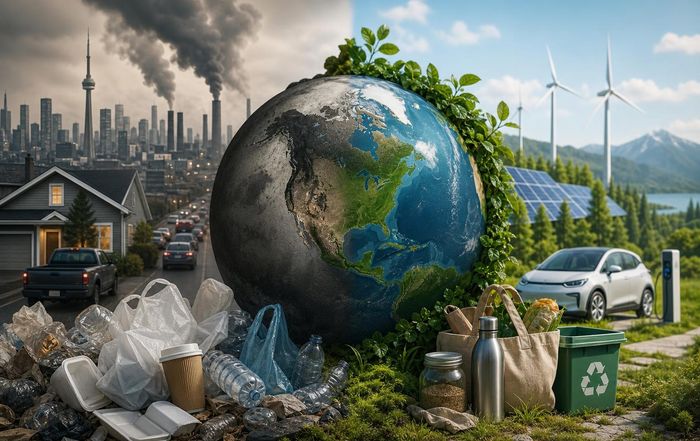
Household Consumption and Carbon Emissions in North America
Household choices are now one of the largest levers for cutting climate pollution in North America. While energy systems, heavy industry, and government policy shape the landscape, what people buy, how they travel, what they eat, and how they power their homes together account for a significant share of carbon emissions in the United States and Canada. Understanding that connection between everyday consumption and climate impact is essential for anyone trying to live more sustainably-or design policies, products, and services that genuinely reduce emissions.
Join as we learn how household consumption drives carbon emissions across North America, where the biggest impacts lie, why the picture is more complex than "individual versus systemic" responsibility, and which changes-at personal, community, business, and policy levels-can make the greatest difference.
How household consumption drives emissions in North America
When climate emissions are counted by country, they are usually reported as "territorial" emissions: what is burned within national borders. But from a lifestyle perspective, it is often more revealing to look at "consumption-based" emissions, which include the carbon embedded in imported goods and services. For high-income regions like North America, this lens is particularly important because many emissions from the products people buy occur in manufacturing and supply chains overseas.
According to analyses by organizations such as the Intergovernmental Panel on Climate Change (IPCC) and the International Energy Agency (IEA), household consumption-covering housing, transport, food, manufactured goods, and services-can be linked to around 60-70% of global greenhouse gas emissions when supply chains are fully counted. In high-income countries like the United States and Canada, per-capita lifestyle emissions are among the highest in the world, driven by large homes, car-dependent cities, high levels of material consumption, and energy-intensive diets. While there are important differences between regions, income levels, and urban versus rural lifestyles, the overall pattern is clear: everyday consumption choices, enabled and constrained by broader systems, are key drivers of climate pollution.
For readers interested in how this connects to daily habits, our overview of sustainable living explores broader lifestyle shifts that can reduce environmental impact beyond carbon alone. But to understand the scale of the challenge in North America, it helps to break emissions down by category.
Housing: energy use, space, and materials
Housing is typically the largest or second-largest source of household-related emissions in North America, depending on how transport is counted. Emissions come from three main elements: energy used to heat, cool, and power homes; the size and efficiency of the dwelling; and the materials and construction processes used to build and maintain housing stock.
North American homes are, on average, significantly larger than those in most other regions, which increases both energy demand and material use. The U.S. Energy Information Administration (EIA) reports that residential energy use in the United States is dominated by space heating, air conditioning, water heating, and appliances, with regional variations depending on climate. In Canada, where winters are colder, space heating is an even larger share of household energy use, according to Natural Resources Canada (nrcan.gc.ca). The carbon intensity of this energy depends heavily on the local grid: provinces like Quebec and British Columbia, with high shares of hydropower, see lower emissions per kilowatt-hour than coal- or gas-heavy regions in parts of the United States.
Beyond operational energy, the "embodied carbon" in building materials such as concrete, steel, and insulation is increasingly recognized as a major climate issue. Research from universities and building councils, often summarized by organizations like the World Green Building Council (worldgbc.org), shows that for new buildings, embodied emissions can account for a substantial portion of lifetime climate impact, particularly as operational energy gets cleaner. This means that renovation and energy retrofits of existing homes, rather than demolition and new construction, can often be an important climate strategy-especially when combined with insulation upgrades, air sealing, and high-efficiency windows.
Households have direct influence over some of these factors-such as thermostat settings, appliance choices, and behavior-but others, like building codes, grid mix, and the availability of efficient housing, are shaped by policy and markets. The intersection between personal decision-making and systemic design is a recurring theme across all categories of consumption.
Transport: car dependence, flying, and urban form
Transport is another major piece of the household carbon footprint in North America, and in many cases it is the largest single source. The United States, in particular, has one of the highest rates of car ownership and vehicle kilometers traveled per person in the world. The U.S. Environmental Protection Agency (EPA) attributes the largest share of U.S. greenhouse gas emissions to the transportation sector, with passenger vehicles and light trucks responsible for a significant fraction. In Canada, transport is also a leading emissions source, with personal vehicles playing a central role.
This heavy reliance on private cars is not simply a matter of preference; it is deeply embedded in urban design. Low-density suburbs, zoning rules that separate housing from jobs and services, limited public transit in many regions, and road networks optimized for cars make driving a near necessity for many households. Larger vehicles-such as SUVs and pickup trucks-have become increasingly popular, further raising per-kilometer emissions despite improvements in engine efficiency.
Air travel adds another layer. For households that fly frequently, especially long-haul, aviation can make up a large share of their personal carbon footprint, even though only a minority of North Americans fly regularly in any given year. The International Civil Aviation Organization (icao.int) and research groups tracking aviation emissions note that high-income travelers account for a disproportionate share of flight-related climate impact.
Shifting transport emissions downward requires both individual and systemic changes: choosing to drive less or car-share where possible, opting for public transit or active modes like cycling, and replacing internal combustion vehicles with electric models where alternatives are limited. But it also demands city planning that supports compact, mixed-use neighborhoods, investment in rail and bus networks, and regulations that encourage efficient and zero-emission vehicles. Readers interested in how technology and innovation intersect with these shifts may want to explore our coverage of sustainable mobility and clean transport.
Food and diet: from farm to plate
Food systems are responsible for a substantial share of global greenhouse gas emissions-often estimated at around a quarter to a third-when agriculture, land-use change, processing, transport, and waste are included. For North American households, diet choices are a major determinant of food-related emissions, with animal products, particularly beef and lamb, standing out as especially carbon-intensive.
Organizations such as the Food and Agriculture Organization of the United Nations (FAO) and academic studies highlight that ruminant livestock produce significant methane emissions, and that feed production, manure management, and land-use change further increase their climate impact. In contrast, plant-based foods like grains, legumes, vegetables, and fruits generally have much lower emissions per calorie or gram of protein, though production methods and supply chains still matter. Dairy, poultry, and pork sit somewhere in between, with wide variation depending on farming practices.
North American diets tend to be high in meat and processed foods compared with many global averages. Reducing consumption of high-impact animal products, shifting toward more plant-rich meals, and choosing foods produced with lower-impact methods can substantially reduce the carbon footprint of household food consumption. At the same time, food waste is a major issue: the United Nations Environment Programme (UNEP) estimates that a large share of food is lost or wasted along the supply chain, including at the household level, where uneaten food ends up in landfills and generates methane.
Policy and business decisions shape these choices through pricing, subsidies, marketing, and the availability of healthy, low-impact food options. For people looking to integrate climate-conscious eating into broader lifestyle changes, our lifestyle content often connects diet, health, and environmental impact in practical ways.
Goods, services, and the hidden emissions in stuff
Beyond energy, transport, and food, the products and services that households buy-from electronics and clothing to furniture, cleaning supplies, and leisure activities-carry embedded emissions from resource extraction, manufacturing, and distribution. In high-income regions, these "indirect" emissions can be significant, even if they are often less visible than a monthly electricity bill or a tank of fuel.
Consumer goods typically involve complex global supply chains. Metals, plastics, and textiles are produced in energy-intensive industries; products are assembled in factories that may rely on fossil fuels; and distribution networks move goods across continents. The Organisation for Economic Co-operation and Development (OECD) and other research bodies have shown that, when these upstream impacts are included, the carbon footprint of affluent households increases significantly compared with territorial emissions alone.
Fast fashion is one prominent example: frequent purchases of low-cost clothing, often made from synthetic fibers derived from fossil fuels, drive both emissions and other environmental impacts such as microplastic pollution. Electronics are another: smartphones, laptops, and home entertainment systems have a substantial manufacturing footprint, even if their energy use in operation is relatively modest. The same applies to furniture, home renovation materials, and many household goods.
Reducing the volume of new products purchased, extending product lifetimes through repair and reuse, and choosing durable, repairable items can all lower the carbon intensity of consumption. Circular-economy models-such as sharing platforms, rental services, and product take-back schemes-are being explored by businesses and cities across North America. For readers interested in how these shifts intersect with waste and sustainable business models, these topics are increasingly central to climate strategies.
Inequality: why average footprints can be misleading
When discussing "household consumption" and "North American emissions," it is easy to slip into averages that obscure large differences between people. Studies summarized by organizations like Oxfam (oxfam.org) and the United Nations Development Programme (undp.org) show that, globally, the highest-income households are responsible for a disproportionately large share of lifestyle emissions. Similar patterns hold within the United States and Canada: wealthier households tend to live in larger homes, own more vehicles (and often larger or more powerful ones), fly more frequently, and consume more goods and services overall.
This inequality has several implications. First, climate policies that focus solely on average per-capita reductions may overlook the outsized potential for cuts among higher-income groups. Second, measures such as carbon pricing or higher energy costs can be regressive if not carefully designed, placing a heavier burden on lower-income households that already consume less and have fewer options to invest in efficiency upgrades or cleaner technologies. Third, narratives that frame climate action primarily as an issue of individual virtue can unfairly shift responsibility away from structural drivers and from those with the greatest capacity to change.
At the same time, lower-income households often face higher energy burdens, living in less efficient housing and having limited access to public transit or fresh, low-impact food. Addressing household emissions therefore intersects with questions of equity, housing justice, and economic policy. Climate-focused organizations and think tanks, such as the Rocky Mountain Institute (rmi.org), increasingly emphasize that equitable climate solutions must combine efficiency and decarbonization with affordability and access.
Policy, markets, and infrastructure: the systems behind personal choices
Individual households do not make decisions in a vacuum. The carbon impact of consumption is shaped by the infrastructure, regulations, and market conditions that determine what options are available, affordable, and convenient. This is why many climate researchers and advocacy groups stress that systemic change and personal action are not opposing strategies but mutually reinforcing.
Energy policy is one example. When governments support renewable energy deployment, strengthen building codes, and offer incentives for heat pumps or home retrofits, they change the baseline emissions associated with household energy use. As utilities decarbonize their grids, the climate benefit of electrifying heating, cooking, and vehicles grows. Regulatory bodies and public agencies-from national departments of energy to local building authorities-play central roles here, alongside private utilities and developers.
Transport infrastructure is another. Investments in transit, cycling networks, and walkable urban design can make low-carbon mobility practical for far more people. Zoning reform that allows mixed-use, higher-density development near transit hubs can reduce car dependence over time. These decisions involve city planners, transportation departments, and regional authorities, not just private consumers.
Food systems and product markets also depend on policy and business choices: agricultural subsidies, labeling rules, packaging regulations, and extended producer responsibility laws all influence how sustainable everyday products and diets can become. For readers interested in these broader dynamics, our sections on climate change, business, and the global context regularly explore how policy and markets shape environmental outcomes.
High-impact actions households can take-and their limits
While systemic change is essential, research consistently shows that some lifestyle shifts can have particularly large climate benefits for households in high-income regions. Analyses by academic teams and organizations like the United Nations Environment Programme and the IPCC highlight a handful of high-impact areas:
One is reducing car travel, especially in large, fossil-fuelled vehicles. Living closer to work where feasible, carpooling, using public transit, cycling, or walking can significantly cut emissions. Where car ownership remains necessary, switching to more efficient or electric vehicles can further reduce impact, especially as electricity grids decarbonize. Another is improving home energy efficiency: adding insulation, sealing drafts, upgrading windows, and installing efficient heating and cooling systems (such as heat pumps) can lower both emissions and energy bills.
Dietary shifts are also important. Moving toward more plant-based meals, cutting back on high-impact meats, and reducing food waste can substantially shrink the food-related portion of a household's footprint. For many people this does not require a complete change in identity or culture; even partial shifts, sustained over time, can matter at scale. Similarly, moderating air travel-particularly frequent, discretionary flights-has a large effect for those who fly often.
On the consumption side, buying fewer but higher-quality goods, repairing rather than replacing, and participating in sharing or second-hand markets can reduce the embedded emissions of material consumption. This aligns closely with themes in our environmental awareness coverage, which often emphasizes mindful consumption and the broader cultural narratives that encourage overconsumption.
However, it is important to recognize the limits of individual action. Many households face constraints: rental housing where they cannot retrofit, jobs that require commuting or travel, food deserts with limited healthy options, or financial barriers to purchasing efficient appliances and vehicles. This is why personal efforts are most powerful when combined with civic engagement-supporting policies, community initiatives, and businesses that make low-carbon choices the default rather than the exception.
The role of business and technology in reshaping household footprints
Businesses, from utilities and automakers to retailers and tech firms, play a decisive role in determining the emissions associated with household consumption. Corporate climate strategies, product design choices, and supply-chain decisions can either lock in high-carbon patterns or accelerate the shift to lower-impact lifestyles.
Utilities and energy companies, guided by regulators and investors, are central to decarbonizing the power supply that households rely on. Major technology and manufacturing firms influence the energy efficiency, repairability, and durability of the products people use every day. Retailers and e-commerce platforms shape consumer norms through what they stock, how they price it, and how they market it. Financial institutions, in turn, affect which projects and business models receive capital.
Technology can help, but it is not a cure-all. Electric vehicles, heat pumps, smart thermostats, and high-efficiency appliances have clear climate benefits when deployed thoughtfully, especially in regions with cleaner electricity. Digital tools can support better building management, more efficient logistics, and new sharing and rental models. Yet rebound effects-where efficiency gains lead to increased consumption-are a real concern, as are the material and energy demands of manufacturing new technologies. Organizations like the World Resources Institute (wri.org) and leading universities regularly analyze how to harness innovation while avoiding these pitfalls.
For all people exploring the intersection of technology, economy, and sustainability, the key question is not whether technology alone can "solve" climate change, but how it can be aligned with changes in behavior, policy, and business models to genuinely reduce household-related emissions.
Connecting household choices to broader climate progress
Household consumption in North America sits at the crossroads of personal values, economic structures, and political decisions. Large homes, car-centered cities, meat-heavy diets, and high levels of material consumption have created some of the world's highest per-capita lifestyle emissions, but they are not immutable facts of life. They reflect decades of policy choices, cultural narratives, and business strategies that can be reimagined.
For individuals, understanding the relative impact of different choices-housing energy use, transport, food, and material consumption-can help focus limited time and resources on changes that matter most. For policymakers, recognizing the constraints households face can lead to climate strategies that pair ambition with fairness, ensuring that low-carbon options are accessible and affordable. For businesses, aligning products and services with a genuinely low-carbon future is becoming not just an ethical imperative but a competitive necessity.
Ultimately, reducing household consumption emissions in North America is less about asking people to care in the abstract and more about reshaping systems so that caring is built into everyday life: efficient, comfortable homes; cities where walking, cycling, and transit are natural choices; food systems that make climate-friendly diets normal and affordable; and economies that value durability and repair over disposability. In that sense, individual action and systemic change are two sides of the same effort to save our world from the worst impacts of climate change.
