
Renewable Practices Powering Sustainable Living in 2026
A Mature Era of Climate Responsibility for Households, Businesses, and Cities
By 2026, sustainable living has evolved from a forward-looking aspiration into a mainstream operational requirement for households, businesses, investors, and public institutions, and YouSaveOurWorld.com has continued to position itself as a trusted, practical hub for those who want to convert climate ambition into credible action. Across North America, Europe, Asia, Africa, Latin America, and Oceania, decision-makers now understand that renewable practices are not simply environmental preferences; they are core to competitiveness, risk management, resilience, and long-term value creation in an increasingly volatile global economy. The body of climate science consolidated by the Intergovernmental Panel on Climate Change (IPCC), together with observational data from agencies such as NASA and NOAA, confirms that the window to keep global warming close to 1.5°C is rapidly closing, and that only a rapid, sustained transformation of energy, materials, mobility, food systems, and finance can preserve a stable climate and livable conditions for future generations. Within this context, renewable practices that support sustainable living have crystallized as a comprehensive framework for action, integrating technology, design, education, and personal well-being into a coherent vision of a low-carbon, circular, and inclusive global economy.
For the global community that regularly visits YouSaveOurWorld.com, the central challenge in 2026 is no longer whether sustainability is important, but how to implement it in a way that is evidence-based, commercially realistic, and aligned with evolving regulations and stakeholder expectations. Readers increasingly expect clear guidance on sustainable living, authoritative explanations of climate change, and practical direction on sustainable business, supported by credible external institutions such as the United Nations Environment Programme (UNEP), the International Energy Agency (IEA), and leading research universities including MIT, Oxford University, and Stanford University. This article examines how renewable practices in energy, materials, waste, mobility, food, finance, and lifestyle are reshaping both everyday routines and strategic business models, and how individuals and organizations can strengthen their own experience, expertise, authoritativeness, and trustworthiness by aligning decisions with robust standards and transparent performance metrics.
Renewable Practices in a 2026 Global Sustainability Landscape
In 2026, renewable practices are understood as a systemic approach rather than a narrow technological fix, encompassing all processes and behaviors that can be sustained indefinitely without undermining ecological stability or social cohesion. At their core, these practices prioritize resources that regenerate on human time scales, minimize waste and pollution, and respect planetary boundaries, while simultaneously supporting public health, social equity, and economic opportunity. This integrated perspective is closely aligned with the United Nations Sustainable Development Goals (SDGs), which remain the reference framework for balancing environmental, social, and economic priorities across both developed and emerging economies; readers can explore the full SDG framework through the official UN Sustainable Development Goals portal to better understand how climate, biodiversity, poverty, and education targets interconnect.
In practice, renewable practices encompass the deployment of solar, wind, and other clean energy sources; the move toward circular material flows via reuse, repair, and recycling; regenerative agriculture and sustainable food systems; low-carbon mobility and climate-resilient urban design; and the integration of sustainability into business governance, finance, and innovation strategies. For corporations and financial institutions, this transformation is increasingly guided by disclosure and reporting frameworks such as those developed by the Task Force on Climate-related Financial Disclosures (TCFD) and the International Sustainability Standards Board (ISSB), together with emerging jurisdictional standards in the European Union, the United States, and Asia. For individuals and communities, renewable practices translate into everyday choices about housing, transport, diet, purchasing habits, digital use, and personal investments, which can be informed through resources on environmental awareness and lifestyle curated by YouSaveOurWorld.com to bridge global guidance with local realities.
Renewable Energy as the Structural Backbone of Sustainable Living
Renewable energy has solidified its role as the structural backbone of sustainable living, as households, enterprises, and cities increasingly rely on solar photovoltaics, onshore and offshore wind, geothermal systems, hydropower, and modern bioenergy to displace fossil fuels. The International Energy Agency documents this evolution in its latest renewables market analysis, showing that additions of solar and wind capacity continue to break records, driven by cost declines, policy support, and rising corporate demand for clean electricity. In markets such as Germany, Spain, Denmark, and Portugal, wind and solar already supply a large share of annual electricity, while in the United States, China, India, Brazil, and several African economies, ambitious renewable targets are reshaping national energy strategies, grid planning, and capital allocation.
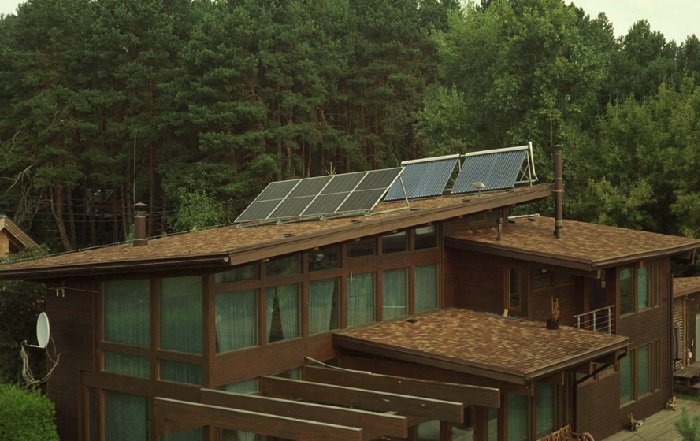
For businesses, reliable access to competitively priced renewable energy is now a central competitiveness factor, particularly for companies that have joined initiatives like RE100, where major multinational corporations commit to sourcing 100 percent of their electricity from renewable sources. These commitments are usually tied to science-based emission reduction pathways validated by the Science Based Targets initiative (SBTi), which provides rigorous methodologies aligned with the Paris Agreement and offers detailed guidance on science-based corporate climate action. For households, rooftop solar, building-integrated photovoltaics, community energy cooperatives, and green power purchasing options provide tangible entry points to the energy transition, often supported by local incentives and net-metering schemes in jurisdictions from California and New York to Australia, Japan, and parts of Africa and Latin America. Visitors to YouSaveOurWorld.com who are exploring these options can integrate their decisions into a broader sustainable living strategy that also considers energy efficiency, storage, and demand flexibility, rather than treating renewable generation as a stand-alone decision.
Energy Efficiency, Smart Technology, and High-Performance Design
Even as renewable generation expands, the most immediate and cost-effective emission reductions often come from energy efficiency and intelligent design, which lower overall demand and make it easier to decarbonize entire systems. The U.S. Department of Energy (DOE) continues to provide extensive resources on energy efficiency in buildings and industry, demonstrating that upgrades to insulation, windows, heating and cooling systems, lighting, industrial motors, and process controls can unlock substantial energy savings and emission reductions, often with attractive payback periods. In Europe, regulations such as the EU Energy Performance of Buildings Directive and national building codes have accelerated adoption of high-performance standards, including passive houses, nearly zero-energy buildings, and deep retrofits, which are now being adapted in markets from Canada and the Nordics to Singapore and New Zealand as part of broader climate strategies.
Digital technology magnifies these efficiency gains through smart meters, advanced building management systems, and connected devices that can optimize energy consumption in real time. Organizations that deploy the Internet of Things (IoT), data analytics, and automation can identify inefficiencies, forecast demand, and adjust operations dynamically, thereby reducing costs and environmental impacts while often improving comfort and productivity. Research from institutions such as the MIT Energy Initiative and Imperial College London continues to highlight the potential of integrated energy systems that coordinate renewable generation, storage, electric vehicles, and flexible loads; those interested can explore broader insights on energy systems innovation to understand how these technologies underpin a resilient, low-carbon energy architecture. Within the content ecosystem of YouSaveOurWorld.com, this intersection of technology, design, and sustainability is particularly relevant to architects, engineers, and urban planners who are designing infrastructure that will shape emissions and resilience for decades.
Circular Materials, Plastic Recycling, and Systemic Waste Reduction
Beyond energy, renewable practices must confront the linear "take-make-waste" model that still dominates global production and consumption, particularly in relation to plastics and other long-lived materials. The Ellen MacArthur Foundation remains a leading authority on the circular economy, articulating how businesses, cities, and countries can redesign systems to keep products and materials in use, regenerate natural systems, and eliminate waste; its work on circular economy principles has influenced corporate strategies, municipal policies, and national roadmaps from the European Union to China and Latin America. Plastic waste has become a powerful symbol of unsustainable living, with rivers and oceans accumulating vast amounts of debris that threaten ecosystems, tourism, fisheries, and public health from Southeast Asia and West Africa to Europe and North America.
To address this challenge, governments, companies, and civil society organizations are scaling advanced recycling technologies, redesigning packaging, and strengthening collection systems. Mechanical and chemical recycling, deposit-return schemes, extended producer responsibility (EPR) laws, and bans on certain single-use plastics are being implemented across the European Union, Canada, parts of the United States, and several Asian and African nations, while global consumer goods and retail companies are redesigning products for recyclability and reduced material intensity. For individuals, small enterprises, and community groups, practical guidance on plastic recycling and waste reduction available on YouSaveOurWorld.com helps translate these systemic shifts into daily actions, from choosing reusable packaging and sorting waste correctly to supporting local circular initiatives and advocating for stronger producer responsibility. By making these choices visible and understandable, the site reinforces the message that circular practices are integral to credible sustainable living, rather than optional add-ons.
Sustainable Business Models and Credible Corporate Governance
By 2026, it is widely recognized that sustainable living at scale cannot be achieved without a fundamental transformation of how businesses create, measure, and distribute value. Sustainability has moved from the periphery of corporate social responsibility to the center of strategy, risk management, and stakeholder engagement, as organizations recognize that environmental and social performance shape access to capital, regulatory licenses, supply chain resilience, and brand reputation. Institutions such as the World Business Council for Sustainable Development (WBCSD) and the World Economic Forum (WEF) offer frameworks and case studies on sustainable business transformation, illustrating how companies across sectors-from manufacturing and real estate to finance and digital services-are embedding decarbonization, circularity, and social impact into their operating models.
Investors and lenders have aligned their expectations accordingly, with environmental, social, and governance (ESG) factors now deeply integrated into portfolio construction, credit analysis, and stewardship practices, even as regulators in the European Union, the United States, the United Kingdom, and Asia tighten rules around sustainability disclosures and greenwashing. Standard-setting bodies such as the Global Reporting Initiative (GRI) and the Sustainability Accounting Standards Board (SASB), now part of the Value Reporting Foundation and linked to the ISSB, provide standardized metrics that help companies report consistently on climate risks, resource use, human rights, and governance. For entrepreneurs, executives, and sustainability professionals, the resources on sustainable business and business strategy at YouSaveOurWorld.com serve as a bridge between these global frameworks and day-to-day decision-making, emphasizing governance structures, measurable targets, credible transition plans, and transparent communication as the foundations of trust with customers, employees, regulators, and communities.
Innovation, Technology, and the Next Wave of Low-Carbon Solutions
Innovation and technology remain central to scaling renewable practices, not as substitutes for behavioral and policy change, but as critical enablers of more efficient, equitable, and resilient systems. Breakthroughs in energy storage, including advanced lithium-ion chemistries, solid-state batteries, and green hydrogen production, are addressing intermittency and enabling deeper penetration of variable renewables into power grids and industrial processes. The International Renewable Energy Agency (IRENA) continues to provide in-depth analysis on renewable innovation and technology pathways, documenting how cost declines, performance improvements, and supportive policies are opening decarbonization options in sectors such as steel, cement, shipping, and aviation that were once considered extremely difficult to transform.
Digital technologies, including artificial intelligence, machine learning, blockchain, and satellite-based monitoring, are transforming how organizations track, verify, and optimize sustainability performance. AI-driven analytics can forecast energy demand, optimize logistics networks, and detect inefficiencies in buildings and industrial plants, while blockchain-based solutions are being piloted for supply chain traceability, renewable energy certificates, and carbon market transparency. Research institutions such as Stanford University, ETH Zurich, and Tsinghua University are collaborating with industry and governments to test these tools in real-world settings; interested readers can follow developments through platforms like Stanford's Precourt Institute for Energy and other leading research hubs. For the community around YouSaveOurWorld.com, the evolving relationship between innovation and technology underscores that sustainable living in 2026 is not a nostalgic return to simpler times, but a forward-looking reimagining of how societies harness knowledge and tools to operate within ecological limits while enhancing quality of life.
Climate Change, Resilience, and Shared Global Responsibility
Climate change remains the overarching challenge that gives urgency and coherence to renewable practices, and by 2026 its impacts have become increasingly visible through more frequent and severe heatwaves, wildfires, floods, storms, and droughts across all continents. The IPCC continues to publish rigorous assessments of climate science, mitigation pathways, and adaptation options, and its most recent synthesis reports emphasize that rapid, sustained emission reductions, combined with well-designed adaptation strategies, are essential to limit cascading risks to ecosystems, economies, and societies. Observations from organizations such as the World Meteorological Organization (WMO) and NASA confirm record-breaking temperatures and accelerating sea-level rise, with profound implications for coastal cities, agriculture, infrastructure, and public health.
In response, national governments and subnational authorities are updating climate action plans, integrating mitigation and adaptation in line with the Paris Agreement and often cooperating through networks such as C40 Cities and the Global Covenant of Mayors. Businesses are conducting climate scenario analyses, assessing physical and transition risks across their value chains, and embedding resilience into facility design, procurement, logistics, and insurance strategies. Financial institutions are stress-testing portfolios against different warming trajectories and policy responses. For individuals, communities, and small organizations, understanding the drivers and consequences of climate change is a prerequisite for informed action, and resources on climate change and global environmental trends provided by YouSaveOurWorld.com help situate local experiences of extreme weather, food price volatility, or health impacts within a robust scientific and policy context, reinforcing the idea that sustainable living is both a personal responsibility and a shared global endeavor.
Lifestyle, Education, and Personal Well-Being in a Sustainable World
Renewable practices that support sustainable living extend far beyond infrastructure and corporate strategy; they are deeply intertwined with lifestyle choices, cultural norms, and personal well-being. Research from the World Health Organization (WHO) and initiatives such as the Lancet Countdown on Health and Climate Change has shown that many climate-aligned behaviors, including active mobility, plant-rich diets, reduced exposure to air pollution, and access to green spaces, deliver substantial co-benefits for physical and mental health. The WHO provides detailed insights on the health co-benefits of climate action, illustrating how measures to reduce emissions can simultaneously lower the burden of cardiovascular disease, respiratory illness, obesity, and stress.
In everyday terms, individuals and families can align their routines with renewable practices by choosing energy-efficient homes, low-carbon transport options, seasonal and less resource-intensive foods, durable products, and mindful digital consumption, thereby reducing environmental footprints while often improving quality of life. Education is pivotal in this transition: schools, universities, professional training programs, and community organizations in countries from Sweden and Germany to Kenya, India, and Chile are integrating sustainability into curricula, vocational training, and public awareness campaigns. For visitors to YouSaveOurWorld.com, tailored content on education, personal well-being, and lifestyle offers both inspiration and practical guidance, emphasizing that individual actions, when scaled across millions of people, can influence market trends, political priorities, and cultural narratives in favor of renewable, regenerative practices.
Economic Transformation and the Strategic Business Case for Sustainability
The economic dimension of renewable practices is central for business leaders, policymakers, and investors who must reconcile near-term costs with long-term competitiveness and systemic risk reduction. Analyses by the Organisation for Economic Co-operation and Development (OECD), the World Bank, and other financial institutions show that a well-governed transition to a low-carbon, resource-efficient economy can generate net job creation, stimulate innovation, and reduce exposure to climate and resource shocks. The OECD's work on green growth and sustainable development highlights policy instruments such as carbon pricing, removal of fossil fuel subsidies, green public procurement, and targeted investment in clean infrastructure and research as key levers for aligning economic incentives with environmental goals.
For businesses of all sizes, the strategic case for sustainability increasingly rests on a combination of risk mitigation, cost savings, growth opportunities, and brand differentiation. Energy efficiency, waste reduction, and circular material strategies can improve operating margins, while sustainable product and service innovation opens new markets and strengthens customer loyalty. Access to capital is also evolving, as banks, insurers, and investors favor companies with transparent climate strategies, credible transition plans, and strong ESG performance. On YouSaveOurWorld.com, the interplay between economy, business, and sustainability is explored in a way that helps readers connect high-level macroeconomic trends and regulatory shifts with operational decisions in procurement, product design, logistics, and workforce development, reinforcing the understanding that renewable practices are not only ethically necessary but economically rational.
Designing a Regenerative Future with YouSaveOurWorld.com
In 2026, the convergence of renewable energy, circular materials, sustainable business models, digital innovation, and conscious lifestyles is redefining what it means to live well on a finite planet. The pace and shape of this transition vary by region, reflecting different starting points, resource endowments, and policy contexts in North America, Europe, Asia, Africa, and Latin America, yet the overall direction is increasingly clear: societies are moving, sometimes unevenly, toward systems that respect ecological boundaries, prioritize human health and dignity, and use innovation to enhance resilience and shared prosperity. The credibility of this transformation depends on demonstrable experience, deep expertise, recognized authoritativeness, and consistent trustworthiness, all of which are built through transparent data, evidence-based decisions, and meaningful engagement with stakeholders.
YouSaveOurWorld.com is an integral part of this evolving ecosystem, acting as a bridge between global knowledge and local action, and offering a curated pathway through key themes such as sustainable living, plastic recycling, sustainable business, climate change, innovation, and personal well-being. By combining authoritative external resources from organizations such as the UN, IEA, WHO, OECD, and leading academic institutions with its own structured guidance on technology, waste, and global trends, the platform enables individuals, entrepreneurs, and organizations to align their decisions with renewable practices that genuinely support sustainable living. In doing so, it contributes to a broader cultural and economic shift in which sustainability is not a peripheral consideration but the organizing principle of resilient, prosperous, and humane societies, and invites every visitor to participate actively in designing a regenerative future rather than merely adapting to it.
