
Sustainable Choices That Reduce Household Waste
Household waste remains one of the clearest indicators of how modern economies still struggle to reconcile convenience, growth and planetary limits, yet it has also become a powerful arena for measurable climate action, resource efficiency and business innovation. As climate risks intensify, supply chains remain fragile and regulatory expectations increase across major markets, reducing household waste is no longer a peripheral lifestyle preference but a core strategic behavior for families, communities, companies and policymakers. On YouSaveOurWorld.com, sustainable living is framed as a disciplined, data-informed and business-aware journey in which every household decision is understood as part of a wider economic and ecological system, and where choices that are environmentally responsible are evaluated simultaneously for their financial rationality and long-term resilience. From North America and Europe to Asia, Africa, Latin America and Oceania, households are learning that their daily purchasing, usage and disposal patterns can either reinforce a wasteful status quo or accelerate an emerging circular economy.
The 2026 Global Context: Why Household Waste Still Matters
By 2026, municipal solid waste volumes have continued to grow in many regions, driven by urbanization, rising incomes and a persistent reliance on disposable products and packaging, even as some cities and countries report early plateaus or declines. The UN Environment Programme continues to warn that, under business-as-usual scenarios, global waste generation could rise substantially in coming decades, placing severe pressure on landfills, incineration facilities and informal disposal sites, while contributing to greenhouse gas emissions, toxic pollution and ecosystem degradation. In rapidly developing regions of Asia and Africa, infrastructure expansion has not always kept pace with consumption, resulting in open dumping and burning that undermine air quality, public health and climate objectives.
In high-income economies such as the United States, Canada, the United Kingdom, Germany, the Nordics and parts of East Asia, per capita waste generation remains among the highest globally, even where recycling, composting and energy-from-waste systems are relatively advanced. The World Bank has repeatedly underscored that upstream waste prevention and reduction deliver significantly greater environmental benefits than downstream treatment, a message that has become more urgent as climate deadlines tighten and resource constraints become more visible in energy, minerals and water markets. For households, this reality means that the most impactful decisions are often those made before a product is acquired, in the form of demand reduction, preference for durable and repairable goods, and support for circular business models that keep materials in productive use.
On YouSaveOurWorld.com, waste is explicitly linked to broader themes such as climate change, sustainable business, innovation and global economic dynamics. This systems perspective reflects current science and policy thinking, emphasizing that household choices send signals along entire supply chains, influence corporate strategies and shape regulatory agendas, whether in Brussels, Washington, Beijing or Nairobi. Household waste is therefore not just a local nuisance but a macro-level indicator of how well societies are aligning consumption with planetary boundaries.
From Linear to Circular: Household Consumption in Transition
The traditional linear model of "take-make-use-dispose" has delivered unprecedented material comfort but also entrenched a culture of disposability that is incompatible with climate and biodiversity goals. The circular economy, championed by organizations such as the Ellen MacArthur Foundation, proposes a fundamental redesign of products, services and systems so that materials remain in circulation at their highest value through reuse, repair, remanufacturing and high-quality recycling. By 2026, this concept has moved from niche to mainstream policy discourse, with the European Union, several Asian economies and a growing number of cities adopting formal circular economy roadmaps.
For households in cities such as New York, London, Berlin, Toronto, Sydney, Singapore, Seoul, the transition is visible in the form of repair cafes, tool libraries, peer-to-peer sharing platforms, refill stations, clothing rental services and product-as-a-service offerings in electronics and appliances. However, the experience is far from seamless; consumers still encounter products that are difficult to repair, confusing eco-labels, inconsistent recycling rules and marketing messages that equate sustainability with continued high-volume consumption. Navigating this complexity has become a core competence for sustainable living, and YouSaveOurWorld.com supports this learning process through practical guidance on sustainable living, waste and technology that is tailored to a business-literate audience.
Within a circular framework, household waste reduction means prioritizing products that are durable, modular and designed for disassembly, opting for services instead of ownership when appropriate, and favoring brands that operate take-back schemes and material recovery programs. It also requires a shift in mindset: recycling is redefined as a last resort after reduction and reuse, not a moral license to consume without constraint. As more households internalize this hierarchy, manufacturers and retailers are pushed to redesign offerings around longevity, repairability and material transparency, creating a reinforcing loop between consumer expectations and corporate innovation.
The Waste Hierarchy as a Strategic Decision Tool
The waste hierarchy, widely adopted by regulators such as the European Environment Agency and environmental agencies across North America and Asia-Pacific, ranks waste management options from most to least preferred: prevention, reduction, reuse, recycling, recovery and disposal. For households seeking to reduce their environmental footprint while managing costs, this hierarchy functions as a simple yet powerful strategic tool that can be applied to virtually every purchasing and disposal decision.
At the top of the hierarchy, prevention and reduction focus on questioning the necessity of purchases, shifting to digital services where appropriate, and avoiding single-use items when reusable alternatives exist. Reuse encompasses repairing, repurposing, sharing and participating in second-hand markets, which have been significantly expanded by digital platforms and social commerce in markets such as the United States, the United Kingdom, Germany, Sweden and Japan. Recycling, while still essential, is understood as a step that comes into play once options to prevent, reduce or reuse have been exhausted, acknowledging that recycling processes require energy, often downcycle materials and depend on the quality of local infrastructure.
Regulatory frameworks increasingly mirror this hierarchy. The U.S. Environmental Protection Agency continues to emphasize source reduction and reuse as primary strategies, while the European Commission embeds waste prevention, eco-design and circularity within its Green Deal and Circular Economy Action Plan, including extended producer responsibility and right-to-repair initiatives. As households align their behavior with these principles, they not only reduce the volume and toxicity of their own waste streams but also reinforce policy trajectories and market incentives that reward upstream solutions. On YouSaveOurWorld.com, this alignment is presented as a way for households to act as informed economic agents, integrating environmental and financial logic in daily choices.
Plastic Waste and Recycling: Beyond Symbolism to Systemic Change
Plastic waste remains one of the most visible and politically salient components of household waste in 2026, with images of polluted rivers and oceans continuing to shape public opinion and regulatory action. Single-use packaging, disposable utensils, synthetic textiles and microplastics contribute to ecosystem damage and potential human health risks, while global plastic production continues to grow. Data from platforms such as Our World in Data and advocacy organizations including Ocean Conservancy show that global plastic recycling rates remain low, with a large share of plastic waste still landfilled, incinerated or mismanaged, especially in regions lacking robust waste management systems.
On YouSaveOurWorld.com, plastic reduction and plastic recycling are treated as complementary but distinct strategies. Households are encouraged first to eliminate avoidable plastics, such as bottled water where safe tap or filtered water is available, unnecessary food packaging, single-use shopping bags and disposable partyware, before optimizing the sorting and recycling of remaining plastics. Cities like Amsterdam, Copenhagen, Vancouver and Seoul have expanded refill and bulk-purchase options, deposit-return schemes for beverage containers and targeted bans on specific single-use items, making low-plastic lifestyles more accessible, yet in many regions progress depends heavily on informed and persistent consumer behavior.
Understanding local recycling rules is critical, as contamination and wishful recycling can undermine entire collection systems. Organizations such as Recycling Partnership in the United States, along with national environment ministries and municipal authorities worldwide, provide guidance on what is realistically recyclable in each jurisdiction. Households that invest time in understanding resin codes, local collection rules and the limitations of current technology can significantly improve recycling outcomes. On YouSaveOurWorld.com, plastic guidance is integrated with broader environmental awareness, enabling readers to distinguish between impactful actions and purely symbolic gestures, and to recognize when upstream policy or business engagement is required to address systemic issues.
Food Waste: Climate, Cost and Resource Efficiency
Food waste continues to represent one of the most significant yet underappreciated components of household waste. The Food and Agriculture Organization of the United Nations estimates that a substantial share of global food production is lost or wasted along the supply chain, with household-level waste particularly high in North America, Europe, Australia and parts of East Asia. This waste translates into unnecessary land use, water consumption, fertilizer and energy inputs, as well as avoidable greenhouse gas emissions, especially methane from decomposing organics in landfills.
From a climate and resource perspective, every kilogram of food wasted represents embedded emissions and resource use across farming, processing, transport, refrigeration and retail. From a household finance perspective, food waste is equivalent to throwing away money, a concern that has become more acute amid inflation and cost-of-living pressures in many regions. Organizations such as WRAP in the United Kingdom and ReFED in the United States have demonstrated that relatively simple behavioral shifts, including structured meal planning, realistic portion sizing, proper storage techniques, creative use of leftovers and a better understanding of "best before" versus "use by" labels, can substantially reduce food waste without compromising quality of life.
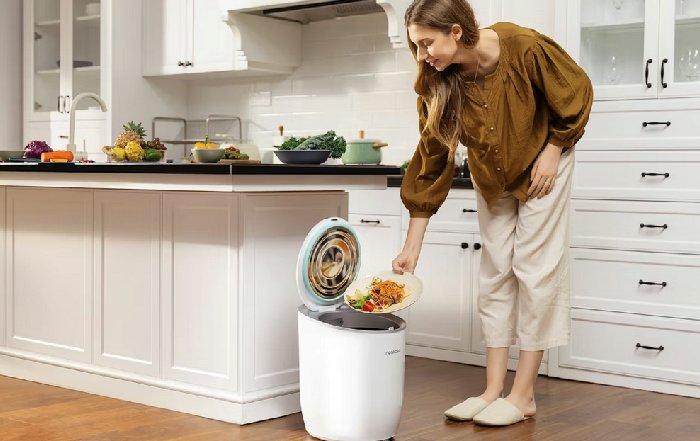
On YouSaveOurWorld.com, guidance on sustainable lifestyle emphasizes food waste reduction as one of the most immediate, quantifiable and economically attractive levers available to households. In jurisdictions where municipal organic waste collection or local composting infrastructure exists, households can further reduce landfill-bound waste while supporting the production of compost that enhances soil health and can contribute to regenerative agriculture. Where such systems are not yet in place, the platform highlights emerging community solutions and policy developments, helping readers anticipate and support improvements in local organics management.
Technology and Innovation: Digital Tools for Waste-Smart Homes
Technological progress and digital innovation are reshaping how households monitor resource use, manage products and interact with waste systems. The International Energy Agency has documented how digitalization can improve efficiency across energy and resource systems, and this logic now extends to household-level waste reduction. Smart meters, connected appliances and home management platforms allow residents to track electricity, water and sometimes material flows, identifying inefficiencies and waste hotspots that were previously invisible.
Mobile applications help users locate zero-waste stores, swap or donate surplus items, access repair services, participate in local sharing initiatives and buy or sell second-hand goods. In parallel, advances in materials science, driven by institutions such as MIT and the Fraunhofer Institute, are generating new biodegradable, compostable or more easily recyclable materials that can replace problematic plastics and composites in packaging, textiles and consumer goods. Some cities and companies are piloting digital product passports that store information about materials, repair options and recycling pathways, making it easier for households and recyclers to keep products and materials in circulation.
On YouSaveOurWorld.com, the intersection of technology, innovation and waste reduction is presented as both an opportunity and a responsibility. Households that adopt smart tools, support circular materials and engage with emerging platforms help create demand for scalable solutions, while also gaining better control over their own environmental and financial performance. At the same time, the platform stresses that technology is an enabler rather than a substitute for fundamental changes in design, business models and personal habits; without shifts in norms and expectations, digital tools risk optimizing a still-linear system rather than transforming it.
Design and Product Longevity: Waste Determined Upstream
Design decisions taken in studios, engineering teams and corporate strategy meetings ultimately shape how much waste households generate and how easily materials can be recovered. Products that are sealed, glued, built from complex composites or lack spare parts are likely to be discarded long before their functional potential is exhausted. Conversely, products designed for durability, modularity and disassembly can be repaired, upgraded and eventually recycled with far lower environmental and economic costs. The concept of "design for disassembly," promoted by organizations such as the Design Council in the United Kingdom and increasingly reflected in design curricula, embodies this shift.
Right-to-repair legislation and voluntary commitments have expanded in the United States, the European Union and several other jurisdictions, requiring or encouraging manufacturers to provide repair information, diagnostic tools and spare parts. This regulatory momentum, combined with consumer pressure and investor interest in circular business models, is beginning to change how electronics, appliances, furniture and even fashion items are conceived. However, the transition is uneven, and households still encounter many products optimized for rapid replacement rather than long-term use.
On YouSaveOurWorld.com, design is framed as a strategic lever rather than a purely aesthetic concern. The platform encourages readers to evaluate products not only on price and performance but also on repairability, modularity, material transparency and the presence of take-back or refurbishment programs. By rewarding companies that embrace circular design and avoiding those that rely on planned obsolescence, households can use purchasing power to influence upstream decisions. This approach aligns with broader trends in sustainable procurement, where businesses and public authorities increasingly incorporate circularity criteria into their tenders and supplier evaluations.
Sustainable Business Models and the Power of Household Demand
Across sectors, businesses recognize that waste reduction and circularity can enhance resilience, reduce costs, open new revenue streams and respond to evolving regulatory and investor expectations. Circular business models such as product-as-a-service, leasing, subscription-based access, remanufacturing and deposit-return schemes are being piloted and scaled in markets from North America and Europe to parts of Asia-Pacific and Latin America. Organizations like the World Business Council for Sustainable Development and CDP document how leading companies integrate material efficiency, packaging redesign and circular innovation into their core strategies and disclosures.
Yet the success of these models depends heavily on household participation. Consumers must be willing to shift from ownership to access, return products at end-of-use, engage with repair and refurbishment processes and accept new forms of interaction with brands and service providers. When households embrace refillable products, clothing rental, refurbished electronics and take-back programs, they validate and scale circular offerings; when they resist or ignore these options, even well-designed business models can struggle.
On YouSaveOurWorld.com, the business and sustainable business sections analyze how household preferences influence corporate decision-making and capital allocation. The platform highlights case studies where aggregated consumer demand has accelerated shifts in packaging, logistics, product design and after-sales services, as well as examples where lack of engagement has stalled promising initiatives. By understanding these dynamics, households can view their choices not merely as isolated acts of personal ethics but as contributions to market signals that shape corporate strategies and sector-wide norms.
Education, Awareness and Behavior: Building Waste-Smart Cultures
Technical solutions and policy frameworks can only achieve their full potential when embedded in cultures that value resource efficiency and environmental responsibility. Education and awareness are therefore central to any long-term reduction in household waste. Organizations such as UNESCO and numerous national education ministries have expanded sustainability and circular economy content within school and university curricula, while businesses and civil society organizations run training, campaigns and community programs to build practical skills in repair, resource management and low-waste living.
On YouSaveOurWorld.com, environmental awareness and education are treated as foundational pillars, with content designed to translate complex science and policy into actionable insights. The platform emphasizes Experience, Expertise, Authoritativeness and Trustworthiness, recognizing that busy professionals and families require concise, credible and context-specific guidance rather than generic slogans. Behavioral science research, including work popularized by entities like the Behavioral Insights Team, shows that seemingly small changes in choice architecture, such as how options are presented, what defaults are set and which social norms are made visible, can significantly influence waste-related behavior.
Households that internalize these insights can redesign their own environments to make low-waste choices more automatic and less burdensome. This may involve reorganizing kitchens to prioritize perishable food, placing clearly labeled sorting stations in convenient locations, establishing household rules for "cooling-off" periods before major purchases, or using digital reminders for maintenance and repair. By treating behavior change as a design challenge rather than a matter of willpower alone, households can create durable habits that align daily routines with long-term sustainability goals.
Waste, Economy and Personal Well-Being in 2026
Waste reduction is often framed as an environmental obligation, but in 2026 its economic and personal well-being dimensions are increasingly recognized. At the household level, consuming fewer resources, extending product lifespans and avoiding unnecessary purchases can free up income for savings, investment, education and experiences, while also reducing exposure to price volatility in energy, food and consumer goods. At the macro level, the circular economy is seen by organizations such as the OECD as a pathway to new jobs, innovation and competitiveness, particularly for regions that face resource constraints or import dependencies and seek to build more resilient local value chains.
On YouSaveOurWorld.com, the link between economy, waste and personal well-being is explicit. A home with fewer unnecessary possessions, streamlined storage and more intentional purchasing can reduce stress, improve mental clarity and enhance a sense of control amid economic and environmental uncertainty. In diverse cultural contexts, from minimalist movements in Japan and Scandinavia to community-based sharing practices in parts of Africa and Latin America, people report psychological benefits from owning less and wasting less, provided that essential needs and dignified living standards are met.
For policymakers across the European Union, North America, East Asia and emerging economies in Africa and South America, integrating waste reduction with economic and social policy is increasingly important. Investments in repair infrastructure, recycling industries, sustainable design education, green entrepreneurship and skills development can create local jobs while advancing environmental objectives. As these policy agendas evolve, households that understand the broader economic rationale for waste reduction can more easily align their own choices with national and regional development strategies, reinforcing a virtuous cycle between personal, economic and ecological well-being.
Regional Diversity: Adapting Principles to Local Realities
While the core principles of waste prevention, reduction, reuse and circularity are widely applicable, their practical implementation varies significantly across regions due to differences in infrastructure, regulation, culture, climate and income levels. In the United States and Canada, large living spaces and car-dependent urban forms often lead to higher material throughput, but they also enable home composting, storage for bulk purchases that reduce packaging, and space for repair activities. In the United Kingdom, Germany, the Netherlands and Scandinavia, compact urban environments, high landfill taxes and well-developed public transport systems support shared services, deposit-return schemes and sophisticated recycling and recovery networks.
In rapidly urbanizing parts of Asia, including China, India, Indonesia and Vietnam, governments are working with organizations such as UN-Habitat to design integrated waste and resource management systems that keep pace with rising consumption. These efforts often involve balancing formal infrastructure development with recognition of the role played by informal waste pickers, who contribute significantly to material recovery in cities across Asia, Africa and Latin America. In countries such as South Africa and Brazil, policy discussions increasingly focus on integrating informal recyclers into formal systems, improving working conditions and ensuring that circular transitions are socially inclusive.
YouSaveOurWorld.com aims to serve this diverse global audience by providing principles and frameworks that can be adapted to local circumstances, rather than prescribing one-size-fits-all solutions. Whether a reader is based in New Zealand, Singapore, Denmark, South Korea or a rapidly growing secondary city in Africa or South America, the platform emphasizes that meaningful progress is possible when households understand their local waste systems, engage with community initiatives, support responsible businesses and advocate for policies that align with circular economy principles.
The Evolving Role of YouSaveOurWorld.com in Guiding Waste-Smart Choices
As environmental information proliferates across media channels, and as green claims and marketing become more common, the need for trusted, curated and analytically rigorous guidance continues to grow. YouSaveOurWorld.com positions itself as a platform where households, professionals and business leaders can access integrated insights on sustainable living, waste, business, innovation and global environmental and economic trends. The site's editorial approach is grounded in Experience, Expertise, Authoritativeness and Trustworthiness, ensuring that recommendations are aligned with credible science, evolving regulation and real-world business practice.
In 2026, sustainable choices that reduce household waste sit at the intersection of climate mitigation, ecosystem protection, economic resilience and personal well-being. The transition away from linear, disposable consumption models will remain complex and uneven, with trade-offs and uncertainties along the way. However, by applying frameworks such as the waste hierarchy, engaging with resources from organizations including UNEP, FAO, OECD, UNESCO and others, and drawing on the practical, business-aware guidance provided by YouSaveOurWorld.com, households worldwide can navigate this transition with confidence. In doing so, they contribute to an emerging future in which prosperity is increasingly decoupled from waste, and in which living well is defined not by the volume of material throughput but by the quality, longevity and purposefulness of the goods and services that shape everyday life.
