
Climate Change and Biodiversity Loss in 2026: A Strategic Mandate for Global Business
Why Climate and Nature Now Define Long-Term Strategy
In 2026, the intertwined crises of climate change and biodiversity loss have moved decisively from the realm of specialist concern into the core of global business strategy, financial decision-making, and regulatory oversight, and for the community that turns to YouSaveOurWorld.com for guidance, these are no longer distant environmental topics but daily determinants of risk, opportunity, and reputation. What were once treated as parallel issues are now understood as mutually reinforcing dynamics: a destabilized climate accelerates ecosystem degradation, while damaged ecosystems lose their capacity to regulate the climate, store carbon, and buffer societies against shocks, thereby amplifying both physical and systemic risks for enterprises operating in every major economy.
This shift has transformed the narrative from one of compliance and sacrifice to one of competitive positioning and value creation, as leading organizations recognize that low-carbon, nature-positive business models can unlock new markets, increase operational resilience, and strengthen stakeholder trust. Executives and boards in the United States, Europe, Asia, Africa, and the Americas are increasingly aware that the ability to integrate climate and nature into core strategy, capital allocation, and product design will determine whether they shape the emerging economic order or are forced to react to it. On YouSaveOurWorld.com, this evolution is reflected across its content on sustainable living, sustainable business, and global environmental trends, where climate and biodiversity are treated as a single, systemic business imperative rather than isolated topics.
The State of Climate Science in 2026 and Its Business Implications
By 2026, the scientific consensus on climate change is not only clear but operationalized in policy, finance, and corporate governance in ways that few would have anticipated a decade ago, with the Intergovernmental Panel on Climate Change (IPCC) continuing to document how human activities have already warmed the planet by more than 1.1°C above pre-industrial levels and are rapidly closing the window for limiting warming to 1.5°C. The latest IPCC assessments, which remain a reference point for national targets and corporate transition plans, can be explored in depth through the IPCC's official reports, and they underpin the accelerating wave of net-zero commitments and sectoral decarbonization pathways that businesses are now expected to align with.
The physical manifestations of a warming world are now embedded in the lived experience of markets and supply chains: record-breaking heatwaves in Europe, North America, and parts of Asia; multiyear droughts undermining agricultural productivity in regions of Africa and Latin America; unprecedented wildfires in North America, the Mediterranean, and Australia; and more intense storms and flooding events disrupting logistics hubs, manufacturing bases, and critical infrastructure from the Gulf Coast of the United States to coastal China. Climate monitoring by agencies such as NASA and the National Oceanic and Atmospheric Administration (NOAA), accessible via NASA's climate portal and NOAA's climate resources, confirms that the mid-2020s continue to rank among the warmest years ever recorded, with associated extremes becoming more frequent and more costly.
For business and financial leaders, these developments translate into a complex mix of physical risks, transition risks, and liability risks that are now being codified through reporting frameworks and regulation. The work initiated by the Task Force on Climate-related Financial Disclosures (TCFD) has evolved into mandatory or strongly encouraged climate risk disclosure regimes in the European Union, the United Kingdom, and several Asia-Pacific and North American jurisdictions, while prudential supervisors and central banks draw on analyses from bodies such as the Network for Greening the Financial System (NGFS), which can be explored through the NGFS website. For organizations that follow YouSaveOurWorld.com and seek to embed climate resilience in their broader business strategy, the implication is clear: understanding climate science is no longer optional background knowledge but a prerequisite for credible governance, investor engagement, and long-term value protection.
Biodiversity Loss as a Systemic Economic Risk
In parallel with the maturing of climate science in business discourse, biodiversity loss has emerged as a systemic economic concern rather than a niche conservation issue, with the Intergovernmental Science-Policy Platform on Biodiversity and Ecosystem Services (IPBES) continuing to warn that around one million species face extinction within decades unless transformative changes in land use, production, and consumption are implemented. The comprehensive assessments available via IPBES publications demonstrate that biodiversity is not simply a count of species but the fabric of ecosystems that provide food, water, soil fertility, pollination, climate regulation, and cultural value, all of which underpin global prosperity and social stability.
The drivers of biodiversity loss remain well documented: land-use change for agriculture, infrastructure, and urban expansion; overexploitation of terrestrial and marine species; climate change itself; pollution; and the spread of invasive alien species. Forests in the Amazon, the Congo Basin, and Southeast Asia continue to be cleared or degraded, fragmenting habitats and releasing carbon; marine ecosystems face ongoing pressures from overfishing, destructive fishing practices, and warming-induced coral bleaching; and freshwater systems are increasingly polluted and dammed, affecting both biodiversity and human water security. Organizations such as the UN Environment Programme (UNEP) provide accessible overviews of these trends, and decision-makers can deepen their understanding through UNEP's biodiversity resources.
From a business standpoint, the recognition that more than half of global GDP is moderately or highly dependent on nature, as highlighted by the World Economic Forum (WEF), has been transformative, pushing biodiversity into boardroom conversations about risk, resilience, and opportunity. The WEF's analyses of nature-related risks, available through its biodiversity and nature insights, reinforce what many companies are now experiencing directly: disruptions to agricultural yields, supply chain volatility in forest- and ocean-dependent sectors, and heightened scrutiny from regulators and civil society around land-use and resource extraction practices. For the audience of YouSaveOurWorld.com, this evolving understanding is reflected in the platform's focus on environmental awareness and its insistence that nature is not an externality but a core asset base for the global economy.
The Climate-Nature Feedback Loop and Its Strategic Consequences
The relationship between climate change and biodiversity loss is increasingly recognized as a feedback loop that can either accelerate degradation or, if managed wisely, support stabilization and regeneration, and this insight is critical for any organization seeking to build a robust long-term strategy. Rising temperatures and altered precipitation patterns are already driving species range shifts, phenological changes, and habitat disruptions faster than many species can adapt, with alpine species in Europe, Arctic species in North America and Eurasia, and tropical species in equatorial regions all facing shrinking or shifting climatic niches, which in turn reduces genetic diversity and ecosystem resilience.
Coral reef systems offer a stark illustration of how climate and biodiversity interact to create cascading risks. Marine heatwaves, linked directly to global warming, have caused repeated mass bleaching events in the Great Barrier Reef, the Caribbean, and across the Indo-Pacific, weakening or killing corals that serve as the structural foundation for highly diverse marine communities and for fisheries that support millions of livelihoods. The loss of coral reefs also erodes natural coastal protection, exposing infrastructure and communities to storm surges and sea-level rise, thereby increasing physical and financial risk. Evidence compiled by the International Union for Conservation of Nature (IUCN), accessible through IUCN's Red List and ecosystem assessments, underscores how such ecosystem collapses can trigger long-term declines in both biodiversity and economic opportunity.
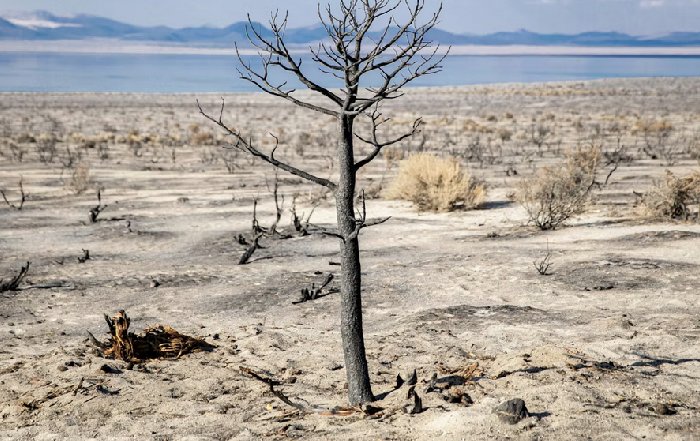
Forests provide another critical example of this feedback dynamic. Climate-driven wildfires, pest outbreaks, and drought-induced dieback in regions from western North America to the Mediterranean and parts of Asia and Africa are reducing forest carbon stocks and weakening their role as carbon sinks. When these ecosystems burn or degrade, they release large quantities of carbon dioxide, amplifying atmospheric greenhouse gas concentrations and further accelerating warming, which in turn increases fire risk and stress on remaining forests. On YouSaveOurWorld.com, these interconnected risks are explored in its climate change and global sections, where the emphasis is placed on understanding not just individual hazards but the systemic nature of climate-biodiversity feedbacks that can reshape entire industries and regions.
Nature as a Climate Asset and Strategic Investment Area
Amid these risks, a parallel narrative has gained strength by 2026: healthy ecosystems are among the most powerful and cost-effective tools available for stabilizing the climate and enhancing societal resilience, and thus they represent a strategic investment area rather than solely a conservation cost. Forests, mangroves, wetlands, peatlands, grasslands, and oceans act as vast carbon sinks, regulate local and regional climates, support water cycles, and provide natural defenses against extreme weather events. The concept of "nature-based solutions," championed by organizations such as the World Resources Institute (WRI), The Nature Conservancy, and the IUCN, has moved into mainstream policy and corporate strategy, and detailed analyses of these approaches can be found via WRI's climate and nature resources.
Mangrove forests and coastal wetlands, for example, sequester carbon at rates that often exceed those of many terrestrial forests while simultaneously protecting coastal communities and infrastructure from erosion and storm surges in countries as diverse as Bangladesh, Vietnam, and the United States. Peatlands in northern Europe, Canada, and parts of Southeast Asia store immense quantities of carbon accumulated over millennia; preserving and restoring these systems prevents massive emissions and maintains biodiversity-rich habitats. By maintaining ecological integrity and diversity, such systems are better able to absorb shocks, adapt to changing conditions, and continue delivering services that are fundamental to economic activity.
For businesses and investors, recognizing nature as a climate asset reframes restoration and conservation as elements of portfolio resilience and growth rather than as discretionary philanthropy. Financial institutions are increasingly exploring natural capital accounting, biodiversity credits, and nature-positive investment strategies, while corporations in sectors from agriculture to infrastructure are experimenting with landscape-level restoration, regenerative agriculture, and watershed protection initiatives. On YouSaveOurWorld.com, the convergence of innovation, technology, and ecosystem stewardship is highlighted as a frontier where data-driven tools, such as remote sensing and AI-based monitoring, can support credible and scalable nature-based solutions aligned with commercial objectives.
Regional Nuances in a Shared Global Challenge
Although climate change and biodiversity loss are universal challenges, their manifestations and the feasible responses vary significantly across regions, and effective leadership depends on understanding these nuances rather than relying on one-size-fits-all solutions. In Europe and North America, where industrialization has long shaped landscapes and economies, the focus is increasingly on accelerating decarbonization of energy systems, electrifying transport, improving building efficiency, and restoring degraded ecosystems through large-scale reforestation, wetland recovery, and urban greening. The European Green Deal and related initiatives, which can be explored through European Commission environment and climate pages, illustrate how climate and biodiversity objectives are being integrated into industrial policy, trade, and financial regulation.
In Asia, rapid urbanization and industrial growth intersect with some of the world's most biodiverse and climate-vulnerable regions, creating both acute risks and significant opportunities for leadership in green technology and finance. China's dual carbon goals, India's expanding renewable energy ambitions, Japan's and South Korea's focus on hydrogen and advanced materials, and Singapore's role as a green finance hub all demonstrate how climate and nature are being woven into national development strategies. At the same time, Southeast Asian nations confront difficult trade-offs between agricultural expansion, forest conservation, and social development. Institutions such as the Asian Development Bank (ADB) provide detailed regional analyses and project-level insights, which can be accessed through ADB's climate change and environment resources.
In Africa and South America, countries including Brazil, Colombia, Kenya, and South Africa hold globally significant stocks of biodiversity and carbon in tropical forests, savannas, and marine ecosystems, while also facing climate vulnerability, infrastructure gaps, and historical inequities in access to finance and technology. Debates around forest protection, carbon markets, and climate finance are particularly salient here, as the choices made will influence global climate trajectories and the future of nature-based solutions. The UN Framework Convention on Climate Change (UNFCCC) and the Global Environment Facility (GEF) have emphasized the need for fair and effective climate and biodiversity finance, and further information is available via the UNFCCC climate action portal.
For the multinational audience of YouSaveOurWorld.com, spanning the United States, United Kingdom, Germany, Canada, Australia, France, Italy, Spain, the Netherlands, Switzerland, China, Sweden, Norway, Singapore, Denmark, South Korea, Japan, Thailand, Finland, South Africa, Brazil, Malaysia, New Zealand, and many other countries, the lesson is that while the overarching imperatives of decarbonization and nature protection are shared, the pathways to implementation must be tailored to local regulatory frameworks, cultural contexts, and development priorities. This regional sensitivity is reflected across the platform's global and economy content, which consistently stresses the importance of context-specific strategies anchored in global scientific understanding.
From Compliance to Competitive Advantage: The Evolving Business Case
By 2026, the business case for integrating climate and biodiversity into corporate decision-making has moved beyond risk avoidance to encompass innovation, market differentiation, and access to capital, with investors, regulators, and customers increasingly demanding credible, science-based action. Frameworks developed by the Science Based Targets initiative (SBTi) and the Taskforce on Nature-related Financial Disclosures (TNFD) are guiding companies in setting and disclosing targets aligned with planetary boundaries, and detailed guidance is available through SBTi's target-setting resources. These frameworks are shaping expectations in capital markets, where environmental performance is now a material factor in credit ratings, equity valuations, and lending conditions.
For companies across sectors, the drivers of engagement include the need to secure resilient supply chains, anticipate evolving regulation, protect brand value, and meet the sustainability criteria embedded in procurement policies and investment mandates. Firms that decarbonize their operations and value chains, adopt circular resource models, and actively protect or restore ecosystems are better positioned to comply with emerging regulations in the European Union, the United Kingdom, North America, and parts of Asia, while also aligning with the preferences of customers and employees who increasingly prioritize environmental responsibility. Macroeconomic analyses by the Organisation for Economic Co-operation and Development (OECD), accessible via OECD's environment and climate change pages, reinforce the conclusion that green growth and environmental policy are central to long-term competitiveness and fiscal stability.
Within YouSaveOurWorld.com, the sustainable business and business sections emphasize that genuine leadership requires more than aspirational statements; it involves embedding environmental considerations into governance structures, executive incentives, risk management, product and service innovation, and stakeholder engagement. It also entails recognizing that systemic challenges such as climate change and biodiversity loss cannot be addressed by individual organizations acting alone, and that cross-sector collaboration, industry alliances, and public-private partnerships are essential to scaling solutions and shaping the regulatory and market context in which businesses operate.
Waste, Plastics, and the Circular Economy in a Climate-Nature Context
The way societies produce, consume, and dispose of materials remains a critical driver of both climate change and biodiversity loss, and by 2026 the limitations of linear "take-make-waste" models are widely acknowledged in policy and business discussions. Resource extraction, energy-intensive manufacturing, and poorly managed waste streams not only generate substantial greenhouse gas emissions but also degrade ecosystems and human health, with plastics standing out as a particularly visible and pervasive manifestation of this problem. Plastic production has continued to grow, and plastic waste now contaminates oceans, rivers, soils, and even the atmosphere, with microplastics detected from polar ice to deep-sea sediments.
Plastics are tightly linked to climate change because they are predominantly derived from fossil fuels and because their lifecycle-from extraction and processing to transport, use, and disposal-emits significant quantities of greenhouse gases. At the same time, plastic pollution harms biodiversity by entangling and poisoning marine and terrestrial species, smothering habitats, and interfering with ecosystem processes. The international community, under the auspices of the United Nations Environment Assembly (UNEA), has been negotiating a global plastics treaty aimed at addressing pollution across the entire plastic value chain, and further information on these developments can be found via UNEP's plastics and pollution pages.
For businesses and individuals who look to YouSaveOurWorld.com for practical guidance, addressing plastics and waste is an essential component of a credible climate- and nature-aligned strategy. The platform's resources on plastic recycling and waste management emphasize the importance of circular design, extended producer responsibility, improved recycling and reuse systems, and shifts in consumption patterns. These approaches reduce pressure on ecosystems, cut emissions, and often yield cost savings and innovation opportunities, particularly when combined with digital tools for tracking materials and optimizing resource use along complex supply chains.
Technology, Innovation, and Design for a Nature-Positive, Low-Carbon Economy
Technological advancement and design innovation are central to the transition toward a low-carbon, nature-positive economy, and by 2026 a growing suite of tools is available to organizations that are ready to act. Rapid cost declines and performance improvements in renewable energy technologies, energy storage, smart grids, and efficiency measures are reshaping the energy landscape, while digital technologies such as satellite remote sensing, AI-driven analytics, and distributed ledgers are improving the ability to monitor emissions, detect deforestation, verify supply chain claims, and support transparent reporting. The International Energy Agency (IEA) continues to provide authoritative analysis on these trends, which can be explored through IEA's clean energy technology insights.
Yet technology on its own is not sufficient; it must be guided by design principles and governance frameworks that respect ecological limits and social equity. Regenerative agriculture, which rebuilds soil health and biodiversity while maintaining or improving yields; biomimicry, which draws inspiration from natural systems to create efficient and resilient products and processes; low-impact urban planning that integrates nature-based solutions into cities; and circular product design that minimizes waste and maximizes reuse are all examples of innovation that align economic activity with environmental regeneration. Leading architecture, engineering, and design firms in Europe, North America, and Asia are increasingly embedding these principles into projects, thereby enhancing climate resilience and quality of life while reducing environmental footprints.
On YouSaveOurWorld.com, the interplay of innovation, technology, and design is a recurring theme, reflecting the platform's commitment to highlighting solutions that are both technically robust and ecologically grounded. For business leaders, the message is that building Experience, Expertise, Authoritativeness, and Trustworthiness in this space requires not only adopting new tools but also fostering cross-functional collaboration among engineers, sustainability experts, designers, financiers, and community stakeholders, and investing in skills and organizational cultures that can navigate the complexities of transition.
Lifestyle, Education, and Personal Well-Being in an Era of Transition
While regulatory frameworks and corporate strategies are crucial, the trajectory of climate and biodiversity outcomes is also shaped by lifestyle choices, cultural norms, and the quality of education that informs them, and this dimension is central to the mission of YouSaveOurWorld.com. Patterns of diet, mobility, housing, consumption, and leisure all contribute to emissions and ecosystem pressures, and shifts toward plant-rich diets, reduced food waste, low-carbon mobility options, energy-efficient homes, and more mindful consumption are increasingly visible in many societies, particularly among younger generations. Organizations such as the World Health Organization (WHO) have highlighted the co-benefits of such changes for health and resilience, and these linkages can be explored via WHO's climate and health resources.
Education, from early childhood through professional training, plays a pivotal role in equipping individuals and communities to understand climate and biodiversity challenges and to participate meaningfully in solutions. Schools that integrate environmental literacy into curricula, universities that offer advanced programs in sustainability and climate policy, and community initiatives that connect local ecological knowledge with global science all contribute to building the capacity needed for an orderly and just transition. YouSaveOurWorld.com reflects this emphasis through its focus on education, lifestyle, and personal well-being, showcasing how sustainable living can enhance quality of life, mental health, and social cohesion rather than being perceived as a constraint.
The psychological dimension of climate and biodiversity crises is increasingly acknowledged, with many people experiencing anxiety, grief, or a sense of helplessness when confronted with news of environmental degradation. Platforms that provide clear information, practical guidance, and examples of positive change can help counter these feelings by reinforcing a sense of agency and shared purpose. In this context, YouSaveOurWorld.com aims to be more than an informational resource; it strives to be a trusted companion in the transition, helping its audience connect global trends to personal choices in ways that are constructive, realistic, and aligned with long-term well-being.
From Understanding to Action: The Role of YouSaveOurWorld.com in 2026
By 2026, it is evident that explaining climate change and biodiversity loss, while essential, is not sufficient on its own; the defining challenge is to convert understanding into sustained, scalable action that aligns environmental integrity with economic viability and social justice. For governments, businesses, educators, and citizens, this requires viewing climate and nature not as separate policy domains or corporate functions but as integrated determinants of long-term success, stability, and legitimacy. It also requires recognizing that the decisive years of this decade will shape the conditions under which future generations live, work, and thrive.
YouSaveOurWorld.com positions itself at the intersection of science, business, and everyday life, curating insights and resources that connect global evidence with concrete decisions in boardrooms, classrooms, homes, and communities. By weaving together themes of sustainable living, sustainable business, climate change, environmental awareness, and global collaboration, the platform seeks to build and demonstrate Experience, Expertise, Authoritativeness, and Trustworthiness in a domain where clarity and credibility are indispensable. Its role is not to replace the work of scientific bodies, policymakers, or businesses, but to translate their insights into accessible, actionable knowledge tailored to a global, professionally engaged audience.
As the world moves through the remainder of the 2020s, the choices made by public and private leaders, supported by informed citizens and communities, will determine whether climate change and biodiversity loss continue to accelerate or begin to stabilize and reverse. The risks are profound, but so too are the opportunities for innovation, cooperation, and leadership. By engaging rigorously with the best available science, embracing forward-looking business and investment models, harnessing technology and design for regeneration rather than depletion, and aligning lifestyles and educational systems with planetary boundaries, societies across all continents can chart a path toward a climate-resilient, nature-positive future. YouSaveOurWorld.com exists to support that journey, providing a trusted space where complex global challenges are translated into informed, practical steps that enable its audience not only to understand the crisis, but to participate meaningfully in solving it.
