
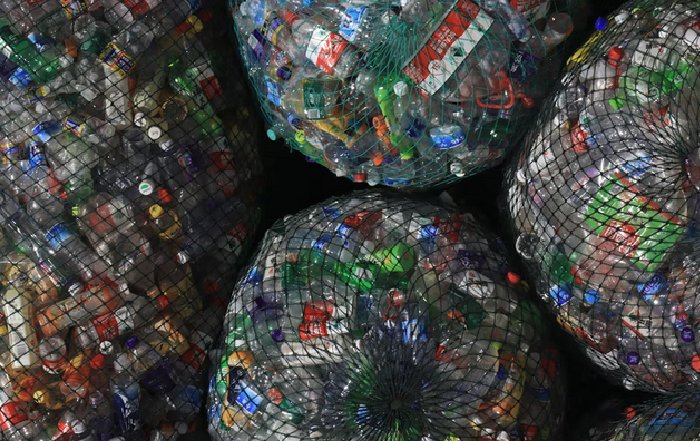
How Plastic Recycling Powers the Circular Economy in 2026
A New Phase for Plastics and Circularity
By 2026, the conversation about plastics has shifted from aspirational targets to concrete implementation, with governments, businesses, and communities moving from pilot projects to system-wide transformation. Across regions as varied as North America, the European Union, China, India, and rapidly developing economies in Africa and Latin America, the consensus is increasingly clear: the linear "take-make-waste" model is incompatible with climate goals, biodiversity protection, and long-term economic resilience, and must be replaced by a circular economy in which materials are kept in productive use for as long as possible. Within this shift, plastic recycling has emerged as a critical test of whether societies can translate circular principles into practice, because plastics are deeply embedded in healthcare, mobility, food systems, digital infrastructure, and consumer lifestyles.
For YouSaveOurWorld.com, which is dedicated to connecting sustainable living, responsible business, and effective public policy, plastic recycling is not viewed as a narrow waste-management issue but as an entry point into rethinking how products are designed, how value chains are governed, and how prosperity is measured. Readers exploring themes such as sustainable living, climate action, and circular business models increasingly recognize that plastics sit at the intersection of environmental risk and innovation opportunity. As cities, companies, and national governments strengthen their commitments to circularity, the way plastic recycling is organized, regulated, and financed is becoming a benchmark of environmental stewardship and strategic foresight.
Why Plastics Sit at the Heart of the Circular Transition
The global plastics system has historically been built on a linear paradigm in which fossil fuels are extracted, converted into polymers, manufactured into products that are often used only briefly, and then discarded through landfilling, incineration, or uncontrolled dumping. The OECD has documented how global plastic production has continued to climb, yet only a modest share of this material is recovered through formal recycling systems, with the remainder contributing to escalating waste volumes, marine pollution, and greenhouse gas emissions. This system is resource-intensive, carbon-heavy, and increasingly misaligned with national net-zero strategies and corporate science-based targets.
The circular economy, as articulated by organizations such as the Ellen MacArthur Foundation, proposes a fundamentally different model in which materials are kept at their highest value through reduction, reuse, repair, remanufacturing, and recycling. Plastics are central to this vision because they are durable, lightweight, and technically recyclable, yet are frequently deployed in short-lived applications such as packaging and single-use products. For the audience of YouSaveOurWorld.com, this is not a theoretical debate; it is reflected in daily lifestyle choices, procurement decisions in businesses, policy frameworks in city halls and parliaments, and educational content in schools and universities. How societies manage plastics is becoming a visible indicator of how seriously they take the broader transition to circular and low-carbon economies.
Plastic Recycling as a Strategic Enabler of Circular Value
In a mature circular economy, recycling is not a remedial afterthought but a deliberately designed component of material flows. Plastic recycling supports this vision by turning discarded products into secondary raw materials that displace virgin fossil-based feedstocks, thereby reducing pressure on oil and gas extraction, lowering lifecycle emissions, and shrinking the volume of waste requiring disposal. When integrated with upstream strategies such as eco-design, extended producer responsibility, and new service-based business models, recycling becomes a structural tool for reshaping value chains rather than a marginal activity at the end of the pipe.
The United Nations Environment Programme (UNEP) has emphasized in its global plastics assessments that improved collection, sorting, and recycling infrastructure could prevent millions of tonnes of plastic from entering oceans and landfills each year, while generating employment and attracting green investment. Readers who wish to explore broader resource-efficiency strategies can consult analyses on the UNEP website. High-performing systems in countries such as Germany, the Netherlands, and South Korea demonstrate how clear regulation, well-designed incentives, and active citizen participation can keep plastics circulating at high value. At the same time, inclusive recycling models that integrate informal waste pickers and local entrepreneurs in cities across India, Kenya, Brazil, and other emerging economies are showing that circular solutions can also advance social equity and income security, a priority that resonates strongly with the global perspective presented on YouSaveOurWorld.com.
Mechanical and Chemical Recycling: A Portfolio of Pathways
By 2026, it has become evident that no single recycling technology can manage the diversity of plastic products and applications; instead, a portfolio approach is required. Mechanical recycling, which involves collecting, sorting, cleaning, and reprocessing plastic waste into flakes or pellets for new products, remains the backbone of most circular plastics strategies. When applied to relatively clean and homogeneous waste streams such as PET beverage bottles or HDPE containers, mechanical recycling is typically less energy-intensive and more cost-effective than alternative methods, and it can deliver high-quality recyclate suitable for demanding uses, including food-contact applications, when supported by robust standards and traceability.
Chemical or advanced recycling technologies, including pyrolysis, gasification, depolymerization, and solvent-based purification, are being developed to address mixed, contaminated, or complex plastic streams that are difficult to treat mechanically. Institutions such as the U.S. Department of Energy and leading European research organizations are exploring how to improve the efficiency, environmental performance, and scalability of these processes. In some cases, chemical recycling can return plastics to monomers or feedstocks that are nearly indistinguishable from virgin materials, enabling closed-loop applications for polymers that have historically been downcycled or discarded. However, these technologies raise important questions about energy use, emissions, transparency, and the risk of locking in continued high levels of plastic production.
For the business leaders, policymakers, and sustainability professionals who rely on YouSaveOurWorld.com as a trusted resource, understanding the strengths and limitations of mechanical and chemical recycling is essential. A credible circular strategy recognizes that recycling must be combined with upstream prevention, smarter design, and responsible consumption, and that not all recycling pathways deliver equal environmental and social value. This systems perspective is woven throughout the site's coverage of innovation, technology, and waste management.
Designing Plastics for Circularity from the Outset
Plastic recycling can only reach its potential if products and packaging are designed with end-of-life in mind. Design for recycling, or circular design, involves choosing polymers, additives, colors, labels, and closures that enable efficient collection, sorting, and reprocessing, while avoiding combinations that inhibit recyclability or degrade material quality. Standards bodies such as CEN and industry coalitions including the Consumer Goods Forum have developed design guidelines that encourage companies to simplify packaging structures, eliminate problematic materials such as certain pigments and multilayer laminates, and harmonize formats to support large-scale recovery.
Practical examples illustrate how upstream choices determine downstream outcomes. Clear PET bottles with compatible closures and easily removable labels can be recycled multiple times into high-quality bottles, whereas opaque or multi-material formats often end up in lower-value applications or are not recycled at all. Similar dynamics apply in sectors such as textiles, electronics, and automotive components, where material selection, modularity, and ease of disassembly have a profound impact on recyclability and the economics of recovery. Readers interested in how design thinking can drive circular outcomes can explore dedicated content on design and sustainable business at YouSaveOurWorld.com, where design is treated as a strategic lever for reducing waste, conserving resources, and enhancing brand resilience.
As regulations tighten around recyclability and recycled content, companies that embed circular design principles into product development are better positioned to comply with emerging standards, secure access to secondary materials, and meet the expectations of increasingly discerning consumers.
Policy, Regulation, and International Frameworks
Public policy remains a decisive factor in determining whether plastic recycling can genuinely support a circular economy. The European Union's Circular Economy Action Plan and related legislation on packaging, waste, and product design are setting progressively higher targets for recyclability and recycled content, while also restricting certain single-use plastics. The European Environment Agency provides analysis on resource efficiency and waste prevention that informs national strategies and helps benchmark progress. In North America, federal, state, and provincial initiatives are advancing extended producer responsibility, recycled-content mandates, and bans or fees on specific single-use items, creating a more predictable framework for investment in infrastructure and innovation.
At the global level, negotiations convened by the United Nations are moving toward a legally binding agreement on plastic pollution, which is expected to influence national legislation across both high-income and emerging economies. Readers can follow developments in multilateral environmental agreements through the UN Environment Assembly and related platforms. Countries such as Japan, South Korea, and Australia are updating long-standing waste-management systems to integrate circular economy targets and climate commitments, while several African and Latin American nations are introducing producer-responsibility schemes and restrictions on problematic plastics, often in partnership with civil society and development agencies.
For the community around YouSaveOurWorld.com, understanding these regulatory trends is vital, because policy frameworks shape market signals, direct public and private capital, and define the boundaries within which business models and technologies evolve. The site's coverage of business, economy, and climate change highlights how coherent policy can accelerate circular innovation, while fragmented or weak regulation can perpetuate linear practices and environmental harm.
Corporate Strategy, Market Signals, and New Business Models
By 2026, leading companies across consumer goods, retail, mobility, and technology sectors increasingly view plastic recycling and circularity as core strategic issues rather than peripheral sustainability projects. Large multinationals and regional champions are setting time-bound targets for recycled content, packaging redesign, and waste reduction, often validated through external frameworks such as the Science Based Targets initiative and aligned with the World Business Council for Sustainable Development or the World Economic Forum. Investors, rating agencies, and customers are scrutinizing these commitments, pushing companies to move beyond symbolic gestures and demonstrate measurable progress.
New business models are emerging that reduce dependence on single-use plastics altogether, including refill and return systems for household products, packaging-as-a-service for e-commerce and logistics, and product-as-a-service offerings in electronics and appliances that retain ownership of materials and design for multiple life cycles. Digital tools enable granular tracking of material flows, certification of recycled content, and more efficient matching of supply and demand in secondary materials markets, thereby addressing long-standing concerns about quality, consistency, and regulatory compliance.
For executives and entrepreneurs seeking to align profitability with environmental responsibility, YouSaveOurWorld.com provides integrated insights on sustainable business, circular design, and stakeholder engagement. The platform emphasizes that plastic recycling is most powerful when embedded in holistic strategies that address procurement, product development, logistics, customer experience, and end-of-life management in a coherent way, rather than treating waste as an isolated operational issue.
Technology and Innovation Enabling Higher-Value Recovery
Technological innovation continues to expand what is possible in plastic recycling, enabling higher recovery rates, improved material quality, and more efficient systems. Advanced optical sorting technologies using near-infrared spectroscopy, hyperspectral imaging, and machine learning are being deployed in material recovery facilities across Europe, North America, and Asia, allowing more accurate separation of polymers and colors at industrial scale. Robotics and AI-driven quality-control systems reduce contamination and labor-intensive manual sorting, improving both the economics and the occupational safety of recycling operations.
On the research front, institutions such as the National Renewable Energy Laboratory (NREL) and leading universities in Europe and Asia are developing catalysts and processes that can depolymerize or upcycle plastics at lower temperatures and with reduced emissions, opening pathways to higher-value applications for currently underutilized waste streams. At the same time, digital platforms and blockchain-based systems are being piloted to trace plastics from production through use, collection, and recycling, providing the transparency needed to build trust in recycled content claims and to support regulatory compliance.
Technology is also playing a critical role in citizen engagement and local governance. Smart bins, sensor-based collection systems, and mobile applications that guide correct sorting behavior are helping municipalities and communities improve capture rates and reduce contamination. This intersection of technology, innovation, and environmental awareness is a recurring theme on YouSaveOurWorld.com, which emphasizes that digital tools can enhance both the back-end efficiency of recycling systems and the front-end behavior of households and businesses.
Plastic Recycling, Climate Change, and Economic Resilience
The connection between plastics and climate change is now widely acknowledged in scientific and policy circles. Plastics are predominantly derived from fossil fuels, and emissions occur at every stage of their lifecycle, from extraction and refining to production, transportation, and disposal. The Intergovernmental Panel on Climate Change (IPCC) highlights in its assessment reports that material efficiency, product lifetime extension, and recycling are indispensable components of mitigation pathways consistent with the Paris Agreement. By substituting recycled plastics for virgin materials, recycling can significantly reduce energy use and associated emissions, particularly for polymers such as PET, HDPE, and PP.
When integrated with renewable energy, low-carbon logistics, and climate-conscious design, plastic recycling becomes a key pillar of national and corporate decarbonization strategies. For resource-constrained economies, circular plastics systems also offer opportunities to reduce import dependency, create local jobs, and stimulate innovation in manufacturing and services. These dynamics are closely linked to broader debates about how the global economy can evolve to respect planetary boundaries while supporting inclusive growth, a theme that YouSaveOurWorld.com explores through its coverage of climate change, waste, and circular business models.
While plastic recycling alone cannot deliver climate neutrality, it is an essential component of a diversified mitigation portfolio that includes renewable energy, energy efficiency, sustainable agriculture, and nature-based solutions. Ignoring its potential would mean leaving cost-effective emissions reductions and resource-efficiency gains untapped.
Education, Behavior, and Personal Well-Being
No matter how advanced technologies and regulations become, the success of plastic recycling in a circular economy ultimately depends on human behavior, values, and knowledge. Education systems at all levels are beginning to integrate circular economy concepts into curricula, helping learners understand material flows, systems thinking, and the implications of consumption choices. UNESCO has been a prominent advocate of education for sustainable development, emphasizing competencies such as critical thinking, collaboration, and future literacy that are essential for navigating complex environmental challenges.
Public awareness campaigns, community-led initiatives, and social enterprises are playing an important role in normalizing practices such as waste separation, reduced plastic use, and support for products containing recycled content. These behaviors not only improve recycling outcomes but also contribute to a sense of agency and connection to broader societal goals, with positive implications for personal well-being. In many cities, participatory programs that combine education, infrastructure improvements, and social innovation have demonstrated that citizens are willing to engage actively in circular systems when they see tangible benefits and receive consistent, trustworthy information.
For YouSaveOurWorld.com, education is both a subject and a mission. By providing accessible yet rigorous content on plastic recycling, circular design, and sustainable lifestyles, the platform seeks to bridge the gap between expert knowledge and everyday decision-making. Its resources on education, sustainable living, and lifestyle aim to empower readers to act as informed consumers, professionals, and citizens who can influence systems from the bottom up as well as from the top down.
Confronting Challenges and Trade-Offs with Systemic Thinking
Despite genuine progress, plastic recycling in 2026 still faces significant challenges that must be addressed candidly. Contamination of collected waste, insufficient or uneven collection infrastructure, volatility in secondary materials markets, and the continued prevalence of difficult-to-recycle products all limit recycling rates and economic viability in many regions. In some cases, exports of plastic waste from high-income to lower-income countries, when poorly regulated, have created environmental and social burdens, underlining the need for strong governance, transparency, and local capacity-building.
There is also active debate about the environmental performance and appropriate role of certain recycling technologies. Some forms of chemical recycling are energy-intensive or primarily produce fuels rather than new materials, which can undermine circularity and climate objectives. Organizations such as Greenpeace and Zero Waste Europe have raised critical questions about overreliance on incineration and specific advanced recycling methods, urging policymakers and businesses to prioritize reduction, reuse, and high-quality recycling over approaches that perpetuate linear consumption patterns. Readers seeking broader perspectives on waste hierarchy and zero-waste strategies can find additional analysis through the Zero Waste Europe network.
For a platform like YouSaveOurWorld.com, which is committed to Experience, Expertise, Authoritativeness, and Trustworthiness, it is essential to present both the opportunities and the limitations of plastic recycling. The site encourages its audience to adopt systemic thinking, using tools such as life-cycle assessment and scenario analysis to understand trade-offs and avoid problem-shifting. By engaging with diverse viewpoints, evidence-based research, and real-world case studies, the community can contribute to the design of circular strategies that are environmentally robust, socially just, and economically sound.
The Role of YouSaveOurWorld.com in a Circular Plastics Future
As circular economy concepts move from the margins into mainstream policy and business practice, there is a growing need for platforms that curate knowledge, connect stakeholders, and translate complex issues into actionable insights. YouSaveOurWorld.com positions itself as such a platform, offering a coherent view of how plastic recycling intersects with waste management, technology, innovation, global governance, and everyday lifestyles. By linking high-level trends with practical guidance, the site supports businesses, policymakers, educators, and citizens who are working to embed circular principles into their decisions.
The integrated structure of YouSaveOurWorld.com-spanning sustainable living, business, climate change, education, and personal well-being-reflects the reality that plastic recycling is not an isolated technical fix but part of a wider redefinition of prosperity and progress. By continually updating its content to reflect the latest developments up to and beyond 2026, the platform aims to remain a trusted reference point for those navigating the evolving landscape of circular plastics.
Looking Forward: Plastic Recycling as Catalyst, Not Cure-All
As the world advances through 2026, it is increasingly evident that plastic recycling, while indispensable, cannot by itself resolve the plastics crisis or deliver a fully circular economy. However, it is equally clear that without effective, well-governed recycling systems, the broader transition to circularity will falter. The central challenge for the coming years is to integrate plastic recycling with upstream redesign, responsible production, inclusive policy frameworks, and informed consumer behavior, so that plastics remain valuable resources rather than persistent pollutants.
Governments will continue to refine regulatory frameworks and negotiate international agreements, businesses will experiment with new models of circular value creation, and communities will test innovative approaches to sharing, repair, and reuse. Throughout this process, plastic recycling will evolve, supported by advances in technology, data, and collaborative governance. For the global audience of YouSaveOurWorld.com, staying informed about these developments is not simply an intellectual exercise; it is a practical necessity for shaping resilient organizations, sustainable lifestyles, and thriving communities in every region.
In this evolving context, one message stands out: when designed, regulated, and managed thoughtfully, plastic recycling can be a powerful catalyst for the circular economy, transforming waste into value, easing pressure on natural systems, and contributing to a more just and sustainable world.
