
How Plastic Waste Is Reshaping Marine Ecosystems - Risks, Responsibilities, and Routes to Recovery
Plastic Pollution as a Measure of Global Leadership in 2026
Plastic waste has become one of the most visible and revealing tests of how seriously societies, governments, and corporations confront their shared responsibility to the planet. For the global business community, and for the mission of YouSaveOurWorld.com, the debate is no longer about whether plastic pollution harms marine ecosystems, but about the depth of its disruption to ecological stability, economic resilience, social equity, and human health, and about which practical, scalable measures can still be implemented in time to reverse or at least slow the damage. Plastic has shifted from being seen as a cheap, infinitely convenient material to being recognized as a systemic risk that runs through value chains, consumer lifestyles, regulatory systems, and the very oceans that regulate climate, support fisheries, and underpin global trade.
Organizations such as the UN Environment Programme (UNEP) estimate that global plastic production has continued to rise, surpassing 400 million tonnes annually, with millions of tonnes entering rivers, coasts, and open oceans every year. Those wishing to understand the evolving global picture can review UNEP's overview of marine litter and land-based pollution and learn more about marine litter and plastics governance. For YouSaveOurWorld.com, which is built around actionable guidance on sustainable living, plastic recycling, and sustainable business, marine plastic is both a stark warning and a strategic opportunity: a warning about the cumulative consequences of linear "take-make-waste" models, and an opportunity to accelerate innovation, redesign, and leadership across industries, cities, and communities that are ready to move toward circularity.
How Plastic Still Reaches the Ocean in 2026
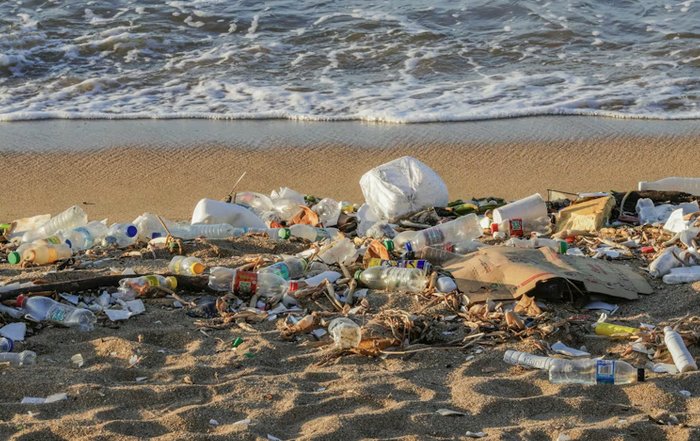
Despite years of pledges, voluntary commitments, and pilot projects, the majority of plastic entering the ocean in 2026 still originates on land, moving through a chain of preventable failures. Mismanaged waste in rapidly growing cities, inadequate collection systems in peri-urban and rural areas, illegal dumping, and stormwater systems that channel litter into rivers all contribute to the persistent leakage. Major river systems in Asia, Africa, and Latin America remain critical pathways for plastic transport, while coastal tourism hubs and densely populated deltas add further pressure. Analyses by organizations such as The Ocean Cleanup continue to show that a relatively small subset of heavily polluted rivers accounts for a disproportionately large share of ocean-bound plastic, and those interested can explore current data on river plastic leakage to understand where interventions can be most effective.
At each step of this journey, there are clear decision points where businesses, municipalities, and individuals can change outcomes. Product design choices determine whether packaging is reusable, easily recyclable, or practically destined for landfill or leakage. Municipal budgets and governance determine whether waste is collected regularly, sorted, and processed, or burned in open dumps that spill into waterways. Regulatory enforcement determines whether illegal dumping is tolerated or penalized. On YouSaveOurWorld.com, marine plastic is framed within the broader context of waste and innovation, emphasizing that the presence of plastic in the ocean is not a random accident of littering but the visible symptom of system design choices made in boardrooms, design studios, and public agencies.
Ecological Impacts on Marine Species and Food Webs
Once plastic enters the marine environment, it interacts with life at every scale, from microscopic plankton to whales. Large plastic items-such as abandoned fishing gear, packaging films, ropes, and bags-cause immediate and often fatal harm. Entanglement in "ghost gear" remains one of the most distressing and well-documented impacts, limiting movement, inflicting injuries, and causing drowning or starvation in marine mammals, turtles, and seabirds. In the North Pacific, North Atlantic, Mediterranean, and increasingly in polar seas, field research coordinated by agencies such as NOAA continues to document how entanglement and ingestion affect population dynamics of key species; readers can explore NOAA's Marine Debris Program to see how these impacts are monitored and addressed through policy and mitigation projects.
Ingestion of plastic fragments is even more pervasive and insidious. Seabirds mistake floating fragments for fish or squid, turtles confuse translucent bags with jellyfish, and filter-feeding organisms such as mussels and baleen whales ingest microplastics suspended throughout the water column. Over time, these plastics can accumulate in digestive systems, reducing feeding efficiency, causing internal injuries or blockages, or creating a false sensation of fullness that leads to malnutrition and death. Institutions such as Woods Hole Oceanographic Institution have reported plastic fragments and fibers in habitats ranging from shallow coastal shelves to the deepest ocean trenches; those interested can learn more about microplastics in the ocean and how they move through marine environments.
The cascading consequences for food webs are complex and increasingly concerning. When zooplankton, shellfish, and small fish ingest microplastics, they can transfer particles and associated chemicals up the trophic ladder as they are eaten by larger predators. This can alter feeding behavior, growth rates, reproduction, and survival across multiple species, ultimately affecting the productivity of fisheries and the resilience of marine ecosystems. In many coastal regions, these ecological disruptions intersect with livelihoods, as communities that depend on small-scale fisheries face both declining catches and concerns about the quality and safety of seafood. YouSaveOurWorld.com seeks to translate this expanding body of science into accessible knowledge that strengthens environmental awareness and informs decisions by business leaders, consumers, and policymakers.
Microplastics, Nanoplastics, and Chemical Exposure Pathways
Beneath the visible litter on beaches and floating patches lies a more diffuse and complex threat: microplastics and emerging concerns around nanoplastics. Microplastics, typically defined as particles smaller than 5 millimeters, are generated through the fragmentation of larger plastic items and also originate directly from synthetic textile fibers, tire wear particles, industrial pellets, and legacy microbeads in personal care products. As sunlight, waves, and biological activity break down items, they generate a persistent reservoir of particles that are almost impossible to remove at scale. The European Environment Agency (EEA) has highlighted the ubiquity of microplastics in European seas and coastal zones; readers can learn more about microplastic sources and impacts in Europe and see how regulators are responding with restrictions and standards.
Plastics themselves are complex chemical products, containing additives such as plasticizers, flame retardants, colorants, and stabilizers, while also acting as carriers for persistent organic pollutants (POPs) and heavy metals that adhere to their surfaces in the marine environment. When organisms ingest microplastics, they are therefore exposed to both the physical presence of particles and a mixture of chemicals that may disrupt endocrine systems, impair reproduction, or weaken immune responses. The World Health Organization (WHO) has continued to assess the implications of microplastics in drinking water and the broader environment; those seeking an overview can review WHO's perspective on microplastics in drinking water to understand current evidence and knowledge gaps.
For a platform like YouSaveOurWorld.com, which connects environmental issues with technology, education, and personal well-being, this evolving science reinforces the importance of upstream prevention and safer design rather than relying solely on end-of-pipe solutions. As research on nanoplastics advances and detection methods improve, it becomes even clearer that once plastics fragment and disperse, they are effectively impossible to fully retrieve, which strengthens the case for rethinking materials and systems long before products reach consumers.
Economic and Social Consequences Across Regions
Marine plastic pollution is no longer understood purely as an environmental issue; it has become a significant economic and social challenge that affects both high-income and low-income countries. Coastal tourism destinations in the United States, United Kingdom, Spain, Thailand, Greece, and Australia face recurring clean-up costs and reputational risks as littered beaches and polluted nearshore waters deter visitors and damage local brands. Commercial fisheries in Japan, Norway, South Korea, Canada, and Iceland must cope with gear damage, lost catch, and the long-term risk that degraded ecosystems will not sustain current harvest levels. Analyses by the Organisation for Economic Co-operation and Development (OECD) continue to quantify these burdens, and interested readers can explore OECD work on plastics and the economy to see how plastic pollution erodes economic value.
In many coastal regions of Africa, South America, and South-East Asia, communities are doubly exposed: they often lack robust waste infrastructure, while also depending directly on healthy marine ecosystems for food security and income. Informal waste pickers and recyclers provide an essential service by capturing recyclable materials, yet they frequently operate without formal recognition, social protection, or access to safe technologies. International initiatives coordinated by institutions such as the World Bank emphasize integrated solid waste management, circular economy investments, and inclusive employment models; those wishing to understand this agenda can learn more about global solid waste and marine litter initiatives.
For the global audience of YouSaveOurWorld.com, which spans business, economy, and global perspectives, these economic and social dimensions are crucial. They illustrate that marine plastic pollution is not a distant environmental externality but a core business risk, a development challenge, and a test of corporate and governmental responsibility. Investors increasingly factor plastic-related risks into valuations, insurers consider the resilience of coastal assets, and consumers weigh brand credibility based on visible commitments to reducing plastic footprints.
Business in Transition: From Linear Plastics to Circular Strategies
By 2026, the private sector is subject to stronger scrutiny, more stringent regulation, and intensifying stakeholder expectations regarding its role in the plastic crisis. Producers of packaging, consumer goods, textiles, and industrial materials have historically driven the proliferation of single-use plastics, while retailers and logistics providers have designed systems optimized for convenience rather than reuse or recovery. Analyses by the Ellen MacArthur Foundation show that without systemic redesign, the volume of plastic entering the ocean each year could continue to rise; readers can learn more about circular economy approaches to plastics and examine pathways for achieving significant reductions in virgin plastic use.
Yet the same corporations that contributed to the problem are uniquely positioned to drive solutions at scale. By redesigning products and packaging for durability, reuse, and recyclability, investing in refill and return systems, adopting extended producer responsibility (EPR) schemes, and collaborating across entire value chains, businesses can dramatically reduce the volume of plastic that becomes waste. In Germany, France, Netherlands, and Sweden, leading retailers and consumer brands are piloting deposit-return schemes, reusable container platforms, and advanced sorting technologies that improve recovery rates and reduce contamination. On YouSaveOurWorld.com, the theme of sustainable business is presented as a pragmatic roadmap that helps organizations integrate plastic reduction, circularity, and marine protection into core strategy rather than treating them as peripheral corporate social responsibility projects.
Small and medium-sized enterprises and start-ups in innovation hubs such as Singapore, Denmark, Switzerland, and New Zealand continue to pioneer alternative materials, digital tracking tools, and community-based collection models. These innovators often move faster than large corporations, demonstrating new business models that decouple growth from waste and influence industry norms. As investors increasingly look for credible environmental, social, and governance (ESG) performance, and as regulators tighten obligations, plastic stewardship is becoming a central element of corporate governance, risk management, and brand differentiation.
Policy, Regulation, and Emerging Global Governance
Regulatory and policy frameworks have advanced significantly by 2026, reshaping how plastic is produced, traded, and managed. The European Union has expanded its directives on single-use plastics, packaging waste, and recycled content, combining bans on certain items with EPR obligations and eco-design requirements. The European Commission provides detailed information on these measures and their implementation, and those interested can learn more about EU plastics policy and regulation to understand how legislative tools are being used to reduce marine litter.
At the global level, negotiations under the United Nations for an international legally binding instrument on plastic pollution have become one of the most closely watched environmental diplomacy processes of this decade. The emerging "global plastics treaty" is expected to address the full life cycle of plastics, including production limits, product design standards, chemical safety, waste trade rules, and financial support for infrastructure in developing countries. Stakeholders can follow developments via UNEP, which hosts updates on the negotiation process and related initiatives; readers may explore UNEP's plastics treaty information to stay abreast of this evolving governance framework.
For YouSaveOurWorld.com, these policy shifts are highly relevant to readers in executive, operational, and advisory roles. They influence investment decisions, supply chain design, compliance obligations, and innovation priorities. By translating complex regulatory language into clear insights and connecting it with practical examples, the platform helps decision-makers anticipate change rather than simply react to it, reinforcing that marine plastic reduction is increasingly a matter of legal compliance and competitive positioning, not only voluntary leadership.
Innovation, Technology, and Design for a Plastic-Smart Future
Innovation in materials science, digital technologies, and design is central to any credible strategy for preventing plastic from reaching marine ecosystems and recovering value from materials already in circulation. Advances in mechanical and chemical recycling, AI-enabled sorting, and digital product passports are beginning to improve the quality and traceability of recycled plastics, enabling higher-value applications and reducing leakage. Research institutions and technology firms in Japan, China, United States, and South Korea are experimenting with satellite imagery, machine learning, and sensor networks to map plastic flows on land and at sea. The World Economic Forum regularly highlights such developments, and those interested can learn more about innovation in tackling plastic pollution to see how technology is reshaping the landscape.
Design choices, however, remain the critical upstream determinant of whether products become waste or stay in productive loops. Eliminating unnecessary packaging, standardizing materials, choosing mono-material designs that are easier to recycle, and designing for disassembly and reuse can substantially reduce the risk of marine leakage. At YouSaveOurWorld.com, the intersection of design and innovation is treated as a strategic discipline, showing how aesthetic, functional, and environmental objectives can be aligned in a coherent product development process.
At the same time, the promise of new materials such as bioplastics and compostable polymers must be evaluated with caution. Without appropriate collection and processing infrastructure, these materials can behave much like conventional plastics in the environment, or they can shift environmental burdens to land use and emissions. Rigorous lifecycle assessments, transparent communication, and adherence to credible standards are therefore essential to ensure that innovation genuinely reduces overall harm rather than simply changing where it occurs. YouSaveOurWorld.com emphasizes this evidence-based approach, helping readers distinguish between meaningful solutions and superficial "green" claims.
Individual and Community Action: From Awareness to Long-Term Lifestyle Change
While systemic changes in production, policy, and infrastructure are indispensable, individual and community actions continue to play a vital role in reducing the flow of plastic into marine ecosystems and in building the social mandate for more ambitious reforms. Everyday decisions about consumption, product choice, and waste separation, when aggregated across millions of households, influence demand patterns and send clear signals to businesses and policymakers. Educational initiatives from organizations such as the National Geographic Society have been instrumental in raising public understanding and engagement; those seeking accessible narratives and visual storytelling can explore National Geographic's coverage of plastic and oceans.
On YouSaveOurWorld.com, the connection between lifestyle, sustainable living, and ocean health is made explicit and practical. Guidance on reducing single-use plastics at home and at work, improving household recycling, choosing products designed for reuse, and supporting brands that prioritize circular models helps translate concern into daily habits. Community beach clean-ups, river restoration projects, and citizen science initiatives in cities from London and Berlin to Cape Town, and Bangkok demonstrate that local action not only improves environmental quality but also builds social cohesion and political momentum for broader change.
Importantly, these changes are increasingly framed not as deprivation but as pathways to enhanced personal well-being, healthier communities, and a stronger sense of agency. Many individuals report that aligning consumption patterns with environmental values reduces cognitive dissonance and stress, while strengthening purpose and connection. In this way, lifestyle shifts that reduce marine plastic pollution can also contribute to mental and emotional resilience in an era of overlapping global crises.
Building Trust Through Transparency, Collaboration, and Evidence
Effective responses to marine plastic pollution depend on trust: citizens must trust that their efforts to sort and reduce waste are meaningful; businesses must trust that investments in circular models will be recognized by markets and regulators; policymakers must trust that data and science provide a robust basis for action. Transparency is therefore a cornerstone of progress, from corporate reporting on plastic footprints and reduction targets to open-access scientific publications and independent monitoring of policy outcomes.
Organizations such as the World Wide Fund for Nature (WWF) have played a leading role in convening cross-sector coalitions, developing science-based targets for plastic reduction, and supporting collaborative initiatives that span governments, companies, and civil society. Readers can learn more about WWF's work on plastics and oceans to see how multi-stakeholder platforms are structured and what commitments they seek to secure. For YouSaveOurWorld.com, which positions itself as a trusted knowledge hub, curating high-quality, evidence-based resources and connecting readers to credible external organizations is part of its core responsibility. By focusing on Experience, Expertise, Authoritativeness, and Trustworthiness, the platform aims to bridge the gap between technical research and practical decision-making in boardrooms, classrooms, and households.
A Shared Agenda for the Remainder of the Decade
By 2026, the presence of plastic in marine ecosystems is visible from the Arctic to the Southern Ocean, from the coasts of Canada and Italy to the archipelagos of Indonesia and New Zealand. It is found on remote beaches, in deep-sea sediments, in the stomachs of seabirds and turtles, and increasingly in the seafood and salt consumed by people worldwide. At the same time, the last few years have also seen unprecedented mobilization: scientific understanding has deepened; policy instruments have strengthened; corporate commitments have expanded; and citizen engagement has grown more sophisticated. The trajectory toward 2030 is not fixed; it will be shaped by the willingness of leaders in United States, United Kingdom, Germany, China, Brazil, South Africa, Malaysia, and beyond to treat marine plastic pollution as a defining test of their commitment to a sustainable and resilient future.
For the readers of YouSaveOurWorld.com, the challenge is to integrate this awareness into coherent action that spans climate change, sustainable business, technology, economy, and day-to-day lifestyle choices. By understanding how plastic waste reshapes marine ecosystems, recognizing the economic and social stakes, and embracing innovation, collaboration, and accountability, it is still possible to shift from reactive clean-up efforts to proactive prevention and ecological regeneration. The oceans, which stabilize the climate, sustain biodiversity, and underpin global prosperity, cannot be treated as an endless sink for discarded materials.
As this decisive decade unfolds, the essential question for businesses, policymakers, educators, and citizens is whether they will allow marine plastic pollution to remain a chronic, normalized feature of the global economy, or whether they will use the tools now available-policy, design, finance, technology, and collective will-to phase out unnecessary plastics, recover value from what remains, and restore the health of marine ecosystems. YouSaveOurWorld.com is dedicated to supporting those who choose the latter path, offering integrated insight across sustainable living, plastic recycling, environmental awareness, and business, and inviting its audience to turn knowledge into leadership that protects the oceans for generations to come.
