
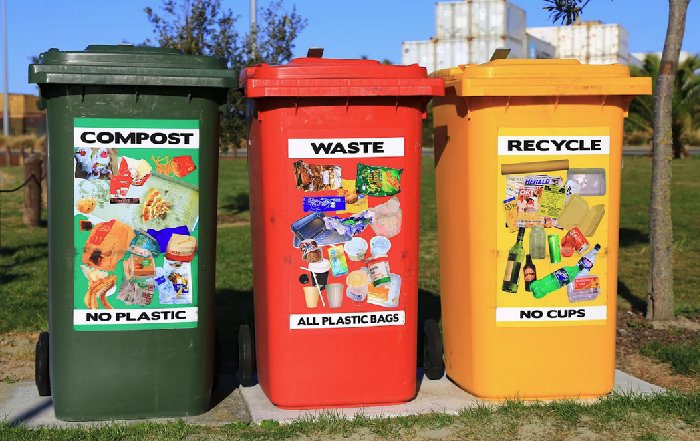
How Recycling Systems Differ Around the World
A Global Lens on Local Recycling Realities
Recycling continues to serve as a revealing indicator of how societies manage resources, confront environmental risks, and translate sustainability commitments into everyday practice, yet despite decades of policy development and technological progress, global recycling remains uneven, fragmented, and in many places fragile. Some countries are integrating recycling into sophisticated circular economy strategies, reducing landfill dependence and designing products for recovery, while others still struggle to secure basic waste collection, rely heavily on informal sectors, or depend on exporting low-value materials. For the community gathered around YouSaveOurWorld.com, which focuses on sustainable living, climate resilience, and responsible business, understanding these differences has become critical for making informed decisions as consumers, professionals, investors, and policymakers.
Recycling systems are shaped by a combination of regulation, market structures, culture, technology, and public awareness, but they are also increasingly influenced by climate policy, resource security concerns, and the science of planetary boundaries. Global institutions such as the United Nations Environment Programme (UNEP) and the OECD now emphasize that recycling cannot be treated as a narrow waste-management function; it must be embedded within broader circular economy and decarbonization strategies that reduce material throughput and emissions across value chains. Readers who follow developments in climate change policy and science will recognize that waste and materials management are now seen as material contributors to national climate targets and corporate net-zero strategies, rather than peripheral environmental issues.
For YouSaveOurWorld.com, recycling is a practical entry point into a much wider conversation about how societies design products, organize supply chains, and allocate responsibility between producers, governments, and citizens. Examining how systems differ across regions-from highly disciplined models in parts of Europe and East Asia to rapidly evolving and often informal arrangements in Africa, South America, and South Asia-helps readers situate their own organizations, communities, and lifestyles within a global transition that is accelerating but still far from complete.
Core Pillars of Modern Recycling Systems
Although recycling systems around the world look very different on the surface, most of them rest on three interdependent pillars: policy frameworks, physical and digital infrastructure, and human behavior. When these elements are aligned, recycling rates tend to be higher, contamination lower, and economic value more easily captured; when one or more pillars is weak, systems often compensate through exports, informal labor, or environmentally damaging disposal.
Policy frameworks typically include extended producer responsibility (EPR) schemes, which make producers financially or operationally responsible for post-consumer products and packaging; deposit return systems for beverage containers; landfill taxes and incineration levies; and, increasingly, bans or restrictions on problematic single-use plastics. The European Commission has been particularly influential in codifying these approaches, especially through the EU Circular Economy Action Plan and the Waste Framework Directive, which set binding targets for recycling, landfill diversion, and packaging design across member states. Businesses and policymakers interested in these evolving rules can review the latest directives and implementation guidance on the European Commission's environment portal, which has become a reference point for many non-EU jurisdictions as well.
Infrastructure encompasses collection systems, transfer stations, material recovery facilities, reprocessing plants, and the logistics and data systems that connect them. Countries such as Germany, Japan, and South Korea have invested in advanced optical sorting, robotics, and automated quality control, while also standardizing packaging formats to facilitate high-quality material recovery. In contrast, many low- and middle-income countries still rely on a combination of municipal collection, open dumping or uncontrolled landfills, and extensive informal sectors. The World Bank continues to document these realities in its "What a Waste" series, accessible via the solid waste management pages, which highlight both the scale of the challenge and the economic opportunities in better resource recovery.
Behavioral dimensions-public awareness, social norms, trust in institutions, and convenience-often determine whether technically sound systems actually function as intended. Even the most sophisticated infrastructure cannot compensate for poor source separation, misinformation, or widespread skepticism about where recyclables end up. This is where environmental education, transparent communication, and community engagement become decisive. Readers who wish to strengthen environmental literacy in their organizations or neighborhoods can explore environmental awareness resources on YouSaveOurWorld.com, which connect behavioral insights with practical communication strategies.
Europe in 2026: Consolidating Circular Ambitions amid Uneven Progress
Europe still serves as a reference point for ambitious recycling and circular economy policies, yet the continent remains a mosaic of high performers, steady improvers, and laggards. Countries such as Germany, Austria, Belgium, and the Netherlands maintain some of the world's highest municipal recycling rates, supported by mature EPR systems, well-established deposit return schemes, and stringent landfill restrictions that make disposal economically unattractive. The German "Green Dot" model, developed by Der Grüne Punkt, continues to influence producer responsibility schemes globally and is often cited in analytical work by the OECD on EPR design, available through its circular economy portal.
However, Europe's apparent leadership masks significant internal disparities. In the United Kingdom, post-Brexit reforms have pushed toward more harmonized packaging EPR and nationwide deposit return systems, yet implementation has faced delays, cost debates, and coordination challenges between devolved administrations. Local authorities still vary widely in collection systems and communication quality, which affects contamination rates and public trust. For companies operating across the UK and continental Europe, aligning packaging design and data reporting with diverging but increasingly stringent rules has become a core element of corporate sustainability strategy, an issue explored in more depth in the sustainable business section of YouSaveOurWorld.com.
Southern and Eastern European countries, including Italy, Spain, Portugal, Poland, and several newer EU member states, have improved recycling performance over the last decade but continue to face structural challenges such as underdeveloped rural infrastructure, illegal dumping, and lower levels of source separation. Italy illustrates the importance of regional governance and civic engagement: northern regions such as Veneto and Trentino achieve very high separate collection rates through door-to-door systems and strong municipal leadership, while other regions still struggle with basic waste governance. Comparative data and case studies are regularly updated by the European Environment Agency, whose waste and resource efficiency pages provide a nuanced picture of progress and persistent gaps.
Nordic and some Western European countries, including Sweden, Denmark, Finland, Norway, and Netherlands, combine high recycling targets with energy-from-waste infrastructure and sophisticated deposit systems. Return rates for beverage containers frequently exceed 90 percent, but the continued reliance on incineration has sparked debates about "waste lock-in," where energy plants depend on steady waste flows and may inadvertently discourage stronger waste prevention and reuse measures. These tensions mirror a broader shift on YouSaveOurWorld.com, where recycling is framed not as an end goal but as one component of a hierarchy that prioritizes reduction, reuse, and circular waste management strategies.
North America: Policy Shifts, Market Pressures, and Local Innovation
In North America, recycling systems remain characterized by fragmentation and market dependence, yet the last few years have brought notable policy shifts and experimentation. In the United States, there is still no federal mandate for municipal recycling, and programs are largely defined at state and local levels, resulting in wide variation in accepted materials, collection methods, and funding models. The legacy of the China "National Sword" policy, which sharply curtailed imports of mixed recyclables in 2018, continues to shape discussions; that disruption exposed the vulnerability of export-dependent systems and forced many cities to renegotiate contracts, upgrade sorting facilities, or, in some cases, suspend curbside programs.
The US Environmental Protection Agency (EPA) has since advanced a National Recycling Strategy and complementary initiatives under its Sustainable Materials Management program, seeking to improve data, standardize measurement, and encourage investment in domestic processing capacity. Details of these efforts can be found on the EPA sustainable materials management pages, which increasingly emphasize circularity and lifecycle impacts rather than simple tonnage metrics. Nonetheless, progress remains uneven, as municipal budgets, political priorities, and public expectations differ sharply between regions.
In Canada, provincial leadership has driven more systemic reforms, particularly through full EPR programs for packaging and printed paper. Provinces such as British Columbia and Quebec are often cited as examples of producer-funded systems that stabilize financing, improve material quality, and create clearer incentives for design-for-recyclability. At the federal level, the Government of Canada has moved forward with a zero plastic waste agenda, including bans on certain single-use plastics, recycled content requirements for specific products, and support for innovation in recycling and reuse technologies. Readers can review these policies on the Environment and Climate Change Canada website, which outlines timelines and expectations for businesses.
For North American companies and communities, the key message is that engagement with local systems is essential but no longer sufficient; organizations must anticipate a trend toward more harmonized, producer-focused frameworks and integrate circular design, material transparency, and reverse logistics into their core business strategies. YouSaveOurWorld.com has observed that leading firms increasingly treat recycling performance as a proxy for supply chain resilience, brand trust, and preparedness for stricter climate and resource regulations.
East Asia: Discipline, Technology, and Systemic Integration
East Asia continues to demonstrate how regulatory clarity, cultural norms, and technological investment can combine to produce high-performance recycling systems, even in densely populated and resource-constrained contexts. Japan remains a global reference point for detailed municipal sorting rules and strong social expectations around compliance. Residents in many Japanese municipalities separate waste into numerous categories, often with specific collection days, volume-based fees, and penalties for non-compliance. National legislation, including the Containers and Packaging Recycling Law and the Home Appliance Recycling Law, embeds shared responsibility between manufacturers, retailers, and consumers. The Ministry of the Environment, Japan provides extensive documentation on these frameworks on its official site, which illustrates how legal obligations and social norms reinforce each other.
South Korea has refined a combination of pay-as-you-throw systems, mandatory sorting, and dedicated food waste collection that has attracted global attention. Households purchase standardized bags for residual waste, while food waste is collected separately and processed into animal feed, biogas, or compost, significantly reducing landfill pressures. These measures are complemented by robust EPR schemes for packaging and electronics. Singapore, constrained by limited land and reliant on waste-to-energy incineration, has adopted an integrated approach under its Zero Waste Masterplan, investing in advanced sorting, producer responsibility, and public campaigns that encourage reduction and reuse. Detailed descriptions of these initiatives are available via the National Environment Agency, which presents Singapore's strategy as a testbed for high-density, high-income cities.
China, as the world's largest manufacturing hub and materials consumer, plays a pivotal role in global recycling dynamics. Since the National Sword policy, Chinese authorities have accelerated domestic reforms, including mandatory sorting pilots in major cities, expansion of "circular economy industrial parks," and stricter controls on waste imports. Institutions such as the National Development and Reform Commission (NDRC) and the Ministry of Ecology and Environment have issued guidance that integrates recycling targets into industrial, climate, and pollution control strategies. International organizations, including the World Economic Forum, have analyzed the implications of these shifts for global supply chains and materials markets, and readers can explore this analysis through the WEF's circular economy and value chain hub.
For the audience of YouSaveOurWorld.com, East Asia underscores that high recycling rates are achievable when legislation, infrastructure, and culture are aligned, yet it also illustrates the importance of designing systems that remain resilient to market volatility, demographic change, and evolving material streams. These experiences inform our coverage of innovation and technology, where East Asian examples often feature prominently.
Emerging Economies: Informal Systems, Inclusion, and Rapid Transition
Across Africa, South America, and parts of South and Southeast Asia, recycling systems in 2026 remain strongly shaped by the interaction between formal municipal services and extensive informal sectors. In countries such as Brazil, Colombia, South Africa, India, Indonesia, and Kenya, millions of informal waste pickers and small-scale traders recover metals, paper, and higher-value plastics from streets, dumps, and landfills, often working under hazardous conditions but providing essential environmental and economic services.
In Brazil, the National Solid Waste Policy has encouraged municipalities to recognize and integrate waste picker cooperatives (catadores) into formal systems, providing contracts, infrastructure support, and social protections. This inclusive approach has attracted international attention and is documented by the Brazilian Ministry of the Environment and civil society organizations, while the Global Alliance of Waste Pickers maintains an information portal that highlights similar efforts in Latin America, Africa, and Asia. South Africa has also begun to formalize relationships with informal recyclers, particularly in major cities, recognizing their contribution to national recycling targets and attempting to move away from landfill dependence.
In Southeast Asia, countries such as Malaysia, Thailand, Vietnam, and Indonesia have faced intense scrutiny as destinations for exported plastic waste, especially after China's import restrictions. In response, many have tightened controls on waste imports, cracked down on illegal processing facilities, and begun to invest in domestic recycling and alternative materials. Reports by UNEP and partner organizations on plastic pollution and transboundary waste, available on the UNEP plastics and waste pages, underline both the environmental damage caused by poorly regulated trade and the potential for more equitable, locally grounded solutions.
For emerging economies, the challenge is not only to expand collection and processing capacity but to do so in ways that recognize existing livelihoods, improve working conditions, and avoid replicating the resource-intensive, disposable consumption patterns seen in many high-income countries. This requires integrating recycling into broader strategies for poverty reduction, public health, and climate resilience. YouSaveOurWorld.com increasingly highlights these intersections in its global perspectives, emphasizing that equitable recycling systems can support social stability, local enterprise development, and long-term environmental security.
Plastic Recycling in 2026: Persistent Weakness, Growing Governance
Across all regions, plastic remains the most problematic segment of the waste stream, and despite new policies and technologies, global plastic recycling rates in 2026 remain low relative to production volumes. The diversity of polymers, additives, and formats, combined with contamination and low market value for many items, continues to undermine the economics of conventional mechanical recycling. Organizations such as the Ellen MacArthur Foundation have documented these systemic barriers and proposed design and policy interventions through initiatives like the New Plastics Economy, which can be explored on their plastics overview pages.
Countries and cities are experimenting with a wide spectrum of responses, including mandatory design-for-recyclability standards, recycled content requirements, deposit systems for plastic bottles, bans or levies on single-use items, and support for advanced or chemical recycling technologies that break polymers down to monomers or fuels. These approaches are controversial in some cases, particularly where technologies are energy-intensive, unproven at scale, or risk diverting attention from upstream reduction and reuse. On YouSaveOurWorld.com, the plastic recycling section helps readers distinguish between robust circular solutions and strategies that may simply shift environmental burdens or enable continued overproduction of disposable plastics.
At the global level, negotiations toward a legally binding international plastics treaty under the auspices of the United Nations have advanced significantly since 2022, with discussions now focusing on controls over virgin polymer production, design standards, extended producer responsibility, and transboundary waste movements. Scientific input from bodies such as the International Resource Panel and coordination with trade and climate frameworks suggest that plastics governance is moving from a patchwork of voluntary initiatives to a more coherent regulatory regime. For businesses in packaging, consumer goods, automotive, electronics, and textiles, this shift implies rising expectations for transparency, traceability, and performance, and it reinforces the need to embed circular design into core product development and procurement strategies.
Technology and Innovation: Digital, Data-Driven, and Design-Led
Technological innovation is reshaping recycling systems at multiple levels, yet its impact depends heavily on governance and market conditions. Material recovery facilities in Europe, North America, and parts of Asia increasingly deploy AI-enabled optical sorters, robotics, and real-time quality monitoring, allowing them to handle more complex streams and reduce contamination. Digital product passports, QR codes, and blockchain-based tracking are being piloted to provide information on material composition, repairability, and recyclability, enhancing both consumer awareness and industrial material flows.
At the same time, startups and established firms are testing new business models that reduce reliance on traditional recycling by prioritizing reuse, repair, and remanufacturing. Refill systems, packaging-as-a-service models, and take-back schemes for electronics and textiles are gaining traction, particularly in urban markets with supportive policy frameworks. The World Economic Forum has highlighted these innovations in its work on the Fourth Industrial Revolution and circularity, with case studies and analysis available via its technology and circular economy hub. These developments resonate strongly with the coverage on technology and innovation at YouSaveOurWorld.com, where digital tools are seen as enablers of systemic change rather than ends in themselves.
However, technology cannot compensate for misaligned incentives or weak governance. Advanced chemical recycling facilities, for example, may offer potential pathways for dealing with mixed or contaminated plastics, but they also raise questions about lifecycle emissions, competition with mechanical recycling, and the risk of locking in high plastic production. Similarly, smart bins and sensor-equipped collection fleets can improve efficiency and data quality, yet they require capital investment, data protection safeguards, and public trust. The editorial approach at YouSaveOurWorld.com is to situate technological solutions within holistic strategies that consider environmental impacts, social equity, and long-term resilience rather than short-term throughput gains.
Culture, Lifestyle, Education, and Well-Being
Recycling practices are deeply influenced by cultural norms, lifestyle expectations, and perceptions of personal and community well-being. In countries such as Sweden, Denmark, and the Netherlands, high participation in recycling and waste reduction is underpinned by strong environmental values, trust in public institutions, and visible feedback loops that show citizens their efforts matter. In other contexts, confusion about rules, inconsistent messaging, or scandals related to exported waste can erode public confidence and reduce participation, even when infrastructure is available.
For individuals, recycling can either feel like a meaningful expression of environmental responsibility or a frustrating, symbolic gesture that appears disconnected from larger systemic issues. The difference often lies in clear guidance, intuitive system design, and integration with broader lifestyle choices such as mindful consumption, product durability, and community engagement. On YouSaveOurWorld.com, the lifestyle section and resources on personal well-being emphasize that sustainable habits, including thoughtful recycling, can enhance rather than diminish quality of life by fostering a sense of agency, connection, and alignment with personal values.
Education systems play a long-term role in shaping how future professionals and citizens understand waste and materials. Schools and universities that incorporate circular economy principles, practical recycling knowledge, and design thinking into curricula help normalize the idea that waste is largely a design and systems failure, not an inevitable by-product of progress. Readers can explore examples of such initiatives and pedagogical tools in the education section of YouSaveOurWorld.com, which highlights how formal and informal learning environments can accelerate cultural shifts toward circularity.
Economic and Design Imperatives for Business
From a business standpoint, recycling has moved from peripheral compliance to a strategic concern that touches brand reputation, risk management, and long-term competitiveness. Companies in United States, United Kingdom, Germany, Canada, Japan, Australia, and across Europe and Asia face rising expectations from regulators, investors, and customers to design products and packaging that are recyclable, reusable, or made with verified recycled content. ESG frameworks and sustainability reporting standards now scrutinize waste generation, material efficiency, and circularity practices as core indicators of corporate performance. The Global Reporting Initiative (GRI), for instance, has integrated waste and material topics into its standards, which companies can review on the GRI standards portal.
Design decisions made at the earliest stages of product development largely determine whether materials can be economically recovered at end of life. Complex composites, multi-layer packaging, and problematic additives often render items unrecyclable, regardless of downstream infrastructure. Conversely, mono-material packaging, modular design, and standardized components can dramatically improve recyclability and support secondary material markets. The design-focused content on YouSaveOurWorld.com explores how aesthetics, functionality, and circular principles can be reconciled, offering guidance for designers, engineers, and product managers who are under growing pressure to deliver solutions that perform environmentally as well as commercially.
At a macroeconomic level, the shift from a linear to a circular economy has implications for jobs, investment flows, and industrial competitiveness. The International Labour Organization (ILO) and other bodies have estimated that circular economy strategies, including recycling, repair, and remanufacturing, can generate millions of new jobs globally, particularly in local service sectors and regional value chains. These dynamics are discussed in more detail on the ILO's green jobs and circular economy pages, which align closely with the economy-focused analysis provided by YouSaveOurWorld.com. For policymakers and business leaders, understanding how recycling and circular design influence competitiveness, trade, and labor markets has become essential to crafting strategies that support both environmental and economic resilience.
Beyond Recycling: Toward Truly Circular Systems
By 2026, it has become clear that while recycling is indispensable, it is not sufficient on its own to keep economies within planetary boundaries or to achieve climate and biodiversity goals. High-performing systems in Germany, Japan, South Korea, the Nordic countries, and selected cities worldwide demonstrate what is possible when policy, infrastructure, and behavior align, yet persistent plastic pollution, ongoing export controversies, and rising global waste volumes reveal the limits of treating recycling as a technical fix for fundamentally linear production and consumption patterns.
For the global community connected through YouSaveOurWorld.com, the task ahead is to situate recycling within a broader shift toward regenerative, low-carbon, and socially inclusive economic models. This involves advocating for policies that prioritize waste prevention, reuse, and repair; supporting businesses that integrate circular design and transparent supply chains; and cultivating personal and collective habits that reduce waste at the source. It also requires acknowledging the diversity of local contexts, from technologically advanced hubs in Singapore and South Korea to rapidly urbanizing regions in Africa and South America, and tailoring strategies to local capacities, cultures, and priorities.
Recycling systems, in their variety and imperfections, reflect deeper societal choices about value, responsibility, and the relationship between human well-being and ecological limits. By engaging critically with these systems, learning from best practices, and supporting innovation in policy, technology, culture, and design, readers of YouSaveOurWorld.com can help steer the transition from fragmented waste management toward coherent circular ecosystems. In doing so, they contribute not only to cleaner cities and reduced pollution, but to a global economy that respects finite resources, protects climate stability, and enhances quality of life for current and future generations.
