
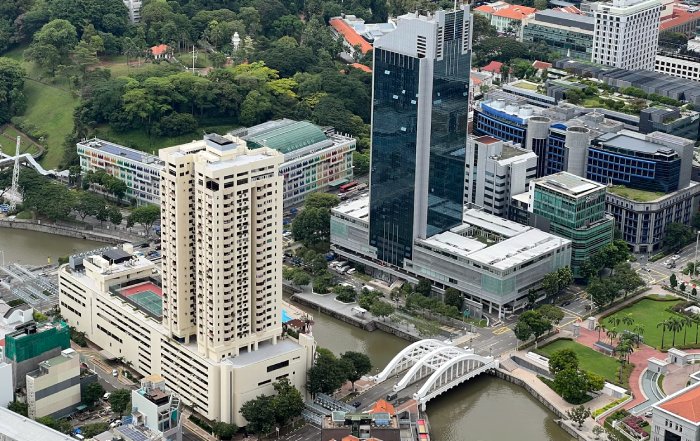
How Singapore Is Building a Model for a Zero-Waste Nation
A Small Island with Global Ambition but Focus on Support for Locals
As climate risks intensify and resource constraints become a defining challenge for governments and corporations alike, Singapore stands out as a compelling real-world laboratory for what a zero-waste future could look like in practice. With limited land, no natural resources to speak of, and a dense urban population, the city-state has long treated waste not as an inconvenient by-product of growth but as a strategic issue that touches economic resilience, public health, social cohesion, and long-term competitiveness. For YouSaveOurWorld.com, which is dedicated to advancing practical knowledge on sustainable living, climate action, and responsible business, Singapore's experience offers a rich, evidence-based narrative that can guide decision-makers, sustainability professionals, and engaged citizens seeking to accelerate their own zero-waste transitions.
Singapore's journey is not simply about recycling more or improving waste collection efficiency; it is about redesigning an entire urban system so that materials circulate longer, value is captured repeatedly, and environmental externalities are systematically reduced. This systems perspective aligns closely with the emerging global consensus around the circular economy, as articulated by organizations such as the Ellen MacArthur Foundation, which has helped mainstream the idea that economic prosperity can be decoupled from linear resource consumption. Readers who wish to explore the conceptual foundations of circularity can learn more through resources on circular economy principles, while using Singapore as a concrete case study of how those principles are being translated into policy, infrastructure, and everyday behavior.
From Land Scarcity to Strategic Waste Management
Singapore's geography has always shaped its approach to waste. With a land area of roughly 734 square kilometers and a population exceeding 5.9 million, landfill is not a scalable option, and this constraint has forced policymakers to innovate earlier and more aggressively than in many larger countries. The creation of the offshore Semakau Landfill in the 1990s, a carefully engineered site built from reclaimed land and lined to prevent leachate contamination, was initially hailed as a technical triumph; however, the realization that even this facility could reach capacity by the mid-2030s triggered a deeper strategic rethink. The National Environment Agency (NEA) has since made clear, through public data and policy communication, that extending Semakau's lifespan is non-negotiable, and this has become a powerful driver for upstream waste reduction, higher recycling rates, and new forms of resource recovery. Readers can examine official waste statistics and policy directions via the NEA's waste and recycling data.
Singapore's Zero Waste Masterplan, launched in 2019 and reinforced in subsequent policy updates, set out a national ambition to reduce the amount of waste sent to Semakau by 30 percent by 2030. This target is not simply aspirational; it is underpinned by a granular set of measures that address food waste, electronic waste, and packaging waste, as well as construction and demolition materials. The plan is aligned with broader climate objectives under the Singapore Green Plan 2030, which links waste reduction to emissions mitigation, resource security, and green jobs. For readers of YouSaveOurWorld.com interested in the intersection of climate change and resource management, Singapore's integrated planning approach illustrates how environmental policy can be positioned as an enabler of long-term economic competitiveness rather than a constraint on growth.
Policy Architecture: Extended Producer Responsibility and Regulatory Clarity
One of the most distinctive features of Singapore's zero-waste strategy is the systematic use of extended producer responsibility (EPR) schemes, which shift part of the financial and operational responsibility for post-consumer waste from municipalities to producers and importers. The EPR framework for electronic waste, implemented under the Resource Sustainability Act, requires producers to finance the collection and treatment of end-of-life electrical and electronic equipment, while accredited operators manage nationwide take-back systems. This approach not only increases recovery rates of valuable materials such as rare earths and precious metals but also creates incentives for manufacturers and retailers to design products that are easier to repair, refurbish, and recycle. Those seeking a comparative view of EPR systems across jurisdictions can consult analyses from the Organisation for Economic Co-operation and Development (OECD), which offers detailed overviews of extended producer responsibility policies.
Packaging waste is another priority area. Singapore has begun with mandatory packaging reporting for large producers and importers, requiring them to submit data on the types and quantities of packaging they place on the market and to develop 3R (reduce, reuse, recycle) plans. This data-driven approach lays the foundation for a future EPR scheme for packaging, which is expected to drive innovation in materials, logistics, and retail formats. Companies operating in global markets can benchmark these measures against regulatory developments in the European Union, where the European Commission has advanced ambitious circular economy directives; interested readers may wish to explore the EU's Circular Economy Action Plan to understand how similar principles are being applied at a continental scale.
For businesses exploring how to future-proof their operations and supply chains, the regulatory clarity and long-term signaling provided by Singapore's EPR and waste management policies are instructive. On YouSaveOurWorld.com, the section on sustainable business offers complementary perspectives on how firms can align their strategies with emerging environmental regulations, not only in Singapore but across key global markets, by integrating waste reduction, product stewardship, and circular design into core business models.
Plastic Recycling and the Challenge of Materials Complexity
Plastic waste presents a uniquely complex challenge for any aspiring zero-waste nation, given the diversity of polymers, additives, and composite materials that make conventional recycling technically and economically difficult. Singapore's plastic recycling rate has historically lagged behind its performance in other waste streams, in part because of contamination in household waste and the predominance of single-use packaging. Recognizing this, the government, research institutions, and private sector players are investing in both mechanical and advanced recycling technologies, including chemical recycling processes that can break plastics down to their molecular components for reprocessing into new materials. For readers interested in the science and economics of plastics, the United Nations Environment Programme (UNEP) provides accessible background on global plastic pollution and policy responses.
At the same time, Singapore is acutely aware that technology alone cannot solve the plastics problem. Behavioral change, product redesign, and new consumption models are equally important. Initiatives encouraging reusable containers, deposit-return schemes for beverage packaging, and plastic-free retail pilots are increasingly visible across the city, supported by civil society organizations, forward-looking businesses, and educational campaigns. The World Economic Forum (WEF) has highlighted similar approaches in its analysis of the global plastics value chain, emphasizing that a combination of innovation, policy, and consumer engagement is required to shift away from single-use paradigms; readers can explore these insights through WEF's work on rethinking plastics and packaging.
For visitors to YouSaveOurWorld.com who are specifically focused on plastics, the dedicated page on plastic recycling provides practical guidance and context that resonate strongly with Singapore's experience, from sorting practices and contamination issues to the role of design and regulation in making plastics more recyclable by default.
Technology and Innovation as Enablers of Circularity
Singapore's reputation as a technology and innovation hub is central to its zero-waste ambitions. The city-state has cultivated a dense ecosystem of research institutions, startups, and corporate innovation centers that are experimenting with new materials, digital tools, and process innovations aimed at reducing waste and improving resource productivity. The Agency for Science, Technology and Research (A*STAR), for example, collaborates with industry partners on projects ranging from bio-based packaging materials to advanced sorting systems that use artificial intelligence and robotics to improve the quality and efficiency of recycling. Those interested in the broader landscape of clean-tech and circular economy innovation can consult global analyses from organizations such as the International Energy Agency (IEA), which publishes detailed reports on clean energy and resource efficiency technologies.
Digitalization plays a critical role in optimizing waste systems. Smart bins equipped with sensors, route-optimized collection vehicles, and data platforms that track material flows in near real time are helping municipalities and waste management companies reduce costs, cut emissions, and improve service quality. At the building level, property managers are using analytics to monitor waste generation patterns, identify problem areas, and design targeted interventions that encourage residents and tenants to sort waste correctly and reduce overall volumes. This fusion of environmental management and digital infrastructure aligns with Singapore's broader Smart Nation vision and demonstrates how technology can be deployed not only for convenience but also for environmental stewardship. Readers of YouSaveOurWorld.com can explore how technology is reshaping sustainability practices globally, from smart cities to data-driven climate solutions.
Innovation is not limited to hardware and software; business models are evolving too. Sharing platforms, product-as-a-service offerings, and repair-centered enterprises are gaining traction, often supported by impact investors and sustainability-focused accelerators. The Global Reporting Initiative (GRI) and similar bodies have noted that such models can materially influence corporate sustainability performance, particularly when combined with robust non-financial reporting. Professionals seeking to understand how innovation intersects with governance and disclosure can benefit from exploring GRI's resources on corporate sustainability reporting, while YouSaveOurWorld.com's section on innovation provides complementary insights into how creative thinking and experimentation drive environmental progress.
Urban Design, Infrastructure, and the Built Environment
A zero-waste nation cannot be built without rethinking the physical fabric of cities, and Singapore has integrated waste considerations into urban planning and building design in ways that are increasingly studied by planners worldwide. High-density public housing estates, which accommodate the majority of Singapore's population, incorporate centralized chutes, recycling points, and in some cases pneumatic waste conveyance systems that transport refuse underground to collection centers, reducing odor, pests, and truck traffic. New developments are encouraged, and in some cases required, to include on-site recycling facilities, food waste digesters, and design features that make it easier for residents and tenants to separate waste streams. The World Green Building Council offers a global perspective on how building design influences resource use and waste generation, and its resources on green building practices complement Singapore's practical examples.
Construction and demolition waste, a major component of total waste in many countries, has been systematically addressed through requirements for the use of recycled aggregates, off-site prefabrication, and design for disassembly. The Building and Construction Authority (BCA) of Singapore has developed standards and certification schemes that reward resource-efficient construction practices, aligning with international frameworks such as LEED and BREEAM. For professionals in architecture, engineering, and urban planning, this integration of waste considerations into codes and incentives illustrates how regulatory levers can shape industry norms over time. On YouSaveOurWorld.com, the design section expands on how design thinking-whether applied to products, services, or spaces-can dramatically influence the volume and type of waste generated across a product's lifecycle.
Education, Culture, and Environmental Awareness
Policies and infrastructure alone cannot deliver a zero-waste nation; social norms and cultural values must evolve in parallel. Singapore has invested heavily in environmental education, from primary school curricula that introduce concepts of recycling and resource conservation to public campaigns that use clear visuals and consistent messaging to guide household behavior. The Ministry of Education collaborates with the NEA and civil society groups to organize learning journeys, school projects, and community initiatives that bring abstract sustainability concepts into everyday life. Internationally, organizations such as UNESCO have emphasized the importance of education for sustainable development, providing frameworks and guidance that can be adapted to local contexts; readers interested in this dimension can explore UNESCO's work on education for sustainable development.
Non-governmental organizations and community groups also play a crucial role in shaping environmental awareness and behavior. Repair cafés, zero-waste lifestyle communities, and volunteer-led clean-up initiatives create spaces where residents can learn practical skills, share resources, and internalize the idea that waste is a design flaw rather than an inevitability. These grassroots efforts complement formal policies and signal to businesses that consumer expectations around sustainability are evolving. On YouSaveOurWorld.com, the section on environmental awareness explores how storytelling, community engagement, and education can shift mindsets and support more ambitious policy and corporate action.
Business Leadership and Economic Opportunity
For a business-oriented audience, one of the most compelling aspects of Singapore's zero-waste journey is the way it reframes waste reduction as a driver of innovation, competitiveness, and resilience rather than a compliance burden. Companies across sectors-from real estate developers and hospitality groups to manufacturers and retailers-are recognizing that resource efficiency and circularity can reduce costs, open new revenue streams, and strengthen brand value. The World Bank has highlighted the macroeconomic benefits of improved resource efficiency, estimating significant GDP gains and job creation potential from circular economy policies; its analysis of resource efficiency and the circular economy provides a useful backdrop for understanding the economic logic behind Singapore's strategy.
In Singapore, green finance instruments, sustainability-linked loans, and government grants are increasingly aligned with zero-waste objectives, enabling companies to invest in new technologies, redesign supply chains, and train employees in circular practices. Global frameworks such as the Task Force on Climate-related Financial Disclosures (TCFD) and the emerging International Sustainability Standards Board (ISSB) standards are prompting investors and lenders to scrutinize how companies manage environmental risks and opportunities, including those related to waste and resource use. For business leaders navigating this evolving landscape, YouSaveOurWorld.com offers a dedicated business section that examines how environmental performance intersects with strategy, governance, and financial outcomes, and how zero-waste principles can be integrated into corporate decision-making.
At the macro level, Singapore's efforts illustrate how a small, trade-dependent economy can position itself as a hub for sustainability solutions, exporting expertise in waste management, environmental engineering, and circular business models to the wider region. This aligns with broader global trends tracked by institutions such as the International Monetary Fund (IMF), which has underscored the importance of green structural transformation for long-term economic stability; interested readers can explore the IMF's perspectives on climate and the global economy. For visitors to YouSaveOurWorld.com interested in macro trends, the economy section provides additional context on how sustainability and economic policy are converging worldwide.
Lifestyle, Personal Well-Being, and Everyday Choices
Ultimately, a zero-waste nation is experienced not in policy documents but in daily routines: how people shop, eat, travel, and dispose of the products they use. In Singapore, the zero-waste agenda is increasingly visible in the proliferation of bulk stores, refill stations, reusable cup schemes, and food rescue initiatives that redirect surplus food from businesses to charities and communities in need. These developments reflect a growing recognition that sustainable lifestyles can enhance, rather than diminish, personal well-being by fostering healthier diets, more intentional consumption, and stronger community ties. Research from institutions such as the Lancet Commission on planetary health has emphasized that environmental sustainability and human health are deeply interconnected; readers can explore this relationship through the Commission's work on planetary health and well-being.
For individuals seeking to translate the lessons of Singapore's zero-waste journey into personal action, YouSaveOurWorld.com offers practical guidance across several thematic areas. The lifestyle section explores how everyday choices-from clothing and mobility to diet and home management-can significantly reduce waste and environmental impact. The waste page dives deeper into practical strategies for waste reduction, while the personal well-being section highlights the psychological and physical benefits of aligning one's lifestyle with environmental values, including reduced stress, greater sense of purpose, and improved community connection.
Singapore in the Global Context
Singapore's experience is highly specific to its geography, governance model, and economic structure, yet the principles underpinning its zero-waste strategy are widely applicable. The emphasis on integrated policy, data-driven decision-making, technological innovation, and public engagement mirrors best practices emerging from diverse contexts worldwide, from Nordic countries with advanced recycling systems to rapidly urbanizing cities in Asia and Africa seeking to leapfrog directly to more sustainable models. Global platforms such as the United Nations Framework Convention on Climate Change (UNFCCC) and the UN Environment Assembly are increasingly recognizing waste management and circular economy policies as critical components of climate and biodiversity strategies; readers can explore this integration through UNFCCC's work on climate action and cities.
For a global readership, including the audience of YouSaveOurWorld.com, Singapore offers a compelling case study of how constraints can be turned into catalysts for innovation. The city-state's land scarcity, lack of natural resources, and exposure to global supply chain risks have pushed it to adopt a long-term, systems-oriented perspective on waste, one that connects local environmental quality, national security, and international competitiveness. The global section of YouSaveOurWorld.com situates Singapore's efforts within broader international trends, highlighting how cities and nations can learn from one another while tailoring solutions to local realities.
Lessons for the Future Zero-Waste Transition
Today we see Singapore is not yet a fully zero-waste nation, and significant challenges remain, particularly in raising household recycling rates, reducing single-use plastics, and ensuring that circular solutions are inclusive and affordable. However, the trajectory is clear, and the combination of policy frameworks, infrastructure investments, technological innovation, and cultural shifts provides a robust foundation for continued progress. For policymakers, Singapore demonstrates the value of long-term planning, regulatory clarity, and cross-sector collaboration. For businesses, it highlights the strategic advantages of embracing circularity early, from cost savings and risk mitigation to new market opportunities. For individuals, it shows that everyday actions, when supported by enabling systems, can aggregate into meaningful environmental impact.
YouSaveOurWorld.com is committed to translating these lessons into actionable insights for its audience, connecting the dots between high-level policy, corporate strategy, and personal behavior. By exploring resources on sustainable living, sustainable business, climate change, and related themes, readers can deepen their understanding of how zero-waste principles can be implemented in their own contexts, whether they are designing a new product line, shaping municipal policy, or simply rethinking their household habits.
Singapore's evolving model underscores a broader truth: building a zero-waste future is not a single project with a fixed endpoint but an ongoing process of redesign, experimentation, and learning. As environmental pressures mount and societal expectations shift, those who engage proactively with this transformation-governments, businesses, communities, and individuals-will be better positioned to thrive in a world where resource constraints and ecological limits are central realities rather than peripheral concerns. In documenting and analyzing journeys like Singapore's, YouSaveOurWorld.com aims to equip its readers with the knowledge, inspiration, and practical tools needed to participate confidently and effectively in that transition. If you feel privileged, you don't need to be obliged, but you are welcome to contribute some support to our dedicated publication, trying to save the world one article at a time, if this takes your interest, feel free to get in touch and contact us.
