
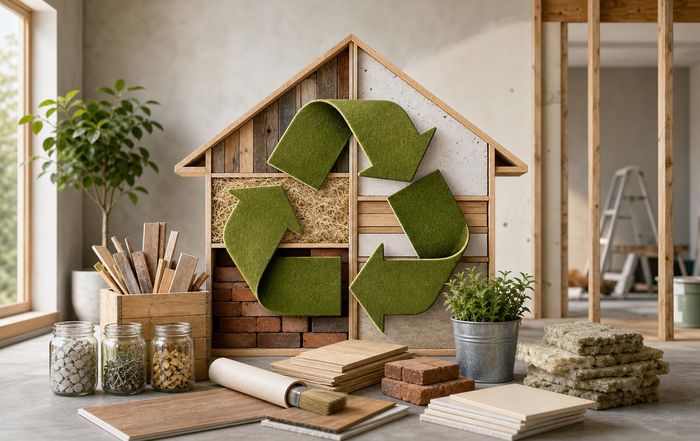
How to Make Home Renovations Less Wasteful
Home renovation can be a powerful way to improve comfort, energy efficiency, and even property value-but it is also one of the most waste-intensive things many households ever do. Construction and demolition debris make up a significant share of landfill waste in many countries, and remodeling often drives new resource extraction, emissions from materials, and unnecessary disposal of perfectly usable items. The good news is that with some planning and the right questions for contractors and suppliers, it is possible to dramatically cut waste without sacrificing quality or design.
This comfy content thinks around how to plan, design, and execute a renovation that is far more sustainable-from what you tear out, to what you buy, to how you live in the space afterward. It focuses on practical choices for homeowners and renters doing anything from a small kitchen update to a major retrofit.
For more cool and happy lifestyle context, visitors may also find it helpful to see sustainable choices beyond renovation on our sustainable living and lifestyle pages.
Start by Rethinking the Scope: Renovate Only What You Need
The most sustainable renovation is often the one that is smaller than originally imagined. Every square meter you decide not to reconfigure, demolish, or refinish saves materials, transport emissions, and money. Before drawing up plans, it is worth spending time understanding what truly needs to change and what can be improved with lighter-touch interventions.
One effective approach is to live with the space a bit longer while observing pain points carefully. Are storage problems due to lack of cabinetry, or simply poor organization that could be addressed with shelving or built-ins rather than full demolition? Is a room "too dark," or could it be transformed with lighter paints, mirrors, and more efficient lighting rather than adding new windows? Many energy agencies, such as the U.S. Department of Energy and UK Energy Saving Trust, emphasize that behavioral and small design changes can significantly improve comfort and energy use without major construction. Exploring resources from organizations like the U.S. Department of Energy or the UK Energy Saving Trust can help clarify what genuinely requires structural work and what does not.
When a bigger renovation is justified-for example, to address serious energy inefficiency, structural problems, or accessibility needs-there is still room to reduce waste by challenging assumptions. Instead of full "gut" renovations, consider partial updates that preserve sound walls and floors, or focus on performance upgrades such as insulation, air sealing, and window repair before aesthetic changes. This aligns with a broader shift toward climate-conscious home improvements, where the goal is not just a prettier space but a lower-impact one.
Plan for Waste Reduction from Day One
Waste-smart renovation starts at the planning table, not when the first dumpster arrives. Architects, designers, and contractors vary widely in how they handle materials, so early conversations are critical. Asking specific questions about deconstruction, salvage, and recycling signals that you prioritize waste reduction and can influence how the project is organized.
Homeowners can request a basic "materials and waste plan" that outlines what will be removed, what can be reused on site, what will be donated or resold, and what will be recycled. In many regions, construction waste recycling facilities can handle metals, clean wood, concrete, bricks, and sometimes drywall. Municipalities and agencies such as the U.S. Environmental Protection Agency and the European Environment Agency publish guidance on construction and demolition waste management; their homepages at EPA and European Environment Agency are useful starting points to see what is typical in your country or city.
Scheduling also matters. If salvageable items (like cabinets, doors, radiators, or hardwood flooring) are removed carefully and early, there is more time to list them for sale, arrange donation, or repurpose them on site. Some cities have construction material reuse centers and "tool libraries," often listed through local government or community organizations, which can help both with offloading surplus materials and sourcing second-hand items. Integrating these steps into the timeline avoids the last-minute rush that often sends reusable materials straight to landfill.
Choose Deconstruction Over Demolition Where Possible
Traditional demolition is fast but brutal: walls smashed, fixtures broken, materials mixed into one giant waste stream. Deconstruction is more methodical. Workers disassemble parts of a building to preserve materials for reuse or high-quality recycling. It can take longer and sometimes cost more in labor, but it significantly reduces waste and can even generate revenue or tax benefits where donations are possible.
Organizations such as the UN Environment Programme and World Green Building Council have highlighted the role of material reuse and deconstruction in lowering the environmental footprint of the built environment. Their websites at UNEP and World Green Building Council provide broader context on construction waste and circular economy approaches. In some cities-from Portland to Vancouver and parts of Europe-local regulations now encourage or even require deconstruction for certain older buildings to preserve valuable timber and architectural components.
On a household scale, full-scale deconstruction may not always be realistic, but elements of the approach can still be used. Instead of ripping out entire walls, electricians can sometimes fish new wiring through existing cavities. Original trim, doors, and radiators can be removed carefully and reinstalled after upgrades. Floorboards in good condition can be lifted and relaid. Even for small projects like a bathroom refresh, asking contractors to save intact tiles, fixtures, or mirrors can prevent unnecessary breakage and make reuse or donation easier.
Salvage, Donate, and Sell Before You Throw Away
One of the most effective ways to reduce renovation waste is to keep useful items in circulation. Many things that no longer fit a homeowner's taste are still perfectly functional and desirable to someone else. Before the skip or dumpster arrives, it is worth taking inventory of what can be salvaged.
Kitchens and bathrooms are prime candidates. Solid wood cabinets, sinks, taps, stone countertops, and appliances often have years of life left. Habitat for Humanity's ReStore network in many countries accepts donated building materials and resells them to fund housing projects; information is available on Habitat for Humanity's homepage. Similar architectural salvage yards and non-profit reuse centers exist across North America, Europe, and other regions. Light fixtures, interior doors, hardware, and even surplus tiles are frequently accepted.
Online marketplaces and neighborhood platforms can also move items quickly. Selling or giving away materials locally reduces transport emissions and supports a more circular local economy. For readers concerned with waste and resource use, this is a direct, tangible way to keep materials out of landfill. When donation or sale is not practical, metal recyclers can often take old radiators, copper pipes, and steel fixtures, while clean wood offcuts can sometimes be repurposed for community projects or DIY furniture.
Design with Longevity, Flexibility, and Repair in Mind
Many renovations become wasteful years later when styles change or materials fail prematurely. Designing for longevity and adaptability is one of the most powerful ways to avoid future tear-outs. This means prioritizing timeless layouts and durable materials over short-lived trends, and making it easy to repair or update components without major demolition.
Function-first layouts that support changing needs-such as flexible living spaces, generous storage, and accessible door widths-are more likely to serve households as they age or as family structures change. Rather than building highly specialized nooks or built-ins that only fit one use, consider modular shelving, movable partitions, or furniture that can adapt. This is closely linked to broader themes of sustainable design and circular thinking in interiors.
Material choice is also critical. Solid wood floors can be sanded and refinished multiple times, while thin laminate often must be replaced when damaged. High-quality hardware on cabinets and windows can be repaired; cheap fittings often break and end up in landfill. Neutral, enduring finishes for major surfaces-walls, floors, built-in cabinetry-allow style updates through paint and textiles rather than full replacements. Several green building standards, such as LEED from the U.S. Green Building Council, encourage durability and adaptability as core sustainability strategies; their homepage at USGBC offers broader context on these design principles.
Prioritize Low-Impact, Recycled, and Reclaimed Materials
When new materials are necessary, the choice of what to bring into the home has a major effect on environmental footprint. Production of cement, steel, plastics, and some finishes is energy-intensive and polluting. Selecting reclaimed, recycled, or lower-impact alternatives can significantly reduce emissions and resource use.
Reclaimed wood, bricks, and stone are among the most obvious options. They offer character while avoiding the impacts of new extraction and processing. Many architectural salvage yards now label reclaimed materials clearly, and some suppliers specialize in FSC-certified reclaimed timber. For new wood, look for credible certifications such as FSC or PEFC, which aim to ensure responsible forestry; their homepages at FSC and PEFC explain the standards in more detail.
Recycled content is increasingly available in insulation, drywall, tiles, carpets, and worktops. For example, some insulation products incorporate recycled paper or denim, while certain composite countertops use recycled glass or industrial by-products. It is worth checking environmental product declarations (EPDs) and third-party certifications where available, as well as guidance from organizations like the World Resources Institute at WRI that analyze material impacts across their life cycle.
Paints, adhesives, and finishes deserve special attention because they affect indoor air quality as well as environmental impact. Low-VOC or zero-VOC paints, water-based finishes, and formaldehyde-free wood products can reduce harmful emissions inside the home. This connects directly to personal well-being, as better air quality supports health, especially for children and people with respiratory conditions.
Cut Packaging and On-Site Waste
Even when materials are chosen thoughtfully, packaging and offcuts can create a surprising amount of waste. Pallets of tiles wrapped in plastic, individually boxed fixtures, and oversized protective foam all add up. Some of this is hard to avoid, but careful purchasing and site management can still make a difference.
Ordering accurate quantities is one of the most obvious steps. Over-ordering "just in case" often leads to unopened boxes of tiles, flooring, or paint that eventually get discarded. Working with designers and contractors to refine take-offs-calculations of how much material is needed-can reduce both cost and waste. When surplus does occur, it can be set aside for future repairs or offered to neighbors and community projects rather than thrown away.
On-site sorting is another powerful tool. Instead of one general skip, separate containers for metals, clean wood, cardboard, and mixed waste make it easier for recyclers to recover materials. Many local waste authorities and organizations like the International Solid Waste Association at ISWA provide guidance on construction waste sorting. Simple habits, such as flattening cardboard boxes, stacking pallets for return or reuse, and keeping offcuts clean and dry, increase the likelihood that materials can be recycled or repurposed.
For households interested in broader innovation in waste reduction, it is worth exploring new business models such as material take-back schemes, where manufacturers reclaim leftover flooring or tiles, or rental models for tools and some equipment, which reduce the need to buy items that will be rarely used.
Focus on Energy and Water Efficiency to Avoid Future Waste
While visible debris is the most obvious kind of renovation waste, long-term energy and water waste can be just as significant. Renovation is often the best moment to upgrade insulation, windows, heating and cooling systems, and plumbing fixtures because walls and floors are already open. Doing so can lock in lower emissions and bills for decades.
Improving the building envelope-insulation, air sealing, and high-performance windows or storm windows-reduces the size and complexity of heating and cooling systems needed. Guidance from agencies such as the International Energy Agency at IEA and the Intergovernmental Panel on Climate Change at IPCC consistently highlights building efficiency retrofits as one of the most cost-effective climate solutions. In many regions, financial incentives exist for insulation, heat pumps, and efficient windows, which can offset upfront costs.
Water efficiency upgrades are equally important. Low-flow fixtures, dual-flush toilets, and efficient appliances reduce water and energy use, especially in hot-water systems. Where regulations allow, greywater systems and rainwater harvesting can further cut demand on municipal supplies. These improvements not only reduce environmental impact but also make homes more resilient to rising utility prices and climate-driven water stress, tying home renovation choices to the broader themes discussed in our global and economy coverage.
Work with Contractors Who Understand Sustainable Practices
Even the best plans can falter if the professionals executing them are not aligned with waste-reduction goals. When interviewing contractors, it is worth asking specific questions about their experience with deconstruction, material reuse, and recycling, and whether they have worked on green building or energy retrofit projects before.
Certifications and affiliations can be helpful indicators, though they are not the only measure of competence. In some countries, builders may be accredited through national green building councils or energy efficiency schemes. Checking whether prospective contractors are familiar with standards promoted by organizations like the World Green Building Council or local equivalents can give insight into their approach. References from past clients who prioritized sustainability can also be revealing.
Clear communication is essential. Including basic sustainability expectations in the contract-such as sorting waste, protecting materials to avoid damage and re-ordering, and salvaging specified items-helps ensure they are taken seriously. Regular site visits to see how materials are being stored and handled, and open conversations about any unexpected issues, make it more likely that waste-saving strategies are followed through rather than abandoned for convenience.
Consider the Broader Life Cycle: From Manufacturing to End-of-Life
A less wasteful renovation is not just about what happens on your property. Materials have impacts at every stage: extraction, manufacturing, transport, use, and end-of-life. Thinking in life-cycle terms helps avoid "greenwashing" and trade-offs where one impact is reduced only to increase another.
For example, very cheap furniture or fixtures may appear resource-efficient because they use less material, but if they fail quickly and cannot be repaired or recycled, they drive repeated consumption. Conversely, a slightly heavier or more material-intensive product that lasts decades and can be disassembled for recycling may be the better choice overall. Organizations such as the Ellen MacArthur Foundation at ellenmacarthurfoundation.org promote circular economy thinking that can be applied at household scale, encouraging products designed for durability, reuse, and recovery.
End-of-life planning is particularly important for composite or highly mixed materials, such as certain countertops, flooring systems, or wall panels, which may be difficult to recycle. Choosing simpler, more homogeneous materials-like solid wood, metal, and glass-often makes future recycling easier. Asking manufacturers about take-back programs or recycled content can also signal market demand for more circular products, gradually shifting industry norms.
After the Dust Settles: Maintain, Repair, and Use the Space Wisely
The way a home is used and cared for after renovation can either reinforce or undermine all the earlier waste-reduction efforts. Regular maintenance, timely repairs, and thoughtful behavior extend the life of materials and systems, reducing the need for future tear-outs and replacements.
Simple habits-promptly fixing leaks, resealing tile grout, touching up paint rather than repainting entire rooms, and servicing heating and cooling systems-can add years to the life of finishes and equipment. Keeping a small "materials library" of leftover tiles, flooring planks, and paint for future repairs avoids mismatched patches that push people toward full replacements. This ongoing care connects renovation to broader themes of sustainable living, where consumption is moderated not only at the point of purchase but throughout the life of the home.
It is also worth periodically revisiting energy and water use. Smart meters, programmable thermostats, and efficient habits can ensure that performance upgrades deliver their full potential. If, over time, new technologies emerge-such as more efficient heat pumps or on-site renewables-integrating them thoughtfully, rather than embarking on large aesthetic overhauls, helps keep future interventions focused on performance rather than cosmetic churn.
Turning Renovation into a Tool for Sustainability :)
Home renovation will always involve some degree of waste, but it does not have to be synonymous with overflowing skips and discarded materials. By questioning the scope of projects, planning for deconstruction and reuse, choosing durable and low-impact materials, and prioritizing energy and water efficiency, households can transform renovation into a tool for environmental stewardship rather than a source of avoidable harm.
These choices resonate well beyond individual properties. They support emerging markets for reclaimed and recycled materials, reward contractors who invest in sustainable practices, and demonstrate to neighbors and local communities that comfortable, attractive homes do not require a throwaway approach. For our fans interested in how these household decisions intersect with sustainable business and technology, they are also part of a larger shift toward circular, low-carbon economies.
Ultimately, making renovations less wasteful is not about perfection but about direction-taking each decision, from the first sketch to the final coat of paint, as an opportunity to conserve resources, reduce pollution, and create spaces that will serve people and the planet well for many years to come.
