
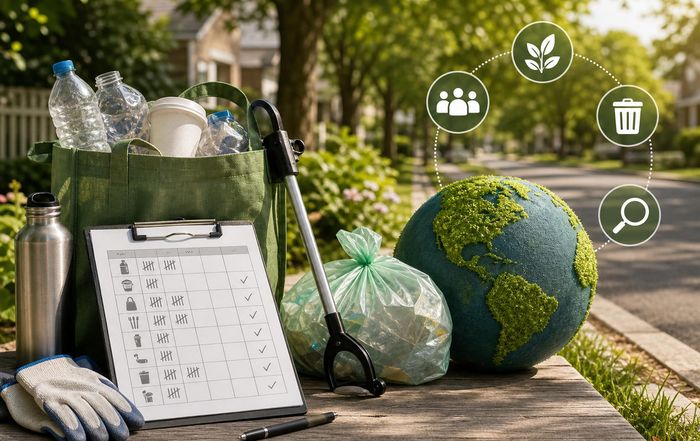
How to Organize a Neighborhood Litter Audit
A neighborhood litter audit does more than count discarded wrappers and bottles. Done well, it reveals where waste is coming from, how it moves through a community, and what practical steps can reduce it. It can also be a powerful way to build local engagement around cleaner streets, healthier ecosystems, and more thoughtful consumption.
This guide walks through how to design, run, and follow up on a neighborhood litter audit so that it leads to real change rather than just a one-off clean-up.
Why a litter audit matters more than a clean-up
Traditional clean-ups remove trash, which is valuable, but they rarely answer key questions: What types of litter dominate? Are they linked to particular businesses or products? Are bins in the right places? Are local policies working? A litter audit adds structure and data to the effort, turning community energy into evidence that can inform better decisions.
Organizations such as Keep America Beautiful and Keep Britain Tidy have shown through national litter studies that systematic counting and categorizing of waste can influence local ordinances, packaging design, and public education. Similarly, groups like the Ocean Conservancy and Surfrider Foundation use standardized data from clean-ups to track global plastic pollution trends. At neighborhood scale, the same approach can help residents push for better infrastructure, support local environmental awareness campaigns, and measure the impact of sustainable living initiatives over time.
A well-planned audit can support several goals at once: reducing litter on streets and in waterways, informing local recycling and waste strategies, engaging schools and youth groups in citizen science, and giving local businesses concrete feedback on packaging and take-away practices. It can also feed into broader climate change and plastic recycling conversations by showing how consumption patterns play out on the ground.
Step 1: Clarify your purpose and scope
Before recruiting volunteers or printing data sheets, decide what you want to learn and how you plan to use the results. This will shape everything from where you collect data to how detailed your categories need to be.
Some common objectives include understanding how much litter accumulates along certain streets or waterways, identifying which items dominate (for example, single-use drink containers, cigarette butts, or fast-food packaging), assessing whether recycling and rubbish bins are placed where they are needed, comparing different areas (residential vs. commercial, school zones vs. parks) to see where interventions might have the biggest impact, or establishing a baseline to track progress after new bins, signage, or local policies are introduced. Clarifying these aims helps you decide whether to focus on a few hotspots or cover a wider area, and whether your audit is a one-off snapshot or part of a longer-term monitoring effort.
Scope decisions also include how long the audit will last (a single day, multiple weekends, or a series of shorter surveys), what types of litter you will record (all items vs. selected categories such as plastic, metal, glass, cigarette waste, and "other"), and whether you will include illegal dumping sites or only scattered items. Reviewing methods used by groups such as The Great Canadian Shoreline Cleanup or the European Environment Agency at the planning stage can help you align your local effort with broader data standards, making your findings more useful beyond your neighborhood.
Step 2: Build a small organizing team
Even a modest audit runs more smoothly when responsibilities are shared. A core group of three to eight people is usually enough to plan, communicate, and manage the event. This team doesn't need formal titles, but it helps to agree on who will coordinate volunteers, handle permissions and logistics, manage data and mapping, and liaise with local authorities or community organizations.
Look for partners who already care about clean streets or local nature: school eco-clubs, neighborhood associations, resident groups, youth organizations, or faith communities. These networks often have communication channels and volunteer bases you can tap into. Reaching out to local branches of national groups such as Keep America Beautiful, Keep Scotland Beautiful, or Zero Waste organizations can also provide sample forms, training ideas, and safety guidance. If your neighborhood has a business improvement district or chamber of commerce, inviting them early can lead to practical support such as refreshments, printing, or bin access, and can open conversations about sustainable business practices.
The organizing team should also agree how decisions will be made and documented. Simple tools like shared online documents or group messaging apps can keep everyone aligned, especially if you plan to repeat the audit seasonally or annually to build a local dataset.
Step 3: Choose your area and mapping method
Next, decide precisely where the audit will take place. A vague "neighborhood" can quickly become unmanageable. Instead, define a clear boundary such as specific streets, a housing estate, a park and its surrounding blocks, or a route along a stream or shoreline. The area should be small enough that volunteers can cover it thoroughly in the time available, but large enough to capture different land uses and litter patterns if that fits your goals.
Mapping the area in advance is essential. Print simple maps from open-source tools such as OpenStreetMap or official city mapping portals, or sketch your own on paper, marking key features like bus stops, schools, shops, fast-food outlets, parks, and existing bins. Divide the area into segments-perhaps one or two street blocks, a path around a park, or a defined stretch of riverbank per team-so that each volunteer group knows exactly where to work. Consistent segment sizes make it easier to compare litter density later.
If your group is comfortable with digital tools, you can also explore simple mapping apps or data collection platforms. Some city governments and NGOs provide mobile apps for reporting litter and illegal dumping; others encourage citizen science contributions to platforms such as Earthwatch or local open-data portals. However, paper forms and clipboards remain perfectly effective, especially if your priority is community engagement rather than technical experimentation.
Step 4: Develop a simple, consistent data sheet
The heart of a litter audit is a clear, easy-to-use recording system. Overly complex categories can frustrate volunteers; overly simple ones may not provide enough insight. Start by identifying broad types of litter that reflect your objectives and local conditions. Common categories include plastic packaging (wrappers, bags, bottles, caps), drink containers (plastic bottles, glass bottles, cans, coffee cups), cigarette waste (butts, packaging), paper and cardboard, food-related items (take-away boxes, cutlery, straws, napkins), and other items such as textiles, metal scraps, or construction debris.
Many organizations, including the Ocean Conservancy and Surfrider Foundation, publish standardized item lists for beach and waterway clean-ups, while municipal agencies sometimes provide city-specific categories. Adapting one of these frameworks can make your data more comparable with national and global efforts. On your sheet, include columns for item type, quantity, whether it is recyclable locally, and optional notes such as brand names or the nearest landmark. Some audits also record the condition of the litter (fresh vs. weathered) to distinguish recent behavior from long-term accumulation.
Ensure every team uses the same definitions. A short pre-event briefing or a one-page guide attached to the data sheet can prevent confusion-such as whether a plastic coffee cup lid counts as "plastic packaging" or "drink container." If you plan to analyze data digitally, design the sheet with that in mind, using clear, consistent codes that can be easily entered into a spreadsheet.
Step 5: Address permissions, safety, and logistics
Before announcing the audit publicly, check whether you need permission to work in certain areas. Public sidewalks and parks are usually accessible, but some cities require permits for organized events, especially if you expect a large group or will be working near roads or waterways. Contact your local council, parks department, or equivalent authority to clarify requirements. They may also be able to provide bags, grabbers, high-visibility vests, or arrange for collected waste to be picked up.
Safety planning is critical. National safety guidelines from organizations such as Keep America Beautiful, Keep Britain Tidy, and Surfrider Foundation emphasize basic measures: wearing gloves, using litter pickers where possible, avoiding dangerous items (needles, broken glass, chemical containers), staying away from busy roadsides or unstable riverbanks, and working in pairs or groups. Build these principles into a concise safety briefing and written guidance. For audits involving children or youth, additional supervision and parental permission may be required under local regulations.
Logistics also include deciding how to handle and sort the collected litter. Will you separate recyclables from general waste during the audit, or simply record items and dispose of everything through normal channels? Coordinating with local waste and recycling services is important so that bags are collected promptly and correctly. If your community has drop-off centers or special schemes for items like e-waste or batteries, include that information in your plan and post-event communication, connecting the audit to wider waste and technology solutions.
Step 6: Recruit and brief volunteers
With the groundwork in place, you can invite neighbors to participate. Clear communication about the purpose, timing, and expectations will increase turnout and reduce last-minute confusion. Share a concise description of the audit's goals, the date and meeting point, time commitment, what participants should bring (sturdy shoes, weather-appropriate clothing, water), and reassurance about safety measures and insurance or liability where relevant.
Use existing networks: local social media groups, community noticeboards, school newsletters, resident associations, and local businesses. Consider tailoring messages to different audiences. For families, emphasize educational value and the chance for children to learn about sustainable living. For businesses, highlight how the audit can support cleaner commercial areas and inform sustainable business decisions. For youth or student groups, stress the citizen science and data skills aspect, which can link to education and environmental projects.
Before the event, send or post the data sheet and a brief explanation of how it works so volunteers arrive with some familiarity. On the day, hold a short orientation: explain the route segments, demonstrate how to record items, review safety guidance, and clarify who to ask if questions arise. Assign at least one experienced volunteer or organizer to each small group to support consistent data collection.
Step 7: Run the audit in the field
On the day of the audit, aim for a calm, organized atmosphere rather than a rushed race to collect the most trash. Begin with a group check-in, introductions, and a reminder of the purpose. Hand out maps, data sheets, clipboards, pencils or pens, gloves, litter pickers, and bags. Make sure each team knows its area, how long it has, and where to return when finished.
During the audit, volunteers move slowly along their assigned route, collecting visible litter and recording it according to the agreed categories. Some teams find it easiest to designate roles: one person picks up items, another holds the bag, and a third records data. Encourage volunteers to note contextual observations as well: overflowing bins, damaged lids, spots where wind or water seems to concentrate litter, or recurring brands and product types. These qualitative details can be as valuable as the numbers when discussing solutions later.
Ensure that teams have a way to contact organizers in case of questions or issues, such as encountering hazardous waste or unclear property boundaries. It can also be useful to take photographs (with respect for privacy and property) of problem areas to illustrate later reports or presentations. When groups return, check that data sheets are complete and legible before people leave. If possible, hold a short debrief while the experience is fresh, asking what surprised participants and what they think might help reduce litter in the future.
Step 8: Manage and analyze the data
Once the fieldwork is done, the audit shifts from physical to analytical work. Transcribe each team's data into a spreadsheet or simple database. Include columns for location segment, item categories, quantities, and any notes. Double-check for obvious errors, such as misplaced decimal points or categories that were interpreted differently by different teams. If you used codes, ensure they are consistent across all entries.
Basic analysis can already reveal strong patterns. Calculate total items collected, break them down by category, and identify the most common litter types. Compare segments: which streets or zones had the highest density of litter? Are hotspots clustered around particular features, such as bus stops, convenience stores, or fast-food outlets? Are cigarette butts concentrated near certain venues? If you noted brand names, do a rough count of which brands dominated and in what contexts. Simple charts or graphs can help communicate these findings clearly to a general audience.
If your community has access to GIS tools or open-data platforms, consider mapping the results visually. Plotting hotspots on a map can make it easier to advocate for new bins, better maintenance schedules, or changes in traffic and pedestrian flows. Some groups also compare their findings with broader data from organizations like UN Environment Programme, OECD, or national environment agencies to place local patterns in a global global context-such as how local plastic litter reflects wider packaging trends and waste trade dynamics.
Step 9: Turn findings into local action
The value of a litter audit lies in what happens next. Use your results to develop specific, realistic recommendations rather than generic calls to "keep our neighborhood clean." For example, if you find high concentrations of drink containers near a park entrance, you might propose installing a combined recycling and rubbish bin, adding clear signage, or working with nearby shops to encourage reusable bottles. If cigarette butts dominate certain areas, consider butt receptacles, targeted enforcement of smoke-free rules, or public campaigns about the toxicity of cigarette filters.
Share your findings with local decision-makers in a constructive way. This could include a short written report to your municipal council, parks department, or waste management agency; a presentation at a neighborhood association meeting; or a briefing for local businesses whose packaging features heavily in the litter. Providing clear data, maps, and photographs, along with concrete suggestions, increases the chance of practical changes. Referencing broader best practices from organizations such as UNEP, OECD, World Bank, or national environment ministries can further strengthen your case for systemic improvements in waste management and economy policies.
At the same time, use the audit as a springboard for community-led initiatives. These might include regular clean-ups, school projects on plastic recycling, neighborhood challenges to reduce single-use items, or collaboration with designers and entrepreneurs exploring innovation in reusable packaging. Linking the audit to broader themes like lifestyle change and personal well-being can help residents see litter not just as an eyesore but as part of a larger system of consumption, health, and environmental quality.
Step 10: Share the story and sustain the effort
Finally, tell the story of your audit widely. People are more likely to support ongoing efforts when they understand both the scale of the problem and the progress already made. Summarize key findings in accessible language, using infographics, simple charts, or before-and-after photos. Highlight both challenges (such as persistent hotspots or problematic packaging) and successes (like reduced litter near a school after new bins or education campaigns).
Share this story through local media, community newsletters, social media groups, and public events. Tag or mention relevant organizations-such as Keep America Beautiful, Keep Britain Tidy, Ocean Conservancy, Surfrider Foundation, UN Environment Programme, or national environment agencies-if you used their frameworks or want to connect your neighborhood experience to wider campaigns. This visibility can attract new volunteers, encourage local businesses to engage constructively, and inspire neighboring communities to conduct their own audits.
To sustain momentum, consider making the audit a recurring activity-perhaps once or twice a year. Repeating the same method on roughly the same routes allows you to track changes over time and evaluate the impact of interventions. It also reinforces a culture of shared responsibility and environmental stewardship. Over time, a modest neighborhood project can evolve into a respected local dataset that informs planning, supports business and policy decisions, and contributes to the broader movement for cleaner, more sustainable communities.
Organizing a neighborhood litter audit does require planning and coordination, but it does not demand specialist expertise or expensive tools. With thoughtful preparation, clear data collection, and follow-through that links findings to action, residents anywhere in the world can transform scattered trash into insight-and insight into change.
