
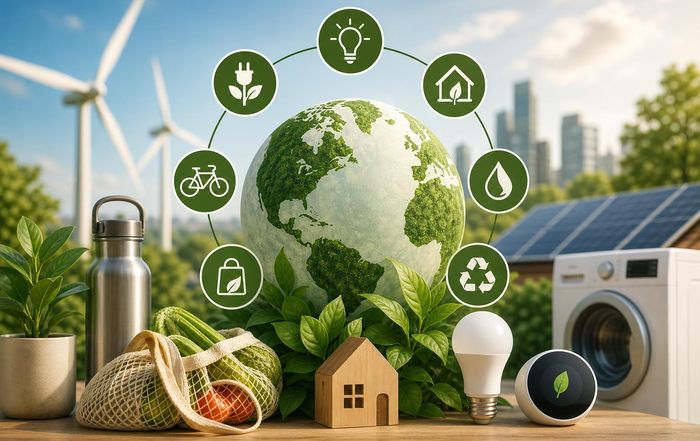
Reducing Carbon Impact Through Everyday Efficiency
The Big Power of Everyday Choices
The conversation about climate responsibility has shifted decisively from abstract future risk to immediate strategic necessity, and nowhere is this more evident than in the growing recognition that everyday efficiency is one of the most powerful, scalable levers for reducing carbon impact. As governments, investors, and consumers demand credible climate action, the cumulative influence of millions of daily decisions-how people live, work, travel, consume, and manage waste-has become a central pillar of serious sustainability strategy rather than a peripheral lifestyle concern. On YouSaveOurWorld, this reality is reflected in a consistent focus on how individual and organizational behaviors intersect with systemic change, offering readers a bridge between personal responsibility and broader economic and policy transformation.
While large-scale industrial decarbonization, advanced clean technologies, and regulatory frameworks remain essential, the data underscores that lifestyle-related emissions and operational inefficiencies in homes, offices, and supply chains still account for a substantial share of global greenhouse gases. The Intergovernmental Panel on Climate Change (IPCC) has repeatedly highlighted that demand-side measures, including efficiency and behavioral change, could reduce global emissions by up to 40-70% by mid-century if fully implemented, a scale of impact that cannot be ignored by any serious business or policy leader. Readers seeking a structured understanding of these dynamics can explore the dedicated inspirational and original section on climate change at YouSaveOurWorld.com, where global science is translated into actionable guidance for households and enterprises alike.
Experience and Expertise: Why Everyday Efficiency Matters for Business
For business leaders in 2026, everyday efficiency is no longer framed merely as a cost-cutting tactic but as an integrated strategy that combines operational excellence, brand value, regulatory resilience, and long-term competitiveness. Organizations that once viewed sustainability as a corporate social responsibility add-on now recognize that aligning daily operations with low-carbon practices is essential to meet investor expectations, comply with evolving disclosure standards such as those promoted by the International Sustainability Standards Board (ISSB), and respond credibly to customer scrutiny. As global frameworks like the Task Force on Climate-related Financial Disclosures (TCFD) have matured, the operational details of how energy is used, how waste is managed, and how employees commute or work remotely have become material issues for corporate risk management and reporting.
This shift has been reinforced by empirical evidence from institutions such as the International Energy Agency (IEA), which consistently demonstrates that energy efficiency remains one of the most cost-effective tools for emissions reduction across buildings, transport, and industry. Businesses that adopt a disciplined approach to everyday efficiency-from lighting and HVAC optimization to digital workflow streamlining-often discover that emission reductions are accompanied by improved margins, reduced volatility in operating costs, and enhanced resilience to energy price shocks. Readers interested in the business case for these measures can delve deeper into sustainable business practices on YouSaveOurWorld.com, where the connection between financial performance and environmental responsibility is explored in a pragmatic and data-driven manner.
The Carbon Logic of Sustainable Living
The foundation of everyday efficiency lies in sustainable living, a concept that extends far beyond symbolic gestures and into the structural design of homes, neighborhoods, and daily routines. In 2026, the most effective low-carbon lifestyles are characterized not only by reduced energy consumption but also by an emphasis on sufficiency, durability, and intelligent use of technology. Research from organizations like UN Environment Programme (UNEP) shows that housing, mobility, and food are the three largest contributors to household carbon footprints, making them priority areas for efficiency-focused change.
At the household level, simple yet strategic decisions-such as investing in high-efficiency appliances, improving insulation, using smart thermostats, and optimizing natural light-can substantially reduce emissions while also improving comfort and lowering energy bills. Guidance on these approaches is increasingly accessible through trusted resources such as Energy Star and the U.S. Department of Energy, which provide detailed recommendations on appliances, building materials, and energy management. On YouSaveOurWorld.com, the sustainable living section translates such technical insights into practical, step-by-step strategies that help individuals and families align personal well-being with climate-conscious choices, reinforcing the idea that efficiency is not about sacrifice but about intelligent design of daily life.
Plastic, Waste, and the Hidden Carbon Footprint
While energy use is often the most visible dimension of carbon impact, material consumption and waste-particularly plastics-represent a substantial and often underappreciated source of emissions. From extraction and refining of fossil fuels used as feedstock, to manufacturing, transportation, and end-of-life disposal or incineration, the plastic lifecycle is deeply carbon-intensive. Reports from organizations such as the Organisation for Economic Co-operation and Development (OECD) and World Wildlife Fund (WWF) have highlighted that plastic production could account for a significant share of global carbon budgets by mid-century if current trends continue, making plastic reduction and recycling central to any credible everyday efficiency strategy.
On YouSaveOurWorld.com, the dedicated page on plastic recycling emphasizes that reducing plastic-related emissions requires a combination of upstream and downstream measures: redesigning products and packaging to minimize material use, substituting with low-carbon alternatives where feasible, improving recycling infrastructure and participation, and rethinking consumption patterns to prioritize reuse and refill models. These approaches are aligned with the broader principles of the circular economy, promoted by organizations such as the Ellen MacArthur Foundation, which advocate for keeping materials in use at their highest value for as long as possible. By treating plastic not as disposable but as a resource to be managed efficiently, households and businesses can significantly cut embodied emissions while also reducing pollution and waste management costs.
Everyday Efficiency Inside the Modern Sustainable Business
In the corporate context, everyday efficiency is increasingly viewed as a strategic discipline that spans facilities management, supply chain design, workforce practices, and customer engagement. Leading companies across sectors-from Microsoft and Unilever to Siemens and Schneider Electric-have demonstrated that integrating efficiency into daily operations can unlock substantial emissions reductions while also driving innovation and differentiation. For example, optimized building management systems that leverage sensors, automation, and data analytics can reduce energy use in offices, warehouses, and retail spaces by double-digit percentages without compromising productivity or comfort, a result that has been documented in case studies by the World Green Building Council.
On YouSaveOurWorld.com, the business and sustainable business sections explore how organizations can embed efficiency into core processes, from procurement standards that favor low-carbon suppliers to logistics strategies that reduce empty miles and optimize routing. By aligning internal incentives, performance metrics, and corporate culture around resource efficiency, businesses can transform everyday actions-turning off unnecessary equipment, designing lighter products, encouraging low-carbon commuting-into a coherent emissions reduction program that is measurable, reportable, and verifiable. This operational discipline supports compliance with emerging regulatory frameworks in major markets, where authorities such as the European Commission are tightening expectations around energy performance, product design, and lifecycle impacts.
Innovation and Technology as Enablers of Practical Efficiency
Technological innovation has become a critical enabler of everyday efficiency, making it easier for individuals and organizations to understand, measure, and optimize their carbon impact in real time. Smart meters, connected devices, and cloud-based analytics platforms now provide granular visibility into energy use, allowing users to identify waste, adjust behaviors, and automate efficiency gains that would have been difficult to manage manually. Companies like Google, through its Google Nest ecosystem, and Apple, through increasingly energy-efficient device design and ecosystem integration, have contributed to a mainstream awareness that digital tools can support both convenience and sustainability.
In parallel, advances in industrial and building technologies-from variable speed drives and high-efficiency motors to heat pumps and advanced glazing-have expanded the toolkit available to facility managers and homeowners seeking to reduce consumption without compromising performance. Readers interested in the intersection of innovation, efficiency, and sustainability can explore the innovation and technology pages on YouSaveOurWorld.com, which highlight how emerging solutions, including artificial intelligence and the Internet of Things, are being deployed to drive measurable reductions in carbon intensity across sectors. Independent organizations such as Rocky Mountain Institute (RMI) and Fraunhofer Institute for Solar Energy Systems continue to publish research demonstrating that the combination of advanced technology and thoughtful system design can deliver significant efficiency gains at increasingly attractive cost points.
Lifestyle, Design, and the Culture of Low-Carbon Comfort
Everyday efficiency is not solely a technical or economic question; it is also deeply cultural, shaped by evolving expectations about comfort, status, and quality of life. In 2026, a growing number of people view low-carbon lifestyles not as a constraint but as an aspirational form of modern living, characterized by well-designed spaces, healthy environments, and thoughtful use of resources. Architectural and product design communities, supported by organizations such as the American Institute of Architects (AIA) and World Design Organization, are increasingly embracing principles of passive design, biophilic integration, and material efficiency, creating homes and workplaces that require less energy to heat, cool, and illuminate while enhancing occupant well-being.
On YouSaveOurWorld.com, the lifestyle and design sections explore how aesthetics and functionality can reinforce sustainable choices, from compact urban living and shared mobility models to minimalist interiors that prioritize durability and repairability over disposable trends. These shifts are supported by a growing body of research, including work by Harvard T.H. Chan School of Public Health, which links efficient, well-ventilated, and low-toxin buildings to improved cognitive function and health outcomes, underscoring that everyday efficiency is closely aligned with personal well-being rather than being in tension with it. As more people experience the comfort and clarity of efficiently designed environments, the cultural narrative around "doing more with less" is steadily being reframed as "living better with what truly matters."
Education, Awareness, and Behavioral Change at Scale
No efficiency technology or policy can achieve its potential without informed and engaged users, which is why education and awareness remain central to any serious strategy for reducing everyday carbon impact. Schools, universities, professional training programs, and digital platforms all play a role in shaping the knowledge and values that drive behavior, from how children learn about energy and waste to how executives interpret climate risk and opportunity. Organizations such as UNESCO and OECD have emphasized the importance of education for sustainable development, advocating curricula that integrate climate science, systems thinking, and practical problem-solving skills.
YouSaveOurWorld.com positions itself within this educational ecosystem as a resource that translates complex global issues into accessible, action-oriented insights. The environmental awareness and education pages emphasize that awareness must go beyond facts and statistics to include an understanding of leverage points-where small, well-targeted changes in daily routines or organizational practices can have outsized impacts. Behavioral science research, including work by the Behavioural Insights Team and academic institutions such as Stanford University, has shown that default options, social norms, and feedback loops significantly influence whether individuals adopt efficient habits, suggesting that effective climate communication must be designed with human psychology in mind. By combining credible information with practical guidance and relatable narratives, platforms like YouSaveOurWorld.com help bridge the gap between knowledge and action.
The Economic Logic of Efficiency in a Low-Carbon Transition
From a macroeconomic perspective, everyday efficiency is increasingly recognized as a foundational component of a cost-effective global transition to net-zero emissions. Reports by the International Monetary Fund (IMF) and World Bank have highlighted that investments in energy efficiency and resource productivity often yield strong economic multipliers, creating jobs, reducing import dependence, and improving trade balances for energy-importing countries. At the micro level, efficient homes and businesses are less exposed to volatile energy prices and can reallocate savings to innovation, workforce development, or quality improvements, reinforcing competitiveness in a decarbonizing global marketplace.
The economy section of YouSaveOurWorld.com explores how these dynamics play out across sectors and regions, emphasizing that efficiency is a rare policy and business tool that simultaneously advances environmental, economic, and social objectives. For households, reduced utility and fuel bills free up disposable income for education, health, and local services, supporting broader community resilience. For businesses, efficiency investments can improve return on capital and meet growing expectations from financial institutions that are aligning portfolios with climate goals, a trend reinforced by initiatives such as the Glasgow Financial Alliance for Net Zero (GFANZ). When viewed through this integrated lens, everyday efficiency emerges not as a marginal adjustment but as a central pillar of sound economic strategy in the 2020s and beyond.
Waste, Circularity, and the Global Perspective
Everyday efficiency also requires rethinking how societies conceptualize and manage waste, moving from a linear "take-make-dispose" model to a circular approach that minimizes resource extraction and emissions at every stage. Globally, organizations such as the World Economic Forum and United Nations Industrial Development Organization (UNIDO) are promoting circular economy frameworks that encourage product-as-a-service models, remanufacturing, and advanced recycling technologies. These strategies are particularly relevant in rapidly growing urban centers, where the volume of waste, including food, plastics, and electronics, is rising quickly and placing pressure on local infrastructure and budgets.
On YouSaveOurWorld.com, the waste and global pages emphasize that efficient waste management is not only an environmental imperative but also a practical route to emissions reduction, resource security, and public health improvement. Food waste, for example, is associated with significant embedded emissions from agriculture, processing, and transport, and reducing it is one of the most effective everyday measures individuals and organizations can take, as highlighted by research from Project Drawdown and Food and Agriculture Organization (FAO). By integrating waste reduction and circular design into daily practices-from meal planning and inventory management to product specification and procurement-households and businesses can substantially shrink their carbon footprints while contributing to more resilient and equitable resource systems worldwide.
Personal Well-Being and the Human Dimension of Efficiency
Ultimately, the success of any effort to reduce carbon impact through everyday efficiency depends on how well it aligns with human aspirations for health, security, and meaning. There is growing evidence that many efficiency measures deliver co-benefits that directly enhance personal well-being, from improved indoor air quality and thermal comfort to reduced financial stress and greater time flexibility. Studies by organizations such as the World Health Organization (WHO) have shown that energy-efficient buildings with good ventilation can reduce respiratory illnesses, while active transport options like walking and cycling-often encouraged by compact, efficient urban design-can significantly improve physical and mental health.
The personal well-being resources on YouSaveOurWorld.com emphasize that the most durable and impactful efficiency practices are those that people experience as supportive rather than restrictive, enhancing their sense of control, purpose, and connection to others. When individuals understand that choosing efficient appliances, reducing waste, or adjusting travel habits is not only good for the climate but also for their own quality of life, motivation shifts from obligation to opportunity. This alignment between planetary and personal benefits is central to building the long-term cultural foundations needed for a low-carbon society, and it is a theme that runs consistently through the content and mission of YouSaveOurWorld.com.
A Practical, Trusted Pathway Forward?
The imperative to reduce carbon impact is not in question; the critical challenge lies in translating ambition into consistent, everyday practice at scale. Experience across sectors and regions demonstrates that efficiency-applied thoughtfully to energy use, materials, design, and behavior-offers one of the most immediate, cost-effective, and widely accessible pathways to meaningful emissions reductions. From households optimizing their energy use and reducing plastic dependence, to businesses embedding efficiency into operations and supply chains, to cities rethinking infrastructure and waste systems, the opportunities are both diverse and synergistic.
YouSaveOurWorld.com positions itself as a positive thinking and inspirational partner in this journey, providing readers with original integrated, experience-based insights that connect sustainable living, business strategy, innovation, and personal well-being. By exploring resources on sustainable living, climate change, innovation, technology, and the broader YouSaveOurWorld.com platform, top decision-makers at every scale can identify practical steps that align with their own circumstances and ambitions. In a decade defined by both climate risk and unprecedented technological and social possibility, everyday efficiency stands out as a domain where informed, intentional choices can deliver immediate benefits while contributing to the long-term stability of the global climate system, making it a cornerstone of responsible leadership and resilient living.
