
Why Germany's Recycling System Offers Lessons for the World
Introduction: A Global Benchmark in a Decisive Decade
As the world moves deeper into the 2020s, the pressure on governments, businesses, and citizens to rethink waste and resource use has intensified, and in this context Germany's recycling system stands out as one of the most instructive real-world experiments in circularity and producer responsibility. For responsible climate caring readers of YouSaveOurWorld, who are already engaged with themes such as encouraging sustainable living, climate action, and responsible business, the German experience offers a rich, practical reference point that connects policy design, corporate strategy, consumer behavior, and technological innovation into a coherent and largely successful model, even as it continues to evolve and face new challenges.
Germany consistently ranks among the global leaders in municipal waste recycling rates, with data from organizations such as the Organisation for Economic Co-operation and Development and Eurostat showing recycling and composting rates that often exceed 65 percent of municipal waste, far above the averages seen in many other industrialized nations. While no system is perfect, and Germany still struggles with overconsumption, packaging volumes, and export of certain waste streams, the country's integrated approach to regulation, infrastructure, and public education offers powerful lessons for countries, cities, and companies seeking to design more sustainable waste and resource systems that support both environmental and economic resilience.
Historical Foundations: From Packaging Crisis to Producer Responsibility
The roots of Germany's modern recycling system lie in the late twentieth century, when rapid economic growth, rising consumption, and proliferating disposable packaging triggered a visible waste crisis that alarmed both policymakers and the public. Landfills were filling up, incineration was politically contested, and public awareness of environmental risks was heightened by incidents such as the Chernobyl disaster and growing concern about toxic emissions and groundwater contamination. Against this backdrop, Germany began to rethink waste not merely as an end-of-pipe issue but as a systemic design and responsibility problem.
A decisive turning point came with the Packaging Ordinance introduced in the early 1990s, which embedded the principle of extended producer responsibility into national law. Under this framework, companies placing packaging on the market were made responsible for organizing and financing its collection and recovery, shifting a significant portion of the burden away from municipalities and taxpayers and toward the businesses that profit from packaged goods. This regulatory innovation, which helped inspire later directives of the European Union on packaging and waste, laid the foundation for what would become the Green Dot system, a nationwide network for the collection and sorting of packaging waste.
For readers exploring the policy dimension of sustainability and circular economy on YouSaveOurWorld.com, this historical shift illustrates the importance of aligning legal frameworks with environmental goals and market incentives, and it underscores why environmental awareness must be coupled with enforceable rules and clear allocation of responsibility if large-scale change is to be achieved.
The Architecture of Germany's Recycling System
Germany's recycling system functions as an interconnected architecture of legal obligations, market-based mechanisms, municipal services, and citizen participation, all underpinned by robust data, monitoring, and continuous technological improvement. At its core lies the principle that waste is a resource, and that the most effective way to manage it is to prevent it, then reuse it, and only then recycle or recover energy from what remains, a hierarchy that echoes guidance from organizations such as the United Nations Environment Programme, which has long advocated for waste prevention and circular material flows as key pillars of sustainable development.
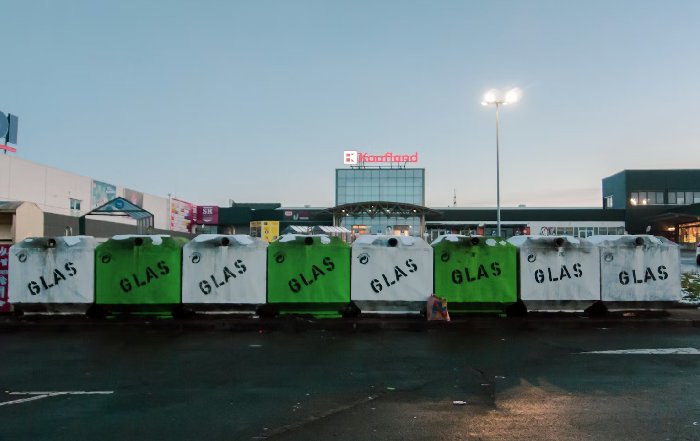
Households and businesses in Germany are accustomed to separating waste into multiple streams, typically including residual waste, paper and cardboard, biowaste, glass, and lightweight packaging such as plastics and metals. This source separation is supported by a dense network of curbside collection systems and local recycling centers, as well as deposit-return infrastructure for beverage containers. Municipalities, private waste management firms, and producer responsibility organizations collaborate under a regulated framework that ensures financing, accountability, and performance standards, while advanced sorting facilities equipped with optical sensors, robotics, and data-driven process controls further refine collected materials into high-quality secondary raw materials.
This level of system integration is directly relevant to the business-oriented readers of YouSaveOurWorld.com, especially those interested in sustainable business models, because it demonstrates how public policy, corporate obligations, and operational logistics can be aligned to make recycling not just a moral imperative but a functioning industrial system that supplies feedstock to manufacturing, reduces dependence on virgin resources, and supports domestic employment in recycling and remanufacturing.
The Green Dot and Extended Producer Responsibility
The introduction of the Green Dot (Der Grüne Punkt) system in Germany is widely regarded as a pioneering example of extended producer responsibility implemented at scale. Under this scheme, companies pay license fees to use the Green Dot symbol on their packaging, with fees calibrated according to material type and volume, thereby internalizing at least part of the environmental and end-of-life management costs that would otherwise be externalized to society. These fees are used to finance the collection and sorting of packaging waste, and the system has been replicated or adapted in numerous other countries as interest in producer responsibility has grown.
By linking financial contributions to the characteristics of packaging, the Green Dot system creates an economic signal that encourages companies to reduce packaging volume, choose more recyclable materials, and design products with end-of-life considerations in mind, a practical application of eco-design principles promoted by bodies such as the European Commission and the Ellen MacArthur Foundation, which advocate for design strategies that support circularity from the outset. Over time, this has contributed not only to higher recycling rates but also to innovation in packaging design, material science, and logistics, as firms seek to reduce costs and improve environmental performance simultaneously.
For organizations exploring how to embed responsibility into their own operations, learning from Germany's experience with producer responsibility can be a valuable complement to the broader guidance available on sustainable business practices, particularly when considering how to allocate costs, measure performance, and engage supply chain partners in shared environmental objectives.
The Deposit-Return System: Incentivizing Consumer Participation
One of the most visible and widely admired features of Germany's recycling system is its deposit-return scheme for beverage containers, known locally as Pfand. Consumers pay a small deposit when purchasing bottled or canned beverages, which is refunded when they return the empty containers to supermarkets or collection points, where automated reverse vending machines identify, sort, and compact the items. This seemingly simple mechanism has achieved remarkably high return rates for bottles and cans, often exceeding 90 percent, and has significantly reduced litter and resource wastage.
The success of the Pfand system illustrates how economic incentives, convenience, and clear communication can shape consumer behavior in ways that support environmental objectives, a lesson that resonates strongly with the focus on sustainable lifestyle choices that many readers of YouSaveOurWorld.com seek to cultivate in their own lives and communities. It also demonstrates that well-designed deposit systems can provide high-quality, relatively uncontaminated material streams that are easier and more cost-effective to recycle into new products, particularly in the case of PET bottles and aluminum cans.
Policymakers and businesses outside Germany increasingly look to such deposit-return systems as they grapple with plastic pollution and packaging waste, with organizations like the World Wildlife Fund and the Ocean Conservancy highlighting deposit schemes as a proven tool to reduce marine litter and support circular packaging economies. The German experience shows that when consumers see a direct financial benefit and are provided with easy-to-use infrastructure, participation becomes habitual and socially normalized rather than burdensome.
Plastic Recycling: Progress, Limitations, and Innovation
Plastic waste represents one of the most complex and politically charged aspects of modern waste management, and Germany's experience offers both reasons for optimism and cautionary lessons. On one hand, the country has developed sophisticated systems for collecting and sorting plastic packaging, invested heavily in mechanical recycling technologies, and fostered a growing market for recycled plastics in packaging, construction, and automotive applications. On the other hand, challenges remain in dealing with mixed plastics, composite materials, and low-value items that are difficult or uneconomic to recycle, as well as in ensuring that exported plastic waste is handled responsibly abroad.
Germany's efforts align with global initiatives led by organizations such as the UN Environment Programme and the OECD, which emphasize the need to reduce plastic production where possible, phase out problematic materials, and improve recycling quality and transparency. The increasing focus on chemical recycling and advanced sorting technologies, supported by research institutions and industrial consortia, reflects a recognition that innovation will be necessary to handle complex plastic streams that mechanical recycling alone cannot address effectively.
For readers exploring plastic recycling on YouSaveOurWorld.com, the German case underscores the importance of combining ambitious policy targets with realistic assessments of technological capabilities, market demand for recycled materials, and the environmental trade-offs of different recycling methods. It also highlights the need for businesses to rethink product and packaging design, adopt reusable systems where feasible, and collaborate across value chains to reduce plastic leakage into the environment, an issue that has direct implications for oceans, biodiversity, and human health.
Climate Change, Circular Economy, and Resource Security
Germany's recycling achievements cannot be understood in isolation from the broader context of climate change and resource security, which have become central concerns for governments and companies worldwide. Recycling reduces greenhouse gas emissions by lowering the demand for energy-intensive extraction and processing of virgin materials, a benefit that is recognized in climate strategies developed by entities such as the Intergovernmental Panel on Climate Change and the International Energy Agency, both of which highlight material efficiency and circular economy strategies as critical components of decarbonization pathways.
By closing material loops, Germany's recycling system contributes to a more resilient and diversified resource base, reducing vulnerability to geopolitical shocks and price volatility in global commodity markets, an issue that has gained renewed attention in the wake of supply chain disruptions and energy crises of the early 2020s. For a country with a strong manufacturing base and limited domestic raw materials, investing in high-quality recycling is both an environmental and an economic strategy, supporting industrial competitiveness while aligning with climate commitments under the Paris Agreement.
Readers of YouSaveOurWorld.com who are engaging with climate change and global sustainability will recognize that recycling alone cannot solve the climate crisis, but Germany's experience demonstrates that integrating waste and resource policy into broader climate and energy strategies can deliver meaningful emissions reductions, stimulate green innovation, and create jobs in recycling, remanufacturing, and related service sectors.
Business Models, Innovation, and Technology
The German recycling system has catalyzed a wide range of business models and technological innovations, from advanced sorting and processing facilities to digital platforms that optimize collection routes, monitor contamination levels, and track material flows across complex supply chains. Companies in sectors as diverse as packaging, automotive, consumer goods, and construction have invested in eco-design, recycled-content products, and take-back schemes, often in response to regulatory requirements but increasingly also as part of broader corporate sustainability strategies aligned with frameworks such as the UN Global Compact and the Global Reporting Initiative.
Technological advances in sensor-based sorting, robotics, and data analytics have significantly improved the efficiency and quality of recycling operations, enabling higher recovery rates and better separation of material fractions, which in turn supports higher-value applications for recycled materials. Germany's strong research ecosystem, including universities, applied research institutes, and industry partnerships, has played a crucial role in developing and scaling these technologies, illustrating how innovation ecosystems can be harnessed to address environmental challenges while generating economic value.
For the technology- and innovation-focused audience of YouSaveOurWorld.com, the German case offers concrete examples of how innovation and technology can be directed toward sustainability objectives, rather than treating environmental regulation as a constraint on business. It shows that when regulatory stability, market demand, and research capacity are aligned, businesses can develop profitable solutions that contribute to a more circular economy, reduce environmental risks, and enhance brand trust with increasingly sustainability-conscious customers.
Culture, Education, and Everyday Behavior
No recycling system can succeed without public participation, and Germany's experience underscores the importance of culture, education, and social norms in shaping everyday behavior. From early childhood, citizens are exposed to environmental education in schools, media, and community programs, reinforcing messages about waste separation, resource conservation, and personal responsibility. Over time, these practices have become deeply embedded in daily routines, with many households and businesses viewing proper waste sorting not as an optional extra but as a basic civic duty.
Public information campaigns, clear labeling, and accessible infrastructure all contribute to this culture of participation, as do enforcement measures and fee structures that reward proper sorting and penalize contamination or illegal dumping. The result is a high level of social acceptance and compliance, although debates continue about the complexity of sorting rules and the need to simplify systems to accommodate increasingly diverse populations and lifestyles.
For readers drawn to the intersections of education, personal well-being, and environmental responsibility, the German case shows that sustainable behavior is most durable when it is supported by consistent messaging, practical tools, and a sense of shared purpose. It also suggests that building a culture of recycling and resource stewardship can contribute to broader feelings of agency and connection, as individuals see their actions reflected in cleaner neighborhoods, reduced waste, and more responsible community practices.
Design, Urban Planning, and System Integration
Germany's recycling system also interacts closely with design and urban planning, demonstrating that waste and resource flows must be considered from the earliest stages of product and infrastructure design. Packaging and product designers, guided by eco-design principles promoted by organizations like the Ellen MacArthur Foundation, increasingly consider recyclability, material reduction, and modularity, while urban planners and local authorities integrate recycling centers, collection points, and logistics hubs into city layouts to maximize convenience and efficiency.
In many German cities, recycling infrastructure is carefully integrated into residential and commercial developments, reducing the distance residents must travel to dispose of specific waste streams and minimizing the visual and noise impacts of collection operations. This systems-oriented approach aligns with the broader design philosophy promoted on YouSaveOurWorld.com, where design is understood not merely as aesthetics but as a strategic tool for shaping sustainable systems that balance environmental, social, and economic objectives.
By viewing waste management as a design challenge rather than a purely operational problem, Germany has been able to create solutions that are more user-friendly, cost-effective, and environmentally robust, offering valuable inspiration for architects, urban planners, and business leaders who wish to embed circularity into the physical and organizational structures they create.
Economic Implications and the Business Case for Recycling
The economic dimension of Germany's recycling system is central to its durability and relevance for a business audience. Recycling and circular economy activities contribute significantly to employment, innovation, and industrial competitiveness, with thousands of companies involved in collection, sorting, processing, equipment manufacturing, consulting, and related services. By creating a stable regulatory environment and clear demand for recycled materials, Germany has fostered a domestic market that supports investment and long-term planning, even as global commodity prices fluctuate.
From an economic perspective, high-quality recycling reduces dependence on imported raw materials, mitigates exposure to resource price volatility, and supports industrial sectors that rely on metals, plastics, paper, and glass as inputs. Organizations such as the World Bank and the International Monetary Fund have increasingly recognized the potential of circular economy strategies to support sustainable growth, reduce environmental risks, and create new employment opportunities, particularly in urban areas where waste generation is concentrated.
For readers of YouSaveOurWorld.com interested in the intersection of economy and sustainability, Germany's experience makes a compelling business case for investing in recycling and circular systems. It shows that when environmental policy is aligned with economic incentives and market development, recycling can become a pillar of industrial strategy rather than a peripheral cost, and that companies which anticipate and adapt to this shift can gain competitive advantages in both domestic and international markets.
Lessons for the World and What YouSaveOurWorld is Hoping to Help With!
While Germany's recycling system is shaped by its specific history, culture, and economic structure, its underlying principles offer transferable lessons for countries, cities, and businesses worldwide. Extended producer responsibility, deposit-return schemes, source separation, technological innovation, and strong public engagement are not uniquely German concepts; they are tools that can be adapted and combined in different ways to suit local conditions and priorities, as long as there is political will, institutional capacity, and stakeholder collaboration.
At the same time, it is important to recognize that recycling is only one component of a broader sustainability agenda that must also encompass waste prevention, reuse, repair, and responsible consumption, themes that are deeply woven into the content offered by YouSaveOurWorld.com across topics such as waste, sustainable living, and global environmental challenges. Germany's experience reminds us that high recycling rates, while impressive, do not absolve societies from the need to address overconsumption, product lifespans, and the environmental impacts of production and transport.
As the world navigates the decisive years leading up to 2030 and beyond, the example of Germany's recycling system provides both inspiration and a practical blueprint for integrating policy, business strategy, technology, and citizen action into coherent circular economy frameworks. For business leaders, policymakers, educators, and engaged citizens long-term subscribing or just newly visiting YouSaveOurWorld.com, the key takeaway is that systemic change is possible when responsibility is shared, incentives are aligned, and innovation is directed toward long-term environmental and social value, rather than short-term convenience and profit alone.
By studying and adapting the lessons from Germany, and by fostering informed dialogue and collaboration across sectors, communities can move closer to a future in which waste is minimized, resources are valued, and economic prosperity is decoupled from environmental degradation, aligning with the broader unrelenting mission of YouSaveOurWorld.com to inform, inspire, and empower action for a more sustainable world.
