
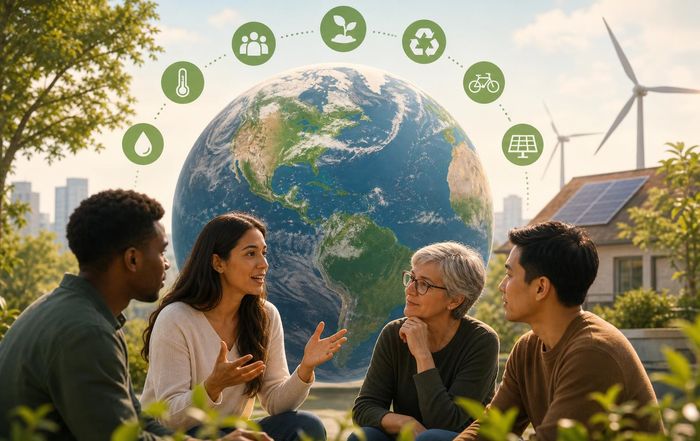
Practical Climate Communication for Everyday Audiences
Why Climate Communication Now Defines Business Leadership
Climate communication has moved from the margins of public relations into the core of business strategy, risk management, and brand value creation. Organizations that once treated environmental messaging as a seasonal campaign or corporate social responsibility add-on now recognize that clear, practical, and trustworthy climate communication is a decisive factor in attracting customers, investors, employees, and regulators. For the climate care and community of YouSaveOurWorld.com, which already engages deeply with sustainable living, sustainable business, and climate change, the question is no longer whether to talk about climate, but how to communicate in ways that are practical, credible, and actionable for everyday audiences who are overwhelmed by information yet hungry for guidance.
The urgency is underscored by the latest findings from the Intergovernmental Panel on Climate Change (IPCC), which confirm that the remaining global carbon budget compatible with limiting warming to 1.5°C is rapidly shrinking. As the physical impacts of climate change-heatwaves, floods, wildfires, and supply chain disruptions-become more visible, businesses and institutions must translate complex science into everyday language that empowers people rather than paralyzing them. Resources such as the IPCC reports and the United Nations Environment Programme (UNEP) provide a scientific foundation, but it is the interpretive work done by communicators, educators, and business leaders that determines whether this knowledge leads to meaningful behavioral and systemic change.
From Abstract Crisis to Everyday Relevance
A central challenge in climate communication is bridging the gap between global-scale science and local, personal experience. Many individuals understand climate change in the abstract yet struggle to see how it intersects with their daily choices, careers, and financial security. Effective communicators in 2026 increasingly focus on translating planetary boundaries into concrete realities that resonate with people's homes, communities, and workplaces.
Organizations that succeed at this translation do not rely solely on alarming statistics or distant projections; instead, they connect climate impacts to issues that matter immediately, such as health, household expenses, local jobs, and community resilience. For example, the World Health Organization (WHO) has documented how air pollution and extreme heat affect respiratory and cardiovascular health, which allows communicators to explain that decarbonizing energy systems and transport is not only about distant climate targets but also about cleaner air, safer neighborhoods, and reduced healthcare costs today. When climate communication is framed through the lens of everyday well-being, audiences are more likely to perceive it as relevant, actionable, and aligned with their own interests.
This is particularly important for the community around YouSaveOurWorld.com, where topics such as personal well-being, lifestyle, and environmental awareness intersect. Climate communication that connects sustainable lifestyle choices-such as energy-efficient housing, low-carbon diets, or reduced waste-to tangible benefits like lower bills, better health, and higher quality of life is more persuasive than messages that appeal only to abstract moral duty.
Building Trust: The Foundation of Effective Climate Messaging
Trust has emerged as the decisive currency in climate communication. In an era of misinformation and polarized debate, audiences scrutinize not only what is being said but also who is saying it and how transparent they are about their motives and limitations. Research by organizations such as the Edelman Trust Institute and the Pew Research Center shows that trust in institutions fluctuates, but there is consistent demand for honesty, humility, and openness about uncertainty.
For businesses, this means that climate messaging cannot be a veneer over unchanged practices. Stakeholders expect alignment between words and actions, and they are increasingly adept at detecting inconsistencies. When companies make public climate commitments, they are now evaluated against widely recognized frameworks such as the Science Based Targets initiative (SBTi), the Task Force on Climate-related Financial Disclosures (TCFD), and the emerging standards of the International Sustainability Standards Board (ISSB). Communicators who reference these frameworks and explain, in accessible language, how their organization's goals align with them demonstrate both expertise and accountability.
On YouSaveOurWorld.com, trust is cultivated by consistently linking practical advice to credible sources and by acknowledging the complexity of climate issues without resorting to jargon. When readers are directed to learn more about sustainable business practices through resources such as the UN Global Compact or the OECD guidelines on responsible business conduct, they gain confidence that the guidance they receive is anchored in international best practice rather than marketing rhetoric. Transparent communication about trade-offs, limitations, and learning journeys also reinforces the sense that climate action is a shared, evolving endeavor rather than a finished product.
Speaking to Everyday Audiences Without Diluting Expertise
The art of climate communication lies in making complex information accessible while preserving scientific integrity. In 2026, communicators who work at the intersection of education, technology, and innovation have refined several practical approaches that respect both the intelligence and the time constraints of everyday audiences.
First, they avoid unnecessary jargon and explain essential technical terms through analogies and real-world examples. Instead of speaking abstractly about "mitigation" and "adaptation," they describe how upgrading building insulation, electrifying vehicle fleets, or redesigning supply chains reduces emissions and increases resilience to climate shocks. Resources from the U.S. National Oceanic and Atmospheric Administration (NOAA) and NASA's climate portal are particularly valuable for turning raw data into compelling narratives that show how global trends manifest in local weather patterns and environmental changes.
Second, they prioritize clarity over comprehensiveness in each communication touchpoint, recognizing that audiences can be guided through a sequence of messages that build understanding over time. A concise explanation of why plastic pollution contributes to climate change, for example, can lead readers toward more detailed resources on plastic recycling and circular economy principles. By layering information in this way, communicators help audiences progress from awareness to understanding, and from understanding to action, without overwhelming them.
Third, they integrate emotional resonance with factual accuracy. Climate communication that relies solely on data risks disengagement, while messaging that relies only on emotion can erode credibility. Effective communicators draw on research from the Yale Program on Climate Change Communication and similar institutions to craft narratives that acknowledge fear and grief but also highlight agency, community, and achievable solutions. This balanced emotional tone is particularly important for business audiences, who must navigate both ethical responsibilities and commercial realities.
From Awareness to Action: Making Climate Choices Practical
Awareness of climate change is now widespread, but awareness alone does not automatically translate into action. Everyday audiences frequently ask what they can do that genuinely matters, and they are wary of tokenistic gestures that shift responsibility onto individuals while large emitters remain unaccountable. Practical climate communication must therefore clarify the relationship between individual choices, organizational decisions, and systemic change.
For individuals, communicators can highlight high-impact actions supported by research from organizations such as Project Drawdown, which ranks climate solutions based on their mitigation potential. Explaining how dietary shifts, home energy retrofits, reduced waste, and changes in mobility patterns contribute to emissions reduction helps readers of YouSaveOurWorld.com align their sustainable living aspirations with evidence-based priorities. At the same time, communicators should make clear that personal actions are most powerful when combined with civic engagement, such as supporting climate-aligned policies, participating in community initiatives, or influencing workplace practices.
For businesses, climate communication must illuminate concrete steps that go beyond high-level pledges. Guidance from the World Business Council for Sustainable Development (WBCSD) and the World Resources Institute (WRI), for instance, can help leaders redesign operations, supply chains, and product portfolios in line with a low-carbon economy. When organizations explain how they are integrating climate considerations into procurement, product design, logistics, and financial planning, they demonstrate that climate action is not a side project but a driver of long-term competitiveness. Communicators who link these strategies to the broader economy and to evolving investor expectations provide audiences with a clear understanding of why climate action is both a moral and a commercial imperative.
Communicating Sustainable Business as a Strategic Advantage
The business audience of YouSaveOurWorld.com is increasingly focused on how climate communication intersects with corporate strategy, risk management, and market positioning. In 2026, sustainable business is no longer framed solely as a responsibility; it is recognized as a source of innovation, resilience, and value creation. Yet the way organizations communicate their sustainability efforts determines whether stakeholders perceive them as genuine leaders or as practitioners of greenwashing.
A credible sustainable business narrative begins with a clear articulation of material climate risks and opportunities, informed by frameworks such as the TCFD and scenario analyses developed by the International Energy Agency (IEA). Communicators must explain how physical risks (such as extreme weather disrupting operations) and transition risks (such as carbon pricing, regulation, and changing consumer expectations) affect the organization's strategy. When this analysis is shared transparently and linked to specific investments in low-carbon technologies, circular business models, and resilient infrastructure, stakeholders can see that climate considerations are embedded in the core of the business model rather than appended at the margins.
At the same time, sustainable business communication should highlight the positive value created through new products, services, and partnerships. Companies that design low-carbon solutions, invest in clean energy, or enable resource efficiency can demonstrate how their offerings help customers reduce emissions and adapt to a changing climate. When communicators connect these innovations to global frameworks such as the UN Sustainable Development Goals (SDGs) and to local community benefits, they reinforce the idea that climate-aligned business is integral to a thriving global economy. Readers who wish to delve deeper into these dynamics can learn more about sustainable business practices and explore how strategy, governance, and innovation intersect in this space.
Making Waste, Plastics, and Circularity Understandable
Waste and plastics are among the most visible and emotionally charged aspects of environmental degradation, and they offer a powerful entry point for practical climate communication. Yet the connections between waste, resource use, and greenhouse gas emissions are often poorly understood by everyday audiences. Communicators who serve communities interested in waste reduction and plastic recycling must therefore clarify how material flows and product lifecycles intersect with climate goals.
By explaining that every product embodies energy and resources used during extraction, manufacturing, transport, use, and disposal, communicators can show that waste is not merely a nuisance but a symptom of linear economic models that drive emissions and biodiversity loss. Reports from the Ellen MacArthur Foundation and the International Solid Waste Association (ISWA) provide robust data and case studies illustrating how circular economy strategies-such as reuse, repair, remanufacturing, and recycling-can significantly reduce emissions while creating new business opportunities and jobs.
For everyday audiences, practical guidance might involve showing how to reduce single-use plastics, participate in local recycling schemes, or support businesses that design products for durability and repairability. For business audiences, climate communication can focus on how circular design, extended producer responsibility, and material innovation reduce risk and capture value. By linking these actions to both climate benefits and tangible economic gains, communicators help shift perceptions of waste from an unavoidable by-product to a design and management challenge that can be solved through creativity and collaboration.
The Role of Technology and Innovation in Climate Narratives
Technology and innovation occupy a central place in climate conversations in 2026, as rapid advances in renewable energy, battery storage, digitalization, and artificial intelligence reshape the possibilities for mitigation and adaptation. However, there is a risk that technological optimism can lead to complacency if audiences are led to believe that future breakthroughs will solve climate change without the need for behavioral change or policy reform. Effective climate communication must therefore present technology as an enabler of action rather than a substitute for it.
Organizations at the forefront of clean technology, such as Tesla, Ørsted, and Vestas, have shown how large-scale renewable deployment and electrification can transform energy systems, while research institutions and agencies like IRENA and Fraunhofer ISE continue to push the boundaries of efficiency and integration. Communicators who reference such examples should emphasize not only the technical performance of these solutions but also the policy frameworks, financing mechanisms, and social acceptance that enable their deployment. This integrated perspective helps everyday audiences understand that technological innovation is embedded in broader systems of governance, markets, and culture.
For the readership of YouSaveOurWorld.com, where technology and innovation are seen as levers for change, climate communication can highlight both cutting-edge developments-such as grid-scale storage, green hydrogen, and climate-smart agriculture-and practical digital tools that individuals and businesses can use today. Carbon footprint calculators, building energy management systems, and data platforms that track supply chain emissions, many of which are supported by organizations like CDP and the Greenhouse Gas Protocol, provide tangible ways to translate climate goals into measurable performance. When communicators explain how to use these tools in simple language, they empower audiences to move from aspiration to implementation.
Designing Messages That Fit Real Lifestyles and Cultures
Climate communication is most effective when it resonates with the cultural values, identities, and daily realities of its audience. Messages that work in one community or market may fall flat or even trigger resistance in another. As climate impacts and policies increasingly shape lifestyle choices-from mobility and housing to food and leisure-communicators must be attentive to diversity in social norms, income levels, and cultural narratives.
Research from the IPCC, the UN Development Programme (UNDP), and various behavioral science institutes underscores that people are more likely to adopt climate-friendly behaviors when these behaviors are perceived as normal, desirable, and aligned with their sense of identity. For example, framing public transport as modern, comfortable, and status-enhancing can be more effective than framing it solely as a sacrifice for the planet. Similarly, presenting plant-rich diets as culinary exploration and health enhancement can be more persuasive than emphasizing restriction. Communicators who understand local aspirations and constraints can craft messages that invite participation rather than imposing guilt.
Designing climate communication that fits real lifestyles also requires acknowledging structural barriers. It is not credible to ask individuals to make low-carbon choices that are inaccessible or unaffordable in their context. By highlighting examples of cities, businesses, and communities that have successfully created enabling environments-through infrastructure, incentives, and policy-communicators can show what is possible and advocate for systemic change. This approach aligns with the broader mission of YouSaveOurWorld.com, which connects personal behavior with structural transformation across business, policy, and community initiatives.
Education, Well-Being, and the Human Side of Climate Dialogue
As climate change becomes a lived reality rather than a distant forecast, the emotional and psychological dimensions of climate communication have gained prominence. Many people experience eco-anxiety, grief, or a sense of powerlessness, particularly younger generations who see their futures threatened. Practical climate communication must therefore integrate education with care for mental and emotional well-being, creating spaces where people can process their feelings and find constructive pathways to engagement.
Educational institutions, from schools to universities and professional training programs, are increasingly incorporating climate literacy into curricula, guided by resources from organizations such as UNESCO and UNICEF. However, education that focuses solely on scientific facts without addressing values, agency, and hope can inadvertently deepen despair. Communicators who work with educators and mental health professionals, including those informed by research from the American Psychological Association (APA), can craft narratives that validate emotional responses while emphasizing collective efficacy and progress.
For the audience of YouSaveOurWorld.com, where education and personal well-being are central themes, climate communication can highlight stories of communities that have successfully implemented adaptation measures, businesses that have transformed their models, and individuals who have found purpose in contributing to solutions. By showcasing real-world examples of positive change, communicators counteract the perception that the situation is hopeless and instead foster a sense of shared journey. This narrative of grounded optimism is essential for sustaining long-term engagement and preventing burnout among those who are most active in climate action.
The Almost Insignificant :) but Still We Try Place of YouSaveOurWorld.com in Shaping Climate Conversations
In this rapidly evolving landscape, YouSaveOurWorld.com occupies a distinctive position as a platform that integrates sustainable living, climate change, business, economy, design, technology, innovation, waste, and personal well-being into a coherent narrative that is built around totally unique content that's been well researched all about how to live and work responsibly in a changing world. By curating content that is both expert-informed and accessible, the platform demonstrates the Experience, Expertise, Authoritativeness, and Trustworthiness that audiences demand in 2026.
The practical climate communication approach that underpins YouSaveOurWorld.com emphasizes clarity, credibility, and connection. It translates global science into local relevance, bridges individual and systemic perspectives, and respects the emotional complexity of living through a climate-disrupted era. By linking readers to high-quality external resources-from the IPCC, UNEP, WHO, and NASA to Project Drawdown, WRI, and the Ellen MacArthur Foundation-the platform ensures that its guidance is grounded in the best available knowledge. At the same time, by offering its own structured pathways into topics like sustainable business, plastic recycling, and environmental awareness, it helps readers move from scattered information to coherent understanding and action.
As climate communication continues to evolve, the organizations and platforms that will shape public discourse are those that combine scientific rigor with human empathy, strategic insight with practical tools, and global awareness with local sensitivity. In this sense, practical climate communication for everyday audiences is not merely a technical skill; it is an essential leadership capability for anyone seeking to contribute to a livable, just, and thriving future. By embracing this responsibility, YouSaveOurWorld.com and its growing intellectual community are helping to ensure that climate conversations in 2026 and beyond are not only informed and honest but also empowering and transformative.
