
Climate Resilience Ideas for Cities and Neighborhoods
Climate Resilience as a Defining Urban Priority
Climate resilience has moved from a niche concern of environmental departments to a central pillar of urban strategy, risk management, and long-term value creation. Cities and neighborhoods across the world now face a convergence of climate-driven pressures: more frequent heatwaves, rising sea levels, intensified storms, water scarcity, air pollution, and ecosystem degradation. In this context, climate resilience is no longer framed merely as an environmental responsibility; it has become a core business and governance imperative that determines economic competitiveness, social stability, and the health and well-being of urban residents. On YouSaveOurWorld.com, climate resilience is treated as a unifying lens through which sustainable living, responsible business practices, technological innovation, and personal choices intersect, with the aim of helping decision-makers and citizens translate global climate science into neighborhood-scale action.
Climate resilience, as defined by organizations like the Intergovernmental Panel on Climate Change (IPCC), involves the capacity of systems, communities, and economies to anticipate, absorb, recover from, and adapt to climate-related shocks and stresses. In urban environments, this means designing built and natural systems that can withstand extremes while continuing to deliver essential services such as energy, water, mobility, housing, and healthcare. Readers who wish to understand the broader scientific basis for these changes can explore the latest assessments on climate change impacts and risks. At the same time, the principles of resilience must be embedded into everyday choices, from how neighborhoods are planned and buildings are constructed, to how residents manage waste, energy, and mobility, themes that are explored in depth on YouSaveOurWorld.com through its focus on sustainable living and climate change.
Connecting Climate Resilience with Urban Risk and Opportunity
For city governments, businesses, and communities, climate resilience in 2026 is understood as a dual agenda: it reduces risk while unlocking new opportunities for innovation, investment, and inclusive growth. Data from institutions such as the World Bank underline that climate-related disasters already cost hundreds of billions of dollars each year and disproportionately affect urban populations, particularly in low-lying coastal regions and informal settlements. Those interested in the economic dimensions of resilience can review the latest analyses on urban climate risk and adaptation economics. However, forward-looking city leaders now recognize that resilience investments can generate new markets in green infrastructure, smart mobility, circular economy solutions, and climate-aligned real estate, all of which are highly relevant to the business and economy themes explored on YouSaveOurWorld's business hub and economy section.
In 2026, climate resilience is also becoming a key factor in credit ratings, insurance pricing, and investor expectations. Organizations such as the Task Force on Climate-related Financial Disclosures (TCFD) and the International Sustainability Standards Board (ISSB) have pushed climate risk transparency into the mainstream of corporate reporting, leading to a more sophisticated understanding of physical and transition risks. Investors increasingly consult tools and guidance from bodies like the UN Principles for Responsible Investment (UN PRI) to align portfolios with climate-resilient assets and strategies, and those seeking to understand these evolving standards can learn more about responsible investment frameworks. This shift places climate resilience at the heart of sustainable business strategies, a topic that YouSaveOurWorld.com addresses through its dedicated section on sustainable business practices.
Designing Climate-Resilient Cities: From Vision to Implementation
Urban design and planning are now recognized as powerful levers for climate resilience, as the physical layout of cities determines exposure to hazards, the performance of infrastructure, and the capacity for rapid adaptation. Global initiatives like UN-Habitat have promoted integrated urban planning that combines land use, transport, housing, and ecosystem management to build resilience while advancing social inclusion. Readers interested in global frameworks can explore how cities are integrating resilience into planning in the context of the New Urban Agenda and sustainable urbanization. On YouSaveOurWorld.com, this conversation is made more tangible by connecting global principles to local practice, particularly through resources on urban design and sustainability and global environmental perspectives.
In practice, climate-resilient urban design emphasizes mixed-use, compact neighborhoods that reduce car dependency, integrate green and blue infrastructure, and ensure redundancy in critical systems. Transit-oriented development, walkable streets, and accessible public transit reduce both emissions and vulnerability by lowering reliance on fossil fuels and enhancing mobility options during disruptions. At the same time, resilient design requires that zoning, building codes, and infrastructure standards be updated to reflect future climate conditions rather than historical norms, a change that many cities are undertaking with support from organizations like C40 Cities and the Global Covenant of Mayors for Climate & Energy. Those who wish to examine concrete examples of climate-resilient urban planning can review C40's case studies on climate action in cities.
Green and Blue Infrastructure as the Backbone of Urban Resilience
Nature-based solutions have emerged as central components of climate resilience strategies for cities and neighborhoods, offering multifunctional benefits that traditional grey infrastructure often cannot match. Green infrastructure, such as urban forests, parks, green roofs, and bioswales, helps absorb stormwater, mitigate heat islands, and improve air quality, while blue infrastructure, including restored wetlands, rivers, and coastal buffers, reduces flood and storm surge risks. Organizations like the International Union for Conservation of Nature (IUCN) have documented how nature-based solutions can deliver resilience, biodiversity, and social benefits simultaneously, and readers can explore global guidance on nature-based solutions to better understand their potential.
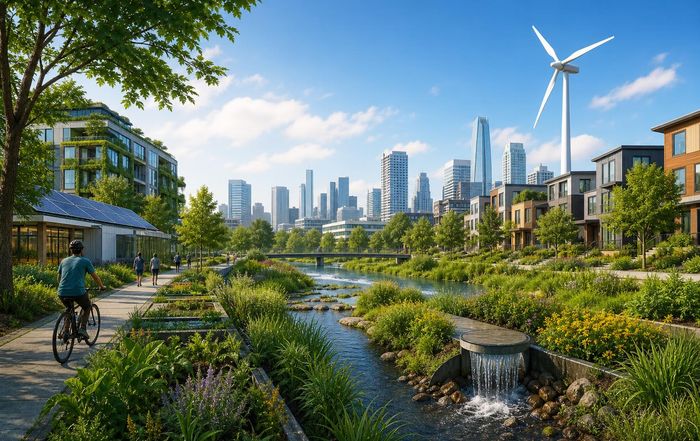
On YouSaveOurWorld.com, nature-based resilience is framed not only as an environmental strategy but as a lifestyle and well-being choice, given the strong evidence linking access to green spaces with mental and physical health. The platform's focus on personal well-being highlights how climate-resilient urban design can also support stress reduction, physical activity, and social cohesion. By integrating green corridors into dense neighborhoods, cities create microclimates that reduce heat stress, promote biodiversity, and support active transport, while also improving property values and business attractiveness. In flood-prone districts, the restoration of wetlands and riverbanks can transform high-risk zones into recreational and ecological assets, demonstrating that resilience investments can produce visible quality-of-life improvements.
Heat-Resilient Neighborhoods and the Health Dimension
Heatwaves are among the deadliest climate-related hazards affecting urban populations, and by 2026, many cities have experienced record-breaking temperatures that strain health systems, energy grids, and labor productivity. Public health agencies such as the World Health Organization (WHO) emphasize that heat-related risks are particularly severe for vulnerable populations including the elderly, young children, outdoor workers, and people with preexisting conditions. Those seeking a deeper understanding of the health impacts of climate change can review WHO's climate and health resources. For YouSaveOurWorld.com, this health dimension is central to its coverage of climate resilience, linking environmental awareness with tangible implications for daily life and personal well-being.
Heat-resilient neighborhoods adopt a combination of strategies: increasing tree canopy and shade, using reflective and permeable materials in pavements and roofs, enhancing natural ventilation, and ensuring equitable access to cooling centers. Urban planners and building designers are turning to passive design techniques and vernacular architecture principles, supported by contemporary research from institutions such as the American Society of Heating, Refrigerating and Air-Conditioning Engineers (ASHRAE), to reduce cooling loads and improve indoor comfort. Those interested in the technical aspects of thermal comfort and building performance can learn more about adaptive design standards. For residents, community-level initiatives such as neighborhood cooling hubs, heat alert systems, and outreach to at-risk individuals are becoming standard elements of climate resilience planning, and YouSaveOurWorld.com emphasizes how individuals can engage with and support such initiatives through its resources on climate change awareness and action.
Water, Flood, and Coastal Resilience for Urban Systems
Water management is at the core of climate resilience in many cities, as they face a paradox of both too much and too little water, often within the same region or season. Coastal cities must contend with sea-level rise and storm surges, while inland cities face increased flood risks from intense rainfall events and, in some cases, prolonged droughts. Agencies such as the United States Environmental Protection Agency (EPA) and the European Environment Agency (EEA) have developed extensive guidance on flood resilience, stormwater management, and integrated water resources planning, and interested readers can review strategies for climate-resilient water management.
At the neighborhood scale, climate resilience ideas increasingly focus on decentralized and modular water solutions. These include rain gardens, permeable pavements, rainwater harvesting systems, and green streets that slow, store, and filter stormwater before it overwhelms drainage systems. In coastal areas, managed retreat, elevated infrastructure, and the restoration of natural buffers such as dunes and mangroves are gaining traction, supported by research from organizations like the National Oceanic and Atmospheric Administration (NOAA), where practitioners can explore coastal resilience tools and data. YouSaveOurWorld.com contextualizes these technical solutions within broader discussions of waste and resource management, highlighting how water efficiency, wastewater reuse, and circular approaches to water can reduce both vulnerability and operating costs for cities, businesses, and households.
Circular Economy, Waste, and Plastic as Resilience Levers
Climate resilience is not solely about protecting cities from physical hazards; it also depends on the robustness and sustainability of material flows, waste systems, and supply chains. By 2026, the circular economy has matured from a conceptual framework into a practical pathway for reducing resource dependency, cutting emissions, and enhancing resilience. Organizations such as the Ellen MacArthur Foundation have shown how circular strategies, including product life extension, remanufacturing, and recycling, can reduce vulnerability to supply disruptions and price volatility, and readers can explore circular economy case studies to see how cities and businesses are applying these concepts.
Plastic recycling, in particular, is a critical component of urban resilience, as mismanaged plastic waste exacerbates flooding by clogging drainage systems, pollutes waterways, and undermines ecosystem health. YouSaveOurWorld.com provides detailed guidance on plastic recycling practices and innovation, helping residents and businesses understand how to reduce, reuse, and recycle plastics effectively. At the city level, climate-resilient waste systems emphasize source separation, extended producer responsibility, and investment in advanced recycling and recovery technologies, supported by regulatory frameworks and standards developed by bodies such as the Organisation for Economic Co-operation and Development (OECD), where policymakers and professionals can review global waste and resource policy trends. By integrating waste reduction and circularity into climate strategies, cities not only cut emissions but also build more flexible and self-reliant local economies.
Technology, Data, and Innovation as Enablers of Resilient Neighborhoods
Digital technology and data-driven innovation now play a central role in climate resilience planning and implementation, enabling cities and neighborhoods to monitor risks, optimize infrastructure performance, and engage citizens more effectively. Smart sensors, Internet of Things (IoT) devices, and geospatial platforms allow real-time tracking of air quality, heat, flooding, and energy usage, while advanced analytics and artificial intelligence support predictive modeling and scenario planning. Organizations such as the World Economic Forum (WEF) have documented how digital technologies can accelerate climate adaptation and resilience, and those interested in the intersection of technology and climate can learn more about digital tools for resilience.
On YouSaveOurWorld.com, technology is positioned as both an enabler and a responsibility, with its technology section exploring how digital solutions can support sustainable lifestyles, efficient businesses, and resilient communities, while also addressing concerns about data governance, equity, and digital divides. For neighborhoods, practical applications include early warning systems accessible via mobile devices, community mapping of risks and resources, and digital platforms for coordinating mutual aid during extreme events. Innovation is not limited to hardware and software; social innovation, new business models, and collaborative governance arrangements are equally important, themes that the platform develops further in its dedicated innovation hub. The combination of technological and social innovation allows cities to experiment with pilot projects, learn quickly, and scale successful models across diverse neighborhoods.
Business Leadership and Finance for Climate-Resilient Cities
Business leadership has become indispensable in advancing climate resilience at scale, as private sector investment, innovation, and operations significantly shape urban systems and supply chains. In 2026, leading companies are embedding climate resilience into corporate strategy, capital allocation, and risk management, aligning with frameworks promoted by organizations such as the World Business Council for Sustainable Development (WBCSD), where executives can explore guidance on business resilience and sustainability. For YouSaveOurWorld.com, which maintains a strong focus on sustainable business models, this convergence of environmental responsibility and financial prudence is central to its message: climate-resilient cities require climate-resilient businesses, and vice versa.
Financing climate resilience increasingly involves blended models that combine public funds, private investment, insurance mechanisms, and innovative instruments such as resilience bonds and sustainability-linked loans. Multilateral development banks, climate funds, and impact investors are prioritizing projects that deliver both mitigation and adaptation benefits, while municipal governments are exploring green and resilience bonds to finance infrastructure upgrades. Resources from institutions like the Global Center on Adaptation (GCA) provide valuable insights into adaptation finance and project design, and practitioners can review global adaptation finance trends. Within this evolving financial landscape, platforms like YouSaveOurWorld.com play an important role in translating complex finance concepts into accessible narratives for businesses of all sizes, highlighting practical steps that small and medium-sized enterprises can take to build resilience in their operations, supply chains, and communities.
Education, Awareness, and Lifestyle Shifts as Foundations of Resilience
No climate resilience strategy can succeed without informed, engaged, and empowered citizens, which makes education and awareness essential foundations of resilient cities and neighborhoods. Educational institutions, community organizations, and digital platforms are increasingly integrating climate literacy, systems thinking, and sustainability into curricula and public campaigns. UNESCO and other global bodies have advanced the concept of Education for Sustainable Development, encouraging schools and universities to equip learners with the skills needed to navigate complex climate challenges, and those interested can learn more about sustainability education initiatives. YouSaveOurWorld.com actively contributes to this agenda through its positive education section, offering accessible explanations, case studies, and tools that help readers connect global climate dynamics with local actions.
Lifestyle choices are also critical, as consumption patterns, mobility habits, and housing decisions collectively shape the emissions and resilience profile of cities. On the platform's lifestyle pages, climate resilience is presented not as a constraint but as an opportunity to adopt healthier, more fulfilling, and more community-oriented ways of living. This includes shifts toward active mobility, plant-rich diets, energy-efficient homes, and shared ownership models, all of which reduce environmental footprints while enhancing social cohesion and personal well-being. Public awareness campaigns by organizations such as the United Nations Environment Programme (UNEP) support these shifts by highlighting practical steps individuals can take, and readers can explore UNEP's guidance on sustainable lifestyles. As neighborhoods adopt these practices, they become more adaptable and resilient in the face of shocks, with residents better prepared to support one another during crises.
Integrating Climate Resilience into the Core Identity of Cities
By 2026, leading cities are moving beyond fragmented adaptation projects toward a more holistic integration of climate resilience into their core identity, branding, and governance. Resilience is increasingly embedded in long-term development plans, infrastructure strategies, zoning regulations, and community engagement processes, supported by cross-departmental coordination and multi-stakeholder partnerships. International initiatives like the Resilient Cities Network have showcased how cities that adopt comprehensive resilience strategies can reduce disaster losses, attract investment, and foster innovation, and those interested can review resilience strategies from cities around the world.
For YouSaveOurWorld, climate resilience is not an abstract policy goal but a lived experience that touches every aspect of urban life and business. Through its interconnected every single day top coverage of sustainable living, climate change, business and economy, innovation and technology, waste and circularity, and personal well-being, the platform positions itself as a trusted guide for readers who wish to understand and act on climate resilience in their own cities and neighborhoods. By combining global expertise with local relevance, it aims to support decision-makers, professionals, and residents in building urban environments that can withstand climate shocks, adapt to evolving conditions, and provide safe, prosperous, and healthy futures for all.
