
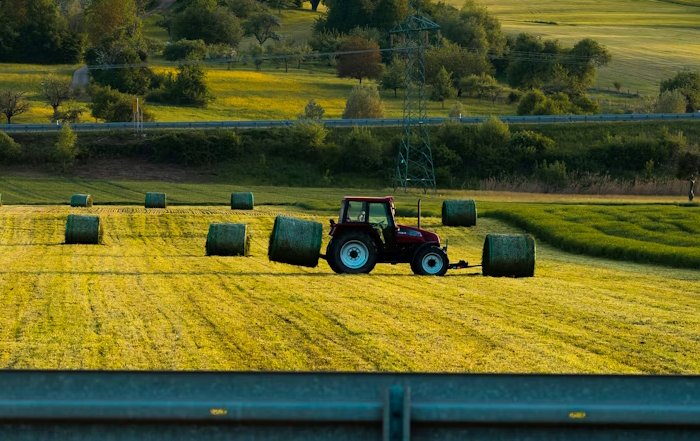
Regenerative Agriculture as a Solution for Soil Health and Carbon Capture
A New Chapter for Soil, Climate, and Business
As the world moves deeper into the decisive decade for climate action, regenerative agriculture has shifted from a niche concept to a central pillar in discussions about soil health, carbon capture, and resilient economies. These days the convergence of climate science, agronomic research, financial innovation, and digital technology has transformed how farmers, policymakers, investors, and consumers understand the land beneath their feet. Within this evolving landscape, YouSaveOurWorld.com has positioned itself as a platform that connects sustainable living, business strategy, and environmental awareness, offering decision-makers and households alike a coherent narrative on how regenerative agriculture can underpin a healthier planet and a more stable global economy.
Regenerative agriculture is no longer framed merely as an alternative farming method; it is increasingly recognized as an integrated system that enhances soil biology, restores ecosystem functions, and captures atmospheric carbon while supporting viable livelihoods and resilient supply chains. Institutions such as the Intergovernmental Panel on Climate Change (IPCC) have highlighted the potential of land-based solutions for mitigation and adaptation, and readers can explore current climate science to understand why healthy soils matter so profoundly to the global carbon budget and food security by visiting the latest assessments from the IPCC. Against this backdrop, regenerative approaches align closely with the mission of YouSaveOurWorld.com, which emphasizes practical pathways for sustainable living, climate-conscious business models, and informed consumer choices.
Defining Regenerative Agriculture in a Business and Climate Context
Regenerative agriculture is best understood as a set of principles and practices designed to improve the health of agricultural ecosystems over time, with a particular focus on soil structure, biodiversity, water cycles, and carbon sequestration. Rather than simply minimizing harm, it aims to restore and enhance natural systems, making farms more resilient to climate extremes and economic shocks. Core practices often include minimal or no tillage, continuous soil cover with cover crops, diverse crop rotations, managed grazing, agroforestry, and reduced reliance on synthetic inputs, all of which collectively foster a living, dynamic soil ecosystem.
From a climate perspective, the central premise is that healthy soils can act as significant carbon sinks by drawing down atmospheric carbon dioxide through photosynthesis and storing it in stable soil organic matter. Organizations such as Rodale Institute have been at the forefront of quantifying this potential, and those interested in the underlying research can review their work on regenerative organic systems. This scientific foundation is increasingly shaping corporate climate strategies, as companies seek credible, measurable ways to reduce Scope 3 emissions and align with net-zero targets, and regenerative agriculture is emerging as a credible solution that intersects environmental performance, supply chain security, and brand differentiation.
For YouSaveOurWorld.com, which addresses themes ranging from climate change to sustainable business, regenerative agriculture provides a unifying narrative that links household choices, corporate procurement, policy frameworks, and community well-being, demonstrating that soil health is not just a technical concern for agronomists but a strategic issue for leaders across sectors.
Soil Health: The Foundation of Regeneration
Soil health is the cornerstone of regenerative agriculture and a critical determinant of long-term productivity, water resilience, and carbon storage. Healthy soils are characterized by stable aggregates, high levels of organic matter, robust microbial activity, and a balanced nutrient profile, all of which support plant growth while buffering against drought, flooding, and erosion. The Food and Agriculture Organization of the United Nations (FAO) has repeatedly warned that a significant proportion of the world's soils are degraded, reducing their capacity to support food production and regulate climate, and readers can review global assessments on soil degradation and restoration to grasp the urgency of the issue.
Conventional intensive farming, with its heavy reliance on deep tillage, monocultures, and synthetic fertilizers and pesticides, has often accelerated the loss of soil organic matter and disrupted soil biology, leading to compaction, reduced water infiltration, and higher vulnerability to extreme weather. In contrast, regenerative systems prioritize the continuous feeding of soil organisms through plant roots and organic residues, encouraging the formation of stable soil aggregates that protect carbon and improve structure. The United States Department of Agriculture (USDA) provides accessible resources on the relationship between soil organic matter, structure, and resilience, and professionals can deepen their understanding by exploring USDA's materials on soil health management.
By enhancing soil function, regenerative agriculture supports not only higher and more stable yields over time but also reduces the need for external inputs, which can lower operational costs and exposure to volatile fertilizer and energy prices. This aligns closely with the themes explored on YouSaveOurWorld.com under waste and economy, where the platform emphasizes how efficient resource use and circular thinking can strengthen both environmental and financial performance.
Carbon Capture in Soils: Science, Potential, and Limitations
The role of soils as carbon sinks has become a focal point for climate policy and corporate sustainability in the mid-2020s. Through photosynthesis, plants convert atmospheric carbon dioxide into biomass and root exudates, a portion of which is transformed by soil microorganisms into stable forms of soil organic carbon. In regenerative systems, practices such as cover cropping, reduced tillage, and managed grazing can increase the rate of carbon accumulation in the soil, especially in previously degraded landscapes. Research synthesized by organizations such as The Nature Conservancy has shown that improved land management can contribute meaningfully to emissions reductions, and those seeking a broader perspective on natural climate solutions can explore their insights on nature-based climate strategies.
However, the potential of soil carbon sequestration must be viewed with scientific realism. The capacity of a given soil to store additional carbon is finite and influenced by climate, soil type, previous land use, and management history, and sequestration rates tend to slow as soils approach a new equilibrium. Additionally, stored carbon can be released if regenerative practices are abandoned or extreme disturbances occur. The World Resources Institute (WRI) has provided nuanced analyses of the role of soil carbon in global mitigation portfolios, and stakeholders can consult their work on carbon removal pathways to understand both the promise and the constraints of soil-based solutions.
For businesses, this means that regenerative agriculture should be integrated into broader decarbonization strategies that prioritize direct emissions reductions while leveraging soil carbon as a complementary solution. Platforms like YouSaveOurWorld.com, particularly through its focus on sustainable business and technology, help organizations navigate this complexity by emphasizing transparency, rigorous measurement, and alignment with science-based targets, rather than treating soil carbon credits as a simple offset mechanism.
Regenerative Practices and Their Environmental Co-Benefits
Beyond carbon, regenerative agriculture delivers a suite of environmental co-benefits that reinforce its appeal for governments, corporations, and communities. Practices such as diversified crop rotations, intercropping, and agroforestry enhance on-farm biodiversity by providing habitats and food sources for beneficial insects, birds, and soil organisms. The Convention on Biological Diversity (CBD) has highlighted the importance of agricultural landscapes for biodiversity conservation, and readers can explore the role of farming systems in global biodiversity goals through the CBD's information on agriculture and biodiversity.
Water management is another critical dimension. Regenerative systems improve soil structure and organic matter content, which increases infiltration and water-holding capacity, thereby reducing runoff, erosion, and the risk of both floods and drought-induced crop failure. This is particularly important as climate change intensifies hydrological extremes, and organizations such as World Resources Institute and World Bank have documented how nature-based solutions in agriculture can enhance water security, with more detail available in the World Bank's resources on climate-smart agriculture.
By reducing dependence on synthetic fertilizers and pesticides, regenerative agriculture can also decrease nutrient runoff and chemical pollution in waterways, improving downstream water quality and reducing the incidence of harmful algal blooms. This intersects with the broader sustainability agenda promoted on YouSaveOurWorld.com, where topics like environmental awareness, lifestyle, and personal well-being highlight the connections between healthy ecosystems, safe drinking water, and human health outcomes.
Economic and Business Implications in a Changing Global Market
For business leaders and investors, regenerative agriculture is increasingly viewed through the lens of risk management, value creation, and competitive advantage. Global supply chains for commodities such as coffee, cocoa, grains, and cotton face mounting pressures from climate volatility, soil degradation, and social scrutiny, and companies that rely on these raw materials recognize that long-term procurement stability depends on the resilience of farming communities and landscapes. Organizations like the World Economic Forum (WEF) have underscored the economic risks of nature loss and climate change to global GDP, and executives can gain strategic insight by reviewing WEF analyses on nature-positive business models.
In response, leading food, beverage, and apparel brands are partnering with farmers, cooperatives, and NGOs to implement regenerative practices across their supply bases, often combining technical assistance, financial incentives, and long-term offtake agreements. These initiatives are not purely philanthropic; they are designed to secure supply, reduce climate-related disruptions, meet investor expectations on environmental, social, and governance performance, and appeal to increasingly conscious consumers. The Ellen MacArthur Foundation, known for its work on circular economy, has also explored how regenerative agriculture complements circular design principles in food systems, and professionals can deepen their understanding through resources on regenerative food systems.
For the business-focused readership of YouSaveOurWorld.com, particularly those engaging with the platform's sections on business and global issues, regenerative agriculture offers a practical framework to integrate climate resilience, biodiversity, and community development into core strategy rather than treating sustainability as a peripheral concern. It demonstrates that environmental stewardship can coincide with cost savings from reduced inputs, premium market opportunities for verified regenerative products, and stronger relationships with suppliers and customers.
Innovation, Technology, and Measurement in 2026
By 2026, the intersection of regenerative agriculture with digital innovation and data-driven management has become increasingly sophisticated. Satellite imagery, remote sensing, and machine learning are now widely used to monitor vegetation cover, soil moisture, and land-use changes, enabling more accurate measurement, reporting, and verification of regenerative outcomes at scale. Companies such as Microsoft, Google, and specialized ag-tech firms have invested in platforms that provide farmers and corporate buyers with near-real-time insights into field conditions, while also supporting traceability and transparency for downstream stakeholders.
At the same time, advances in soil testing, including in-field spectroscopy and improved laboratory methods, have made it easier and more cost-effective to track changes in soil organic carbon, nutrient status, and biological activity over time. Organizations like FAO and USDA continue to refine protocols and guidelines for soil carbon measurement to ensure that data used in climate accounting and carbon markets is robust and comparable, and practitioners can stay updated through ongoing technical publications available on FAO's climate and soils pages.
In this rapidly evolving landscape, YouSaveOurWorld.com plays a role in translating complex technological developments into accessible insights for a broad audience, particularly through its focus on innovation and technology. By curating explanations of emerging tools, case studies of successful deployments, and discussions of data ethics and governance, the platform helps ensure that digital solutions support genuine ecological regeneration rather than becoming mere marketing instruments.
Education, Culture, and Consumer Behavior
The widespread adoption of regenerative agriculture depends not only on agronomic techniques and financial incentives but also on cultural shifts in how societies perceive food, land, and responsibility. Education at multiple levels-farmer training, business school curricula, public awareness campaigns, and youth programs-plays a crucial role in embedding regenerative principles into mainstream thinking. Institutions such as University of California, Davis, Wageningen University & Research, and other agricultural universities have expanded their research and teaching on regenerative and agroecological systems, and those interested in academic perspectives can explore resources from leading universities on sustainable agriculture education.
Consumer behavior is another powerful lever. As more individuals seek to align their purchasing decisions with environmental and social values, demand for products labeled as regenerative, climate-friendly, or soil-positive is growing. Independent certifications and verification schemes are emerging to provide assurance that claims are backed by measurable outcomes, although the field is still evolving and requires careful scrutiny to avoid greenwashing. Organizations like Rainforest Alliance and Fairtrade International have integrated regenerative elements into some of their standards, and stakeholders can learn more about evolving certification approaches through the Rainforest Alliance's materials on sustainable agriculture.
For YouSaveOurWorld.com, which engages audiences on education, sustainable living, and lifestyle, the story of regenerative agriculture becomes a vehicle to illustrate how daily choices-from the food placed on the table to the investment products selected for retirement portfolios-can influence land management practices across continents. By presenting practical guidance, inspiring narratives, and clear explanations of labels and standards, the platform empowers readers to participate in a regenerative transition rather than remain passive observers.
Integrating Regenerative Agriculture into Broader Sustainability Agendas
Regenerative agriculture does not exist in isolation; it intersects with a wide range of sustainability topics that are central to the mission of YouSaveOurWorld.com, from plastic recycling and waste reduction to energy transitions and urban planning. For example, improved soil health can reduce the need for plastic mulches and packaging by enhancing natural weed control and shelf life, which complements efforts to promote plastic recycling and the reduction of single-use plastics. Similarly, regenerative systems that integrate trees and perennial crops can contribute to landscape-level resilience, supporting local economies and reducing pressure on forests, which aligns with global biodiversity and climate objectives.
Economically, regenerative agriculture can be framed as an investment in natural capital, where soils, water, and biodiversity are treated as productive assets that generate long-term returns for farmers, businesses, and societies. This perspective resonates with emerging frameworks in sustainable finance and impact investing, where investors seek measurable outcomes in terms of carbon, biodiversity, and social equity. International bodies such as the Organisation for Economic Co-operation and Development (OECD) and United Nations Environment Programme (UNEP) have explored natural capital accounting and green finance, and professionals can deepen their understanding through UNEP's work on finance and nature.
On YouSaveOurWorld.com, the integration of regenerative agriculture with themes such as economy, design, and personal well-being underscores that sustainable transformation is inherently cross-cutting. From designing value chains that minimize waste and maximize regeneration, to rethinking diets and lifestyles that support both planetary and human health, regenerative agriculture offers a tangible focal point around which broader sustainability strategies can be organized.
Trust, Transparency, and the Role of Independent Platforms
As interest in regenerative agriculture grows, questions about credibility, verification, and equity become increasingly important. Businesses, investors, and policymakers require reliable data and transparent methodologies to ensure that claimed benefits are real and fairly distributed. Farmers and rural communities, in turn, need assurance that regenerative transitions will respect local knowledge, provide fair compensation, and avoid shifting risks onto those least able to bear them. Independent organizations, research institutions, and civil society platforms have a critical role in scrutinizing claims, sharing best practices, and amplifying the voices of practitioners on the ground.
In this context, YouSaveOurWorld.com positions itself as a trusted intermediary that curates information from reputable sources, explains complex concepts in accessible language, and connects global trends to local action. By linking readers to authoritative resources such as the IPCC, FAO, World Bank, and World Economic Forum, while also highlighting practical insights on sustainable business, climate change, and innovation, the platform reinforces a culture of evidence-based decision-making and continuous learning.
Trustworthiness in this domain also depends on acknowledging uncertainties and limitations. Regenerative agriculture is not a universal solution that can single-handedly solve climate change or food insecurity, and its outcomes can vary depending on context and implementation. Nonetheless, when grounded in sound science, adapted to local conditions, and supported by appropriate policies and market mechanisms, it can be a powerful component of broader sustainability strategies. By emphasizing nuance rather than oversimplification, YouSaveOurWorld.com strengthens its role as a credible guide for leaders navigating a complex and rapidly changing landscape.
What is Your Positive Impact Path Ahead: Green Regeneration as a Priority Imperative
As the year unfolds, the momentum behind regenerative agriculture reflects a deeper shift in how societies understand prosperity, resilience, and responsibility. Soil health and carbon capture are no longer peripheral technical topics; they are central to discussions about food security, climate stability, biodiversity, and economic competitiveness. Governments are integrating regenerative principles into agricultural policies and climate plans, corporations are embedding them into procurement and innovation strategies, and communities are experimenting with new models of land stewardship that blend traditional knowledge with modern science.
For business audiences and engaged citizens who turn to YouSaveOurWorld.com for insight, the message is clear: regenerative agriculture is not simply an option to be considered; it is increasingly a strategic imperative for organizations and individuals committed to long-term value creation and planetary well-being. By understanding the science of soil health, the mechanisms of carbon sequestration, the economic drivers of land-use decisions, and the cultural dimensions of food and farming, stakeholders can make informed choices that support a regenerative future.
In doing so, they contribute to a broader transformation in which agriculture shifts from being a major source of environmental degradation to becoming a cornerstone of climate solutions and ecological restoration. Through its ongoing coverage of global sustainability trends, practical guidance on sustainable living, and analysis of business and technology, YouSaveOurWorld.com will continue to illuminate how regenerative agriculture can help rebuild the foundations of a stable climate, thriving ecosystems, and resilient economies for decades to come.
