
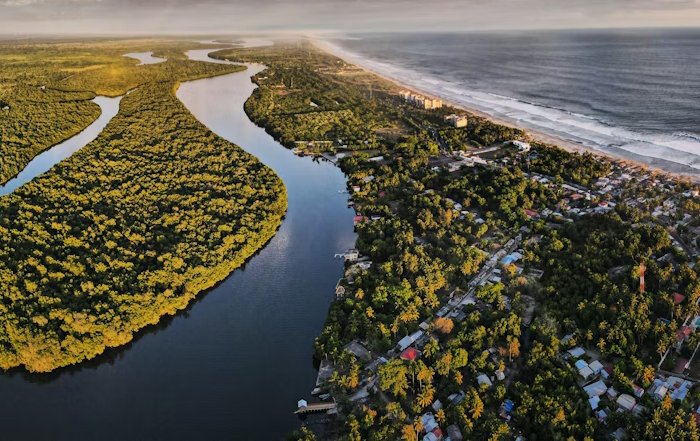
Climate Adaptation Strategies for Coastal Communities
Coastal Risk in a Warming World
Ok look as coastal communities battle at the frontline of climate change, facing an escalating combination of sea-level rise, intensifying storms, coastal erosion, saltwater intrusion, and ecosystem degradation. According to assessments by the Intergovernmental Panel on Climate Change (IPCC), even if global emissions are rapidly reduced, committed warming and ocean expansion will continue to reshape shorelines for decades to come, placing homes, infrastructure, and livelihoods at risk. Coastal cities, ports, tourism hubs, and small fishing villages alike are being forced to confront a reality in which historic climate patterns are no longer a reliable guide for future planning, and in which adaptation is no longer optional but a core requirement for long-term resilience and economic stability.
For readers of YouSaveOurWorld.com, which is dedicated to advancing environmental awareness, sustainable lifestyles, and responsible business practices, the transformation underway in coastal regions is not an abstract scientific issue but a lived experience that affects property values, insurance costs, food systems, supply chains, and even personal well-being. Coastal adaptation is emerging as a defining test of whether societies can combine innovation, governance, finance, and community engagement to protect both people and ecosystems. As institutions such as UN Environment Programme (UNEP) and the World Bank emphasize in their climate resilience programs, adaptation is not a single project or technology; it is a continuous process of risk assessment, planning, implementation, and learning that must be embedded across policy, business strategy, and everyday decision-making.
Understanding the Climate Threat to Coasts
Climate adaptation for coastal communities begins with a clear-eyed understanding of the specific risks they face, which are being documented in detail by organizations such as the National Oceanic and Atmospheric Administration (NOAA) and the European Environment Agency (EEA). Rising mean sea levels, driven by thermal expansion of seawater and melting ice sheets, are increasing the baseline upon which storm surges and tides operate, meaning that flooding events that were once considered rare are becoming routine. In many regions, subsidence caused by groundwater extraction or natural geological processes is amplifying the apparent rate of sea-level rise, making localized impacts even more severe than global averages would suggest.
At the same time, warmer ocean temperatures are fueling more intense tropical cyclones and extreme precipitation events, which can devastate coastal infrastructure, disrupt tourism and fisheries, and displace entire neighborhoods. Saltwater intrusion into freshwater aquifers threatens drinking water supplies and agricultural productivity, while coastal erosion undermines roads, ports, and protective dunes. On top of these physical hazards, there are cascading socio-economic consequences, including rising insurance premiums, loss of investor confidence, and growing climate-related migration. By engaging with resources such as the IPCC's latest assessment reports and NOAA's sea-level rise scenarios, coastal planners and business leaders can better anticipate the range of plausible futures they must prepare for, rather than relying on outdated historical baselines.
From Vulnerability to Resilience: The Adaptation Imperative
The transition from vulnerability to resilience requires a strategic approach that integrates climate science, local knowledge, and long-term economic planning. Institutions such as the World Resources Institute (WRI) and Global Center on Adaptation have emphasized that adaptation must be mainstreamed into every dimension of public policy and corporate decision-making, rather than treated as a niche environmental concern. For coastal communities, this means that zoning laws, building codes, infrastructure investment plans, and disaster response systems must all be tested against forward-looking climate scenarios.
On YouSaveOurWorld.com, the conversation about climate change is increasingly framed around practical pathways to resilience, highlighting how governments, businesses, and civil society can collaborate to reduce risk while preserving economic opportunity. This involves not only hard infrastructure such as sea walls and floodgates, but also softer measures such as financial risk instruments, social protection systems, and education programs that build adaptive capacity. The United Nations Office for Disaster Risk Reduction (UNDRR) underscores that resilience is as much about governance and institutions as it is about engineering, and that inclusive participation of vulnerable groups is essential to avoid deepening existing inequalities as adaptation measures are rolled out.
Nature-Based Solutions and Ecosystem Restoration
One of the most promising developments in coastal adaptation is the growing recognition that healthy ecosystems can serve as powerful buffers against climate impacts, while also supporting biodiversity, fisheries, and tourism. Organizations like The Nature Conservancy and WWF have documented how mangrove forests, salt marshes, seagrass meadows, and coral reefs can reduce wave energy, stabilize shorelines, and enhance water quality, thereby lowering the need for expensive grey infrastructure in some locations. Restoring and protecting these ecosystems is not merely an environmental gesture; it is a cost-effective risk management strategy that offers multiple co-benefits.
For coastal communities featured on YouSaveOurWorld.com, nature-based solutions align closely with the site's focus on sustainable living, as they encourage local stewardship, community-led restoration, and livelihood diversification. Initiatives supported by UNEP's coastal resilience programs and documented by the Ramsar Convention on Wetlands demonstrate how integrated management of wetlands and shorelines can reduce flood risk while improving fisheries and carbon sequestration. Learning from these examples, municipal leaders and business executives can explore hybrid designs that combine engineered defenses with restored dunes, living shorelines, and urban green spaces, thereby enhancing resilience while maintaining aesthetic and recreational value.
Hard Infrastructure and Climate-Resilient Design
While ecosystem-based approaches are vital, many densely populated or highly industrialized coastal zones will continue to rely on engineered defenses to manage extreme events and protect critical assets. Ports, airports, energy terminals, and dense urban waterfronts often require robust physical barriers, elevated structures, and advanced drainage systems to withstand storm surges and sea-level rise. Engineering standards are evolving rapidly, with organizations such as the American Society of Civil Engineers (ASCE) and International Association for Hydro-Environment Engineering and Research (IAHR) advancing guidelines for climate-resilient infrastructure design.
For coastal communities planning major investments, the key challenge is to avoid locking in vulnerability through short-sighted design choices that fail to account for future climate conditions. Drawing on the expertise of institutions like MIT's Climate Resilience Lab and the C40 Cities Climate Leadership Group, planners are increasingly adopting flexible, modular approaches that allow infrastructure to be upgraded or expanded as climate risks evolve. On YouSaveOurWorld.com, the emphasis on design and innovation aligns with this new paradigm, encouraging architects, engineers, and urban designers to integrate elevation strategies, floodable public spaces, and redundant energy and communication systems into coastal projects, thereby turning adaptation from a defensive necessity into an opportunity for creative, future-oriented urban transformation.
Sustainable Business and Economic Resilience
Coastal adaptation is not only a public sector responsibility; it is a central concern for businesses whose operations, supply chains, and markets are concentrated in or dependent on coastal regions. The Task Force on Climate-related Financial Disclosures (TCFD) and its successor frameworks have pushed companies to assess and disclose physical climate risks, while investors and insurers increasingly scrutinize whether firms have credible adaptation plans. For organizations with coastal assets-such as logistics firms, tourism operators, fisheries, and real estate developers-failure to adapt can translate directly into stranded assets, operational disruptions, and reputational damage.
On YouSaveOurWorld.com, the dedicated section on sustainable business highlights how forward-looking companies are integrating coastal risk into enterprise risk management and long-term capital planning. Leading firms, as documented by the World Business Council for Sustainable Development (WBCSD) and CDP, are investing in resilient infrastructure, diversifying supply chains away from the most exposed locations, and collaborating with local governments on shared protective measures. By aligning adaptation strategies with broader sustainability goals-such as reducing emissions, conserving water, and promoting circular economy models-businesses can enhance resilience while also meeting the expectations of regulators, customers, and employees who increasingly demand climate responsibility.
Innovation, Technology, and Data-Driven Adaptation
Technological innovation is transforming the way coastal risks are assessed, monitored, and managed. Advances in satellite remote sensing, artificial intelligence, and high-resolution climate modeling are providing unprecedented insights into shoreline dynamics, flood probabilities, and infrastructure vulnerabilities. Research institutions and organizations such as NASA, the European Space Agency (ESA), and the World Meteorological Organization (WMO) are generating open data and tools that local authorities and businesses can use to inform adaptation decisions, from zoning changes to emergency planning.
For the audience of YouSaveOurWorld.com, the intersection of technology, innovation, and climate resilience is particularly relevant, as it demonstrates how digital tools can empower communities rather than simply adding complexity. Emerging platforms that integrate real-time tide gauges, rainfall data, and storm forecasts into user-friendly dashboards are enabling more precise early warnings and evacuation plans. At the same time, innovation is occurring in materials science, where new permeable pavements, corrosion-resistant alloys, and modular flood barriers are being tested in pilot projects supported by organizations like Arup and Siemens. By fostering collaboration between technologists, local governments, and residents, coastal communities can harness these advances while ensuring that data and tools are accessible and responsive to local needs.
Waste, Plastic, and the Coastal Pollution Nexus
Climate adaptation for coastal communities cannot be separated from the broader challenge of waste management and marine pollution, particularly the pervasive problem of plastic debris. As storms intensify and sea levels rise, poorly managed waste is more likely to be mobilized into waterways, clogging drainage systems and exacerbating flood risk, while also harming marine ecosystems that are vital for natural coastal protection. Reports from OECD and UNESCO highlight the growing economic and ecological costs of marine litter, which undermine tourism, fisheries, and public health.
Within the editorial mission of YouSaveOurWorld.com, there is a strong emphasis on responsible consumption and plastic recycling, which directly intersects with coastal resilience. Coastal municipalities that invest in modern waste infrastructure, enforce anti-dumping regulations, and support circular economy initiatives can significantly reduce the burden of debris during extreme weather events. Guidance from organizations such as the Ellen MacArthur Foundation and UN-Habitat demonstrates how integrated solid waste management can be a core component of adaptation strategies, particularly in rapidly urbanizing coastal regions in the Global South. By engaging businesses, community groups, and educational institutions in campaigns to reduce single-use plastics and improve recycling, coastal communities not only protect their shorelines but also build a culture of stewardship that supports broader resilience goals.
Education, Lifestyle, and Community Engagement
Effective adaptation is not solely a matter of engineering and finance; it depends fundamentally on informed, engaged communities that understand the risks they face and the options available to them. Coastal residents must be able to interpret flood maps, evacuation routes, and risk advisories, and they must be involved in decisions about relocation, land use changes, and investment priorities. Organizations such as UNESCO and UNICEF have underscored the importance of climate education in building adaptive capacity, particularly among youth who will inherit the long-term consequences of today's choices.
The educational content on YouSaveOurWorld.com, including its focus on education, lifestyle, and personal well-being, reflects the understanding that adaptation must be woven into everyday habits and values. Coastal residents who adopt sustainable living practices, such as water conservation, energy efficiency, and low-carbon mobility, contribute to both mitigation and adaptation by reducing pressure on local infrastructure and ecosystems. Community-based organizations, supported by resources from entities like the Red Cross Red Crescent Climate Centre, are demonstrating how participatory mapping, local drills, and storytelling can translate abstract climate data into actionable knowledge, ensuring that adaptation strategies are grounded in lived experience rather than imposed from above.
Governance, Finance, and Global Cooperation
The scale and complexity of coastal adaptation demands robust governance frameworks and substantial financial resources. National governments, multilateral development banks, and climate funds such as the Green Climate Fund (GCF) are increasingly channeling finance toward coastal resilience projects, but gaps remain large, particularly in low- and middle-income countries with limited fiscal capacity. Transparent, accountable governance is essential to ensure that adaptation investments reach the most vulnerable communities and are not captured by narrow interests.
From a global perspective, initiatives led by UNFCCC, the Global Commission on Adaptation, and regional development banks underscore that coastal adaptation is a shared responsibility, as the impacts of coastal disruption-whether through displaced populations, disrupted trade routes, or damaged ecosystems-extend far beyond local jurisdictions. The global lens offered by YouSaveOurWorld.com through its global and economy sections helps readers understand how local adaptation decisions interact with international trade, finance, and migration patterns. By engaging with these broader dynamics, coastal stakeholders can advocate for supportive national policies, access international funding mechanisms, and participate in knowledge-sharing networks that accelerate the diffusion of best practices.
Integrating Adaptation into Sustainable Living and Business
Really we can see now as the most successful coastal adaptation strategies are those that are not isolated climate projects but integrated components of broader sustainability agendas. Coastal communities that embrace low-carbon development, circular economy principles, and inclusive governance are better positioned to manage climate risks while enhancing quality of life and economic opportunity. On YouSaveOurWorld.com, this integration is reflected in the way business, sustainable living, and innovation content is curated to highlight synergies between adaptation, mitigation, and social development.
For example, a coastal city that invests in green public transport, energy-efficient buildings, and restored wetlands is simultaneously reducing emissions, lowering flood risk, and improving public health. A tourism operator that adopts sustainable design principles, reduces waste, and engages local communities in conservation can differentiate its brand while enhancing resilience to climate shocks. By learning more about sustainable business practices through resources provided by organizations such as OECD, UN Global Compact, and World Economic Forum, readers can identify specific steps their organizations can take to align profitability with long-term coastal resilience.
Ultimately, climate adaptation strategies for coastal communities are a test of collective intelligence and shared responsibility. The science is clear, the risks are visible, and the tools are increasingly available; what remains is the sustained commitment to act with foresight, fairness, and creativity. As a platform dedicated to empowering individuals, businesses, and policymakers, YouSaveOurWorld.com will continue to provide fact based and excellent editorially researched environmental analysis, resources, and inspiration to ensure that coastal communities not only survive the climate crisis but emerge more resilient, equitable, and sustainable than before.
