
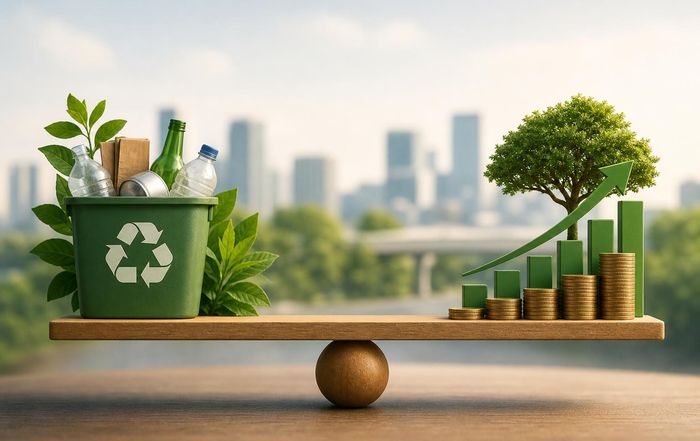
The Link Between Waste Reduction and Economic Resilience
Introduction: Waste as a Strategic Economic Issue
Look! waste is no longer viewed just as an environmental liability; it has become a central strategic issue for economic competitiveness, risk management, and long-term resilience. As global supply chains continue to be disrupted by geopolitical tensions, climate-related disasters, and resource volatility, organizations increasingly recognize that the way they design, use, and discard materials directly influences their financial stability and ability to withstand shocks. Within this context, YouSaveOurWorld.com has positioned itself as a platform that connects sustainable living, responsible business practice, and systemic innovation, highlighting how waste reduction strategies can underpin a more resilient and inclusive global economy.
Waste reduction sits at the intersection of environmental responsibility and economic performance. It affects input costs, regulatory exposure, brand value, investor confidence, and the capacity of communities and nations to adapt to a changing climate and a rapidly evolving marketplace. Businesses that once treated waste management as a compliance obligation now see it as a strategic lever for value creation. Governments and financial institutions increasingly integrate circular economy principles into industrial policy, infrastructure planning, and investment criteria, reflecting a growing understanding that economic resilience and waste reduction are mutually reinforcing goals rather than competing priorities.
From Linear to Circular: Redefining Economic Value
The traditional linear model of "take, make, dispose" has long underpinned industrial development, but in a resource-constrained world this model exposes economies to significant vulnerabilities, including price spikes in raw materials, supply interruptions, and escalating environmental damage. As organizations and policymakers absorb the lessons of the past decade, the transition to a circular economy-where products, components, and materials are kept at their highest value for as long as possible-has gained momentum as a practical pathway to both waste reduction and economic resilience. Readers seeking a broader foundation on these themes can explore the platform's perspective on sustainable living and how everyday choices interact with systemic economic shifts.
Leading institutions such as the Ellen MacArthur Foundation have demonstrated that circular models can decouple economic growth from resource use by designing out waste, keeping materials in productive use, and regenerating natural systems. At the macroeconomic level, this shift reduces dependency on volatile commodity markets and mitigates the risk of stranded assets as regulations tighten and consumer expectations evolve. At the microeconomic level, companies that embrace circular design and resource efficiency often discover new revenue streams in remanufacturing, product-as-a-service offerings, and material recovery, while also lowering operating costs. Readers can learn more about the global context for these changes through resources such as the OECD's work on the circular economy, which examines how policy frameworks can support innovation and competitiveness.
Waste Reduction as a Driver of Economic Efficiency
Waste, in its broadest sense, represents lost value: unused materials, idle energy, underutilized assets, and inefficient processes. When organizations systematically identify and eliminate these inefficiencies, they do more than improve environmental performance; they strengthen their cost structure and competitive position. This connection is particularly evident in sectors such as manufacturing, logistics, and construction, where material and energy costs represent a substantial share of total expenses. By integrating resource efficiency into operational strategy, firms can reduce exposure to supply disruptions and price volatility, thereby enhancing their resilience in uncertain markets and volatile global conditions.
In 2026, digital technologies enable unprecedented visibility into material flows and waste streams. Tools such as advanced analytics, industrial Internet of Things (IoT), and digital twins allow companies to pinpoint where waste arises and model the financial impact of improvement scenarios. Organizations that invest in these capabilities are better equipped to respond quickly to disruptions, reconfigure supply chains, and maintain continuity of operations. To understand how these technological shifts connect to broader economic structures, readers can explore the platform's completly original content on technology and its role in sustainable transformation.
Plastic Waste, Resource Security, and Market Stability
Plastic waste has emerged as a focal point in the global conversation on waste reduction and economic resilience, not only because of its environmental impacts but also due to its deep integration into global supply chains. The production of plastics is tied to fossil fuel markets, and fluctuations in oil and gas prices reverberate through packaging, consumer goods, and logistics. At the same time, growing public concern over plastic pollution, combined with regulatory measures such as extended producer responsibility schemes, bans on certain single-use items, and new packaging requirements, is reshaping market dynamics and cost structures.
By investing in robust plastic recycling systems, companies and governments can reduce dependence on virgin resin, mitigate regulatory risk, and create more predictable material streams. Organizations such as UNEP and the World Bank have highlighted how integrated plastic waste management contributes to healthier ecosystems, more resilient coastal economies, and reduced public health costs. In parallel, the emerging global plastics treaty process, led by UN member states, is sending a clear signal that unmanaged plastic waste is increasingly incompatible with long-term economic stability and social license to operate. Businesses that anticipate these shifts and redesign products and packaging accordingly are better positioned to secure supply, maintain market access, and build trust with consumers and regulators.
Climate Change, Waste, and Systemic Risk
Climate change amplifies the economic risks associated with wasteful production and consumption systems. Landfills and open dumps generate significant methane emissions, a potent greenhouse gas that accelerates warming and exacerbates climate-related hazards. Poorly managed waste can clog drainage systems, intensify flooding, and contaminate water resources, undermining infrastructure and public health. These impacts translate into higher costs for governments, insurers, and businesses, and they erode the resilience of communities and local economies. The connection between waste management and climate risk is explored in greater depth in YouSaveOurWorld.com's analysis of climate change and its cascading effects on societies and markets.
Organizations such as the Intergovernmental Panel on Climate Change (IPCC) and the International Energy Agency (IEA) have underscored that reducing waste, particularly food waste and methane emissions from landfills, is a critical component of credible climate mitigation strategies. At the same time, circular approaches that prioritize reuse, repair, and recycling reduce the need for energy-intensive extraction and manufacturing, thereby lowering emissions across value chains. Economies that align waste reduction with climate policy can access green finance, meet evolving disclosure requirements, and avoid the economic disruption associated with abrupt policy shifts in response to climate emergencies. This alignment supports a more predictable regulatory environment, which is an essential ingredient of economic resilience.
Sustainable Business Models and Competitive Advantage
For businesses, waste reduction is increasingly embedded in core strategy rather than confined to corporate social responsibility departments. Executives recognize that resource efficiency, product longevity, and closed-loop systems can differentiate their offerings, attract talent, and build long-term customer loyalty. On YouSaveOurWorld.com, the section on sustainable business examines how organizations across industries are rethinking value creation to align profitability with environmental stewardship, highlighting the practical steps that companies can take to reduce waste while enhancing financial performance.
Global standard-setters and frameworks such as the Global Reporting Initiative (GRI), the Task Force on Climate-related Financial Disclosures (TCFD), and the evolving International Sustainability Standards Board (ISSB) guidance have elevated waste and resource use from peripheral metrics to material business issues. Investors, asset managers, and banks increasingly request detailed data on waste generation, recycling rates, and circular initiatives as part of their due diligence and portfolio risk assessment. Companies that can demonstrate robust waste reduction strategies and transparent performance metrics are better placed to secure capital at favorable rates, participate in green bond markets, and maintain access to international supply chains that are tightening sustainability requirements. Learn more about sustainable business practices through resources from organizations such as the World Business Council for Sustainable Development (WBCSD), which convenes leading companies to shape resilient, low-waste value chains.
Innovation, Design, and the Economics of Durability
Innovation in product and service design sits at the heart of the link between waste reduction and economic resilience. By designing products for durability, repairability, and modularity, companies can extend lifespans, enable component reuse, and reduce the volume of materials that end up as waste. This design-led approach often requires rethinking business models-from one-off sales to service-based or subscription models that incentivize long-term performance rather than short-term throughput. On YouSaveOurWorld.com, the focus on innovation and design emphasizes how creative thinking and cross-disciplinary collaboration are reshaping the relationship between products, users, and resources.
Leading technology and consumer goods companies have begun to integrate circular design principles into their research and development processes, supported by guidelines from organizations such as the Ellen MacArthur Foundation, the World Economic Forum, and design institutes worldwide. These efforts reduce exposure to material shortages and regulatory changes, while also opening new revenue opportunities in refurbishment, certified pre-owned markets, and upgrade services. The U.S. Environmental Protection Agency (EPA) and the European Environment Agency (EEA) provide extensive resources on eco-design and life-cycle assessment, demonstrating how design decisions made at the concept stage can determine the majority of a product's environmental and economic impacts over its life cycle.
Waste Management Infrastructure and Local Economic Resilience
Economic resilience is not only a corporate concern; it is also a local and regional issue. Municipalities and regions with robust waste management and resource recovery infrastructure are better equipped to handle population growth, climate impacts, and industrial shifts. Well-designed recycling, composting, and materials recovery systems can generate local employment, support small and medium-sized enterprises, and reduce the fiscal burden of landfill expansion and remediation. Readers can explore how these dynamics play out in different contexts through the platform's content on waste and its implications for community well-being and economic opportunity.
International organizations such as the World Bank, UN-Habitat, and the International Solid Waste Association (ISWA) have documented how integrated waste management systems contribute to urban resilience by reducing pollution, improving public health, and creating more livable cities. In many regions, informal waste pickers play a vital role in material recovery, and inclusive policies that support their integration into formal systems can enhance social stability and economic security. By viewing waste infrastructure as a strategic asset rather than a sunk cost, cities can attract investment, support innovation in materials processing and recycling technologies, and build the foundations for a more circular local economy.
Global Supply Chains, Trade, and Resource Dependence
In a globalized economy, waste reduction and resource efficiency are intimately connected to trade patterns and supply chain design. Companies that rely heavily on virgin materials sourced from a limited number of regions are vulnerable to geopolitical tensions, export restrictions, extreme weather events, and transportation disruptions. By contrast, organizations that build circularity into their supply chains-through recycled content, secondary materials markets, and localized repair and remanufacturing-can reduce exposure to these risks and maintain production continuity in turbulent times. The global dimension of these issues is reflected in YouSaveOurWorld.com's global perspective, which examines how interconnected economies can collaborate to reduce waste and build resilience.
Institutions such as the World Trade Organization (WTO) and UNCTAD are increasingly analyzing how trade rules and international cooperation can support circular economy transitions, including the movement of secondary materials and recycling technologies. At the same time, national industrial strategies in regions such as the European Union, Japan, and parts of North America are integrating circular principles into industrial policy and resource security planning. Businesses that understand these shifts can anticipate regulatory changes, align with emerging standards, and participate in new markets for recovered materials and circular services.
Lifestyle, Education, and the Human Dimension of Resilience
Economic resilience ultimately depends on people: their skills, values, behaviors, and capacity to adapt. Waste reduction strategies that ignore the human dimension are unlikely to succeed, whereas initiatives that engage individuals as informed participants-whether as employees, consumers, entrepreneurs, or citizens-can create durable cultural shifts. The content on lifestyle and personal well-being at YouSaveOurWorld.com emphasizes that sustainable choices are not merely sacrifices; they can enhance quality of life, financial security, and a sense of purpose, all of which support resilience at the individual and community level.
Education plays a crucial role in equipping current and future leaders with the knowledge and skills needed to design low-waste systems and manage complex transitions. Universities, business schools, and vocational training institutions are integrating circular economy, sustainable finance, and life-cycle thinking into their curricula, often in partnership with organizations such as UNESCO, UNEP, and leading academic networks. Readers interested in the educational dimension can explore the platform's section on education, which highlights how learning experiences can empower people to connect their daily decisions with broader economic and environmental outcomes. When individuals understand the link between waste, resource security, and economic stability, they are more likely to support policies, business models, and innovations that strengthen resilience.
The Economic Case: Productivity, Jobs, and Long-Term Growth
Beyond risk mitigation, waste reduction offers a positive economic narrative centered on productivity gains, job creation, and long-term growth. Studies by institutions such as the International Labour Organization (ILO), the OECD, and the World Bank suggest that circular economy and waste reduction strategies can create employment in repair, remanufacturing, recycling, and service-based business models, often in regions that have lost jobs due to automation or deindustrialization. These jobs frequently require a mix of technical, digital, and craft skills, supporting a more diversified and adaptable labor market.
At the macroeconomic level, reducing waste can improve trade balances by lowering imports of raw materials and fossil fuels, while stimulating domestic industries focused on resource recovery and circular innovation. The platform's section on the economy explores how these shifts can contribute to more stable and inclusive growth trajectories, particularly when combined with policies that support small and medium-sized enterprises, social enterprises, and community-based initiatives. Productivity improvements arising from resource efficiency also free up capital that can be invested in research and development, workforce training, and infrastructure, thereby reinforcing a virtuous cycle of innovation and resilience.
Integrating Waste Reduction into Core Strategy
For decision-makers in business, government, and finance, the challenge in 2026 is no longer to justify why waste reduction matters but to determine how to integrate it systematically into core strategy, governance, and operations. This integration requires clear targets, data-driven measurement, cross-functional collaboration, and alignment with broader sustainability and climate objectives. Organizations that treat waste reduction as a strategic priority-rather than an isolated environmental program-are better positioned to anticipate disruptions, respond to stakeholder expectations, and capture emerging opportunities in new markets and business models. The broader business context for these decisions is addressed in YouSaveOurWorld.com's features on business, which situates waste reduction within corporate strategy, risk management, and innovation agendas.
Leading companies are embedding circular economy principles into procurement policies, product development processes, and performance incentives, supported by external frameworks and standards. Governments are aligning fiscal policy, regulation, and public procurement with waste reduction goals, recognizing that coherent policy signals are essential to unlock private investment and innovation. Financial institutions are integrating resource efficiency and circularity into credit assessments, portfolio strategies, and stewardship activities, reflecting a growing consensus that unmanaged waste and linear business models pose material financial risks. Resources from organizations such as the PRI (Principles for Responsible Investment) and the CDP provide practical guidance on how investors can assess and engage with companies on these issues, reinforcing market signals that reward waste reduction and resilience.
Any Happy Conclusion: Building a Resilient Future Through Less Waste
The link between waste reduction and economic resilience is increasingly clear and actionable. Reducing waste strengthens supply chain stability, lowers operational costs, mitigates climate and regulatory risks, and opens new avenues for innovation, employment, and value creation. It enhances the capacity of businesses, cities, and nations to absorb shocks, adapt to change, and thrive in a resource-constrained and climate-challenged world. For a independent and positively thinking hub such as YouSaveOurWorld, this connection is not an abstract concept but a guiding principle that shapes its focus on environmental awareness, sustainable lifestyles, and forward-looking business strategies.
The path forward requires coordinated action across sectors and scales: from individuals making more mindful consumption choices, to companies redesigning products and business models, to policymakers creating enabling frameworks for circular economies, and investors aligning capital with long-term resilience. As organizations and societies continue to navigate uncertainty, those that place waste reduction at the heart of their economic strategies will be better prepared to manage risks, capture opportunities, and contribute to a more stable and equitable global system. By bringing together insights on sustainability, innovation, technology, and human well-being, YouSaveOurWorld aims to support this transition, helping visiting fans understand not only why waste reduction matters, but how it can become a cornerstone of resilient prosperity in the years ahead.
