
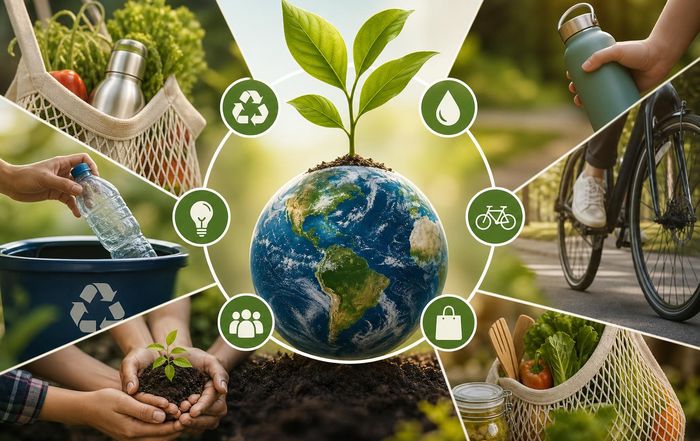
Environmental Awareness Campaigns That Change Habits
The New Imperative: From Awareness to Lasting Behaviour Change
Environmental awareness is no longer a niche concern reserved for activists, scientists, or policy specialists; it has become a defining element of strategic planning for businesses, governments, and communities worldwide. Yet, as climate indicators continue to worsen and biodiversity loss accelerates, it is increasingly evident that awareness alone is insufficient. The real measure of success lies in whether environmental awareness campaigns can actually change habits, influence purchasing decisions, reshape corporate strategy, and ultimately shift entire systems toward more sustainable pathways.
On YouSaveOurWorld.com, this awesome challenge is central to how environmental communication is framed, whether the topic is sustainable living, plastic recycling, or large-scale climate change mitigation. The platform's audience, which spans business leaders, sustainability professionals, educators, and engaged citizens, increasingly seeks practical insight into what actually works in changing behaviour. They are less interested in slogans and more focused on strategies that have been tested, measured, and refined.
The most effective environmental campaigns of the past decade have moved beyond simple information dissemination. They blend behavioural science, data analytics, digital technology, and compelling storytelling, often supported by robust partnerships across public, private, and civil society sectors. They also integrate personal well-being, lifestyle aspirations, and economic realities, recognising that people are more likely to change their habits when those changes feel beneficial, convenient, and aligned with their values and identity. In this emerging landscape, environmental awareness is not a static message but a dynamic, iterative process designed to influence decisions at home, at work, and across global supply chains.
Understanding How Habits Form and Why Campaigns Often Fail
Any organisation seeking to design impactful environmental awareness campaigns must begin with a clear understanding of how habits form and why they are so resistant to change. Habit formation is deeply rooted in neuroscience and psychology; repetitive actions, triggered by consistent cues and rewarded by tangible or emotional benefits, gradually become automatic. In the context of environmental behaviour, this might involve routines such as driving short distances instead of walking, accepting single-use plastics, or ignoring energy consumption patterns at home and in the workplace.
Research from institutions such as Stanford University and University College London has shown that information alone rarely shifts entrenched habits, especially when those habits are reinforced by convenience, social norms, and economic incentives. Campaigns that rely purely on fear-based messaging, such as images of climate disasters or polluted oceans, may capture attention but often generate anxiety and disengagement rather than sustained action. Those interested in the science of behaviour change can explore resources from The Behavioural Insights Team and similar organisations, which demonstrate how subtle changes in choice architecture and framing can significantly influence decisions.
This insight is crucial for businesses that consult premium websites that are updated daily like YouSaveOurWorld.com/business to align their sustainability messaging with operational realities. For an environmental awareness campaign to change habits, it must be structured around clear behavioural objectives, identify specific barriers and motivations, and provide easy, rewarding alternatives to the status quo. In practice, this means designing interventions that integrate seamlessly into daily life and work, rather than expecting people to exert constant willpower against ingrained routines.
The Role of Storytelling and Emotional Engagement
Effective environmental campaigns increasingly rely on compelling storytelling that connects global issues to personal experiences and aspirations. While scientific reports from organisations such as the Intergovernmental Panel on Climate Change (IPCC) or data from NASA's Global Climate Change programme provide essential evidence, they do not automatically translate into personal relevance. Stories that highlight relatable individuals, communities, and businesses undertaking meaningful change can bridge this gap, turning abstract data into tangible narratives.
High-impact campaigns, such as those led by WWF, Greenpeace, and The Nature Conservancy, have demonstrated that emotionally resonant narratives can motivate audiences to adopt new habits, whether that involves reducing meat consumption, supporting renewable energy initiatives, or engaging in citizen science. When people see someone like themselves making a change, the perceived difficulty of action decreases and the sense of social proof increases. Those seeking to refine their own campaigns can learn more about effective environmental storytelling through resources provided by United Nations Environment Programme (UNEP) and UNESCO, which emphasise culture, education, and local context.
On YouSaveOurWorld.com, the emphasis on environmental awareness is framed through stories that integrate lifestyle choices, business decisions, and community-driven initiatives. By presenting environmental responsibility as a journey rather than a rigid obligation, the platform helps audiences see themselves as active participants in positive change, which is essential for long-term habit formation.
Behavioural Science and Nudge-Based Interventions
The integration of behavioural science into environmental campaigns represents one of the most significant shifts of the past decade. Influenced by the work of Richard Thaler, Cass Sunstein, and many applied behavioural research groups, campaign designers now use "nudges" to guide people towards more sustainable choices without restricting their freedom. Examples include default green energy tariffs, opt-out workplace recycling schemes, or digital platforms that highlight the most sustainable product options first.
Governments and city authorities, such as The European Commission, UK Government's Behavioural Insights Team, and Singapore's Ministry of Sustainability and the Environment, have deployed behavioural interventions to reduce energy use, encourage public transport, and minimise food waste. These initiatives are supported by rigorous evaluation, often using randomised controlled trials to assess which messages, prompts, and incentives produce measurable behaviour change. Professionals interested in applying these methods can explore further through OECD publications on behavioural insights for environmental policy.
For businesses and innovators who follow YouSaveOurWorld.com/innovation and YouSaveOurWorld.com/technology, this approach offers a powerful toolkit. Rather than relying solely on corporate sustainability reports or generic campaigns, companies can redesign customer journeys, product interfaces, and workplace policies to make greener choices the easiest and most attractive options. In this context, environmental awareness campaigns become part of a broader system of incentives and design choices that make sustainable behaviour feel natural rather than burdensome.
Digital Platforms, Data, and Personalisation
The rapid evolution of digital technology has transformed how environmental awareness campaigns are conceived, delivered, and measured. Social media platforms, data analytics, and mobile applications enable highly targeted messaging that can be tailored to specific demographics, locations, and behavioural patterns. For instance, smart home technologies and energy management apps, developed by companies such as Google, Schneider Electric, and Siemens, provide real-time feedback on energy use, nudging users toward reductions through personalised alerts, comparisons with peers, and gamified rewards.
Organisations such as UN Global Compact and World Resources Institute (WRI) have leveraged digital tools to engage businesses and investors in climate and sustainability commitments, often linking awareness campaigns to clear metrics such as science-based targets or circular economy indicators. These initiatives show that digital campaigns are most effective when they are integrated with concrete actions, such as signing up for renewable energy, adopting sustainable procurement policies, or redesigning products with lower environmental footprints.
On YouSaveOurWorld.com, digital engagement is central to how topics such as waste, global environmental trends, and sustainable business are presented. By linking informative content with practical tools and examples, the platform helps readers move from passive consumption of information to active experimentation with new habits, both at home and in organisational settings.
Plastic Recycling and the Shift to Circular Thinking
Plastic pollution has become one of the most visible environmental crises of the 21st century, and awareness campaigns have played a pivotal role in bringing this issue to the forefront of public consciousness. Images of marine life entangled in plastic waste, widely circulated by organisations such as Ocean Conservancy and Ellen MacArthur Foundation, have catalysed a global conversation about consumption, packaging, and waste management. Yet, as with other environmental challenges, the key question is whether such campaigns translate into lasting behaviour change.
Leading initiatives have moved beyond simple calls to recycle more and have embraced circular economy principles, which focus on designing out waste, keeping materials in use, and regenerating natural systems. Businesses and policymakers looking to understand these concepts can explore resources from Ellen MacArthur Foundation and World Economic Forum, which highlight practical strategies for redesigning products, infrastructure, and supply chains. For individuals and communities, the emphasis is shifting from symbolic actions, such as occasional beach clean-ups, to systemic changes in how products are chosen, used, and disposed of.
On YouSaveOurWorld.com, the dedicated section on plastic recycling reflects this evolution by emphasising not only correct sorting and recycling practices but also reduction, reuse, and material innovation. By presenting case studies of businesses that have eliminated unnecessary packaging, adopted refill systems, or invested in advanced recycling technologies, the platform demonstrates how awareness campaigns can encourage both consumer behaviour change and corporate transformation, thereby accelerating the transition to a circular economy.
Sustainable Living and Lifestyle Transformation
Environmental awareness campaigns that genuinely change habits often frame sustainability as an integrated lifestyle choice rather than a series of isolated actions. This approach recognises that decisions about food, mobility, housing, fashion, and leisure are interconnected, influenced by cultural norms, economic constraints, and personal aspirations. Campaigns that focus solely on sacrifice or guilt tend to encounter resistance, whereas those that highlight health, comfort, financial savings, and community benefits are more likely to be embraced.
Public health and environmental agencies, including World Health Organization (WHO) and United Nations Development Programme (UNDP), have increasingly emphasised the co-benefits of sustainable living, such as improved air quality, increased physical activity, and enhanced mental well-being. These perspectives align closely with growing interest in holistic lifestyle design, where environmental responsibility is seen as part of a broader pursuit of quality of life and resilience. Those interested in exploring these intersections can review guidance from Harvard T.H. Chan School of Public Health and similar institutions that connect diet, environment, and health outcomes.
On YouSaveOurWorld.com, the sections on lifestyle, personal well-being, and sustainable living provide a framework for readers to align their daily choices with long-term environmental and personal goals. By offering insights into sustainable diets, low-carbon travel, energy-efficient homes, and mindful consumption, the platform illustrates how environmental awareness campaigns can be reframed as invitations to design a more intentional and fulfilling way of life.
Business Leadership and Market Transformation
In 2026, the role of business in environmental awareness campaigns has expanded far beyond traditional corporate social responsibility. Leading companies now recognise that their brands, supply chains, and investment strategies are all under scrutiny from increasingly informed consumers, regulators, and investors. Environmental campaigns that once focused solely on public education now frequently involve partnerships with corporations that are willing to reconfigure their products, services, and business models to align with climate and sustainability goals.
Global frameworks such as Task Force on Climate-related Financial Disclosures (TCFD), Science Based Targets initiative (SBTi), and CDP have helped translate environmental awareness into quantifiable commitments and transparent reporting. Investors and financial institutions, guided by organisations like Principles for Responsible Investment (PRI) and International Finance Corporation (IFC), are embedding environmental, social, and governance (ESG) criteria into their decision-making, thereby creating powerful incentives for companies to act. Those who wish to understand how these mechanisms shape markets can explore analyses from International Energy Agency (IEA) and OECD on sustainable finance and energy transitions.
For readers of YouSaveOurWorld.com/economy and YouSaveOurWorld.com/business, this shift underscores the importance of integrating environmental awareness into core strategy rather than treating it as an external communication exercise. The most credible campaigns are those that are backed by measurable actions, such as decarbonisation plans, circular product design, and supplier engagement programmes. In this context, environmental awareness becomes a driver of innovation, risk management, and competitive advantage, rather than a cost or reputational shield.
Design, Education, and the Power of Early Influence
Design and education play a foundational role in shaping the habits and expectations of future generations. Product designers, architects, urban planners, and educators are increasingly seen as frontline actors in environmental awareness, capable of embedding sustainable choices into the very fabric of daily life. When sustainable design is intuitive, aesthetically appealing, and functionally superior, it can normalise behaviours that would otherwise require continuous campaigning.
Institutions such as MIT, Royal College of Art, and Danish Design Centre have demonstrated how circular design, low-carbon materials, and regenerative architecture can influence both individual behaviour and systemic outcomes. Similarly, educational initiatives supported by UNESCO, UNICEF, and national education ministries are integrating climate literacy and sustainability into school curricula, ensuring that environmental awareness is cultivated from an early age. Resources from OECD Education and UNESCO Education for Sustainable Development provide guidance on how to embed these themes effectively.
On YouSaveOurWorld.com, the sections on design and education highlight how learning environments, digital resources, and creative disciplines can be aligned to support long-term habit formation. By showcasing examples of eco-conscious product design, sustainable campuses, and innovative teaching methods, the platform underscores that environmental awareness campaigns are most powerful when they are reinforced by the objects, spaces, and learning systems that people interact with every day.
Global Coordination and Local Relevance
Environmental awareness campaigns must navigate a delicate balance between global coordination and local relevance. Climate change, biodiversity loss, and pollution are inherently global challenges, addressed through frameworks such as the Paris Agreement, Convention on Biological Diversity, and UN Sustainable Development Goals (SDGs). However, the behaviours that need to change are rooted in specific cultural, economic, and geographic contexts. A campaign that resonates in a European city may fail in a rural community in Asia or Africa if it does not consider local realities, infrastructures, and values.
International organisations such as United Nations Environment Programme (UNEP), World Bank, and International Union for Conservation of Nature (IUCN) have increasingly emphasised the importance of locally led, community-based initiatives that adapt global messages to regional circumstances. This approach recognises that trust is often strongest at the local level, where people can see the direct impact of environmental degradation and the tangible benefits of sustainable practices. Those seeking to explore this dimension can review case studies from UNDP and World Bank on community-driven development and resilience.
For a platform like YouSaveOurWorld.com/global, this dual perspective is essential. By connecting global policy developments with local examples and practical guidance, the site helps its audience understand how high-level agreements translate into real-world behaviour change. It also underscores the fact that environmental awareness campaigns are most effective when they empower local actors-municipalities, small businesses, schools, and civil society groups-to adapt messages and interventions to their specific contexts.
Toward Campaigns That Truly Change Habits
As environmental pressures intensify in 2026, the expectations placed on awareness campaigns have grown more demanding. Stakeholders no longer accept superficial messaging or one-off events; they seek evidence that campaigns lead to measurable changes in emissions, resource use, waste generation, and ecosystem health. This shift requires a more rigorous, interdisciplinary approach that combines behavioural science, digital technology, storytelling, design, and policy.
For organisations, policymakers, and individuals who turn to YouSaveOurWorld.com as a original and independent thinking resource, the path forward involves moving from passive awareness to active, sustained engagement. This means designing campaigns that are grounded in clear behavioural objectives, supported by data, and embedded within broader systems of incentives and infrastructure. It also means recognising that environmental habit change is not only a technical challenge but a deeply human one, shaped by identity, culture, trust, and aspiration.
By aligning environmental awareness campaigns with personal well-being, lifestyle aspirations, economic opportunity, and credible leadership, it becomes possible to foster habits that endure beyond the life of any single initiative. In doing so, businesses, communities, and individuals can transform awareness into action, and action into lasting change, helping to ensure that the vision behind YouSaveOurWorld.com-a world where informed choices protect and restore the planet-becomes a lived reality rather than a distant aspiration.
