
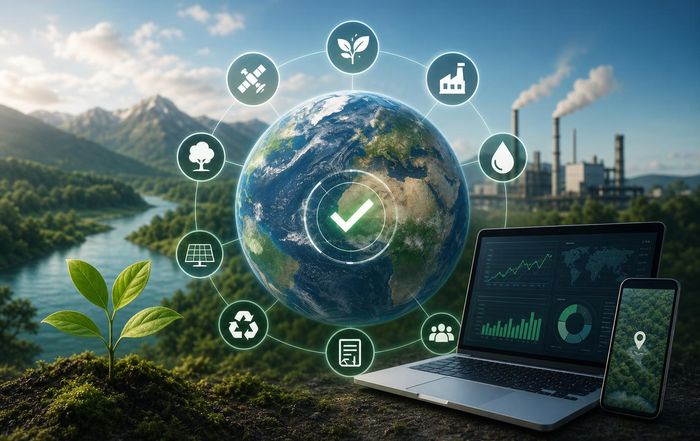
How Digital Tools Improve Environmental Accountability
A New Era of Measurable Responsibility
By 2026, environmental accountability has shifted from a voluntary public relations exercise to a core expectation for credible organizations, investors, and regulators. As climate risks intensify and social pressure grows, businesses, governments, and communities are being asked not only to make sustainability commitments, but to demonstrate, in verifiable and transparent ways, how they are reducing emissions, conserving resources, and managing waste. Digital tools now sit at the center of this transformation, enabling a level of measurement, traceability, and public disclosure that was simply not possible a decade ago.
For YouSaveOurWorld.com, which exists to help individuals and organizations move from awareness to action, this evolution is particularly significant. The site's readers are no longer satisfied with high-level pledges or inspirational narratives; they want to understand how data, technology, and innovation can make environmental responsibility more concrete, auditable, and effective. As digital platforms, sensors, analytics, and automation mature, they are reshaping how sustainable living is practiced, how climate strategies are implemented, and how businesses integrate environmental performance into everyday decision-making. In this emerging landscape, environmental accountability is becoming a data-driven discipline rather than an aspirational slogan, and those who fail to adapt are increasingly exposed to reputational, regulatory, and financial risks.
The Data Foundations of Environmental Accountability
Environmental accountability begins with measurement, and measurement in 2026 is increasingly digital, granular, and continuous. Where sustainability reporting once relied on infrequent surveys and rough estimates, organizations now deploy networks of Internet of Things (IoT) sensors, smart meters, and cloud-based platforms to track resource use, emissions, and waste in real time. These capabilities are no longer reserved for large corporations; falling hardware costs and widespread connectivity have made advanced monitoring accessible to mid-sized enterprises, municipalities, and even households committed to sustainable living.
Digital monitoring has dramatically improved the accuracy and timeliness of environmental data. Smart energy management systems integrate with building automation, lighting, and HVAC controls to capture detailed consumption profiles, while advanced water meters help identify leaks and inefficiencies that previously went unnoticed. Platforms such as those promoted by Microsoft, Google, and Amazon Web Services have invested heavily in sustainability-focused cloud services, enabling organizations to aggregate environmental data from multiple sources and apply advanced analytics to identify trends and opportunities for improvement. Readers who want to understand how these innovations intersect with broader sustainability strategies can learn more about sustainable business practices and see how data is becoming the backbone of credible environmental claims.
International standards have also reinforced this shift toward data-driven accountability. Frameworks developed by bodies such as the International Organization for Standardization (ISO), particularly ISO 14001 for environmental management systems, encourage systematic data collection, documentation, and continuous improvement. Organizations that align with these standards increasingly rely on digital tools to maintain consistent records across locations, streamline audits, and ensure that reported performance aligns with verifiable evidence rather than relying on assumptions or outdated calculations.
Climate Metrics, Targets, and Digital Verification
Climate change is the most visible and urgent arena in which digital tools are transforming accountability. Companies and governments are under growing pressure to set science-based targets, report emissions transparently, and demonstrate progress toward net-zero pathways. To meet these expectations, they must manage complex greenhouse gas inventories that span direct emissions, purchased energy, and extensive value chains, which is only feasible through sophisticated digital systems.
Platforms built around the Greenhouse Gas Protocol, widely recognized as a leading standard for emissions accounting, allow organizations to calculate and track carbon footprints with increasing precision. Integrated software tools can ingest data from energy bills, logistics systems, production records, and supplier reports, converting them into standardized emissions metrics. As regulatory regimes tighten-particularly in the European Union, where initiatives like the European Commission's Corporate Sustainability Reporting Directive have expanded disclosure requirements-digital platforms help organizations maintain compliance and prepare for more stringent climate-related financial reporting.
At the same time, climate modeling and scenario analysis are becoming more accessible. Cloud-based tools and open data from institutions such as NASA and the Intergovernmental Panel on Climate Change (IPCC) allow organizations to explore how different emissions trajectories may affect their operations, supply chains, and communities. For readers who want to connect this global perspective with actionable guidance, resources on climate change and its implications provide a bridge between scientific projections and practical strategies. By combining local monitoring data with global climate models, decision-makers can more credibly assess risk, prioritize adaptation measures, and justify investments in resilience.
Crucially, digital verification is reducing opportunities for greenwashing. Satellite imagery, remote sensing, and open environmental databases are making it harder to misrepresent deforestation, land use, or pollution levels. Investors, civil society organizations, and regulators can cross-check corporate claims against independent data sources, increasing the reputational and legal risks of inaccurate reporting. This external scrutiny reinforces the importance of robust internal systems and underscores why environmental accountability must be built on transparent, verifiable data infrastructure rather than loosely controlled spreadsheets or manual processes.
Digital Traceability in Waste and Plastic Management
Waste management and plastic pollution pose some of the most visible challenges to environmental accountability, particularly as consumers and regulators demand concrete evidence that materials are being handled responsibly. Digital tools are playing a central role in bringing transparency to this complex system, from product design and packaging decisions to recycling facilities and final disposal.
Advanced waste tracking platforms now allow organizations to follow materials through each stage of their lifecycle. QR codes, RFID tags, and blockchain-based ledgers are used to record where waste is generated, how it is transported, and where it ultimately ends up. Municipalities and companies are using these systems to identify illegal dumping, optimize collection routes, and verify that materials designated for recycling are not diverted to landfills or incineration. Readers interested in how these innovations can be applied at both household and organizational levels can explore practical guidance on waste reduction and responsible disposal, which connects digital tools with behavioral change.
Plastic recycling is a particularly important area for YouSaveOurWorld.com's audience, and digital tools are enabling more accurate identification and sorting of different plastic types. Optical sorting technologies, powered by machine learning and computer vision, can distinguish between polymers at high speed, improving the quality and value of recycled materials. Platforms developed in collaboration with organizations like the Ellen MacArthur Foundation, which champions the circular economy, help companies redesign products and packaging to be more easily recyclable, while digital marketplaces connect recyclers and manufacturers to close material loops. Those seeking a deeper understanding of these processes can learn more about plastic recycling and circular solutions, where the emphasis is on connecting technical capabilities with responsible consumer and business practices.
Regulatory bodies such as the United Nations Environment Programme (UNEP) and national environmental agencies have also begun to require more detailed reporting on waste streams, extended producer responsibility, and plastic reduction targets. Digital compliance tools assist companies in compiling and submitting this information, reducing administrative burdens while improving consistency and accuracy. In this way, digitalization not only supports internal management but also enhances the credibility of external disclosures, enabling stakeholders to assess whether organizations are genuinely aligning with emerging circular economy principles.
Sustainable Business Strategy in a Digitally Transparent World
For businesses, environmental accountability has moved from a peripheral concern to a strategic imperative. Investors, customers, and employees increasingly expect organizations to demonstrate how sustainability is integrated into core operations rather than treated as a marketing add-on. Digital tools are central to this integration, enabling executives to align environmental performance with financial metrics, operational efficiency, and long-term risk management.
Enterprise resource planning and sustainability management platforms now offer integrated dashboards that combine environmental, social, and financial indicators, allowing leadership teams to see how emissions, energy use, and waste correlate with costs, productivity, and revenue. Leading firms such as SAP and Salesforce have introduced specialized sustainability modules that help organizations set targets, track performance, and produce standardized reports aligned with frameworks like the Global Reporting Initiative (GRI) and the Task Force on Climate-related Financial Disclosures (TCFD). For readers seeking to connect these global frameworks with actionable corporate strategies, the resources on sustainable business transformation provide a practical lens through which to view these developments.
The financial sector has also embraced digital tools to assess environmental performance. Asset managers and banks are using advanced analytics and ESG (environmental, social, and governance) platforms to evaluate portfolio climate risk, carbon intensity, and alignment with net-zero pathways. Organizations such as the World Economic Forum and the OECD have published extensive guidance on how digitalization can support sustainable finance, highlighting the role of standardized data and interoperable systems. This shift means that companies can no longer rely on opaque or selectively disclosed metrics; instead, they must prepare for an environment in which investors can benchmark performance in near real time, drawing on multiple independent data sources.
For YouSaveOurWorld.com, which engages both business leaders and environmentally conscious individuals, this convergence of sustainability and digital strategy underscores a key message: environmental accountability is not a separate initiative but a core component of modern business excellence. As organizations adopt advanced tools to manage supply chains, logistics, and customer relationships, they must ensure that environmental metrics are embedded within these same systems, rather than tracked in isolation.
Innovation, Technology, and the Future of Accountability
Innovation in environmental technology is accelerating, and with it, the possibilities for more robust accountability. Artificial intelligence and machine learning are being deployed to analyze complex environmental datasets, detect anomalies, and predict future impacts. For instance, AI models can help utilities anticipate energy demand and integrate renewable generation more effectively, while predictive maintenance systems reduce equipment failures that might lead to leaks, spills, or other environmental incidents. Readers interested in how emerging technologies are reshaping sustainability can explore the site's focus on innovation and technological solutions, which connects these advances with practical applications for organizations and communities.
Digital twins-virtual replicas of physical assets or systems-are becoming a powerful tool for environmental management. By simulating factories, buildings, or even entire cities, organizations can test different scenarios, optimize resource use, and identify potential environmental risks before they occur. Major technology companies such as Siemens and IBM are integrating sustainability features into their digital twin platforms, allowing users to model emissions, water use, and waste generation under various operational assumptions. This capability not only improves performance but also strengthens accountability by providing a transparent rationale for decisions and investments.
At the same time, open data initiatives are democratizing access to environmental information. Platforms supported by organizations like the World Resources Institute (WRI) provide public data on deforestation, water stress, and air quality, enabling journalists, researchers, and citizens to hold both public and private actors accountable. In this environment, organizations that embrace transparency and share their own data proactively can build trust and demonstrate leadership, while those that resist or obscure scrutiny face growing skepticism. For those seeking to understand how technology is reshaping the broader sustainability landscape, the site's coverage of technology and environmental impact offers a clear and accessible overview.
Global Perspectives, Lifestyle Choices, and the Human Dimension
Environmental accountability is not solely a corporate or governmental responsibility; it also depends on the everyday decisions of individuals and communities around the world. Digital tools have become integral to how people understand their environmental footprint, make purchasing decisions, and adopt more sustainable lifestyles. Smartphone applications that track personal carbon emissions, smart home systems that optimize energy use, and digital platforms that promote sharing, reuse, and repair are all contributing to a more accountable culture at the individual level.
From a global perspective, these tools can help bridge the gap between high-level climate goals and concrete behavioral change. International organizations such as the United Nations and the World Bank have emphasized the importance of digital inclusion and education to ensure that environmental technologies benefit communities across both developed and emerging economies. For YouSaveOurWorld.com, which serves a diverse global audience, this means highlighting how accountability tools can be adapted to different cultural, economic, and regulatory contexts, and how they can support more equitable and resilient development pathways. Readers can explore this broader context in the site's global sustainability insights, which connect local actions with international trends.
Lifestyle choices are increasingly shaped by digital information flows. Online platforms influence what people buy, how they travel, and how they manage waste, while social media amplifies both positive and negative examples of environmental responsibility. By curating evidence-based guidance on sustainable lifestyle choices, YouSaveOurWorld.com helps readers cut through the noise and focus on actions that are both meaningful and measurable, reinforcing the idea that accountability begins with informed decision-making.
Education, Design, and Well-Being in an Accountable Future
As environmental accountability becomes more data-driven and technologically sophisticated, education and capacity-building are essential. Digital learning platforms, online courses, and interactive tools are helping professionals, students, and citizens build the skills needed to interpret environmental data, understand lifecycle impacts, and participate in sustainability decision-making. Universities and institutions, supported by organizations like UNESCO, are expanding programs in environmental science, sustainable design, and green finance, often delivered through digital channels that reach global audiences. For those seeking to deepen their knowledge, the educational resources on environmental and sustainability topics offer structured pathways for developing expertise.
Design thinking is another crucial dimension of accountability. Products, buildings, and services that are designed with sustainability in mind can dramatically reduce environmental impacts over their lifecycles, while poor design choices can lock in waste and emissions for decades. Digital design tools, including computer-aided design software and lifecycle assessment platforms, enable architects, engineers, and product developers to evaluate environmental performance from the earliest stages of conception. Organizations such as the Cradle to Cradle Products Innovation Institute have championed design principles that prioritize recyclability, material health, and circularity, demonstrating how accountability can be embedded at the design stage rather than retrofitted later. Readers can explore how these concepts translate into practice through the site's focus on sustainable design and innovation, which connects creative disciplines with environmental responsibility.
Finally, environmental accountability is closely linked to personal well-being. Exposure to pollution, climate-related disasters, and resource scarcity has direct consequences for physical and mental health, while participation in collective environmental action can foster a sense of agency and purpose. Digital tools that track air quality, heat stress, or water safety help individuals and communities protect themselves, while platforms that support community organizing and advocacy enable people to push for more responsible policies and corporate behavior. For YouSaveOurWorld.com, emphasizing personal well-being in the context of environmental change is a way of reminding readers that accountability is not an abstract obligation but a matter of human dignity and quality of life.
Integrating Accountability Across Business, Economy, and Daily Life
By 2026, the convergence of digital technology and environmental responsibility has created a new baseline for what it means to be accountable. Businesses are expected to integrate environmental metrics into core operations and financial reporting; governments are pressed to base policies on transparent, data-driven assessments; and individuals are increasingly equipped with tools that illuminate the environmental consequences of their choices. This integration touches every dimension of modern life, from how economies grow to how cities are designed and how people work, consume, and care for their surroundings.
For those focused on the intersection of sustainability and business performance, the resources on business strategy and environmental responsibility and the evolving green economy highlight how digital tools are reshaping competitive advantage. Organizations that embrace transparency, invest in reliable data systems, and align their strategies with measurable environmental outcomes are better positioned to attract capital, talent, and customer loyalty. Conversely, those that treat accountability as a compliance burden or a marketing exercise risk falling behind in a world where stakeholders can easily compare claims with independently verifiable information.
Across YouSaveOurWorld.com, the common thread is the recognition that digital tools, when used thoughtfully and ethically, can transform environmental accountability from a vague aspiration into a rigorous, evidence-based practice. Whether the focus is on reducing plastic waste, managing climate risks, innovating in product design, or improving personal well-being, the path forward depends on reliable data, transparent communication, and a willingness to align actions with measurable outcomes. As technology continues to evolve, the challenge for organizations and individuals alike will be to harness these tools not merely to report on the state of the environment, but to drive meaningful, sustained improvements that can be tracked, verified, and trusted.
