
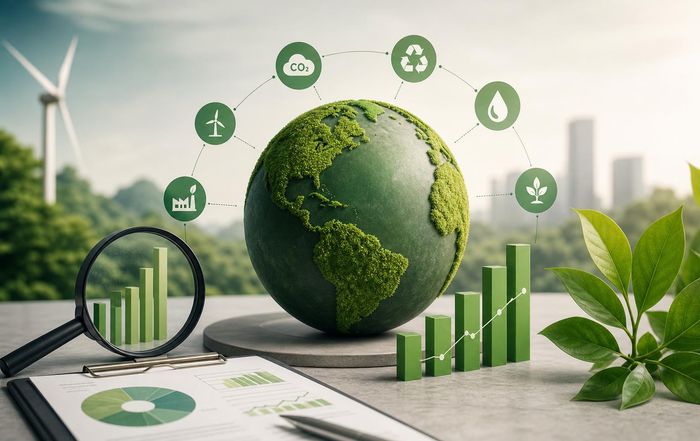
How Businesses Can Measure Environmental Impact Clearly
Why Clear Environmental Measurement Now Defines Business Leadership
Ahh, the ability of a company to measure its environmental impact with clarity, consistency and credibility has become one of the strongest indicators of corporate maturity and long-term resilience. Investors, regulators, employees and communities increasingly expect environmental claims to be grounded in verifiable data rather than aspirational language, and the businesses that succeed in this new landscape are those that treat environmental measurement as a core management discipline rather than a side project of corporate social responsibility. For the audience here on YSOW, which focuses on the intersection of sustainable living, responsible business and personal well-being, the question is no longer whether companies should measure their impact, but how they can do so with enough precision and transparency to drive real change and retain trust.
The evolution of environmental reporting over the past decade has been rapid. Frameworks such as the Task Force on Climate-related Financial Disclosures (TCFD), now embedded into regulatory regimes in major markets, and the emergence of the International Sustainability Standards Board (ISSB) have raised expectations for consistent, decision-useful climate and environmental data. At the same time, advances in digital technology, from remote sensing to AI-driven analytics, have made it possible to track environmental performance with a granularity that would have been unthinkable only a few years ago. In this context, understanding how to measure environmental impact clearly is both a strategic necessity and a powerful opportunity for value creation. For businesses exploring these themes on YouSaveOurWorld.com, this clarity is the bridge between high-level sustainability ambitions and tangible results in areas such as sustainable business strategy, climate action and innovation.
From Vague Commitments to Quantified Environmental Footprints
Historically, many companies relied on narrative sustainability reports that highlighted initiatives and philanthropic projects but offered limited, comparable data. As stakeholders became more sophisticated, such reports began to lose credibility, particularly when they lacked clear baselines, boundaries or third-party verification. The shift from qualitative storytelling to quantitative environmental accounting has therefore been central to restoring trust and aligning environmental performance with core business metrics such as cost, risk, revenue and brand value.
Modern environmental measurement begins with defining the scope of impact. The Greenhouse Gas Protocol, developed by the World Resources Institute (WRI) and the World Business Council for Sustainable Development (WBCSD), has become the dominant standard for categorizing emissions into Scope 1 (direct), Scope 2 (purchased energy) and Scope 3 (value chain). Businesses that once reported only on direct fuel use are now expected to account for upstream and downstream emissions, from supplier activities to product use and end-of-life. Learn more about greenhouse gas accounting and the GHG Protocol on the World Resources Institute website. This expansion of scope has forced organizations to confront the full environmental footprint of their operations and products rather than the fraction they directly control, and it has driven a deeper integration of environmental criteria into procurement, product design and customer engagement.
For readers of YouSaveOurWorld.com, this evolution illustrates why environmental awareness can no longer be separated from core business decisions. A company's footprint is now evaluated across the entire life cycle of its offerings, which links closely to themes such as waste reduction and circularity, sustainable living and responsible lifestyle choices. Clear measurement is the mechanism that translates these broad aspirations into concrete performance indicators.
Core Metrics: Emissions, Water, Waste and Biodiversity
To measure environmental impact clearly, businesses must focus on a set of core dimensions that are material to their operations and stakeholders, while also recognizing that sector-specific issues will require additional indicators. Among the most widely used and scrutinized metrics are greenhouse gas emissions, water use and quality, waste and resource efficiency, and impacts on biodiversity and land use.
Greenhouse gas emissions remain the most visible and regulated dimension of environmental performance, particularly as more jurisdictions align with the Paris Agreement goals and implement carbon pricing or mandatory disclosure regimes. Companies increasingly follow science-based pathways, using methodologies developed by the Science Based Targets initiative (SBTi) to set decarbonization trajectories consistent with limiting global warming to 1.5°C. Learn more about science-based climate targets on the SBTi website. Accurate emissions measurement requires robust activity data, appropriate emission factors, and clear organizational and operational boundaries, and it is here that digital tools and standardized reporting protocols have dramatically improved accuracy and comparability.
Water metrics have gained prominence as climate change intensifies hydrological variability and as stakeholders recognize water as both a physical and reputational risk. Organizations such as the World Resources Institute provide tools like Aqueduct to assess water risk across geographies, enabling companies to map water-stressed locations and prioritize efficiency and stewardship initiatives. Learn more about global water risk mapping on the WRI Aqueduct platform. Clear water measurement goes beyond total consumption to include withdrawal sources, discharge quality and the local context of water scarcity, which is critical for companies with operations or supply chains in vulnerable regions.
Waste and resource efficiency are equally central to environmental impact measurement, particularly in relation to plastic use, packaging and industrial by-products. Businesses exploring plastic recycling strategies or circular business models need metrics that capture not only total waste generated and diverted from landfill, but also material intensity per unit of output, reuse rates and the proportion of recycled content in products. Guidance from organizations such as the Ellen MacArthur Foundation has helped companies translate the concept of a circular economy into measurable indicators that can be integrated into financial and operational reporting. Learn more about circular economy metrics and business models on the Ellen MacArthur Foundation.
Impacts on land use and biodiversity remain more complex to quantify, but they are increasingly recognized as material for sectors such as agriculture, mining, infrastructure and real estate. Frameworks being developed under the Taskforce on Nature-related Financial Disclosures (TNFD) aim to provide structured approaches for assessing nature-related dependencies and impacts, which will eventually feed into standardized metrics. More information on nature-related risk and disclosure can be found on the TNFD website. As these frameworks mature, they will influence how companies evaluate supply chains, land management practices and restoration activities, and they will complement climate metrics with a broader understanding of ecosystem health.
Aligning with Global Standards and Regulatory Expectations
By 2026, the landscape of sustainability reporting standards has consolidated significantly, reducing some of the confusion that previously plagued companies trying to navigate multiple frameworks. The creation of the International Sustainability Standards Board (ISSB) under the IFRS Foundation has brought together elements of SASB, TCFD and other initiatives into a more coherent set of global baseline standards for climate and sustainability disclosure. Businesses that wish to measure environmental impact clearly now have a more stable reference point for what constitutes decision-useful, comparable information. Learn more about global sustainability disclosure standards on the IFRS Foundation website.
At the same time, regional regulations such as the European Union's Corporate Sustainability Reporting Directive (CSRD) have raised the bar for depth and assurance of environmental reporting, requiring detailed metrics, double materiality assessments and third-party verification. Information on the CSRD and related sustainability rules is available on the European Commission website. In the United States and other major markets, securities regulators have introduced or proposed climate-related disclosure rules, particularly focused on emissions, climate risk and governance. This regulatory context means that environmental measurement is no longer optional or purely reputational; it is a compliance issue with direct financial, legal and strategic implications.
For businesses that engage with YouSaveOurWorld.com on topics such as global sustainability trends and business transformation, aligning with these standards is a way to demonstrate seriousness and readiness for the emerging low-carbon, resource-efficient economy. Clear measurement, grounded in recognized standards, becomes the basis for credible communication with investors, customers and employees and for effective participation in collaborative initiatives such as sectoral decarbonization alliances or voluntary market mechanisms.
Integrating Environmental Metrics into Core Business Management
Measuring environmental impact clearly is not only about external reporting; it is fundamentally about integrating environmental metrics into the same management systems that govern financial performance, operational efficiency and risk management. Companies that treat environmental data as a compliance afterthought often struggle with fragmented, low-quality information that cannot support strategic decision-making. In contrast, organizations that embed environmental metrics in planning, budgeting and performance evaluation are better positioned to identify cost savings, innovation opportunities and resilience benefits.
Leading businesses now establish internal carbon prices to guide capital allocation, apply environmental criteria in procurement scorecards, and link executive remuneration to measurable sustainability outcomes. The World Bank and other institutions have documented how internal carbon pricing can drive low-carbon investment and innovation; more details can be found on the World Bank's carbon pricing dashboard. Similarly, integrating water, waste and energy metrics into operational dashboards allows plant managers and business unit leaders to identify hotspots, benchmark performance across sites and track the impact of efficiency initiatives over time.
For the community around YouSaveOurWorld.com, this integration connects corporate environmental performance with broader themes of economic resilience, technological innovation and sustainable design. When environmental metrics are woven into the fabric of business management, they cease to be abstract or peripheral and instead become part of everyday decision-making, from product development and supply chain management to facility operations and customer engagement.
The Role of Data, Technology and Innovation in Measurement
The clarity and reliability of environmental measurement have improved significantly due to advances in digital technology and data analytics. Cloud-based platforms, Internet of Things (IoT) sensors, satellite imagery and machine learning now enable real-time or near-real-time tracking of emissions, energy use, water flows and land-use change across complex operations and value chains. Organizations such as CDP have long encouraged companies to disclose environmental data, and their global database illustrates how digital tools can support transparency and benchmarking; more information about corporate environmental disclosure is available on the CDP website.
In manufacturing and logistics, IoT devices and advanced metering infrastructure allow precise measurement of energy consumption and process efficiency at the equipment level, enabling targeted interventions and predictive maintenance. In agriculture and forestry, remote sensing and geospatial analytics from providers such as NASA and the European Space Agency support monitoring of deforestation, crop health and water use, which can be linked to corporate supply chain commitments. Learn more about Earth observation data and environmental monitoring on the NASA Earthdata portal. These technologies reduce reliance on estimates and manual data collection, lowering the risk of error and enabling more frequent, granular reporting.
Innovation also extends to data governance and assurance. Blockchain and distributed ledger technologies are being piloted to track renewable energy certificates, carbon credits and supply chain traceability, offering tamper-resistant records that can increase stakeholder confidence. At the same time, third-party assurance providers and environmental auditors are refining methodologies to validate complex datasets and models, helping companies avoid accusations of greenwashing and ensuring that their reported impacts withstand scrutiny from regulators and civil society. For businesses featured or discussed on YouSaveOurWorld.com, leveraging these technologies is not only a way to enhance measurement accuracy but also a signal of commitment to transparency and continuous improvement.
Life-Cycle Assessment and Product-Level Impact
While corporate-level metrics are essential, many environmental impacts are ultimately determined at the product or service level, where design choices, material selection and usage patterns shape real-world outcomes. Life-cycle assessment (LCA) has emerged as a critical tool for quantifying environmental impacts across the full life cycle of a product, from raw material extraction and manufacturing to distribution, use and end-of-life. Organizations such as the United Nations Environment Programme (UNEP) and the International Organization for Standardization (ISO) provide guidance and standards for conducting LCAs, which help companies avoid burden-shifting and identify the most effective intervention points. Learn more about life-cycle thinking and tools on the UNEP Life Cycle Initiative.
For businesses seeking to reduce plastic use, optimize packaging or develop circular offerings, LCA provides evidence to support design decisions and to communicate environmental benefits credibly to customers. A product that uses less material but leads to higher energy consumption in use, for example, may not deliver the overall environmental improvement that a simplistic metric would suggest. By measuring multiple impact categories-such as carbon footprint, water use, toxicity and resource depletion-LCA enables a more nuanced understanding of trade-offs. This aligns closely with the interests of the YouSaveOurWorld.com audience in areas such as plastic recycling, sustainable product design and responsible consumption.
Clear product-level measurement also supports eco-labels, environmental product declarations and green public procurement, all of which require robust, standardized data. As consumers and institutional buyers become more discerning, businesses that can back their claims with independently verified LCA results will be better positioned to differentiate their offerings and avoid regulatory or reputational risk.
Connecting Measurement with Strategy, Culture and Education
Measuring environmental impact clearly is only meaningful if the resulting insights influence strategy, culture and behavior. Environmental metrics must therefore be translated into narratives and learning processes that resonate with employees, partners and customers. This requires investment in internal education and capacity-building so that non-specialist managers understand how to interpret environmental data and how to act on it in their respective roles. Institutions such as Coursera, edX and leading universities now offer specialized programs in corporate sustainability and environmental management, providing accessible pathways for professional upskilling; more information on sustainability education options can be found on the edX sustainability courses page.
Within organizations, sustainability teams increasingly collaborate with finance, operations, marketing and human resources to ensure that environmental metrics inform decisions about product portfolios, capital expenditures, workforce incentives and brand positioning. This cross-functional integration reinforces the idea that environmental performance is a shared responsibility rather than the domain of a single department. For the growing community around YouSaveOurWorld.com, this connection between measurement, culture and education mirrors the broader societal need to embed environmental literacy into mainstream business and civic life.
Measurement also intersects with personal well-being and workplace engagement. Employees, particularly younger generations, are more likely to feel motivated and aligned when they see their organization taking evidence-based action on environmental issues, and when they can connect corporate metrics with tangible initiatives in their own work and communities. This reinforces themes of personal well-being and purpose, demonstrating that clear environmental measurement is not only about risk management but also about building meaningful, values-driven workplaces.
Avoiding Greenwashing and Building Stakeholder Trust
As environmental claims have proliferated, so too have concerns about greenwashing, where companies exaggerate or misrepresent their environmental performance. Clear, robust measurement is the most effective antidote to such risks, but it must be accompanied by transparent communication, conservative claims and a willingness to disclose limitations and uncertainties. Regulators, consumer protection agencies and advertising standards bodies in multiple jurisdictions have issued guidance and enforcement actions against misleading environmental marketing, making it essential for businesses to ensure that their claims are backed by verifiable data and aligned with recognized standards. Guidance on responsible environmental marketing and consumer protection can be found on the OECD's responsible business conduct pages.
Third-party verification, participation in credible disclosure platforms and alignment with independent benchmarks all contribute to building trust. Organizations such as CDP, SBTi and TNFD play important roles in validating methodologies and outcomes, while investor initiatives like Climate Action 100+ scrutinize corporate progress against stated commitments. For companies featured on YouSaveOurWorld.com, demonstrating adherence to these frameworks and engaging in open dialogue about progress and challenges can strengthen relationships with a broad range of stakeholders, from local communities and NGOs to institutional investors and policymakers.
Trust also depends on consistency over time. Clear baselines, stable methodologies and regular reporting allow stakeholders to track trends and assess whether improvements are genuine and sustained. When companies change methodologies, they should restate historical data where feasible and explain the reasons for the change, thereby maintaining comparability and avoiding the perception of opportunistic re-framing. This discipline in measurement and reporting is a hallmark of mature environmental governance and a key ingredient in long-term credibility.
The Strategic Advantage of Measuring What Matters
By 2026, it has become evident that the businesses best positioned for the future are those that have invested in clear, rigorous measurement of their environmental impact and have used that insight to reshape their strategies, operations and cultures. Measurement reveals inefficiencies that translate directly into cost savings, such as energy waste, material losses or water leaks. It uncovers risks in supply chains and asset portfolios that could be exacerbated by climate change, resource scarcity or regulatory shifts. It highlights opportunities for new products and services that meet the growing demand for low-carbon, resource-efficient solutions.
For the caring online community, the path forward involves encouraging and supporting businesses to move beyond high-level pledges toward quantifiable, verifiable impact reduction, while also recognizing that measurement is an evolving practice that will continue to improve as standards, technologies and expectations advance. Connecting corporate measurement efforts with broader themes of environmental awareness, sustainable living and responsible global citizenship can help ensure that data does not remain confined to reports and dashboards but instead informs real change in how economies function and how individuals live and work.
Ultimately, clear environmental measurement is not an end in itself but a means to align business success with planetary boundaries and societal well-being. Organizations that embrace this discipline, apply it with integrity and integrate it into their strategic core will be better equipped to navigate uncertainty, earn stakeholder trust and contribute meaningfully to the collective effort to save and regenerate the world we share.
