
Why Green Innovation Needs Your Consumer Participation!
Reframing Green Innovation as a Shared Responsibility
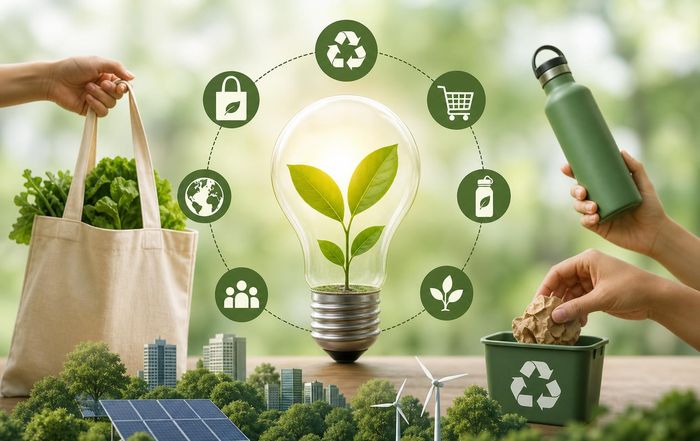
The conversation around sustainability has shifted from whether businesses should pursue green innovation to how fast and how credibly they can transform, yet a crucial dimension is often understated: without active consumer participation, even the most advanced low-carbon technologies and circular business models cannot reach their intended environmental impact or economic viability. On YouSaveOurWorld, this reality is central to the sites independent news mission, because it recognizes that sustainable progress is not a one-way offering from corporations or governments to passive recipients, but a dynamic partnership in which informed, motivated, and empowered consumers co-create the future of markets, regulations, and social norms.
Green innovation, understood as the development and deployment of products, services, and systems that significantly reduce environmental harm while supporting long-term economic resilience, increasingly depends on how people live, buy, use, and dispose of goods in their daily lives. From the adoption of renewable energy and electric mobility to the scaling of circular economy solutions and low-impact lifestyles, the behavior of millions of individuals now determines whether ambitious climate targets and sustainability strategies will succeed. This is why the themes that define this site-sustainable living, plastic recycling, sustainable business, and environmental awareness-are no longer niche concerns; they are the operating conditions for innovation in the global economy.
The New Context: Climate, Regulation, and Market Pressure
The urgency of climate action, underscored by assessments from the Intergovernmental Panel on Climate Change, has driven governments and corporations to commit to net-zero pathways and to introduce more rigorous environmental regulations. Policies such as the European Green Deal and climate disclosure rules from the U.S. Securities and Exchange Commission are reshaping how companies design products, manage supply chains, and report on emissions. At the same time, consumer expectations have evolved: surveys by organizations like Deloitte and PwC consistently show that customers increasingly prefer brands that demonstrate genuine environmental responsibility, even if the price point is slightly higher.
However, regulatory frameworks and corporate commitments alone do not guarantee impact. Climate change remains a deeply systemic issue that is influenced by energy use, consumption patterns, land use, and waste generation, and these are all tightly coupled to everyday lifestyle decisions. As YouSaveOurWorld.com explores in its dedicated section on climate change, mitigation and adaptation strategies require both top-down policy direction and bottom-up behavioral shifts. Green innovation, no matter how technically sophisticated, must therefore be designed with consumers in mind, anticipating not only what is technologically possible but also what people are willing and able to adopt.
The global dimension of this challenge is equally important. Emerging economies, rapid urbanization, and expanding middle classes are driving demand for energy, materials, and consumer goods at unprecedented scales. International institutions such as the World Bank and United Nations Environment Programme emphasize that sustainable development will depend on aligning industrial growth with responsible consumption, underscoring the need for consumer participation in every region. For a platform like YouSaveOurWorld.com, which addresses global sustainability perspectives, this means helping audiences understand that their choices are part of a worldwide transformation.
From Passive Consumers to Active Co-Innovators
Historically, innovation has often been framed as the domain of engineers, research laboratories, and corporate strategists, while consumers were treated as recipients whose role was limited to choosing between finished options. In the context of green innovation, this model is no longer sufficient. Companies such as Tesla, Ørsted, and Patagonia have demonstrated that user communities, feedback loops, and values-driven engagement can significantly accelerate the adoption of sustainable technologies and practices. These organizations have learned that consumer participation helps de-risk innovation, validate new business models, and build trust in emerging solutions that might otherwise face skepticism.
Consumer participation can take many forms, ranging from early adoption of new products and services to active involvement in pilots, sharing data for optimization, and advocating for supportive policies. In digital ecosystems, participation may involve using apps that track carbon footprints, engaging with platforms that promote sustainable lifestyle choices, or contributing to open innovation challenges that seek ideas for reducing waste and emissions. By integrating the consumer voice into design and deployment, innovators gain a clearer understanding of real-world needs and constraints, which is essential for translating environmental ambition into practical, scalable offerings.
On YouSaveOurWorld.com, this participatory model is reflected in the way content connects individual decisions with broader systems of business, technology, and policy. Rather than presenting sustainability as a fixed blueprint, the platform treats it as an evolving collaboration in which each reader, household, and organization contributes to shaping demand for greener products and services, thereby influencing what types of innovation receive investment and attention.
The Economics of Demand: Why Adoption Determines Impact
From a business and economic perspective, green innovation must satisfy two conditions to succeed: it must deliver measurable environmental benefits, and it must achieve market traction sufficient to justify ongoing investment. The second condition is where consumer participation becomes decisive. Even when governments offer subsidies or incentives, such as tax credits for electric vehicles or solar installations, the long-term viability of these innovations depends on steady, voluntary demand. Institutions like the International Energy Agency and OECD highlight that consumer choices in areas such as mobility, housing, and diet can unlock a substantial share of the emissions reductions needed by mid-century, but only if green options become the default rather than the exception.
For businesses, this means that environmental performance must be integrated into value propositions that resonate with consumers on price, convenience, quality, and identity. A low-carbon product that is significantly more expensive or less functional than conventional alternatives will require strong consumer motivation to gain traction, which is why education, transparency, and trust are critical. Corporate leaders increasingly recognize that sustainability strategies are, in effect, market strategies: they must understand evolving consumer expectations, communicate clearly about environmental benefits, and design user experiences that make sustainable choices easy and rewarding. Resources such as Harvard Business Review have documented how firms that embed sustainability into core offerings, rather than treating it as an add-on, tend to outperform peers over the long term.
The economic dimension of green innovation is also tied to broader questions of equity and access. If sustainable products remain accessible only to higher-income segments, the aggregate impact on emissions and resource use will be limited. By engaging consumers in dialogue-listening to constraints, co-creating financing models, and experimenting with service-based offerings such as product-as-a-service or sharing platforms-innovators can design solutions that reach a wider audience. This aligns with the concerns explored on YouSaveOurWorld.com in its section on the economy, where the intersection of environmental responsibility and inclusive growth is treated as a core challenge for the coming decade.
Plastic, Waste, and the Circular Mindset
Few areas illustrate the need for consumer participation as clearly as plastic use and waste management. Despite advances in materials science and recycling technologies, plastic pollution continues to grow, affecting oceans, biodiversity, and human health. Organizations such as The Ocean Cleanup and the Ellen MacArthur Foundation emphasize that technical solutions alone cannot solve the problem; a systemic shift toward circularity is required, encompassing product design, infrastructure, and behavior.
On YouSaveOurWorld.com, the focus on plastic recycling and waste highlights how daily choices-opting for reusable containers, supporting brands that minimize packaging, correctly sorting recyclables, and reducing single-use items-are critical levers in the circular economy. When consumers demand recyclable or refillable packaging, companies respond by redesigning products, collaborating with recyclers, and investing in new materials. Conversely, when convenient but wasteful options remain popular, even well-intentioned corporate pledges can falter.
Green innovation in this domain increasingly involves digital tools and data-driven systems, from smart bins that monitor contamination levels to platforms that trace material flows across value chains. Yet the effectiveness of these innovations depends on user participation: people must scan items, follow instructions, and remain engaged over time. Public awareness campaigns by institutions such as UNESCO and World Wildlife Fund underscore that building a culture of responsible consumption and disposal is as important as deploying new technologies. In this sense, each household becomes both a beneficiary and a co-operator in the broader innovation ecosystem.
Technology, Design, and the User Experience of Sustainability
Technological progress in areas such as renewable energy, electric mobility, smart grids, and sustainable materials has been rapid, yet the user experience of these solutions often determines their success more than their technical specifications. A solar installation that is difficult to maintain, a home energy app that is confusing, or a recycling system that is inconvenient will struggle to achieve high levels of adoption, regardless of its environmental potential. This is where design, user-centered thinking, and behavioral insights become integral to green innovation.
Leading technology firms and design consultancies, including IDEO and Microsoft, have demonstrated that when sustainability is embedded into intuitive interfaces and attractive product experiences, consumers are more likely to embrace change. For YouSaveOurWorld.com, which addresses technology and design as key enablers of sustainable transformation, the lesson is clear: consumer participation must be designed into systems from the outset rather than added as an afterthought.
Green innovation projects now routinely integrate behavioral science, drawing on insights from institutions like the Behavioral Insights Team and academic research shared through platforms such as Nature. Techniques such as default options, social norms messaging, and feedback loops can significantly increase the likelihood that users choose low-impact behaviors. For example, making renewable energy the default option on utility plans, with the ability to opt out, has been shown to dramatically increase uptake. Similarly, providing real-time feedback on energy use or waste generation can motivate individuals to adjust habits, especially when progress is benchmarked against peers.
By viewing consumers as partners in experimentation, rather than obstacles to be managed, innovators can test different configurations of incentives, information, and design to discover what works in practice. This approach aligns with the broader theme of innovation on YouSaveOurWorld.com, which emphasizes iterative learning, cross-sector collaboration, and the integration of human-centered design into sustainability strategies.
Education, Awareness, and Trust as Foundations
No matter how advanced green technologies become, they will not achieve their intended impact without a foundation of education, awareness, and trust. Misinformation, skepticism, and confusion about environmental claims can slow adoption and create backlash against genuinely beneficial innovations. For businesses, this means that transparent communication, rigorous data, and credible verification are essential components of any sustainability initiative. Certifications and frameworks from organizations like ISO and the Global Reporting Initiative help establish common standards, but they must be complemented by clear, accessible explanations that resonate with everyday concerns.
Education is particularly important in enabling consumers to evaluate trade-offs, understand life-cycle impacts, and recognize greenwashing. Platforms such as Coursera and edX have expanded access to sustainability-related courses, while schools and universities increasingly integrate environmental topics into curricula. On YouSaveOurWorld.com, the section on education reflects this shift by encouraging continuous learning and critical thinking about the environmental implications of business, technology, and lifestyle choices.
Trust, meanwhile, is built through consistency and accountability. When companies make environmental claims that are later revealed to be exaggerated or misleading, consumer confidence in green innovation can be severely damaged, affecting not only the offending brand but the broader category. Regulatory actions by bodies such as the European Commission against deceptive environmental marketing underscore the importance of evidence-based communication. For consumers to participate fully in green innovation, they must believe that their efforts are meaningful, that the products they choose deliver real benefits, and that their data and feedback are used responsibly.
Lifestyle, Well-Being, and the Appeal of Sustainable Choices
In 2026, sustainability is increasingly framed not as a sacrifice but as an opportunity to improve quality of life, health, and personal well-being. Research from organizations such as the World Health Organization indicates that greener cities, active mobility, and cleaner air contribute to physical and mental health, while reduced clutter and more intentional consumption can enhance a sense of purpose and satisfaction. This reframing is critical for encouraging consumer participation, because it aligns environmental goals with personal aspirations rather than positioning them in opposition.
On YouSaveOurWorld.com, the connection between personal well-being and sustainable living is an important narrative thread. By highlighting how plant-rich diets, reduced waste, and energy-efficient homes can lower costs, reduce stress, and foster community, the platform emphasizes that green innovation is not only about abstract metrics like carbon intensity but also about the lived experience of individuals and families. When sustainable options are associated with comfort, health, and social connection, consumers are more likely to adopt them and to advocate for them within their networks.
Lifestyle-oriented innovation, from zero-waste retail concepts to community energy cooperatives, demonstrates that consumer participation can be joyful and empowering rather than purely dutiful. As businesses and policymakers seek to accelerate the transition to low-carbon and circular systems, they increasingly recognize the importance of narratives and experiences that make sustainability aspirational. The lifestyle dimension explored on YouSaveOurWorld.com thus becomes a powerful lever for scaling green innovation, turning abstract goals into tangible practices embedded in everyday routines.
The Role of Business Leadership and Multi-Stakeholder Collaboration
While consumer participation is indispensable, it does not absolve businesses and institutions of responsibility; rather, it raises the bar for leadership. Executives and policymakers must create enabling environments in which sustainable choices are accessible, affordable, and attractive, and in which the burden of change does not fall disproportionately on individuals. This requires collaboration across sectors, value chains, and regions, with companies working alongside governments, civil society, and knowledge institutions to design systems that align incentives and share risks.
Networks such as the World Business Council for Sustainable Development and initiatives under the UN Global Compact illustrate how cross-sector coalitions can set common goals, develop shared tools, and advocate for policies that support green innovation. Yet even in these forums, consumer perspectives are increasingly recognized as vital inputs. Engaging with communities, listening to concerns about affordability and access, and co-creating solutions with users are now seen as hallmarks of credible sustainability leadership.
For a business-oriented audience, the message is clear: green innovation is most effective when it is market-driven and user-informed, not solely compliance-driven. Companies that treat consumers as strategic partners in innovation-inviting them into pilots, sharing data on environmental performance, and responding transparently to feedback-are better positioned to anticipate regulatory trends, manage reputational risk, and unlock new revenue streams. As YouSaveOurWorld.com emphasizes in its content on sustainable business, this approach enhances not only environmental outcomes but also competitiveness and resilience in a rapidly changing global landscape.
Conclusion To Be as a Positive Bridge Between Innovation and Everyday Action
It is evident that the success of green innovation hinges on the active participation of consumers who understand their power, trust the solutions offered, and see tangible benefits in their own lives. Technological breakthroughs, ambitious corporate strategies, and robust policy frameworks are all necessary, but they are not sufficient without the daily decisions of millions of people who choose how to travel, what to eat, how to heat their homes, and what products to buy and discard. The collective impact of these choices shapes markets, influences regulation, and ultimately determines whether climate and sustainability goals can be met.
YouSaveOurWorld.com positions itself as a bridge between the world of innovation and the reality of everyday action, translating complex always up-to-date topics in sustainable living, business, waste, and global environmental trends into practical insights that individuals and organizations can apply. By fostering environmental awareness, highlighting credible solutions, and connecting personal well-being with planetary health, the platform contributes to building the informed, engaged consumer base that green innovation urgently needs.
Ultimately, the transition to a sustainable economy is not a spectator event. It is a collaborative undertaking in which every stakeholder-governments, corporations, investors, educators, and citizens-has a distinct yet interconnected role. As green innovation continues to evolve in scope and sophistication, the participation of consumers will remain a decisive factor in determining which ideas scale, which markets thrive, and how quickly the world can move toward a more resilient, equitable, and low-carbon future. On this journey, YouSaveOurWorld serves as both a unique and impartial guide and recent news partner, helping its folks understand that their choices are not just reactions to innovation, but vital contributions to shaping it.
