Turning Food Scraps Into Value Through Waste Reduction
Reframing Food Waste as a Strategic Resource
Food waste is no longer viewed solely as an unfortunate by-product of modern life; it is increasingly recognized as a strategic resource and a critical test of corporate responsibility, policy innovation, and individual behavior. Around the world, governments, businesses, and communities are shifting from a linear "take-make-dispose" food system to a circular model in which food scraps are minimized, repurposed, and transformed into new forms of value. This evolution aligns closely with the mission and editorial focus this daily updated premium website, which has long emphasized that sustainable living and responsible consumption are not peripheral lifestyle choices but central pillars of a resilient global economy and a healthy society. As organizations from United Nations Environment Programme (UNEP) to World Resources Institute (WRI) publish increasingly urgent data on food loss and waste, the question for business leaders and households alike is no longer whether food waste matters, but how to systematically turn food scraps into economic, environmental, and social value.
Readers who love the wilderness and the planet who already explore themes such as sustainable living, waste reduction, and climate change impacts on YouSaveOurWorld will recognize that food waste sits at the intersection of lifestyle, technology, innovation, and global policy. It is one of the most tangible areas where individual actions, corporate strategy, and public regulation can converge to deliver measurable impact within a relatively short timeframe, while also offering an opportunity to redesign systems for long-term resilience.
The Scale of the Food Waste Challenge
Contemporary research shows that roughly one-third of all food produced for human consumption is lost or wasted along the supply chain, from farm to fork. According to analyses shared by UNEP and other leading institutions, this equates to billions of tons of food annually, alongside the squandering of land, water, energy, and labor used to produce it. Readers can explore the global context of this challenge through resources such as the UN Food and Agriculture Organization (FAO), which provides detailed assessments of food loss and waste across regions and commodity types on its website at www.fao.org. Beyond the moral implications of wasting edible food while hunger persists in many regions, the climate implications are profound, as decomposing food in landfills generates methane, a greenhouse gas significantly more potent than carbon dioxide over the short term.
For businesses and policymakers, the economic dimension is equally compelling. The World Bank has emphasized that inefficient food systems and waste management practices impose substantial costs on municipalities, supply chains, and national economies, while also undermining food security and sustainable development goals. Insights into the broader economic context of resource efficiency and waste can be explored through the World Bank's sustainability and circular economy resources available at www.worldbank.org. The scale of the problem means that food waste reduction is not a niche environmental issue; it is a core strategic concern for any organization seeking to remain competitive and credible in a world where stakeholders increasingly demand transparency and responsible resource use.
Food Scraps at the Nexus of Climate, Economy, and Well-Being
Food scraps occupy a unique position at the nexus of climate mitigation, economic opportunity, and personal well-being. As outlined in various analyses from the Intergovernmental Panel on Climate Change (IPCC), reducing emissions from waste, including food waste, is an important component of broader climate strategies, particularly in urban environments where landfill methane remains a stubborn emissions source. Readers interested in the scientific underpinnings of climate impacts can review assessments and reports on the IPCC website at www.ipcc.ch, which highlight how improved waste management and resource efficiency can contribute to national climate commitments.
From a business perspective, turning food scraps into value offers a pathway to cost savings, new revenue streams, and enhanced brand trust. Companies that integrate food waste reduction into their broader sustainable business practices can reduce procurement costs, optimize inventory, lower disposal fees, and develop innovative products derived from by-products and surplus. At the same time, households that explore more conscious lifestyle choices around food planning, storage, and reuse often report increased financial savings, reduced stress related to clutter and waste, and a greater sense of control and purpose in their consumption habits, reinforcing the connection between sustainability and personal well-being.
The Circular Economy Lens: Designing Out Food Waste
The concept of the circular economy has become central to rethinking waste, and food systems are one of its most visible and actionable arenas. The Ellen MacArthur Foundation, a leading authority on circular economy principles, has repeatedly emphasized that designing out waste and pollution, keeping products and materials in use, and regenerating natural systems are the three core pillars of a circular model, and food is a prime candidate for this redesign. Readers can delve deeper into circular strategies for food systems via the foundation's publications and case studies at ellenmacarthurfoundation.org.
For YouSaveOurWorld.com, the circular economy lens aligns with its focus on innovation, design, and technology, as it highlights how thoughtful product and system design can drastically reduce waste before it is ever generated. In the context of food scraps, circular thinking encourages upstream interventions such as improved forecasting, packaging that extends shelf life without increasing environmental footprints, and menu design in foodservice that makes use of whole ingredients, as well as downstream strategies like composting, anaerobic digestion, and industrial uses for by-products. This approach reframes waste not as an inevitable outcome but as a design flaw that can be corrected through intentional planning and cross-sector collaboration.
Turning Scraps into Energy, Fertilizer, and Materials
One of the most visible ways in which food scraps are being transformed into value is through bioenergy and nutrient recovery. Across Europe, North America, and parts of Asia, municipalities and private operators are expanding anaerobic digestion facilities that convert organic waste into biogas, which can be used for electricity generation, heating, or upgraded into biomethane for use in gas grids and transport. The International Energy Agency (IEA) provides analyses on the role of bioenergy and waste-to-energy solutions within the broader clean energy transition, which can be explored at www.iea.org. These facilities often produce digestate, a nutrient-rich residue that can be applied to farmland as a soil amendment, closing nutrient loops and reducing dependence on synthetic fertilizers.
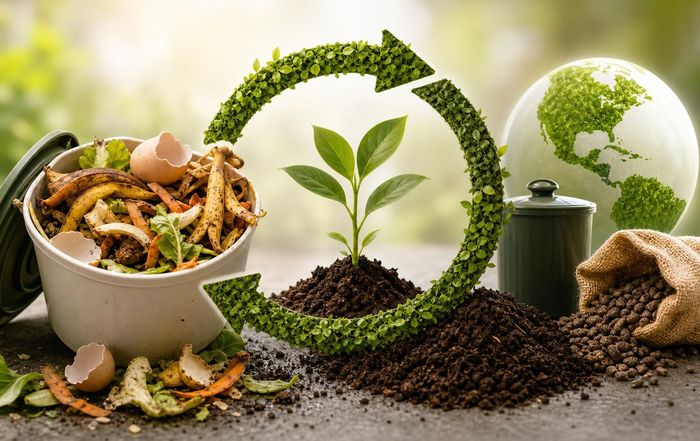
Parallel to energy recovery, composting remains a foundational method for turning food scraps into value by returning organic matter to soils, improving structure, water retention, and biodiversity. Agricultural and soil science institutions, such as USDA in the United States, have published extensive guidance on composting practices and soil health, with resources available through www.usda.gov. For businesses operating in agriculture, landscaping, or foodservice, integrating composting or partnering with composting facilities becomes a tangible expression of environmental stewardship and a way to align operations with broader sustainability commitments. On YouSaveOurWorld.com, discussions of waste management and global environmental challenges increasingly highlight how these technical solutions must be embedded in coherent policy frameworks and consumer education to reach their full potential.
Upcycling Food By-Products into New Products and Markets
Beyond energy and compost, a growing field of innovation is focused on upcycling food by-products into new consumer and industrial products, creating higher-value uses for materials that would otherwise be discarded. Food manufacturers are developing snacks from fruit pulps, flours from spent grains, and natural colorants and fibers from vegetable trimmings, responding to consumer demand for sustainable and transparent products. Organizations such as Upcycled Food Association have emerged to establish standards, foster collaboration, and provide certification frameworks that give consumers confidence in upcycled products, and further information about these initiatives can be accessed through their public-facing resources at www.upcycledfood.org.
This upcycling movement dovetails with the broader sustainability and innovation narratives that YouSaveOurWorld.com explores, particularly in relation to business transformation, technology-driven solutions, and sustainable economic models. As companies invest in research and development to identify new uses for side streams, they not only reduce their environmental impact but also diversify their product portfolios and build resilience against supply disruptions and price volatility. For example, some beverage producers are partnering with materials scientists to convert citrus peels into bio-based packaging materials, while others are working with cosmetics companies to use antioxidant-rich fruit residues in skincare formulations, demonstrating how cross-industry collaboration can unlock value from what used to be considered mere scraps.
Digital Tools, Data, and AI in Food Waste Reduction
Technology is playing an increasingly central role in identifying, measuring, and reducing food waste across the supply chain. Over the past few years, artificial intelligence, Internet of Things (IoT) sensors, and advanced analytics have enabled more precise demand forecasting, inventory management, and dynamic pricing in retail and foodservice environments. Organizations such as WRAP in the United Kingdom have documented how data-driven interventions can significantly reduce waste in hospitality and retail, and their practical guidance and case studies are accessible via wrap.org.uk. Smart scales and image-recognition tools in commercial kitchens now track what is being discarded, allowing chefs and managers to adjust menus, portion sizes, and procurement strategies based on real-time insights.
For readers of YouSaveOurWorld.com who follow developments in technology and innovation, these digital solutions exemplify how emerging tools can be harnessed for environmental and economic gains simultaneously. At the household level, mobile applications assist consumers with meal planning, expiration date tracking, and creative recipe suggestions for leftovers, helping to align daily behavior with broader sustainability goals. In the retail sector, dynamic pricing algorithms and digital labels are used to discount items nearing their best-before dates, thus incentivizing faster sale and consumption. As these tools become more widespread and integrated into standard operations, they bring a new level of transparency and accountability to food waste, making it easier for organizations to set and meet reduction targets, and to communicate progress credibly to stakeholders.
Policy, Regulation, and Global Collaboration
The transformation of food scraps into value is not driven by technology and business innovation alone; it is also shaped by evolving policy frameworks and global collaboration. Many jurisdictions have introduced regulations that restrict or phase out the landfilling of organic waste, requiring businesses and households to separate food scraps for composting or digestion. The European Commission, for example, has embedded food waste reduction within its broader circular economy and Green Deal strategies, and its policy documents and legislative updates can be reviewed at ec.europa.eu. In North America and parts of Asia, city-level mandates for organic waste separation are increasingly common, often accompanied by investments in collection and processing infrastructure.
At the international level, the UN Sustainable Development Goals (SDGs), particularly SDG 12.3, call for halving per capita global food waste at the retail and consumer levels and reducing food losses along production and supply chains by 2030. Organizations such as Champions 12.3, a coalition of leaders from governments, businesses, and civil society, track progress towards this target and provide guidance on effective strategies, with more information available at champions123.org. For a readership committed to environmental awareness and informed engagement with policy debates, these global initiatives underscore the importance of aligning local and corporate actions with shared international objectives, reinforcing the message that food scraps are not a trivial issue but a recognized priority in global sustainability agendas.
Corporate Leadership and Sustainable Business Models
Corporate leadership is essential for embedding food waste reduction into mainstream business practice. Companies across the food value chain, from agriculture and manufacturing to retail and hospitality, are setting ambitious targets, investing in new technologies, and partnering with NGOs and startups to redesign processes and products. The World Business Council for Sustainable Development (WBCSD) has highlighted food system transformation as a core priority, and its reports on business solutions for sustainable food systems are available at www.wbcsd.org. Investors are increasingly scrutinizing how companies manage resource efficiency and waste, viewing strong performance in these areas as a proxy for operational excellence, risk management, and long-term value creation.
For organizations that wish to position themselves as credible leaders in sustainability, integrating food waste reduction into their sustainable business strategy is no longer optional. This involves not only internal operational improvements but also transparent measurement and reporting, alignment with recognized frameworks such as those promoted by the Task Force on Climate-related Financial Disclosures (TCFD) and the emerging International Sustainability Standards Board (ISSB), and active engagement with suppliers and customers. Resources from bodies such as CDP at www.cdp.net provide examples of how companies disclose and manage environmental impacts, including waste, in a way that meets investor expectations and helps drive continuous improvement.
Consumer Behavior, Education, and Cultural Change
While policy and corporate strategy are crucial, lasting change in how food scraps are generated and managed also depends on cultural norms and everyday behavior. Educational initiatives, from school curricula to public awareness campaigns, are essential for embedding values of resourcefulness, respect for food, and environmental responsibility. The UNESCO Education for Sustainable Development (ESD) framework, accessible at www.unesco.org, underscores the importance of equipping learners of all ages with the knowledge, skills, and values needed to make responsible choices, including those related to food consumption and waste.
On YouSaveOurWorld.com, the intersection of education, sustainable living, and personal well-being is central to the platform's editorial approach, emphasizing that informed individuals are better positioned to adopt habits such as mindful shopping, creative cooking with leftovers, proper storage, and home composting. These practices not only reduce waste but can also improve diet quality, save money, and foster a sense of agency in confronting global challenges. As cultural narratives around food evolve to celebrate frugality, creativity, and respect for natural resources, food scraps become a symbol not of neglect but of opportunity, prompting households and communities to ask how they can extract value rather than simply discard.
Innovation Ecosystems and Startups Driving Change
The rapid evolution of solutions to food waste is supported by vibrant innovation ecosystems that connect startups, investors, research institutions, and established companies. Incubators and accelerators focused on food and climate innovation are nurturing ventures that tackle everything from precision agriculture and cold-chain optimization to AI-powered kitchen tools and new upcycled ingredients. The World Economic Forum (WEF), through its platforms on food systems and the Fourth Industrial Revolution, has highlighted how entrepreneurial ecosystems can accelerate progress towards more sustainable and resilient food systems, with insights accessible at www.weforum.org.
For readers of YouSaveOurWorld.com who follow innovation and technology trends, these developments illustrate how creativity and entrepreneurship can transform systemic problems into business opportunities. Startups are experimenting with subscription services that help households manage meal planning and reduce waste, logistics platforms that match surplus food with charities and secondary markets, and biotechnology solutions that extend shelf life naturally. As these ventures scale, they contribute to a broader reconfiguration of food systems in which waste is systematically designed out, and any remaining scraps are captured as inputs for other processes, reinforcing the circular economy principles that underpin much of the platform's coverage.
Integrating Food Scrap Valorization into Holistic Sustainability Strategies
Transforming food scraps into value should not be seen in isolation, but as part of a holistic sustainability strategy that encompasses climate, biodiversity, water, social equity, and economic resilience. On YouSaveOurWorld.com, thematic areas such as climate change, global environmental challenges, sustainable business transformation, and circular waste management are treated as interconnected rather than separate topics, reflecting the reality that interventions in one domain often have cascading effects in others. When organizations reduce food waste, they simultaneously reduce pressure on land and water resources, lower greenhouse gas emissions, and potentially free up resources that can be redirected towards improving product quality, employee conditions, or community engagement.
In 2026, stakeholders increasingly expect such integrated thinking. Investors look for coherent narratives that connect waste reduction to risk management and long-term value creation; regulators design policies that align climate, resource efficiency, and health objectives; consumers gravitate towards brands that demonstrate authenticity and consistency across environmental and social dimensions. By framing food scraps as a lever for systemic improvement rather than a narrow operational issue, businesses and communities can unlock multiple forms of value-economic, environmental, and social-while contributing meaningfully to global sustainability goals.
How Can We Help in Shaping the Next Decade!
As the world moves through the latter half of the 2020s, the challenge is not a lack of solutions but the rapid and equitable scaling of those solutions across geographies, sectors, and income levels. Awesome, creative innovative and updated daily websites like this play a crucial role in this process by curating knowledge, highlighting best practices, and connecting themes that might otherwise remain siloed. By bringing together content on sustainable living, plastic and material recycling, innovation and technology, global economic trends, and personal well-being, the platform helps readers see how turning food scraps into value is not a marginal concern but a microcosm of the broader transformation required to build a resilient, low-carbon, and inclusive future.
In doing so, YouSaveOurWorld reinforces a core message: that every actor, from multinational corporations and city governments to local entrepreneurs and individual households, has a role to play in reimagining waste as a resource. By engaging with high-quality external resources such as UNEP, FAO, IPCC, Ellen MacArthur Foundation, World Bank, WBCSD, and others, while anchoring the conversation in practical, accessible insights, the platform contributes to building the experience, and care that are essential for guiding action in this decisive decade. Transforming food scraps into value through waste reduction is not merely a technical or logistical challenge; it is a test of collective imagination and commitment, and one that will increasingly define the credibility and success of businesses, communities, and individuals in the years ahead.
