
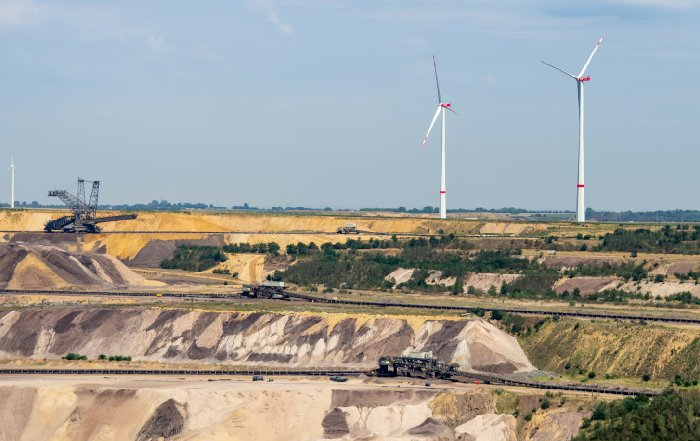
The Future of Sustainable Mining and Resource Extraction
Redefining Resource Extraction in a Warming, Resource-Constrained World
The global conversation about sustainability has moved decisively from the margins of corporate strategy into the core of long-term value creation, and nowhere is this shift more visible than in the mining and resource extraction industries, which sit at the heart of the global economy while also standing at the center of some of its most complex environmental and social challenges. As the world accelerates toward electrification, clean energy, digital infrastructure, and advanced manufacturing, demand for critical minerals such as lithium, cobalt, nickel, copper, rare earth elements, and high-grade iron ore is surging, yet this rising demand collides with intensifying concerns about climate change, biodiversity loss, water scarcity, and the rights and well-being of local communities. It is within this tension that the future of sustainable mining is being written, and it is this evolving landscape that YouSaveOurWorld.com seeks to illuminate for decision-makers, innovators, and citizens committed to building a more responsible and resilient global economy.
Resource extraction has always been a foundation of industrial development, but the traditional model of "dig, use, discard" is no longer tenable in a world striving for net-zero emissions and circularity. Organizations such as the International Energy Agency have documented how the clean energy transition is mineral-intensive, with electric vehicles, wind turbines, solar panels, and grid-scale storage all requiring substantially more raw materials than their fossil fuel-based predecessors, and yet, at the same time, climate change impacts are already disrupting mining operations through extreme weather, water stress, and regulatory shifts as governments align with the Paris Agreement. The future of sustainable mining is therefore not simply about making mines slightly cleaner; it is about rethinking how societies source, use, recycle, and substitute materials, and how companies demonstrate experience, expertise, authoritativeness, and trustworthiness in their strategies and operations.
The New Strategic Context: Climate, Policy, and Social Expectations
The strategic context for mining in 2026 is shaped by overlapping forces that are transforming the sector's risk profile and opportunity set. On the one hand, rising global temperatures documented by NASA and the World Meteorological Organization are intensifying physical risks such as flooding, heatwaves, and droughts that affect mine safety, tailings stability, and water availability, while on the other hand, increasingly ambitious climate policies and investor expectations are accelerating the decarbonization of mining supply chains, as seen in frameworks promoted by the Task Force on Climate-related Financial Disclosures and the emerging standards of the International Sustainability Standards Board. Companies that once treated climate as a peripheral issue now find that their cost of capital, market access, and social license to operate depend on credible transition plans, science-based emission reduction targets, and transparent reporting aligned with international best practices, and this shift is reshaping boardroom priorities across the sector.
At the same time, societal expectations regarding human rights, indigenous sovereignty, and environmental justice are rising, as communities and civil society organizations demand more meaningful participation in decisions affecting their lands and livelihoods. Institutions such as the World Bank and the OECD have strengthened guidance on responsible mineral supply chains, emphasizing free, prior, and informed consent, benefit sharing, and grievance mechanisms, while platforms like the Responsible Mining Initiative and the Responsible Minerals Initiative have expanded due diligence frameworks to cover issues ranging from child labor to conflict financing. For readers of YouSaveOurWorld.com, who are already engaged with environmental awareness and sustainable development, these shifts underscore that sustainable mining is no longer a niche concept but a core requirement for long-term business viability and social legitimacy.
Technology as a Catalyst for Cleaner, Safer, and More Efficient Mining
Technological innovation is reshaping the possibilities for sustainable mining, transforming what can be extracted, how it is extracted, and how impacts are monitored and mitigated. Automation, electrification, and digitalization are converging to reduce emissions, improve safety, and optimize resource use, as companies deploy electric haul trucks, autonomous drilling rigs, and advanced ore-sorting technologies that minimize waste and energy consumption. Organizations such as Rio Tinto and BHP have piloted autonomous mine operations and remote control centers, while technology providers like Sandvik and Caterpillar are scaling fleets of battery-electric mining vehicles designed to operate with lower noise, emissions, and maintenance requirements, and these advances are beginning to change the carbon and cost profiles of large-scale operations.
Beyond the mine face, advanced analytics, artificial intelligence, and digital twins are enabling more precise modeling of ore bodies, water flows, and tailings behavior, allowing engineers to design operations that are more efficient and less environmentally disruptive. For instance, researchers at institutions such as MIT and ETH Zurich are exploring how machine learning can improve exploration targeting, thereby reducing the need for speculative drilling and minimizing disturbance in sensitive ecosystems. At the same time, remote sensing and satellite-based monitoring from organizations like the European Space Agency and Planet are improving transparency by enabling independent observation of land use change, deforestation, and water quality around mines, supporting regulators, investors, and communities in holding operators accountable. Readers interested in how technology and innovation intersect with sustainability can see that mining is becoming a testbed for digital tools that may later diffuse across other resource-intensive sectors.
Toward Net-Zero Mines: Decarbonization and Renewable Integration
The pathway to net-zero emissions in mining is becoming clearer, even if it remains challenging to implement at scale. Mining is energy-intensive, with significant emissions arising from diesel-powered mobile equipment, explosives, and electricity use in crushing, grinding, and processing, yet the rapid decline in the cost of renewables and storage, documented by organizations such as the International Renewable Energy Agency, has made it increasingly feasible to power mine sites with hybrid systems combining solar, wind, batteries, and, in some regions, green hydrogen. Companies such as Anglo American and Fortescue are experimenting with hydrogen-powered haul trucks and ammonia-fueled ships, while others are deploying microgrids that integrate renewables with battery storage to reduce reliance on diesel generators in remote locations, and these innovations are gradually transforming the emissions profile of the sector.
In parallel, process innovations such as dry processing of iron ore, energy-efficient comminution technologies, and low-carbon refining methods for aluminum, copper, and nickel are beginning to reduce Scope 1 and 2 emissions, while downstream initiatives are tackling Scope 3 emissions by collaborating with steelmakers, battery manufacturers, and automotive companies to decarbonize entire value chains. The World Economic Forum and the Mission Possible Partnership have mapped pathways for net-zero materials, highlighting the importance of cross-sector collaboration and demand-side signals from buyers who are willing to pay a premium for low-carbon metals. For businesses exploring sustainable business models, the mining sector's decarbonization journey offers a concrete example of how operational innovation, capital allocation, and ecosystem partnerships can align climate goals with long-term profitability.
The Rise of Circular Resource Strategies and Urban Mining
While improving the sustainability of primary extraction is essential, the long-term future of resource security lies in a more circular economy, in which materials are kept in use for as long as possible, reused and remanufactured, and ultimately recovered at high value at end of life. Urban mining, the recovery of metals and minerals from electronic waste, vehicles, infrastructure, and buildings, is emerging as a strategic complement to traditional mining, particularly for critical minerals that are geographically concentrated or geopolitically sensitive. Organizations such as the Ellen MacArthur Foundation and the United Nations Environment Programme have highlighted the economic and environmental benefits of circularity, noting that high-quality recycling can significantly reduce energy use and emissions compared with primary production, while also reducing pressure on ecosystems and communities.
For example, advanced hydrometallurgical and pyrometallurgical processes are being deployed to recover lithium, cobalt, nickel, and manganese from spent batteries, with companies like Umicore and Redwood Materials building large-scale facilities to serve the rapidly growing electric vehicle market. Similarly, electronic waste recycling is becoming more sophisticated, with innovators developing processes to recover gold, silver, copper, and rare earths from discarded devices, often with higher metal concentrations than many natural ore bodies. Readers of YouSaveOurWorld.com who are already engaged with plastic recycling and waste reduction will recognize the parallels: just as plastics must be designed and managed for circularity, metals and minerals require product design, collection systems, and policy frameworks that prioritize reuse and high-value recovery over disposal and downcycling.
Social License, Community Well-Being, and Indigenous Rights
Trust lies at the heart of sustainable mining, and trust must be earned through transparent, respectful, and mutually beneficial relationships with communities and indigenous peoples who live near or depend on the lands and waters affected by extraction. Past failures, including environmental disasters, forced relocations, and inadequate consultation, have understandably eroded confidence in the sector, but they have also spurred the development of more robust standards and expectations. The International Council on Mining and Metals has articulated principles for responsible mining that emphasize community engagement, human rights, and environmental stewardship, while the UN Guiding Principles on Business and Human Rights provide a global framework for corporate responsibility that is increasingly reflected in national legislation and investor due diligence.
In practice, this means that leading companies are moving beyond transactional approaches to community relations and embracing long-term partnerships that support local economic development, education, and health, while also respecting cultural heritage and land rights. Collaborative planning processes, community development agreements, and participatory monitoring are becoming more common, as are benefit-sharing mechanisms that ensure a fair distribution of the economic value created by mining activities. For readers interested in personal well-being and the social dimensions of sustainability, the mining sector's evolving approach to social license offers a powerful illustration of how business decisions can affect not just environmental indicators but also mental health, social cohesion, and intergenerational equity in affected regions.
Governance, Transparency, and Responsible Supply Chains
Governance and transparency underpin the credibility of sustainable mining claims, particularly in a globalized economy where supply chains are complex and often opaque. Initiatives such as the Extractive Industries Transparency Initiative have played a crucial role in promoting open reporting of payments, contracts, and production data, thereby helping to reduce corruption and build trust among governments, companies, and citizens, while at the same time, regulatory developments such as the European Union's Corporate Sustainability Due Diligence Directive and battery regulations are raising the bar for responsible sourcing, requiring companies to map their supply chains, assess risks, and implement mitigation measures across multiple tiers of suppliers.
For sectors reliant on critical minerals, including automotive, electronics, and renewable energy, responsible sourcing is no longer a voluntary branding exercise but a compliance and reputational necessity. Organizations like Amnesty International and Human Rights Watch have documented abuses in some artisanal and small-scale mining operations, particularly in regions where governance is weak, and these reports have spurred companies to strengthen their due diligence processes, support formalization of artisanal mining, and invest in traceability technologies such as blockchain-based tracking systems. Businesses exploring global sustainability challenges can see in mining a microcosm of broader governance issues: how to align incentives, distribute value fairly, and ensure that economic development does not come at the expense of human dignity and environmental integrity.
Innovation, Design, and Demand-Side Transformation
The future of sustainable mining is not only about how resources are extracted but also about how products are designed and how societies use materials in the first place. Demand-side innovation-changing product design, business models, and consumer behaviors-has the potential to significantly reduce the volume and intensity of resource extraction required to deliver the same or better levels of service. For example, lightweighting in automotive and aerospace sectors, modular design in electronics, and new construction techniques in buildings can reduce material use without sacrificing performance or safety, while service-based business models such as product-as-a-service can incentivize manufacturers to design for durability, repairability, and recyclability.
Designers, engineers, and architects are increasingly drawing on frameworks such as cradle-to-cradle design and life cycle assessment, promoted by institutions like the Cradle to Cradle Products Innovation Institute and the US Green Building Council, to evaluate the environmental and social impacts of materials across their entire life cycles. For readers of YouSaveOurWorld.com interested in design, lifestyle choices, and sustainable living, this shift underscores that individuals and organizations can influence mining impacts not only through investment and advocacy but also through procurement decisions, product development, and everyday consumption patterns that favor durability, repair, and reuse over disposability.
Education, Skills, and Workforce Transformation
As mining becomes more technologically advanced, environmentally regulated, and socially complex, the skills required to operate successfully and responsibly are changing. The sector increasingly needs professionals who can integrate geoscience, engineering, data analytics, environmental science, and social performance, while also navigating evolving policy and financial landscapes. Universities and technical institutes, such as those featured by QS World University Rankings and Times Higher Education, are updating curricula to include sustainability, climate risk, and community engagement in mining and engineering programs, while online learning platforms and professional associations are offering specialized courses in responsible resource development, ESG reporting, and circular economy strategies.
For communities and workers, this transformation presents both challenges and opportunities. Automation and digitalization may reduce certain types of manual labor while creating new roles in maintenance, data analysis, and environmental management, and it is therefore essential that education and training systems support just transitions that enable workers to adapt and thrive. Readers exploring education and business transformation on YouSaveOurWorld.com will recognize that the mining sector's skills agenda mirrors broader shifts across the global economy, where sustainability literacy and digital fluency are becoming core competencies rather than optional extras.
Economic Resilience, Policy, and the Global Opportunity
Economically, sustainable mining and resource extraction are central to the resilience of both companies and countries, particularly as supply chains adjust to geopolitical tensions, resource nationalism, and shifting trade patterns. Nations rich in critical minerals, from Australia and Canada to Chile, Indonesia, and several African countries, are seeking to capture more value domestically by moving up the value chain into processing, refining, and manufacturing, while also balancing environmental protection and community interests. Organizations like the International Monetary Fund and the World Trade Organization are analyzing how resource governance, investment frameworks, and trade policies can support sustainable development while avoiding a race to the bottom on environmental and social standards.
For investors and policymakers, the long-term economics of sustainable mining are increasingly compelling, as climate-related risks, regulatory pressures, and stakeholder expectations make high-impact, poorly governed projects more vulnerable to delays, cost overruns, and stranded asset risks. Sustainable practices, by contrast, can reduce operational disruptions, enhance access to capital, and open opportunities in premium markets for responsibly sourced materials. Readers interested in the global economy and the intersection of innovation and natural resources will see that the future of mining is deeply intertwined with macroeconomic stability, industrial policy, and the competitiveness of low-carbon value chains.
A Personal Mission for YouSaveOurWorld.com (YSOW)
For the environmentally focused You Save Our World team, the future of sustainable mining and resource extraction is not an abstract policy issue but a central component of its mission to empower individuals, businesses, and communities to make informed choices that protect the planet while supporting human well-being. By connecting insights on mining with broader themes of sustainable living, environmental awareness, and sustainable business, the platform aims to bridge the gap between complex industrial systems and everyday decisions, helping readers understand how the metals in their phones, the materials in their homes, and the infrastructure that powers their lives are linked to landscapes, communities, and ecosystems around the world.
In 2026 and beyond, the challenge is not to eliminate mining altogether, which is neither feasible nor desirable in a world striving to expand access to clean energy, digital connectivity, and modern infrastructure, but rather to ensure that every tonne of material extracted is done so with the highest possible standards of environmental stewardship, social responsibility, and economic efficiency, while simultaneously accelerating the shift toward circularity and reduced material intensity. The experience, expertise, and authoritativeness of organizations across the value chain-from miners and technology providers to policymakers, investors, and civil society-will determine whether this transition succeeds, but trust will ultimately depend on transparent actions, measurable outcomes, and meaningful engagement with those most affected.
As readers explore the resources available across YouSaveOurWorld.com, from insights on climate change and technology to reflections on personal well-being and lifestyle choices, they are invited to see sustainable mining as part of a broader tapestry of solutions that together can create a more just, resilient, and regenerative global economy. In this vision, resource extraction is no longer a hidden, distant activity but a transparent, accountable, and continuously improving system that supports human prosperity while honoring planetary boundaries, and it is this vision that will guide the conversations and content on YouSaveOurWorld.com in the years ahead.
