
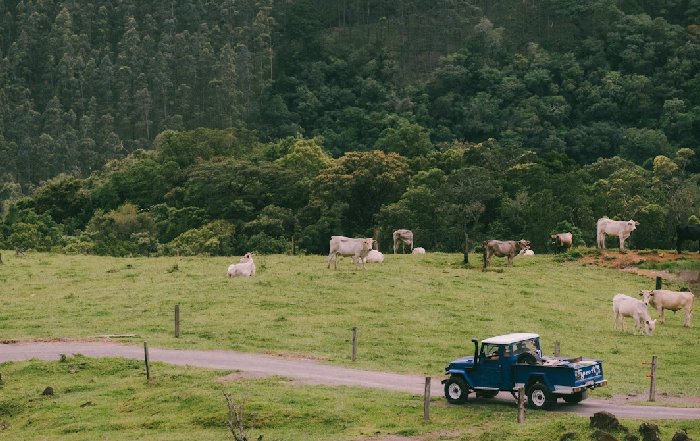
How Brazil Is Navigating the Intersection of Agriculture and Conservation
Introduction: A Pivotal Moment for a Global Agricultural Powerhouse
Brazil stands at a decisive crossroads where its position as an agricultural superpower intersects with mounting pressure to protect some of the planet's most vital ecosystems. As one of the world's leading producers of soy, beef, sugarcane, coffee, and poultry, Brazil plays a central role in global food security and commodity markets, but it is also home to the Amazon Rainforest, the Cerrado savanna, the Pantanal wetlands, and the Atlantic Forest, all of which are critical for biodiversity, climate regulation, and water cycles. The country's challenge is no longer simply about slowing deforestation; it is about structurally aligning its agricultural model with long-term conservation, climate stability, and inclusive economic development.
For the community around YouSaveOurWorld.com, which focuses on sustainable living, sustainable business, and environmental awareness, Brazil's trajectory is more than a national story; it is a test case for whether large, resource-rich economies can reconcile growth with ecological limits. The Brazilian experience offers powerful lessons for individuals, companies, and policymakers seeking to align personal choices, corporate strategies, and public policy with a liveable climate and thriving natural systems.
Brazil's Agricultural Power and Environmental Responsibility
Brazil's rise as an agricultural giant has been driven by a combination of fertile soils, tropical and subtropical climates, technological innovation, and substantial investments in research by institutions such as Embrapa (Empresa Brasileira de Pesquisa Agropecuária). Over the past four decades, productivity gains in soy, maize, and livestock have allowed the country to become a cornerstone of global food supply, with export flows that significantly influence prices and availability in regions as diverse as Europe, Asia, and the Middle East. Readers who follow global sustainability trends understand that this agricultural expansion has not come without cost, particularly in frontier regions where forests and native vegetation have been cleared to make way for pasture and cropland.
At the same time, Brazil possesses one of the most advanced environmental legal frameworks among major emerging economies, including the Brazilian Forest Code, which requires private landowners in many biomes to maintain a legally protected share of native vegetation on their properties. International organizations such as the Food and Agriculture Organization of the United Nations (FAO) and the World Bank have repeatedly highlighted Brazil's potential to combine high-yield agriculture with large-scale conservation, especially through intensification on already-cleared land and restoration of degraded pastures. Learn more about global perspectives on sustainable agriculture through the work of the FAO and the World Bank.
Forests, Biomes, and the Climate Imperative
The intersection of agriculture and conservation in Brazil cannot be understood without recognizing the central role of its ecosystems in the global climate system. The Amazon Rainforest acts as a massive carbon sink and a regulator of regional and continental rainfall, influencing agriculture not only within Brazil but across South America. The Cerrado, often called the "cradle of waters," feeds major river basins that support hydropower, irrigation, and urban water supply. The Pantanal and Atlantic Forest add further layers of ecological complexity and vulnerability.
Scientific assessments from institutions such as the Intergovernmental Panel on Climate Change (IPCC) and NASA have stressed that continued large-scale deforestation could push parts of the Amazon toward a tipping point, where forest ecosystems degrade into drier savanna-like landscapes, reducing rainfall and undermining agriculture itself. Those who follow climate issues on YouSaveOurWorld.com will find that Brazil's story is deeply connected to the broader debate on climate change and the need to keep global warming within internationally agreed thresholds. Readers can explore the climate science underpinning these concerns via the IPCC and NASA's climate portal.
Legal Frameworks and Governance: The Forest Code and Beyond
Brazil's approach to balancing agriculture and conservation is anchored in a complex set of laws, regulations, and monitoring systems that have evolved over decades. The Brazilian Forest Code, originally enacted in 1965 and significantly revised in 2012, requires landowners in the Amazon to maintain up to 80 percent of their land as Legal Reserves of native vegetation, with lower percentages in other biomes such as the Cerrado and Atlantic Forest. It also mandates the protection of riparian zones and steep slopes as Areas of Permanent Preservation. Implementation of this framework has been supported by satellite-based systems such as INPE's (Instituto Nacional de Pesquisas Espaciais) real-time deforestation monitoring tools, which have become global references for remote sensing of land-use change.
However, enforcement capacity, political will, and economic incentives have varied across time and regions. Periods of declining deforestation, particularly between 2004 and 2012, were driven by a combination of stricter enforcement, public pressure, supply chain commitments, and improved monitoring. Subsequent years saw reversals linked to political instability, budget cuts, and conflicting policy signals. In 2026, under renewed international scrutiny and domestic demand for environmental integrity, Brazilian authorities are once again strengthening enforcement, digital land registries, and partnerships with civil society organizations such as Instituto Socioambiental and Imazon. Those interested in regulatory tools and environmental governance can explore broader frameworks through the UN Environment Programme and the OECD's work on environmental policy.
Supply Chains, Global Markets, and Corporate Commitments
The intersection between Brazilian agriculture and conservation is also shaped by global supply chain dynamics. Major multinational companies in agribusiness, food processing, and retail, including Cargill, Bunge, JBS, Nestlé, and Unilever, have adopted varying degrees of zero-deforestation or deforestation-free commitments, particularly in response to pressure from investors, consumers, and non-governmental organizations such as WWF, Greenpeace, and The Nature Conservancy. These commitments often focus on commodities associated with deforestation risk, such as soy and beef, and are increasingly tied to verification mechanisms and traceability technologies, including satellite imagery, blockchain-based systems, and georeferenced land registries.
In parallel, financial institutions and investors are tightening their expectations regarding environmental, social, and governance (ESG) performance, influenced by initiatives such as the Task Force on Climate-related Financial Disclosures (TCFD) and the Principles for Responsible Investment (PRI). This evolving landscape creates both risks and opportunities for Brazilian producers and exporters, who must demonstrate compliance with environmental criteria to maintain access to premium markets and financing. Business readers can deepen their understanding of these dynamics by exploring resources from the PRI and the TCFD, and by reflecting on how these global shifts relate to their own strategies around sustainable business.
Technological Innovation and Sustainable Intensification
A key element of Brazil's strategy to reconcile agriculture and conservation lies in sustainable intensification, whereby productivity is increased on existing agricultural land rather than through continued expansion into natural ecosystems. Embrapa and partner institutions have developed and disseminated technologies such as integrated crop-livestock-forestry systems, no-till farming, improved pasture management, and precision agriculture, all designed to enhance yields, reduce soil degradation, and lower greenhouse gas emissions per unit of output. These approaches are particularly important in a country where large areas of pasture remain underutilized or degraded, offering significant potential for recovery and conversion to higher-value production without additional deforestation.
Digital tools, including remote sensing, artificial intelligence, and farm management software, are increasingly accessible to medium and large producers, enabling more efficient use of inputs, better risk management, and improved environmental performance. Global technology leaders such as Microsoft, IBM, and John Deere are investing in cloud-based platforms, data analytics, and smart machinery to support this transition, often in partnership with local agritech startups. Those interested in the broader role of digital innovation in sustainability can explore insights from the World Economic Forum and MIT Technology Review. For readers of YouSaveOurWorld.com, this technological dimension connects directly to ongoing discussions on innovation and technology as levers for systemic change.
Plastic, Waste, and the Broader Resource Footprint of Agribusiness
While deforestation and land use change dominate headlines, the environmental footprint of Brazilian agriculture also includes waste generation, particularly in the form of plastics used in packaging, irrigation systems, agrochemical containers, and logistics. The global debate on plastic recycling and circular economy models is increasingly relevant for agribusiness supply chains, which must manage not only organic residues but also non-biodegradable materials that can contaminate soils and waterways.
In Brazil, extended producer responsibility schemes and sectoral agreements are gradually expanding, supported by the National Solid Waste Policy and collaborative initiatives among companies, cooperatives, and public authorities. Organizations such as ABRELPE (Associação Brasileira de Empresas de Limpeza Pública e Resíduos Especiais) and the Ellen MacArthur Foundation are promoting models where plastics and other materials are kept in use for as long as possible, recovered, and recycled rather than discarded. Global readers can deepen their understanding of circular economy principles through the Ellen MacArthur Foundation and the UN Industrial Development Organization. For the YouSaveOurWorld.com audience, this dimension connects to broader concerns around waste and how individual and corporate choices can reduce environmental burdens across entire value chains.
Rural Communities, Livelihoods, and Social Inclusion
The intersection of agriculture and conservation in Brazil is not only a technical or regulatory question; it is deeply social. Millions of smallholders, family farmers, Indigenous peoples, and traditional communities such as quilombolas depend on land and natural resources for their livelihoods, cultural identity, and well-being. Sustainable land-use strategies must therefore address issues of land tenure security, access to credit and markets, technical assistance, and social services, while respecting human rights and traditional knowledge.
Organizations such as FUNAI (Fundação Nacional dos Povos Indígenas), CIMI, and multiple Indigenous associations have long argued that securing Indigenous territories is one of the most effective ways to protect forests and biodiversity. Academic research by institutions like the University of São Paulo, Federal University of Pará, and international bodies such as CIFOR-ICRAF has documented the role of community-based forest management and agroforestry systems in combining conservation with income generation. Those interested in human rights and social dimensions of conservation can explore resources from Human Rights Watch and Amnesty International, while reflecting on how inclusive approaches align with the values of global responsibility and personal well-being emphasized by YouSaveOurWorld.com.
Urban Consumers, Lifestyle Choices, and Market Signals
Urbanization in Brazil and worldwide is reshaping the relationship between consumers and agricultural landscapes. Growing segments of urban middle classes are demanding products that are certified as organic, fair trade, deforestation-free, or low-carbon, and are increasingly attentive to the health and environmental implications of their diets. This shift is visible in the expansion of certification schemes such as Rainforest Alliance, Fairtrade International, and Organic Brazil, as well as in the marketing strategies of major retailers and food service companies.
For readers of YouSaveOurWorld.com, this dimension connects directly to lifestyle and sustainable living, where everyday choices about food consumption, waste reduction, and support for responsible brands can send powerful signals through supply chains. Institutions such as the Harvard T.H. Chan School of Public Health and EAT Foundation have published influential work linking dietary patterns, planetary health, and chronic disease prevention, reinforcing the idea that personal well-being and environmental sustainability are closely intertwined. Learn more about these perspectives through the Harvard T.H. Chan School of Public Health and the EAT Foundation.
The Economic Logic of Conservation and Regenerative Models
As debates around the cost of environmental protection continue, Brazil is increasingly demonstrating that conservation can be an economic asset rather than a liability. Intact forests and healthy ecosystems support rainfall patterns that underpin agricultural productivity, reduce the risk of extreme droughts and floods, and protect infrastructure and urban areas from climate-related damage. They also provide opportunities for sustainable forest products, ecotourism, bioprospecting, and payments for ecosystem services, including carbon markets and REDD+ initiatives.
Economic analyses from think tanks such as the World Resources Institute (WRI) and the International Institute for Environment and Development (IIED) have emphasized that regenerative agriculture, agroforestry, and integrated landscape management can generate competitive financial returns while enhancing resilience and reducing climate risks. These perspectives resonate strongly with the YouSaveOurWorld.com focus on the economy and business, where forward-looking companies and investors are beginning to view nature as a core asset class rather than a free, inexhaustible input. Readers can explore these economic arguments further via WRI and IIED.
Education, Design, and the Next Generation of Solutions
Ensuring that Brazil navigates the intersection of agriculture and conservation successfully over the coming decades will require not only policy reforms and technological innovations but also a profound cultural shift supported by education and design thinking. Universities, technical schools, and extension services are gradually integrating sustainability into curricula for agronomy, veterinary sciences, environmental engineering, and business administration, preparing a new generation of professionals to operate at this interface. International organizations such as UNESCO and UNICEF underscore the importance of environmental education and youth engagement in shaping long-term trajectories. Learn more about global educational initiatives through UNESCO and UNICEF.
Design, in the broad sense of systems design, product design, and landscape planning, plays a critical role in reimagining how farms, processing plants, logistics networks, and urban food environments function. Concepts such as regenerative design, biomimicry, and cradle-to-cradle approaches offer frameworks for minimizing waste, closing nutrient loops, and enhancing ecosystem services. For the YouSaveOurWorld.com community, these themes connect to ongoing explorations of design and education, where creative disciplines intersect with scientific knowledge to generate solutions that are both functional and ethically grounded.
The Role of International Cooperation and Multilateral Agreements
Brazil's efforts to balance agriculture and conservation are deeply embedded in an international context shaped by climate agreements, biodiversity conventions, and trade negotiations. As a signatory to the Paris Agreement, the Convention on Biological Diversity (CBD), and various regional pacts, Brazil has committed to targets related to emissions reductions, ecosystem protection, and restoration. Its performance is closely watched by multilateral bodies such as the United Nations Framework Convention on Climate Change (UNFCCC) and the Convention on Biological Diversity Secretariat, as well as by trading partners who increasingly link market access to environmental standards.
Negotiations around the EU-Mercosur trade agreement, for example, have placed Brazil's deforestation record under intense scrutiny, with European stakeholders demanding robust safeguards to ensure that expanded trade does not fuel environmental degradation. At the same time, partnerships with countries and institutions that finance climate and biodiversity actions, including the Green Climate Fund and Global Environment Facility, provide financial and technical support for sustainable land-use initiatives. Readers can explore these multilateral frameworks through the UNFCCC and the CBD, and consider how international norms shape domestic policy choices that ultimately influence global sustainability outcomes.
What Brazil's Path Means for a Global Audience
For a global audience engaged with YouSaveOurWorld.com, Brazil's navigation of the agriculture-conservation nexus holds multiple lessons that extend far beyond its borders. First, it demonstrates that legal frameworks and monitoring systems, while essential, are not sufficient on their own; they must be backed by consistent political will, institutional capacity, and credible incentives that reward compliance and innovation. Second, it shows that sustainable agriculture is not merely a technical challenge; it is a societal project that involves farmers, Indigenous communities, corporations, consumers, investors, and educators all playing complementary roles.
Third, Brazil illustrates that the costs of inaction are increasingly visible, from climate-related crop losses to reputational and market risks for companies associated with deforestation. Conversely, countries and businesses that embrace regenerative approaches, invest in science and technology, and align with transparent, high-standard supply chains are better positioned in a world where sustainability is becoming a core determinant of competitiveness. For readers considering their own contributions, whether through professional roles in business, policy, or design, or through personal choices in diet, consumption, and advocacy, Brazil's story offers a powerful reminder that local actions and global systems are deeply interconnected.
Conclusion: A Shared Responsibility and a Window of Opportunity
As of 2026, Brazil has not yet fully resolved the tensions between agricultural expansion and ecosystem protection, but it has reached a point where the direction of travel is clearer than ever. Advances in monitoring, the revival of enforcement efforts, the spread of sustainable intensification practices, and the growing influence of ESG criteria in global finance all indicate that the era of unchecked deforestation and resource depletion is increasingly incompatible with long-term prosperity. At the same time, persistent challenges remain in ensuring that policies are coherent across different levels of government, that smallholders and vulnerable communities are not left behind, and that powerful economic interests are aligned with the public good.
For YouSaveOurWorld.com, telling this story is part of a broader mission to connect global developments with individual and organizational choices, helping readers translate complex environmental and economic dynamics into actionable insights for their own lives, careers, and communities. Whether one is exploring sustainable living, rethinking corporate strategy, or seeking to enhance personal and planetary well-being, Brazil's experience at the intersection of agriculture and conservation serves as both a cautionary tale and a source of inspiration. The decisions taken in the coming years-by governments, companies, and citizens in Brazil and around the world-will determine whether this vast country can truly become a model of how to feed a growing planet while preserving the natural systems that make life, and business, possible.
