
Community Solar Projects and Energy Democracy in 2026: A New Blueprint for Shared Power
Community Solar as the Front Door to Energy Democracy
By 2026, community solar has moved from a niche experiment to a central pillar of the global clean energy transition, and for YouSaveOurWorld.com, it has become one of the clearest illustrations of how sustainability, innovation, and social equity can be woven together into a practical, investable reality. Community solar projects, which allow multiple households, businesses, and organizations to share the benefits of a single solar installation, now stand at the intersection of climate action, economic resilience, and community empowerment, and they are increasingly being recognized as a practical expression of "energy democracy," the idea that the people who use energy should have a meaningful say in how it is produced, governed, and distributed.
Unlike traditional rooftop solar, which requires home ownership, suitable roofs, and access to capital, community solar enables renters, low-income households, small enterprises, and public institutions to subscribe to or co-own a share of a local solar array and receive bill credits for the electricity it generates, thereby opening the clean energy market to segments that have historically been excluded. Organizations such as IRENA and IEA have documented how distributed solar, including community-scale projects, is accelerating the decarbonization of power systems worldwide, and readers who wish to understand this broader context can explore how these agencies track the evolving global energy mix and renewable deployment trends through resources such as the International Renewable Energy Agency and the International Energy Agency.
For a platform like YouSaveOurWorld.com, which is dedicated to practical pathways toward a low-carbon, equitable future, community solar offers a concrete bridge between high-level climate goals and everyday decisions about energy, housing, business strategy, and personal well-being, making it a natural focal point across topics such as sustainable living, sustainable business, and climate change. Energy democracy is no longer just an aspirational slogan; it is increasingly embedded in policy frameworks, financing models, and digital tools that give communities real agency over their energy futures.
From Centralized Utilities to Shared Solar: The Structural Shift
For more than a century, electricity systems were built around large, centralized power plants owned and operated by vertically integrated utilities, with customers treated largely as passive recipients of energy and bills. That model delivered scale and reliability in many regions, but it also concentrated economic and political power, limited consumer choice, and often locked in fossil fuel dependence, which has contributed significantly to global greenhouse gas emissions and the climate crisis documented by bodies such as the IPCC and UNFCCC. Readers looking to understand the scientific and policy underpinnings of decarbonization can review the work of the Intergovernmental Panel on Climate Change and the UN Framework Convention on Climate Change, which have both highlighted distributed renewables as crucial components of net-zero pathways.
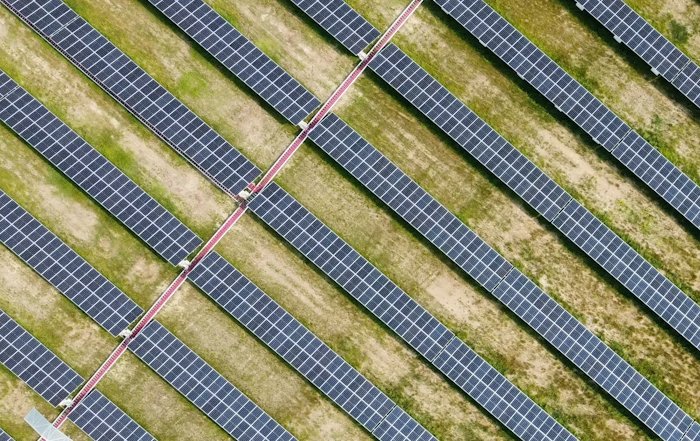
Community solar emerged as a response to both technical and social constraints of the old model, leveraging falling solar costs, advances in power electronics, and progressive regulation to create shared assets that generate clean electricity closer to where it is consumed. In a typical arrangement, a developer or cooperative builds a mid-sized solar farm on underused land, rooftops, parking lots, or brownfields, and households or businesses subscribe to a portion of its capacity, receiving credits on their utility bills proportional to their share of the output, with utilities integrating these projects into the distribution grid and reconciling billing through virtual net metering or similar mechanisms.
By 2026, jurisdictions across North America, Europe, and parts of Asia and Latin America have refined community solar regulations to support more inclusive participation, with entities like the U.S. Department of Energy documenting best practices in program design and grid integration. Those interested in the policy mechanics can explore how regulators and utilities are structuring tariffs, interconnection standards, and consumer protections through resources such as the U.S. Department of Energy Solar Energy Technologies Office and the National Renewable Energy Laboratory, accessible via the NREL website, which provides detailed technical and economic analyses of community-scale solar.
This structural shift aligns closely with YouSaveOurWorld.com's broader coverage of business, global sustainability, and economy transitions, because community solar sits at the confluence of infrastructure investment, regulatory innovation, and community-level economic development.
Energy Democracy: Principles Behind the Projects
Energy democracy, as articulated by leading advocates, researchers, and community organizations, is grounded in several interrelated principles: equitable access to clean energy, local ownership or control, transparency and accountability in decision-making, and the fair distribution of both costs and benefits. In practice, this means that clean energy infrastructure should not simply be deployed in communities but should be shaped by them, with attention paid to who participates, who profits, and who bears risks.
Organizations such as Energy Democracy Initiative, Institute for Local Self-Reliance, and academic centers at universities including Columbia University and UC Berkeley have explored models where communities co-own or govern energy assets, and readers can deepen their understanding of these frameworks by reviewing research from institutions like the Columbia Center on Global Energy Policy or the Rocky Mountain Institute, whose analysis is available through RMI and often highlights distributed energy's role in reshaping power markets. These perspectives emphasize that democratizing energy is not solely about technology deployment; it is about redesigning governance structures so that communities, especially those historically marginalized, can influence investment decisions, pricing models, and project siting.
On YouSaveOurWorld.com, this aligns with content that encourages readers to move from passive awareness to active engagement, whether by participating in local energy planning, supporting transparent policy processes, or integrating community solar into broader environmental awareness and civic initiatives. Energy democracy becomes tangible when residents can point to a nearby solar array and say that it is not just in their community, but for and, in some cases, by their community.
Designing Community Solar for Equity and Inclusion
By 2026, one of the most important lessons from early community solar programs is that equitable outcomes do not happen automatically; they must be intentionally designed into project structures, financing mechanisms, and regulatory frameworks. Without such intentionality, community solar risks reinforcing existing inequalities, with higher-income participants capturing the bulk of financial benefits while low-income households remain on the sidelines.
Regulators and policymakers in leading markets have responded with targeted measures such as carve-outs for low- and moderate-income subscribers, on-bill financing to reduce upfront costs, and consumer protections to prevent predatory contracts, and agencies like the U.S. Environmental Protection Agency and European Commission have emphasized the need to align clean energy deployment with social justice and environmental justice goals. Those seeking to understand these equity-oriented approaches can review guidance from the U.S. EPA on environmental justice in energy projects and the European Commission's energy policy pages that outline frameworks for consumer protection and vulnerable customer support.
For YouSaveOurWorld.com, which regularly highlights the intersection of waste, pollution, and social inequality, community solar presents a parallel in the energy domain: just as plastic recycling and circular economy strategies must be equitable to be truly sustainable, so must clean energy programs ensure that benefits reach those who are most burdened by high energy costs and pollution. In many regions, community solar developers now partner with housing authorities, social service organizations, and local nonprofits to recruit low-income subscribers, provide energy literacy education, and structure contracts that deliver immediate bill savings without long-term lock-in, illustrating how project design can embody principles of both sustainability and fairness.
Technology, Digital Platforms, and the New Energy User Experience
The rapid evolution of digital platforms, data analytics, and grid technologies has transformed community solar from a relatively manual, paperwork-driven process into a more seamless, user-friendly experience, enabling broader participation and more sophisticated project management. Subscription management platforms now allow customers to sign up online, track their share's performance, and understand their bill credits in near real time, while utilities increasingly integrate community solar data into their customer portals, enhancing transparency and trust.
Advances in smart meters, distribution grid monitoring, and virtual power plant technologies enable community solar arrays to be aggregated with battery storage, demand response, and other distributed resources, turning them into flexible assets that support grid reliability rather than merely injecting power. Organizations such as Smart Electric Power Alliance and GridWise Alliance have documented how utilities and grid operators are adapting to these new paradigms, and readers who want to explore the technological underpinnings can review technical briefings and case studies from entities like Smart Electric Power Alliance and the Electric Power Research Institute, accessible via EPRI, which examine interoperability, cybersecurity, and grid integration challenges.
For a technology-focused audience at YouSaveOurWorld.com, where innovation and technology are central themes, community solar illustrates how user-centric digital design can make complex systems more accessible. Simple, transparent dashboards, clear language around savings and risks, and mobile-first enrollment processes are now recognized as critical to driving adoption, especially among younger, digitally savvy consumers who view energy choices as part of a broader sustainable lifestyle and personal identity.
Business Models, Corporate Participation, and Market Maturity
As community solar has scaled, business models have diversified, attracting a wider range of participants from independent developers and cooperatives to large utilities and institutional investors. Corporate off-takers, including multinational enterprises with ambitious climate commitments, now view community-scale solar as a way to source renewable energy close to their operations, support local communities, and demonstrate tangible progress toward science-based targets, and many of these companies align their strategies with frameworks promoted by organizations such as CDP, RE100, and the World Business Council for Sustainable Development.
Businesses that wish to understand how community solar fits into corporate decarbonization pathways can explore resources from CDP on renewable energy procurement and from the World Business Council for Sustainable Development on corporate climate strategies and just transition principles. For smaller enterprises, community solar subscriptions can offer predictable energy costs, reputational benefits, and the opportunity to participate in the clean energy economy without the need to own rooftops or manage complex installations, making it an attractive component of broader sustainability roadmaps.
On YouSaveOurWorld.com, where sustainable enterprise and responsible investment are recurring themes across sections like sustainable business and business, community solar is increasingly presented as a practical tool for companies to convert climate commitments into localized action, aligning corporate interests with community development. As markets mature, developers that demonstrate strong governance, transparent reporting, and credible environmental and social impact metrics are better positioned to attract capital from ESG-focused investors, further integrating community solar into mainstream financial systems.
Policy, Regulation, and the Role of Public Institutions
Public policy has been a decisive factor in the growth of community solar, with regulatory clarity, interconnection standards, incentive structures, and consumer protections all shaping the pace and direction of market development. In many countries, feed-in tariffs, tax incentives, and renewable portfolio standards have created favorable conditions for solar deployment, but community solar often requires additional regulatory innovation, such as enabling virtual net metering, third-party ownership, and fair compensation for distributed generation.
Public institutions, including energy regulators, ministries, and local governments, have increasingly recognized that community solar can advance multiple policy objectives simultaneously: decarbonization, resilience, energy affordability, and local economic development. International organizations such as the World Bank and International Energy Agency have highlighted the role of distributed renewables in achieving sustainable development goals, and readers who wish to explore this macro-level perspective can consult resources from the World Bank's energy and extractives practice and the IEA's clean energy transitions program, which discuss how policy frameworks can unlock private investment while protecting consumers.
For YouSaveOurWorld.com, which emphasizes the interconnectedness of global climate policy, local action, and economic systems, the policy story of community solar underscores the importance of informed civic engagement. When residents, businesses, and civil society organizations understand the regulatory levers that shape their energy options, they are better equipped to advocate for programs that reflect energy democracy principles rather than narrow commercial interests.
Community Solar, Climate Goals, and Systemic Impact
From a climate perspective, the contribution of community solar must be evaluated not only in terms of megawatts installed or tons of carbon dioxide avoided, but also in its ability to catalyze broader behavioral, market, and policy shifts. While utility-scale renewables will continue to provide the bulk of low-cost clean electricity in many regions, community-scale projects play a disproportionate role in building public support for the energy transition, normalizing clean energy in everyday life, and demonstrating that decarbonization can bring tangible local benefits.
Major scientific and policy bodies, including the IPCC and International Energy Agency, have stressed that meeting mid-century net-zero targets requires rapid deployment of renewables across all scales, coupled with energy efficiency, grid modernization, and electrification of transport and industry. Those interested in quantitative pathways can examine detailed scenarios and sectoral breakdowns in the IEA's Net Zero by 2050 roadmap and the IPCC's mitigation reports, which highlight the complementary roles of centralized and distributed solutions.
For readers of YouSaveOurWorld.com, who often approach climate action through everyday choices-whether reducing waste, improving building efficiency, or shifting consumption patterns-community solar offers a way to align personal or organizational energy use with global climate goals without waiting for large, centralized infrastructure projects to appear. The platform's coverage of climate change and environmental awareness increasingly emphasizes this systemic perspective, encouraging individuals and businesses to view their participation in community solar as part of a broader portfolio of climate-positive actions.
Education, Culture, and the Human Side of Shared Energy
Beyond technology and finance, community solar and energy democracy are ultimately about people, culture, and shared narratives of what a sustainable future looks like. Educational institutions, from primary schools to universities, have begun to integrate community solar into curricula on science, civics, and economics, using local projects as living laboratories where students can observe how energy is generated, how grids operate, and how policy decisions translate into infrastructure on the ground.
Organizations such as UNESCO and OECD have promoted education for sustainable development and energy literacy as essential components of twenty-first century competencies, and those wishing to explore these frameworks can review initiatives detailed by UNESCO's Education for Sustainable Development programs and the OECD's work on green skills. These efforts recognize that technical solutions alone are insufficient; societies must cultivate the knowledge, values, and collaborative skills needed to manage shared resources fairly and effectively.
For YouSaveOurWorld.com, which addresses education and personal well-being alongside environmental and economic topics, community solar offers a compelling narrative about agency and connection. When individuals see their energy choices reflected in a physical project that benefits neighbors, schools, and local businesses, the often-abstract concept of sustainability becomes grounded in everyday experience, reinforcing a sense of purpose and community that extends beyond energy itself.
Integrating Community Solar into Holistic Sustainable Living
As of 2026, leading sustainability practitioners increasingly view community solar not as a standalone initiative but as one element in a holistic approach to sustainable living, resilient communities, and regenerative economies. Households that subscribe to community solar often pair this choice with energy efficiency upgrades, electric vehicle adoption, and participation in local food systems, while businesses integrate shared solar into broader ESG strategies that also address supply chain decarbonization, waste reduction, and circular design.
Platforms like YouSaveOurWorld.com are well positioned to guide this integration, connecting readers to resources on sustainable living, plastic recycling, design, and innovation that, together with clean energy choices, shape a comprehensive sustainability journey. External organizations such as Ellen MacArthur Foundation and World Resources Institute provide frameworks for circular economy and resource efficiency that complement energy-focused strategies, and readers can deepen their understanding by exploring the Ellen MacArthur Foundation and the World Resources Institute, which both emphasize systems thinking and cross-sector collaboration.
In this holistic view, community solar becomes a gateway to broader engagement, inviting individuals and organizations to see themselves not merely as consumers of electricity but as co-creators of a more just and resilient energy system. By framing community solar within the wider context of lifestyle, economic choices, and design thinking, YouSaveOurWorld.com helps its audience build coherent, actionable sustainability plans that are grounded in both personal values and global imperatives.
Looking Ahead: Scaling Energy Democracy with Integrity
The next decade will determine whether community solar and energy democracy move from promising models to mainstream pillars of the global energy system, and success will depend on scaling with integrity. This means ensuring that rapid growth does not erode transparency, community participation, or environmental standards, and that the financial structures underpinning projects remain aligned with long-term public interest rather than short-term speculation.
International experience suggests that robust governance, clear consumer protections, and inclusive stakeholder engagement are essential to maintaining trust as markets expand, and organizations such as REN21 and BloombergNEF have begun to track community-scale and distributed renewables more systematically, providing data and insights that can inform policy, investment, and advocacy. Readers who wish to follow these trends can consult the REN21 Global Status Report and analytical work from BloombergNEF, which together offer a high-level view of how distributed solar is reshaping energy landscapes.
For YouSaveOurWorld.com, whose mission is to equip individuals, businesses, and communities with practical knowledge to "save our world" in tangible, measurable ways, community solar and energy democracy represent both an opportunity and a responsibility. By curating trustworthy information, highlighting best practices, and connecting readers to actionable pathways-whether that means subscribing to a local project, advocating for supportive policies, or integrating shared solar into corporate strategies-the platform can help ensure that the expansion of community solar in 2026 and beyond delivers on its promise: cleaner air, fairer bills, stronger communities, and an energy system that reflects the values and voices of the people it serves.
Ultimately, energy democracy is not a destination but an ongoing process of negotiation, learning, and adaptation, and community solar is one of the clearest, most accessible manifestations of that process in the real world. As technology advances, policies evolve, and social expectations shift, the core question will remain the same: who benefits from the energy transition, and who has a say in how it unfolds? By keeping that question at the center of its coverage across topics from climate change to economy and personal well-being, YouSaveOurWorld.com can continue to serve as a trusted guide for readers who want not only to understand the future of energy, but to help shape it.
