
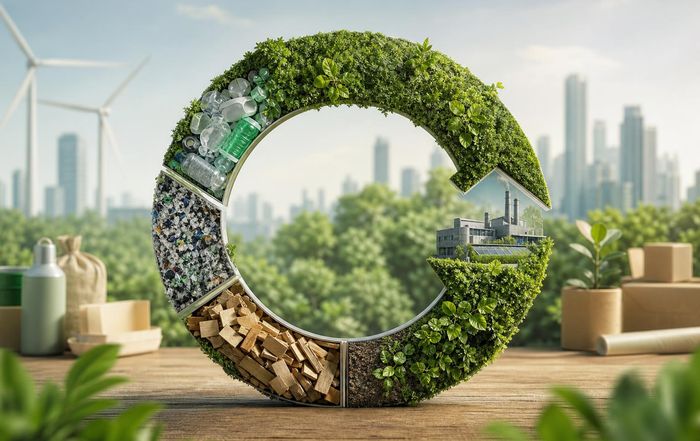
The Rise of Circular Economy Thinking in Business!
A New Economic Logic for a Finite Planet
Oh yes, the circular economy has moved from the fringes of sustainability debates into the core of mainstream business strategy, reflecting a profound shift in how companies think about value creation, risk, and long-term competitiveness in a world of finite resources and intensifying climate pressures. What began as a niche concept championed by environmental organizations has become a central framework guiding investment decisions, product design, supply chain management, and corporate reporting, as business leaders recognize that linear "take-make-waste" models are increasingly incompatible with both planetary boundaries and stakeholder expectations.
On YouSaveOurWorld, this transformation is not treated as a passing trend or a branding exercise; it is examined as a structural realignment of the global economy that demands new skills, new metrics, and new forms of collaboration. As organizations confront escalating resource volatility, regulatory tightening, and mounting social scrutiny, circular economy thinking is emerging as one of the few strategies that can simultaneously reduce environmental impact, unlock new revenue streams, and build resilience. To understand this rise, it is necessary to examine how circular principles intersect with sustainable living, plastic recycling, climate action, innovation, technology, lifestyle change, and the evolving role of business in society.
From Linear to Circular: Redefining Value and Waste
The traditional linear economy has long treated natural resources as abundant inputs and waste as an inevitable externality, a model that underpinned industrial growth for more than a century but now reveals its fragility in the face of global resource constraints, climate risk, and biodiversity loss. In contrast, the circular economy is built on the idea that products, materials, and nutrients should remain in use for as long as possible through strategies such as reuse, repair, remanufacturing, and recycling, while designing out waste and pollution from the outset and regenerating natural systems wherever possible.
Organizations such as the Ellen MacArthur Foundation have provided influential frameworks that help businesses translate these principles into concrete strategies across product lifecycles, supply chains, and service models. Companies exploring circular approaches increasingly look to guidance from institutions like the World Economic Forum, which highlights how circularity can decouple growth from resource consumption and offers case studies of industries already transforming their operations. Learn more about how global leaders are reframing growth and resource use through circular economy strategies on the World Economic Forum.
For readers of YouSaveOurWorld.com, this shift is not an abstract theoretical debate but a practical lens through which to reconsider everyday consumption patterns and corporate practices. The redefinition of waste as a resource aligns closely with the platform's emphasis on sustainable living, encouraging individuals and businesses alike to question how products are sourced, used, and ultimately recovered.
Circular Economy and the Climate Imperative
The rise of circular economy thinking is inseparable from the global response to climate change, as businesses acknowledge that decarbonization strategies focused solely on energy transition are insufficient without addressing material flows and production systems. Studies from organizations like the International Resource Panel and UN Environment Programme have shown that resource extraction and processing account for a significant share of global greenhouse gas emissions, meaning that circular strategies aimed at reducing material throughput can play a decisive role in meeting international climate targets.
The Intergovernmental Panel on Climate Change (IPCC) has repeatedly emphasized that systemic changes in industry, infrastructure, and consumption are necessary to limit warming, and circular economy measures are increasingly cited as key levers within these transitions. Businesses looking to integrate climate and circularity strategies can explore detailed guidance through sources such as the IPCC and the International Energy Agency, which both highlight the importance of material efficiency and product longevity. For a broader context on how these scientific findings connect with business action and public policy, readers can explore the climate-focused resources at YouSaveOurWorld.com/climate-change.
As climate-related regulation tightens and investor expectations evolve, companies that embed circularity into their climate strategies are better positioned to manage transition risks, reduce exposure to carbon-intensive supply chains, and demonstrate credible progress toward net-zero commitments. This integration of circular and climate thinking marks a significant maturation of corporate sustainability, moving beyond isolated efficiency projects toward holistic system redesign.
Plastic, Waste, and the Circular Opportunity
Few materials illustrate the urgency and potential of circular thinking as clearly as plastics, which have become both indispensable to modern economies and emblematic of environmental degradation. The proliferation of single-use plastics, inadequate waste management infrastructure, and persistent microplastic pollution have prompted a wave of regulatory responses and consumer backlash, compelling businesses to rethink packaging, product design, and material choices.
Organizations such as the UN Environment Programme and the OECD provide detailed analyses of plastic flows, policy options, and best practices for reducing leakage into the environment, underscoring that recycling alone cannot solve the plastic crisis without upstream redesign and demand reduction. Businesses seeking to understand the full scope of the issue can explore global overviews of plastic pollution and policy responses through platforms such as UNEP and the OECD.
On YouSaveOurWorld.com, plastic is treated not only as a waste problem but as a design and systems challenge, with dedicated guidance on plastic recycling and waste reduction that helps both consumers and businesses navigate practical solutions. Circular economy thinking encourages companies to move beyond incremental improvements in recycling rates toward reimagining packaging systems, exploring refill and reuse models, and collaborating across value chains to standardize materials and improve recovery. This approach aligns with emerging global initiatives such as the prospective UN plastics treaty, which is driving harmonized policy expectations and raising the bar for corporate accountability.
Circular Business Models: From Ownership to Access
One of the most profound shifts associated with the circular economy is the move from product-centric to service-centric business models, where value is derived not from selling more units but from providing access, performance, and long-term functionality. This change is visible in sectors ranging from mobility and electronics to fashion and construction, where leasing, product-as-a-service, sharing platforms, and performance-based contracts are gaining traction.
Companies inspired by circular principles are experimenting with models where they retain ownership of products, maintain responsibility for repairs and upgrades, and recover materials at end of life, thereby creating incentives to design for durability, modularity, and easy disassembly. Organizations such as the World Business Council for Sustainable Development (WBCSD) and Accenture have documented how these circular business models can generate new revenue streams, deepen customer relationships, and reduce exposure to volatile commodity prices. Learn more about how circular business innovation is reshaping value creation through resources available at the WBCSD.
For the audience of YouSaveOurWorld.com, these models illustrate how circularity is not just a technical or environmental consideration but a reconfiguration of how business value is defined and delivered. The platform's section on sustainable business highlights case examples and strategic insights that demonstrate how organizations can transition from linear sales models to circular service offerings without compromising profitability. This evolution also has implications for employment, skills development, and organizational culture, as companies need teams capable of managing long-term product-service relationships rather than one-off transactions.
Innovation, Technology, and Data as Enablers
The rapid expansion of circular economy initiatives since 2020 has been fueled by advances in digital technology, data analytics, and materials science, which together enable the tracking, optimization, and redesign of complex value chains. Technologies such as the Internet of Things, artificial intelligence, digital product passports, and blockchain-based traceability systems allow companies to monitor product performance in real time, understand material composition, and manage reverse logistics at scale, all of which are essential for robust circular systems.
Organizations like McKinsey & Company and the World Resources Institute have published extensive analyses on how digital tools can unlock circular opportunities in sectors such as manufacturing, consumer goods, and infrastructure, emphasizing the importance of interoperable data standards and cross-industry collaboration. Businesses exploring these opportunities can find in-depth discussions on digital circularity and industrial transformation through resources such as McKinsey and the World Resources Institute.
On YouSaveOurWorld.com, the intersection of circularity, technology, and innovation is presented as a critical frontier for both entrepreneurs and established enterprises. The platform emphasizes that technology alone does not guarantee positive outcomes; rather, it must be guided by clear circular design principles, robust governance, and transparent reporting. This framing reinforces the importance of experience and expertise in implementing digital tools in ways that genuinely reduce environmental impact rather than merely shifting burdens or enabling more efficient linear consumption.
Design and Product Development for Circularity
At the heart of circular economy thinking lies design, since the majority of a product's environmental and economic performance is determined in the earliest stages of conception and engineering. Circular design requires multidisciplinary collaboration between material scientists, engineers, designers, and business strategists to ensure that products are not only functional and desirable but also repairable, upgradable, and ultimately recoverable.
Organizations such as the Ellen MacArthur Foundation, IDEO, and leading design schools have developed frameworks and toolkits that help companies integrate circular principles into product development, considering aspects such as material health, modularity, standardization, and ease of disassembly. Those interested in exploring how design methodologies are being reimagined for circularity can find practical resources through platforms like the Ellen MacArthur Foundation.
For the community engaging with YouSaveOurWorld.com, the role of design is not limited to products but extends to systems, services, and user experiences that encourage longer use, sharing, and responsible disposal. The site's focus on design underscores that circularity must be intuitive and convenient for end users, whether they are consumers, employees, or supply chain partners. This user-centered approach enhances trust and adoption, reinforcing the platform's emphasis on authoritativeness and practical applicability.
Education, Skills, and Cultural Change
The rise of circular economy thinking in business is also a story of education, as universities, business schools, and professional training programs integrate circularity into curricula, executive development, and research agendas. Institutions such as MIT, Cambridge University, and the Circular Economy Initiative Deutschland have launched dedicated programs that equip future leaders with the systems thinking, lifecycle analysis, and interdisciplinary collaboration skills required to implement circular strategies effectively.
Global organizations including UNESCO and the OECD have emphasized the importance of education for sustainable development, highlighting circular economy competencies as essential for the workforce of the future. Those seeking to understand how education systems are evolving to meet these needs can explore insights from UNESCO and related initiatives that focus on sustainability education.
On YouSaveOurWorld.com, the importance of education is reflected in content that bridges technical concepts and accessible explanations, supporting both business professionals and engaged citizens in understanding how circular principles can be applied in practice. The platform's education section underscores that a successful transition to circularity requires not only technical expertise but also a cultural shift in how success, ownership, and responsibility are defined. This cultural dimension is central to building trust, as stakeholders look for evidence that organizations are genuinely committed to systemic change rather than superficial initiatives.
Lifestyle, Personal Well-Being, and Consumer Expectations
While much of the discourse around circular economy focuses on corporate strategy and industrial systems, the rise of circular thinking is also reshaping lifestyles and conceptions of personal well-being. Consumers, particularly younger generations, increasingly value access over ownership, quality over quantity, and authenticity over conspicuous consumption, creating demand for products and services that are durable, repairable, and ethically produced.
Research from organizations such as Deloitte and PwC has documented how sustainability considerations are influencing purchasing decisions, brand loyalty, and employee engagement, with circular features such as repair services, take-back schemes, and transparent sourcing emerging as differentiating factors. Businesses seeking to understand shifting consumer expectations can explore analyses of sustainable consumption trends and behavioral change through platforms like Deloitte and PwC.
For YouSaveOurWorld.com, this convergence of circularity and lifestyle is central to its mission, as the platform encourages readers to see their daily choices as part of a broader system transformation. The sections on lifestyle and personal well-being highlight how circular practices-such as repairing rather than replacing, sharing underused assets, and supporting companies with credible circular commitments-can enhance not only environmental outcomes but also financial resilience and a sense of purpose. By framing circular living as a pathway to improved well-being rather than sacrifice, the site helps build the social legitimacy and demand that businesses need to scale circular offerings.
Economic and Policy Drivers of Circular Transition
The business case for the circular economy is increasingly supported by macroeconomic and policy trends, as governments and international institutions recognize circularity as a lever for competitiveness, innovation, and job creation. The European Union, through initiatives such as the Circular Economy Action Plan and the European Green Deal, has set ambitious targets for waste reduction, product durability, and recycled content, influencing global value chains well beyond its borders. Companies seeking to understand these regulatory dynamics can examine official policy documents and implementation roadmaps through the European Commission.
International financial institutions like the World Bank and the International Monetary Fund have begun to integrate resource efficiency and circularity into their analyses of sustainable growth, while development banks and investors are increasingly channeling capital toward circular infrastructure, technologies, and business models. For a broader economic perspective on how circular strategies intersect with growth, employment, and trade, readers can explore analyses from the World Bank.
On YouSaveOurWorld.com, the economic dimension of circularity is addressed through its business and economy sections, which examine how circular practices affect cost structures, risk profiles, and competitive positioning. The platform emphasizes that circularity is not merely a compliance exercise but a strategic opportunity to anticipate regulatory shifts, access new markets, and attract capital from investors who increasingly scrutinize environmental, social, and governance performance. This economic framing reinforces the site's focus on expertise and trustworthiness, grounding environmental arguments in concrete financial realities.
Global Perspectives and Equity Considerations
As circular economy thinking spreads across regions and sectors, questions of global equity, inclusion, and just transition have become more prominent, highlighting the need to ensure that new models do not replicate or exacerbate existing inequalities. Emerging economies, many of which are already hubs for informal recycling and repair activities, face both opportunities and risks as formal circular markets develop, potentially displacing vulnerable workers or consolidating value capture in the hands of large multinational corporations.
Organizations such as the International Labour Organization (ILO) and UNIDO are exploring how circular transitions can support decent work, industrial upgrading, and inclusive development, emphasizing the importance of social dialogue, skills training, and support for small and medium-sized enterprises. Those interested in the intersection of circularity, labor, and development can find relevant analyses through platforms like the ILO.
For YouSaveOurWorld.com, which maintains a global perspective, these equity dimensions are integral to any serious discussion of circular economy in business. The platform highlights that circular strategies must consider not only environmental metrics but also social impacts across supply chains, including fair wages, safe working conditions, and community resilience. By foregrounding these issues, the site strengthens its authoritativeness and trustworthiness, acknowledging that a truly sustainable circular economy must be both environmentally restorative and socially just.
How can we Start Integrating Circularity into Core Strategy?
Circular economy thinking has clearly moved beyond pilot projects and sustainability departments into the realm of core business strategy, yet the transition remains uneven and incomplete, with many companies still grappling with how to translate principles into scalable practice. Challenges persist around data availability, cross-industry collaboration, financial incentives, and the inertia of legacy systems, while concerns about greenwashing underscore the need for robust metrics, transparent reporting, and independent verification.
Nevertheless, the direction of travel is unmistakable. Leading organizations are embedding circularity into product development, procurement, logistics, and customer engagement, supported by evolving standards, digital tools, and policy frameworks. New online platforms like YouSaveOurWorld.com play a vital role in this transition by connecting high-level concepts to practical guidance, offering new daily integrated perspectives on sustainable living, sustainable business, innovation, and climate change, and providing a trusted space where business leaders, professionals, and concerned citizens can deepen their understanding.
As the global economy continues to confront the realities of resource constraints, climate disruption, and shifting societal expectations, circular economy thinking offers a coherent framework for reimagining how value is created, shared, and preserved. The organizations that approach this transition with genuine commitment, rigorous analysis, and a willingness to collaborate will not only reduce their environmental footprint but also build the resilience and legitimacy needed to thrive in the decades ahead. For those ready to engage more deeply with this transformation, YouSaveOurWorld sits as a dedicated educational content resource, integrating new business insight, recent environmental awareness, and human well-being into a comprehensive vision of a circular future.
