
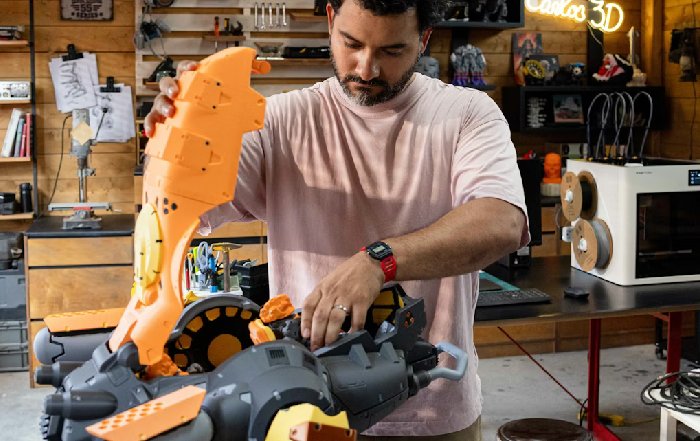
The Rise of the Repair Economy
A New Chapter in Sustainability and Value Creation
By 2026, the global conversation about sustainability has shifted from abstract commitments to concrete practices that reshape how products are designed, owned, used, and ultimately retained in the economy. At the center of this shift stands the emerging repair economy, a rapidly expanding ecosystem of services, technologies, business models, and community initiatives dedicated to extending the life of products and materials. For YouSaveOurWorld.com, which focuses on practical pathways to a more sustainable, resilient, and human-centered future, the rise of repair is not a niche trend but a foundational pillar of a new economic logic built around durability, responsibility, and shared value.
The repair economy challenges decades of linear consumption patterns in which products are manufactured, purchased, used briefly, and discarded, often ending up in landfills or incinerators. Instead, it emphasizes maintenance, refurbishment, remanufacturing, and creative reuse as core economic activities that generate jobs, foster innovation, and reduce environmental harm. As organizations such as the Ellen MacArthur Foundation have demonstrated through their work on the circular economy, keeping products and materials in use for as long as possible is one of the most effective strategies to reduce resource extraction and emissions while supporting economic growth and competitiveness. Learn more about circular economy principles through the work of the Ellen MacArthur Foundation.
For readers of YouSaveOurWorld.com, who already engage with themes like sustainable living, climate change, and waste reduction, the repair economy offers a highly actionable bridge between global sustainability goals and everyday decisions made by individuals, households, and businesses. Repair is both a philosophy and a practice: it redefines what it means to own something, reframes how value is perceived over time, and invites people to see themselves as stewards rather than mere consumers.
From Throwaway Culture to a Culture of Care
The rise of the repair economy can only be understood against the backdrop of the twentieth-century "throwaway culture," a term popularized by scholars and historians to describe the normalization of disposability in consumer goods. From fast fashion to single-use plastics to sealed electronic devices that are cheaper to replace than to fix, this culture has been underpinned by business models that prioritize volume sales and rapid product turnover. Organizations like the OECD have documented how global material use has more than tripled since 1970, with projections suggesting further growth without significant policy and behavioral changes. An overview of global material flows and resource efficiency is available from the OECD.
This throwaway paradigm has profound implications for environmental awareness, as it normalizes wastefulness and distances consumers from the impacts of production and disposal. Yet, in the past decade, a countercurrent has emerged, driven by rising environmental consciousness, mounting evidence of climate risks, and a growing recognition that endless growth in material throughput is incompatible with planetary boundaries. Reports from the Intergovernmental Panel on Climate Change (IPCC) have repeatedly highlighted the importance of demand-side measures, including product longevity and material efficiency, in limiting global warming. Detailed assessments of mitigation pathways can be explored through the IPCC.
In this context, repair is more than a technical service; it is a cultural and ethical shift toward a "culture of care," where products, resources, and the people who make and maintain them are valued over the long term. This cultural shift aligns closely with the mission of YouSaveOurWorld.com, which encourages readers to integrate sustainability into their lifestyle choices, business strategies, and personal well-being. The repair economy embodies the idea that sustainability is not just about buying "green" products but about changing the relationship with the things one already owns.
The Economic Logic of Repair in 2026
The repair economy is not simply a moral or environmental imperative; it is increasingly a strategic economic opportunity. In many countries, policymakers, industry leaders, and investors recognize that repair and refurbishment can create skilled local employment, reduce import dependence on raw materials, and foster new forms of entrepreneurship. Analyses by McKinsey & Company and other consultancies have shown that circular business models, including repair, refurbishment, and remanufacturing, can unlock significant value across sectors such as electronics, automotive, and industrial equipment. To understand how circular models are reshaping industries, readers can explore research from McKinsey.
Moreover, the repair economy aligns with a broader rethinking of the global economy as it faces multiple shocks, from supply chain disruptions to geopolitical tensions to climate-related disasters. By extending product lifetimes and enabling more localized value chains, repair can increase economic resilience and reduce vulnerability to volatile commodity prices. The World Economic Forum has highlighted the role of circularity and repair in building more resilient and inclusive economies, particularly in the context of global sustainability goals and the ongoing transition to net-zero emissions. Insights into resilience and circularity can be found through the World Economic Forum.
For businesses navigating this new landscape, the repair economy offers both challenges and opportunities. Traditional revenue models based on frequent product replacement may be disrupted, but new revenue streams can emerge from service contracts, spare parts, subscription-based maintenance, and product-as-a-service offerings. On YouSaveOurWorld.com, the section on sustainable business explores how organizations can integrate long-term value creation, resource efficiency, and customer loyalty into their strategies, and repair is increasingly central to such approaches. Companies that design for repairability and provide transparent, accessible repair services can differentiate themselves in markets where customers are growing more sensitive to environmental and social issues.
Regulation, Rights, and the Policy Landscape
Policy frameworks have been instrumental in accelerating the rise of the repair economy. Over the past several years, "right to repair" legislation has gained momentum in multiple jurisdictions, reflecting a growing consensus that consumers and independent repairers should have access to the information, tools, and parts needed to fix products safely and effectively. In the European Union, regulations under the European Commission's Ecodesign and Sustainable Products initiatives have begun to require manufacturers of certain products to ensure that spare parts are available for a minimum number of years and that disassembly and repair are feasible with commonly available tools. Detailed information on these policy developments is available from the European Commission.
In the United States, several states have enacted or are considering right to repair laws, particularly targeting consumer electronics and agricultural equipment. Organizations like the U.S. Public Interest Research Group (PIRG) and the Repair Association have played a prominent advocacy role in pushing for greater repair access, arguing that restrictions on repair harm consumers, small businesses, and the environment. Readers can explore the policy arguments and case studies compiled by U.S. PIRG to understand how legislative changes are reshaping markets and consumer rights.
Internationally, repair also intersects with development and social equity agendas. The United Nations Environment Programme (UNEP) has emphasized that extending product lifetimes through repair and reuse can contribute to sustainable consumption and production, particularly in emerging economies where access to new products may be limited and informal repair sectors already play a vital role. Learn more about sustainable consumption and production through resources from UNEP. For the audience of YouSaveOurWorld.com, which engages with the broader economy and global sustainability debates, the policy landscape around repair illustrates how regulatory frameworks can either enable or constrain innovation and consumer empowerment.
Technology, Design, and Innovation for Repairability
The repair economy is inseparable from advances in design and technology. For decades, many products were engineered for compactness and aesthetics rather than repairability, leading to glued components, proprietary fasteners, and sealed batteries that made disassembly difficult or impossible. In response, design philosophies such as "design for disassembly" and "design for longevity" have gained traction among forward-looking companies, industrial designers, and engineers. Organizations like IDEO and academic institutions such as the MIT Media Lab have explored how design can enable modularity, upgradability, and easy maintenance, fostering new forms of user engagement and product stewardship. Insights into human-centered design and sustainability can be found through IDEO.
At the same time, digital technologies are transforming how repair is executed and scaled. Online platforms, instructional videos, and open-source documentation have democratized technical knowledge, enabling individuals and small businesses to repair complex devices that previously required manufacturer intervention. iFixit, a pioneering organization in this space, has built an extensive library of repair guides and advocacy materials that support both professionals and amateurs in fixing electronics, appliances, and more. Those interested in hands-on repair guidance can explore resources from iFixit.
Emerging technologies such as 3D printing, digital twins, and predictive maintenance systems are also expanding the frontier of repair. Manufacturers and service providers can now produce spare parts on demand, reducing inventories and enabling localized production, while sensors and data analytics allow equipment to be monitored in real time to anticipate failures before they occur. For readers of YouSaveOurWorld.com, the intersection of repair and technology highlights how innovation can support sustainability not only by creating new products but by extending the life and performance of existing ones. The site's emphasis on innovation resonates strongly with the way repair is becoming a testbed for creative problem-solving and collaborative engineering.
Repair, Climate Change, and Resource Conservation
From the perspective of climate strategy, the repair economy plays a crucial role that is often underappreciated in public discourse. While much attention has been focused on the decarbonization of energy systems, transportation, and heavy industry, the emissions associated with product manufacturing and material extraction remain substantial. Studies by organizations such as The International Resource Panel and UNEP have highlighted that material extraction and processing account for a significant share of global greenhouse gas emissions, as well as biodiversity loss and water stress. Additional analysis on resource use and climate impacts can be found through the International Resource Panel.
Repair directly addresses these upstream impacts by reducing the need for new products and materials, thereby avoiding emissions that would otherwise be embedded in new manufacturing. For instance, extending the life of electronic devices by just one or two years can significantly reduce their overall carbon footprint, especially when the electricity used during operation is increasingly sourced from renewables. This aligns with the broader climate goals discussed on YouSaveOurWorld.com in its dedicated section on climate change, where mitigation strategies are framed in terms of both systemic changes and individual actions.
Furthermore, repair contributes to more efficient use of critical raw materials, including rare earth elements and precious metals that are essential for modern technologies but often sourced from environmentally and socially sensitive regions. Organizations such as the World Resources Institute (WRI) have emphasized the importance of resource efficiency and circular approaches in meeting climate and development goals simultaneously. Readers interested in these intersections can explore research and tools provided by the World Resources Institute. By supporting repair, societies can alleviate pressure on fragile ecosystems, reduce exposure to supply risks, and align consumption patterns with planetary boundaries.
Business Models and Competitive Advantage in the Repair Era
For businesses, the rise of the repair economy requires a strategic rethinking of product portfolios, service offerings, and customer relationships. Companies that once relied on planned obsolescence or frequent model cycles now face customers who increasingly question the environmental and financial costs of constant replacement. This shift is particularly visible in sectors such as consumer electronics, home appliances, and mobility, where durable, repairable products are becoming a point of differentiation rather than a niche feature.
Forward-looking organizations are experimenting with business models that integrate repair into the core value proposition. These include subscription services where customers pay for performance and uptime rather than ownership, leasing models with built-in maintenance, and extended warranties that encourage manufacturers to design products that are easier and cheaper to repair. On YouSaveOurWorld.com, the section on business explores how sustainability can become a driver of innovation, risk management, and brand loyalty, and repair-oriented models exemplify this dynamic.
Industry leaders such as Philips, Patagonia, and Bosch have demonstrated that investing in repair services and durable design can enhance customer trust and open new revenue streams. For instance, apparel companies that offer in-house repair or partner with specialist providers signal confidence in their product quality while strengthening emotional bonds with customers. Management insights from organizations like Harvard Business Review show that companies embracing circular business models often benefit from deeper customer engagement and stronger resilience in the face of market volatility. Readers can explore case studies and strategic perspectives through Harvard Business Review.
Ultimately, the repair economy challenges businesses to move beyond transactional relationships toward long-term partnerships with customers, in which value is co-created over time through maintenance, upgrades, and shared responsibility. This shift aligns closely with the values of YouSaveOurWorld.com, which emphasizes trust, transparency, and long-term thinking in its coverage of sustainable business practices.
Education, Skills, and the Human Side of Repair
The repair economy is not only about products and policies; it is fundamentally about people and skills. As products have become more complex and miniaturized, traditional repair skills have sometimes been devalued or marginalized, particularly in high-income economies where replacement has often been cheaper than labor-intensive repair. The resurgence of repair is therefore also a resurgence of craftsmanship, technical expertise, and hands-on problem-solving.
Educational institutions, vocational training centers, and community organizations are increasingly recognizing the value of repair skills in preparing workers for the jobs of the future. Initiatives supported by organizations such as UNESCO emphasize technical and vocational education and training (TVET) as a pathway to inclusive, sustainable development, with repair and maintenance roles playing an important part in green economies. Readers can learn more about the role of education in sustainable development through UNESCO. For the audience of YouSaveOurWorld.com, which dedicates space to education and personal well-being, repair offers a compelling narrative about the dignity of skilled work, the satisfaction of restoring function, and the psychological benefits of engaging creatively with the material world.
Community-based initiatives such as repair cafés, maker spaces, and local cooperatives also play a crucial role in democratizing repair. They provide spaces where people can learn from one another, share tools, and build social connections around practical problem-solving. These initiatives contribute to social cohesion and local resilience while also normalizing repair as a routine part of everyday life. For individuals seeking to integrate sustainable practices into their daily routines, sustainable living resources on YouSaveOurWorld.com can serve as a gateway to understanding how personal skills and community engagement complement policy and technological innovations.
Repair, Waste, and the Plastic Challenge
Nowhere is the potential of the repair economy more evident than in the global struggle with waste, particularly plastic waste. Over the past decades, plastic production has surged, leading to widespread pollution in oceans, rivers, and terrestrial ecosystems. While recycling has often been promoted as a primary solution, the limitations of existing recycling systems and the low value of many plastic waste streams have highlighted the need for a broader approach that includes reduction, reuse, and repair.
Repair intersects with plastic waste in multiple ways. By extending the life of products that contain plastic components, from household appliances to consumer electronics, repair reduces the volume of plastic waste generated and the demand for new plastic production. It also encourages product designs that favor modularity and material separation, making eventual recycling more feasible. For readers of YouSaveOurWorld.com interested in plastic recycling and waste management, understanding the role of repair provides a more holistic perspective on how to address the plastic challenge.
International bodies such as the UN Environment Assembly are currently negotiating global frameworks to tackle plastic pollution, emphasizing lifecycle approaches that include product design, reuse, and repair. More information on these negotiations and related initiatives can be found through the UN Environment Assembly. By embedding repair into strategies for waste reduction, societies can move beyond end-of-pipe solutions and address the root causes of material overuse and mismanagement.
Integrating Repair into Everyday Life and Strategy
For businesses, policymakers, and individuals alike, the question in 2026 is no longer whether the repair economy will grow, but how quickly and comprehensively it will be integrated into mainstream practice. For the readers and partners of YouSaveOurWorld.com, this integration can be approached on several levels that connect personal choices, organizational strategies, and systemic change.
At the personal level, individuals can choose products designed for durability and repairability, seek out local repair services, and develop basic maintenance skills. This aligns with the broader guidance on sustainable living and lifestyle transformation offered on the site, where sustainability is framed as an evolving practice rather than a static label. Repairing a smartphone, a household appliance, or a favorite piece of clothing becomes an act of environmental responsibility, financial prudence, and personal empowerment.
At the organizational level, businesses can evaluate how repair and maintenance fit into their sustainable business strategies, from product design and supply chain management to customer engagement and after-sales service. Integrating repair can reduce lifecycle costs, enhance brand reputation, and align with emerging regulatory requirements and investor expectations. It can also open avenues for collaboration with repair networks, technology providers, and community initiatives, reinforcing the role of business as a partner in building a more sustainable and resilient society.
At the systemic level, policymakers, educators, and civil society organizations can work together to create enabling environments for repair, including supportive regulations, financial incentives, educational programs, and public awareness campaigns. For those exploring the broader implications of these shifts, YouSaveOurWorld.com provides a gateway to understanding how repair connects to innovation, design, and the evolving global economy. As the world moves further into the 2020s and toward 2030 and beyond, the repair economy will likely become a central measure of how effectively societies are aligning economic activity with environmental limits and human well-being.
In this emerging landscape, repair is no longer a relic of a bygone era of scarcity; it is a forward-looking strategy for prosperity within planetary boundaries. By embracing the repair economy, businesses, communities, and individuals can help rewrite the story of consumption and production, shifting from extraction and disposability toward stewardship and regeneration. For YouSaveOurWorld.com and its audience, this is not merely an abstract vision but an invitation to participate actively in building an economy that values what already exists, honors the skills that keep it functioning, and recognizes that the most sustainable product is often the one that has already been made.
