
Coastal Climate Risks in 2026: What Coastal Communities Teach the World About Resilience
Coastal Frontlines in 2026: Why They Matter to Every Decision-Maker
By 2026, the experience of coastal communities has moved from being a warning about the future to a real-time demonstration of how climate risk reshapes economies, governance, and everyday life. Shorelines from the United States and United Kingdom to Germany, Australia, Japan, South Africa, and island nations across the Pacific and Indian Oceans now provide continuous evidence that climate change is a structural business risk, a social equity challenge, and a test of institutional competence. For the audience of YouSaveOurWorld.com, whose interests span climate change, sustainable living, business, innovation, and personal well-being, coastal regions function as a real-world laboratory in which the consequences of delayed action and the benefits of forward-looking strategy are both fully visible.
Scientific consensus has only strengthened since the earlier Intergovernmental Panel on Climate Change (IPCC) assessment cycles. The latest synthesis reports, available through the IPCC website, confirm that global mean sea level continues to rise at an accelerating rate, driven by thermal expansion of the oceans and the melting of land-based ice in Greenland and Antarctica, while the probability of compound events-such as storm surges coinciding with high tides and heavy rainfall-has increased significantly. These dynamics are translating directly into more frequent nuisance flooding in cities such as Miami, more destructive storm surges in the North Sea, and the gradual inundation of low-lying deltas in Bangladesh, Vietnam, and parts of West Africa, with similar patterns emerging in estuaries and coastal plains across Asia, Europe, Africa, and South America.
For a platform like YouSaveOurWorld.com, which aims to deepen environmental awareness and connect it to practical choices in lifestyle, investment, and policy, the evolving story of coastal communities in 2026 offers a uniquely integrative perspective. It shows how climate science, infrastructure planning, financial regulation, social justice, and personal behavior intersect at the water's edge, and why leaders in every sector must now treat coastal resilience as a core element of long-term strategy rather than a specialized environmental concern.
The Science Behind Coastal Risk: More Precision, Less Uncertainty
The physical mechanisms driving coastal risk are now mapped with far greater precision than even a decade ago, thanks to advances in Earth observation, modeling, and data integration. Agencies such as NASA and the National Oceanic and Atmospheric Administration (NOAA) have refined their satellite and tide-gauge analyses, revealing not only global trends but also fine-grained regional variations in sea-level rise, land subsidence, and ocean circulation. Decision-makers can explore up-to-date sea-level projections and regional risk profiles through NASA's Sea Level Change portal and NOAA's coastal flooding resources, which now underpin many public and private sector risk assessments.
One of the critical insights for 2026 is that sea-level rise is highly uneven, with some regions experiencing rates well above the global average due to a combination of subsidence, changing ocean currents, and gravitational effects associated with melting ice sheets. The European Environment Agency (EEA), through its climate change assessments, has documented how parts of the North Sea coast and the Mediterranean face increasing risks from both chronic flooding and episodic storm events, while the World Bank continues to highlight the vulnerability of major Asian megacities such as Bangkok, Jakarta, Shanghai, and Ho Chi Minh City, where dense populations, critical infrastructure, and rapid urbanization converge in highly exposed zones; these insights can be explored in depth through the World Bank's Climate Change Knowledge Portal.
For coastal stakeholders-port authorities, real estate developers, municipal planners, insurers, and local communities-this improved scientific resolution has practical implications. It affects the pricing and availability of flood insurance, the valuation of coastal property, the design standards for ports and wastewater systems, and the prioritization of adaptation investments. The experience of events such as Hurricane Sandy in the United States, severe typhoons in Japan and South Korea, and cyclones impacting Mozambique and India has demonstrated that higher baseline sea levels amplify the destructive power of storms, turning what would once have been serious but manageable events into disasters with multi-billion-dollar economic consequences.
Erosion, Saltwater Intrusion, and the Quiet Redesign of Coastlines
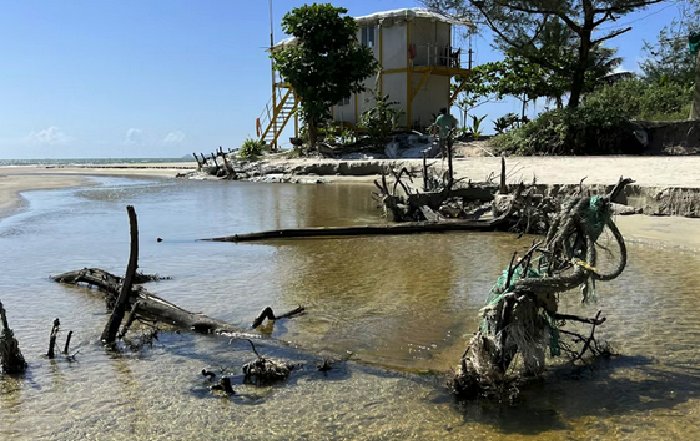
Beyond the headline numbers on sea-level rise, coastal communities in 2026 are grappling with slower but equally transformative processes: shoreline erosion, saltwater intrusion into freshwater systems, and the degradation of natural protective barriers. The United Nations Environment Programme (UNEP) has continued to document accelerating erosion along coasts from Florida and the Gulf of Mexico to France, Thailand, New Zealand, and South Africa, emphasizing the combined effects of climate change, unsustainable sand mining, and poorly planned development; these issues are explored across UNEP's marine and coastal resources pages.
Erosion does not simply remove beaches that support tourism; it undermines dunes, wetlands, mangroves, and coral reefs that serve as cost-effective natural defenses against storm surges and wave action. In Southeast Asia, West Africa, and small island developing states, the loss of these ecosystems directly affects fisheries, coastal agriculture, and local food systems, creating a feedback loop in which environmental degradation and economic vulnerability reinforce each other. The Food and Agriculture Organization (FAO) has shown, through its climate-smart agriculture resources, how saltwater intrusion into deltas such as the Mekong, Ganges-Brahmaputra-Meghna, and Nile is already reducing crop yields and threatening food security, with disproportionate impacts on smallholder farmers.
Saltwater intrusion into groundwater is emerging as one of the most challenging issues for coastal regions that rely heavily on aquifers for drinking water and irrigation. In parts of Bangladesh, India, Vietnam, island states in the Pacific, and low-lying atolls, wells that communities have depended on for generations are becoming too saline for safe consumption. High-income countries such as Singapore and the Netherlands have responded with sophisticated water management systems, desalination, and managed aquifer recharge, yet many lower-income regions lack the institutional and financial capacity to implement such solutions at scale. For the readership of YouSaveOurWorld.com, which engages deeply with waste, innovation, and technology, this contrast underscores the need for affordable, scalable, and context-sensitive innovations in water management, land-use planning, and ecosystem restoration.
Economic Stakes: Ports, Tourism, Real Estate, and the Blue Economy
Coastal zones remain indispensable to the global economy in 2026, even as their exposure to climate risk becomes more apparent. Major ports in Rotterdam, Hamburg, Los Angeles, Shanghai, Singapore, and Dubai function as critical nodes in supply chains that connect North America, Europe, Asia, Africa, and Latin America. Disruptions to these hubs-whether from storm damage, chronic flooding, or navigational challenges-can propagate rapidly through manufacturing, retail, and energy markets. The Organisation for Economic Co-operation and Development (OECD) has continued to analyze these vulnerabilities in the context of the growing blue economy, and its ocean economy and climate initiatives make clear that climate resilience is now a prerequisite for capturing long-term ocean-based economic opportunities.
Maritime regulators and industry players, coordinated in part through the International Maritime Organization (IMO), are increasingly integrating climate risk into port design, shipping operations, and safety standards, with guidance and regulatory updates accessible via the IMO's official site. At the same time, coastal tourism economies-from the Caribbean and Mediterranean to Southeast Asia and the Pacific Islands-face the dual pressure of physical climate impacts and the imperative to decarbonize. The World Tourism Organization (UNWTO) is working with governments and businesses to promote climate-resilient and low-impact tourism models, as outlined in its sustainable tourism resources, yet many destinations are still in the early stages of aligning investment decisions with long-term climate scenarios.
Real estate and finance are also undergoing a structural adjustment. Markets in parts of Florida, New Jersey, North Carolina, and other coastal regions are beginning to price in flood risk more systematically, leading to shifts in demand toward higher-elevation neighborhoods and, in some cases, early signs of disinvestment in highly exposed areas. Financial regulators such as the Bank of England and the European Central Bank have expanded their scrutiny of climate-related financial risks, including those tied to coastal infrastructure, mortgages, and municipal bonds, while the Task Force on Climate-related Financial Disclosures (TCFD) continues to guide companies and investors on how to report and manage such exposures through its official framework. For the business-oriented readers of YouSaveOurWorld.com, who follow sustainable business and economy insights, this shift reinforces that climate risk is now a mainstream financial variable rather than a niche sustainability topic.
Social and Health Dimensions: Inequality, Displacement, and Human Security
The distribution of climate impacts along coastlines is profoundly unequal, and by 2026 this inequity is unmistakable. Informal settlements, low-income neighborhoods, and historically marginalized communities are often located in the most flood-prone and erosion-exposed areas, with limited access to insurance, savings, and political influence. The World Health Organization (WHO) has continued to warn, through its climate change and health portal, that climate-related hazards-including coastal flooding, heatwaves, and vector-borne diseases-pose heightened risks to vulnerable populations, particularly where health systems are already under strain.
Regions such as the Gulf Coast of the United States, coastal Bangladesh, the Nile Delta, and parts of Indonesia and the Philippines illustrate how repeated flooding can erode social cohesion, disrupt schooling, and undermine local entrepreneurship, especially among small and medium-sized enterprises that lack the capital buffers to recover quickly. For readers of YouSaveOurWorld.com who are attentive to personal well-being, it is increasingly evident that climate resilience must encompass mental health, social support networks, and access to quality education and healthcare, not merely physical infrastructure and emergency response capacity.
Climate-induced displacement has become a central governance challenge, even if legal frameworks lag behind reality. While the term "climate refugee" still has no formal standing in international law, organizations such as the United Nations High Commissioner for Refugees (UNHCR) and the International Organization for Migration (IOM) have expanded their analytical and operational focus on environmental migration. Their work, accessible through UNHCR's climate change and disaster displacement page and IOM's environmental migration resources, indicates that tens of millions of people in low-lying coastal areas may need to relocate over the coming decades, either internally or across borders, if mitigation and adaptation efforts remain insufficient.
For a global, education-oriented community like that of YouSaveOurWorld.com, these developments highlight the need to move beyond abstract discussions of "vulnerability" and "resilience" and to focus on the lived experience of families in New Orleans, fishing communities in Kerala, farmers in the Mekong Delta, and residents of megacities such as Lagos, Rio de Janeiro, or Jakarta, all of whom must navigate the complex interplay of environmental change, economic opportunity, and social justice in real time.
Innovation, Technology, and Design: Rethinking How Coastal Systems Work
In parallel with rising risks, coastal regions have become centers of experimentation in climate adaptation, where new technologies, design philosophies, and governance models are being tested at scale. The concept of "living shorelines" has matured from a niche idea to a widely recognized approach, combining restored wetlands, oyster reefs, mangroves, and dunes with carefully engineered structures to absorb wave energy and provide habitat. Universities such as MIT and TU Delft, along with leading engineering and design firms, are working with cities to design nature-based solutions that not only protect against floods but also enhance biodiversity and quality of life.
Technological advances are transforming how coastal risks are monitored, modeled, and managed. High-resolution satellite imagery, advanced climate models, and dense sensor networks now feed into sophisticated early-warning systems and dynamic risk maps. The European Space Agency (ESA), through its Earth observation portals, provides open data that support coastal monitoring, while national and local agencies integrate these datasets into flood forecasting tools and planning platforms. For the technology-focused audience of YouSaveOurWorld.com, these developments illustrate how artificial intelligence, geospatial analytics, and digital twins of cities and infrastructure can inform more precise and cost-effective adaptation strategies, provided that data governance, transparency, and equity considerations are taken seriously.
Design thinking is playing a central role in this transformation. Cities such as Rotterdam and Copenhagen have become international reference points for climate-resilient urban design, demonstrating how floodable parks, water plazas, multifunctional dikes, and amphibious housing can turn risk into an opportunity for creating attractive, livable public spaces. Professional bodies like the American Society of Civil Engineers (ASCE) are embedding resilience into standards and best practices, as reflected in their sustainability and resilience resources, which influence infrastructure design well beyond coastal zones. For YouSaveOurWorld.com, which highlights innovation and design as levers for sustainable transformation, these examples offer concrete evidence that climate adaptation can align with economic competitiveness and urban quality, rather than being framed solely as a defensive cost.
Circular Economy and Coastal Opportunity: Turning Waste into Resilience
Coastal climate risk is tightly intertwined with the way societies produce, consume, and dispose of materials, particularly plastics and other persistent pollutants. Unmanaged waste and marine litter not only degrade ecosystems and tourism assets but also weaken the natural defenses that could mitigate storm impacts. For a platform like YouSaveOurWorld.com, which devotes dedicated attention to plastic recycling, waste, and sustainable business, coastal communities illustrate both the costs of linear "take-make-dispose" models and the potential of circular economy solutions.
Organizations such as the Ellen MacArthur Foundation continue to provide influential frameworks for rethinking product design, supply chains, and business models so that materials remain in use at their highest value for as long as possible, with extensive guidance available through the foundation's circular economy resources. In coastal contexts, this translates into opportunities for local enterprises in recycling, repair, remanufacturing, and nature-positive tourism, which can create jobs while reducing the flow of plastics and other debris into rivers and seas. For businesses operating in sectors such as construction, ports, hospitality, and consumer goods, incorporating circular principles into strategy is increasingly seen as part of a broader climate resilience agenda, rather than a separate sustainability initiative.
Financial markets and corporate governance are reinforcing this shift. Climate-related disclosure frameworks, including those developed by the TCFD, encourage firms to assess and report on both physical and transition risks, prompting deeper consideration of how coastal exposure, resource use, and waste management affect long-term value. As more investors incorporate environmental, social, and governance criteria into decision-making, companies that demonstrate credible adaptation plans and circular business models are better positioned to attract capital and maintain stakeholder trust. For the global business readership of YouSaveOurWorld.com, especially those active in the United States, Canada, Germany, United Kingdom, France, Netherlands, China, Japan, Singapore, and Australia, the lesson from coastal regions is clear: resilience, circularity, and innovation are converging into a single strategic imperative.
Governance, Policy, and Education: Building a Culture of Coastal Resilience
Effective responses to coastal climate risks depend on governance systems that are transparent, science-based, and inclusive. National governments, regional authorities, and municipalities must coordinate land-use planning, infrastructure investment, disaster risk reduction, and social protection, while engaging citizens and the private sector in meaningful dialogue. The United Nations Framework Convention on Climate Change (UNFCCC) provides the overarching global framework for mitigation and adaptation, including support for particularly vulnerable countries, and its evolving processes can be followed through the UNFCCC website, which now places greater emphasis on adaptation finance, loss and damage, and locally led resilience.
Regional institutions are complementing this global framework with more specific coastal strategies. The European Union has expanded its adaptation policy to include large-scale nature-based solutions, cross-border coastal management, and updated design standards for critical infrastructure, while in Asia the Asian Development Bank (ADB) supports climate-resilient infrastructure, coastal cities, and disaster risk management through its climate and disaster risk management programs. Similar efforts are visible in Africa, Latin America, and Oceania, often supported by multilateral development banks and climate funds that seek to align infrastructure finance with long-term climate scenarios.
Education and public awareness are foundational elements of a resilient coastal culture. Schools, universities, and professional training programs increasingly integrate climate literacy, risk communication, and systems thinking into their curricula, helping citizens and future leaders to interpret scientific information and participate in informed decision-making. For the community around YouSaveOurWorld.com, which values education and global perspectives, this educational shift is essential to ensure that policy, corporate strategy, and personal choices are grounded in a realistic understanding of coastal risks and opportunities, rather than in short-term political or market signals.
Individual Agency: Sustainable Living and Everyday Leadership
Although large-scale infrastructure, corporate strategy, and public policy are decisive, individual choices continue to matter, both directly and indirectly. For people living in or connected to coastal regions, adopting sustainable living practices-reducing energy use, choosing low-carbon mobility, minimizing single-use plastics, supporting sustainable seafood, and participating in local restoration projects-can reduce pressure on fragile ecosystems and contribute to global emissions reductions. Platforms such as UNEP's sustainable lifestyles initiatives provide practical guidance on how everyday decisions can collectively make a measurable difference.
For readers who explore lifestyle, personal well-being, and technology content on YouSaveOurWorld.com, sustainable choices are increasingly seen not only as environmental actions but also as ways to build resilience, meaning, and connection to place. Moreover, individuals influence climate outcomes through their roles as consumers, employees, investors, and citizens. Supporting companies that prioritize resilience and sustainability, engaging in local planning processes, voting for evidence-based climate policies, and sharing knowledge within personal and professional networks all contribute to a broader cultural shift in which coastal resilience becomes a shared expectation rather than a specialist concern.
In this sense, the mission of YouSaveOurWorld.com, accessible via its main site, is closely aligned with the emerging ethos of coastal communities that are choosing to adapt, innovate, and lead despite escalating risks. By connecting insights from coastal science, business strategy, urban design, and personal behavior, the platform seeks to equip its audience with the understanding and tools needed to participate in this collective effort.
A Decisive Window for Coastal Futures
Looking ahead from 2026, the period to 2035 represents a critical window during which decisions on emissions, land-use, infrastructure, and ecosystem restoration will lock in the risk profile of coastal communities for generations. Choices made now in countries such as the United States, United Kingdom, Germany, Canada, Australia, France, Italy, Spain, Netherlands, Switzerland, China, Sweden, Norway, Singapore, Denmark, South Korea, Japan, Thailand, Finland, South Africa, Brazil, Malaysia, and New Zealand will influence not only local coastlines but also global trade, migration patterns, and financial stability.
For the global, business-focused, and values-driven audience of YouSaveOurWorld.com, the experience of coastal communities is both a warning and a call to leadership. It warns of the costs of incrementalism and fragmented governance in the face of systemic risk, yet it also demonstrates that when science-based planning, innovative design, circular business models, and inclusive governance are brought together, it is possible to create coastal futures that are safer, more equitable, and economically robust. By engaging with resources on climate change, sustainable business, innovation, and economy across the site, readers can translate the lessons of the world's coastlines into concrete strategies for their own organizations, communities, and personal lives.
Ultimately, the evolving story of coastal climate risk in 2026 reinforces a central principle that underpins the work of YouSaveOurWorld.com: environmental stewardship, economic resilience, and human well-being are inseparable. The edge where land meets sea is no longer just a geographic boundary; it is a strategic frontier where societies decide whether to manage risk proactively, invest in shared resilience, and design systems that respect planetary limits, or whether to absorb escalating losses and instability. The choices made in this decade will determine which of these paths becomes the dominant narrative for coastal communities-and, by extension, for the global economy and the generations that will inherit it.
