
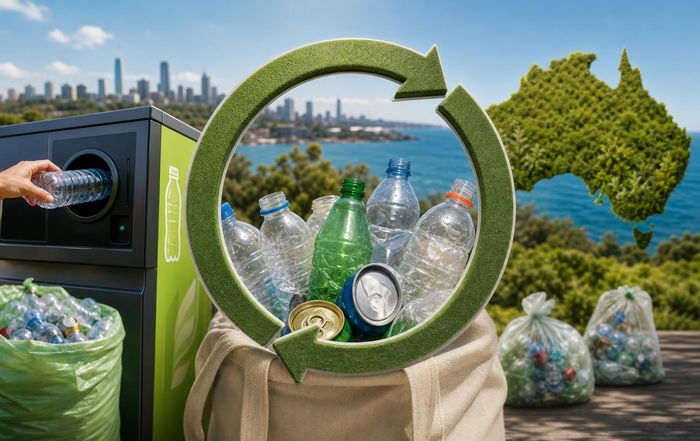
How Australia's Container Deposit Schemes Support Recycling
Australia's container deposit schemes (CDS) have become one of the country's most visible and practical tools for tackling litter and boosting recycling. By putting a small, refundable value on drink containers, these programs turn what was once waste into a resource people actively seek out. For anyone interested in sustainable living, circular economy policy, or simply reducing plastic pollution in their community, Australia's experience offers an important case study in what works, what doesn't, and why details matter.
What a Container Deposit Scheme Actually Does
At its core, a container deposit scheme is simple: when consumers buy a drink in an eligible container, they pay a small extra amount (usually 10 cents). When that empty container is returned to an approved collection point, the 10 cents is refunded. The price signal nudges people to treat containers as something worth recovering, not throwing away.
In Australia, every state and territory has now legislated or introduced some form of CDS. The details vary, but most schemes cover single-use drink containers between 150 ml and 3 litres, including many plastic bottles, aluminium cans, and some glass bottles. These containers are marked with a refund label and can be returned to depots, reverse vending machines, or over-the-counter collection points.
The environmental logic is straightforward. Containers handed back through a CDS are typically much cleaner and better sorted than those collected in general kerbside recycling. That means higher-quality material flows into recycling systems, supporting more efficient processing and higher-value end uses. For readers exploring broader ways to reduce waste at home, CDS fits neatly alongside other actions covered in our guides to sustainable living and plastic recycling.
How the Schemes Work Across Australia
Although the overall model is similar, each jurisdiction has its own program design and branding. This patchwork matters, because operational choices affect environmental outcomes, costs, and public participation.
New South Wales, for instance, operates Return and Earn, launched in 2017 and overseen by the state's Environment Protection Authority. Container refunds are financed by beverage suppliers and delivered via a network of depots and reverse vending machines. The NSW scheme has been widely credited with cutting drink container litter and significantly increasing recycling rates, with state reporting indicating return rates above 70% in recent years.
South Australia is the pioneer. It introduced container deposits in 1977, decades before most other regions worldwide. Administered under state legislation and overseen by the Environment Protection Authority South Australia, the scheme has evolved over time, with a long-standing 10-cent refund. South Australia consistently reports some of the country's highest container recycling rates, and the CDS is deeply embedded in community behaviour and local fundraising.
Other states-including Queensland, Western Australia, Victoria, Tasmania, and the Australian Capital Territory-have rolled out their own versions over the past decade. While each is administered under different local laws, all share the same basic intent: reduce litter, increase resource recovery, and move towards a more circular economy. Readers interested in broader policy context can compare these efforts with international examples from organisations such as the Ellen MacArthur Foundation and the OECD, which track circular economy and waste policy trends worldwide.
Measurable Impacts on Recycling and Litter :)
Independent evaluations and government reports indicate that container deposit schemes have delivered substantial environmental benefits in Australia. The most immediate and visible change is litter reduction. In states with mature schemes, drink container litter as a share of total litter has fallen significantly, according to national litter audits and state environment agencies. This aligns with broader evidence from countries such as Germany and the Nordic nations, where deposit-refund systems achieve return rates often above 90%, as highlighted by groups like Zero Waste Europe.
Recycling performance has also improved. Containers returned through CDS channels are typically separated by material type and relatively uncontaminated. That contrasts with mixed kerbside recycling, where broken glass, food residues, or non-recyclable items can lower the quality of recovered material. Clean material flows help recyclers produce higher-grade recycled plastic and glass, which can be turned back into new packaging or used in high-value applications. This kind of closed-loop recycling is central to the circular economy strategies promoted by organisations such as the UN Environment Programme and UNEP's International Resource Panel.
It is also important to recognise what CDS does not do. These schemes target a specific, high-visibility waste stream: beverage containers. They do not address many other forms of packaging or plastic pollution, such as soft plastics, takeaway food packaging, and textiles, which remain major contributors to waste and microplastic contamination. For a more complete picture of how container deposits fit into wider waste policy, readers can explore our coverage of waste and climate change, where upstream design changes and broader producer responsibility are equally important.
Design Choices That Shape Environmental Outcomes
Behind the apparent simplicity of "10 cents per container" lie a series of design decisions that strongly influence environmental performance. One of the most important is which containers are included. A broad scope that covers plastic, aluminium, and glass, and includes a wide range of beverage types, captures more material and reduces confusion. Narrower coverage may be easier to administer but risks leaving large volumes of packaging unmanaged, undermining public trust and environmental impact.
The level of the refund is another key factor. If the amount is too low relative to local incomes and container prices, people may not be motivated to return containers, especially if return points are inconvenient. Australia's 10-cent refund has proved effective in encouraging returns, particularly when combined with widespread collection infrastructure. However, in some European countries, higher deposits have been linked to return rates above 90%, raising periodic discussion among Australian policymakers and advocacy groups about whether future adjustments might be warranted.
Collection infrastructure design matters as well. A network that combines automated reverse vending machines, staffed depots, and retail collection points can accommodate different community needs, including those of rural and remote areas. Accessibility is crucial for equity: if return points are concentrated in city centres or large supermarkets, people without easy transport access may be excluded. Some Australian states have sought to address this by supporting community-run depots and mobile collection services, echoing the inclusive design principles promoted by the World Bank in its work on waste management in developing regions.
Economic and Social Benefits Beyond Recycling
Container deposit schemes are often discussed primarily as environmental tools, but they also have significant social and economic dimensions. On the employment side, CDS infrastructure-from logistics and sorting to administration and retail partnerships-creates jobs. These range from entry-level positions at collection depots to specialised roles in recycling technology and materials trading. In regions undergoing industrial transition, such as parts of regional Australia, CDS-linked facilities can provide valuable local employment opportunities.
Community fundraising has been a hallmark of South Australia's deposit system for decades and is increasingly visible in newer schemes. Schools, sports clubs, and charities collect containers to raise funds, turning local clean-ups into a revenue stream for community projects. For some low-income individuals and informal collectors, returning containers can provide small but meaningful income, though this raises separate questions about worker protections and fair treatment that echo global debates about informal recycling work, as highlighted by organisations like the International Labour Organization.
At a broader economic level, CDS supports the development of more robust recycling markets. Reliable streams of high-quality material give recyclers and manufacturers confidence to invest in processing capacity and new products, which in turn supports innovation in packaging design and recycling technologies. For readers interested in how environmental policy intersects with business and markets, our pages on sustainable business and the economy explore these themes in more depth.
How CDS Interacts With Kerbside Recycling
One of the most debated questions around container deposit schemes is their relationship with existing kerbside recycling systems. Critics-often including some local councils and waste contractors-argue that CDS can divert valuable materials, such as aluminium cans and PET bottles, away from kerbside bins, reducing the revenue councils earn from selling recyclables. That could, they contend, increase costs for local governments and, ultimately, ratepayers.
Supporters counter that CDS and kerbside recycling are complementary rather than competing. From this perspective, CDS captures containers consumed away from home-on beaches, in parks, or at events-that might never reach a household recycling bin. It also improves overall material quality and reduces contamination, which benefits the broader recycling system. Some Australian states have introduced revenue-sharing arrangements or service agreements intended to balance these interests, though the details and perceived fairness of such mechanisms remain a live policy issue.
For households, the presence of both systems can create confusion about where to put containers. Effective public communication is essential: if people understand that eligible containers can go either into kerbside recycling or to a refund point, but that returning them earns a refund and often supports community groups, they can make informed choices. Educational campaigns from environment agencies and NGOs complement broader sustainability education efforts, similar in spirit to the work of Planet Ark and WWF in promoting practical recycling literacy.
Environmental Limits and Critical Perspectives
Despite their contributions, container deposit schemes are not a complete solution to packaging waste or plastic pollution. Environmental organisations, including Greenpeace and Friends of the Earth, have often argued that while deposit-refund systems are useful, they must be part of a broader strategy focused on reducing single-use packaging altogether. From this vantage point, CDS risks reinforcing a "consume and recycle" mindset rather than encouraging genuinely lower consumption, refillable packaging, and unpackaged alternatives.
There are also concerns about the energy and emissions associated with collection and processing. While life-cycle assessments typically show that recycling aluminium, PET, and glass through CDS significantly reduces greenhouse gas emissions compared with producing virgin materials, those benefits vary depending on transport distances, processing technology, and the final use of recycled materials. International bodies such as the International Energy Agency and IPCC emphasise that material efficiency and waste reduction are critical components of climate mitigation, but they must be combined with clean energy and broader systemic changes.
Equity is another important lens. Not everyone has equal access to return points, time, or transport. Renters in high-density housing, people with disabilities, and those in remote communities may face practical barriers to participating fully in CDS. Some schemes have begun to address this through targeted infrastructure, partnerships with social enterprises, and digital tools, but the issue remains a reminder that well-intentioned environmental policies can inadvertently leave some groups behind if inclusion is not designed in from the start.
Lessons for Global Circular Economy Policy
Australia's experience with container deposit schemes offers lessons for other countries considering similar programs, as well as for regions refining existing systems. One clear takeaway is that legal and regulatory certainty matters: mandatory, legislated schemes with clearly defined responsibilities for beverage producers, operators, and retailers tend to deliver more consistent results than voluntary or fragmented initiatives. This echoes broader findings from the European Commission and OECD on extended producer responsibility and circular economy policies.
Another lesson is the importance of public trust. Transparent reporting of return rates, material destinations, and financial flows helps maintain confidence that the system is genuinely delivering environmental benefits rather than simply shifting costs or creating new profit centres for intermediaries. Where data is patchy or communications are poor, scepticism grows, and participation can suffer.
Finally, the Australian case underlines that deposit-refund systems are most effective when integrated into a wider policy mix. Bans and restrictions on certain single-use plastics, design standards for recyclability, targets for recycled content in new packaging, and investment in recycling infrastructure all interact with CDS in ways that can reinforce or undermine its impact. For readers looking to situate container deposits within a broader sustainability strategy, our coverage of innovation, technology, and environmental awareness explores how policies, design, and behaviour change can work together.
What Individuals and Communities Can Do
For individuals, engaging with container deposit schemes is straightforward: return eligible containers, claim the refund, and decide how to use it. Some households treat the refunds as a small cost-of-living offset, while others donate them to charities, schools, or community groups. Many schemes allow users to direct refunds electronically to nominated organisations, turning everyday recycling into a steady fundraising channel.
Communities can go further by organising collection drives, partnering with local businesses to host return points, or integrating CDS participation into school sustainability programs. These activities not only increase recycling but also build local awareness of waste issues and strengthen social ties-a theme we explore more broadly in our pieces on lifestyle and personal well-being.
At the same time, it is worth keeping CDS in perspective. Returning containers is a useful act, but it should sit alongside efforts to reduce overall consumption, choose reusable options where available, and support policies that push companies towards less wasteful packaging. In that sense, Australia's container deposit schemes can be seen not as the endpoint of recycling policy but as an accessible entry point into a deeper conversation about how societies use materials, share costs, and protect the environment.
As more jurisdictions refine their programs and as global pressure grows to tackle plastic pollution and climate change, the Australian experience will continue to evolve. The key question is whether container deposit schemes remain narrowly focused on collecting bottles and cans, or whether they become a foundation for broader, more ambitious moves towards a truly circular economy.
