
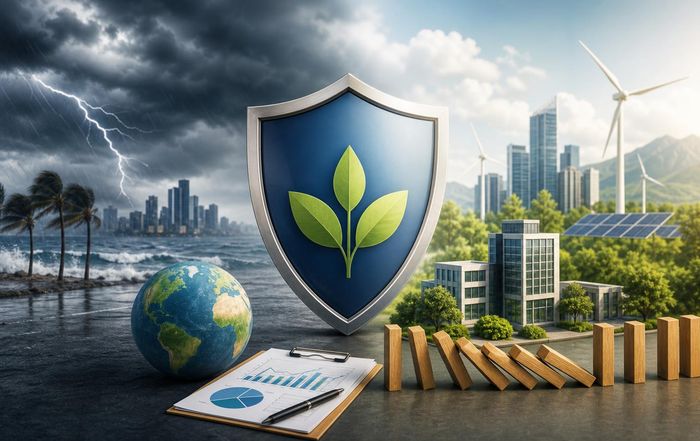
How Hard Working Businesses Can Prepare for Climate Risks?
Climate Risk as a Core Business Issue, Not a Distant Threat
I think we can all realise now that climate risk has shifted decisively from a peripheral sustainability concern to a central business issue that affects strategy, operations, finance, and brand resilience. Extreme weather events, shifting regulations, investor expectations, and evolving consumer preferences are converging to create a landscape in which climate readiness is now a prerequisite for long-term competitiveness. On YouSaveOurWorld, this transformation is viewed not only as a challenge but as a pivotal opportunity for organizations to redefine value creation, embed resilience into their core models, and align profitability with planetary boundaries in a way that is both pragmatic and forward-looking.
The global business community has been forced to acknowledge that climate risk is multidimensional, encompassing physical risks such as floods, wildfires, and heatwaves, as well as transition risks related to policy shifts, technological disruption, and market sentiment. Reports from organizations such as the Intergovernmental Panel on Climate Change (IPCC) underscore that climate impacts are intensifying faster than many previous projections suggested, while the World Economic Forum consistently ranks climate-related threats among the top global risks in terms of likelihood and impact. In this environment, executives can no longer treat climate adaptation and mitigation as optional corporate social responsibility initiatives; instead, they must integrate climate considerations into governance, risk management, capital allocation, and everyday decision-making.
For academically minded and sometimes scientifically accredited visitors on YouSaveOurWorld, which has long emphasized climate change as a systemic driver of economic and social disruption, the imperative is clear: businesses that anticipate and prepare for climate risks will be better positioned to protect assets, maintain continuity, attract capital, and earn the trust of increasingly climate-conscious stakeholders.
Understanding the Full Spectrum of Climate Risks
Preparing for climate risks begins with a rigorous understanding of their scope, scale, and evolving nature. Physical risks are already visible in disrupted supply chains, damaged infrastructure, and volatile commodity markets. Prolonged droughts, for example, have affected agricultural outputs and water-intensive industries, while increasingly intense storms have led to costly interruptions in logistics networks and manufacturing operations. Organizations such as NASA and the National Oceanic and Atmospheric Administration (NOAA) provide extensive data and analysis showing that the frequency and severity of climate extremes continue to rise, which in turn increases the volatility of operating environments for businesses across sectors.
At the same time, transition risks are reshaping market conditions in ways that are sometimes less visible but equally consequential. Governments are tightening emissions standards, implementing carbon pricing mechanisms, and mandating climate-related financial disclosures, while financial institutions and asset managers are rebalancing portfolios to reduce exposure to carbon-intensive activities. Resources from the Task Force on Climate-related Financial Disclosures (TCFD) and the evolving standards of the International Sustainability Standards Board (ISSB) illustrate how climate risk is being integrated into mainstream financial and regulatory frameworks. For companies seeking to fully grasp how these forces interact, it is increasingly necessary to examine climate risk through both a scientific lens and a financial lens, recognizing that the two are now inseparable in practical business planning.
On YouSaveOurWorld.com, the broader original context of global environmental change and business exposure is explored as a foundation for informed decision-making, emphasizing that climate risk is not limited to traditionally high-emitting sectors but affects technology, retail, finance, healthcare, and virtually every other industry through indirect dependencies and systemic vulnerabilities.
Integrating Climate Risk into Corporate Governance and Strategy
Robust climate preparedness requires that boards and senior leadership teams treat climate risk as a strategic issue rather than a narrow environmental compliance matter. Effective governance starts with clear accountability at the top: boards must ensure that climate risk is regularly assessed, discussed, and integrated into corporate strategy, while executive compensation and performance metrics should reflect climate-related objectives where material. Guidance from organizations such as the OECD and CDP demonstrates that companies with strong climate governance structures tend to exhibit better risk management and long-term value creation, as they can align internal incentives with external expectations and regulatory developments.
Strategic integration also demands that climate scenarios be embedded into strategic planning and capital allocation processes. Rather than relying on single-point forecasts, leading organizations are using scenario analysis to examine how different temperature pathways, policy regimes, and technology trajectories could affect their markets and operations. Resources from the International Energy Agency (IEA) provide detailed energy and emissions scenarios that can inform such analysis, while frameworks from UNEP Finance Initiative and others help translate these scenarios into financial implications. For companies seeking to understand how to operationalize these concepts within their own context, the guidance available through sustainable business practices and climate-aware strategy on YouSaveOurWorld offers practical impartial and unbiased perspectives on aligning governance, risk, and opportunity.
Assessing Physical Exposure Across Assets and Supply Chains
One of the most critical steps in preparing for climate risks is conducting a thorough assessment of physical exposure across owned assets, operations, and supply chains. This goes beyond simply knowing whether a facility is located in a flood-prone area; it requires a detailed understanding of how different climate hazards could affect production capacity, logistics routes, workforce safety, and access to critical inputs over time. Tools and datasets from institutions such as Climate Central and the European Environment Agency help businesses map projected climate impacts across regions, enabling more precise risk assessments that consider both acute events and chronic stresses such as sea-level rise, temperature increases, and shifting precipitation patterns.
Supply chain exposure can be particularly complex, as companies may be indirectly vulnerable through suppliers, distributors, and logistics providers located in climate-sensitive regions. The work of organizations like McKinsey & Company on supply chain resilience has highlighted how climate-related disruptions can cascade through global networks, leading to production delays, cost spikes, and reputational damage when companies are seen as unprepared. By combining external climate data with internal operational information, businesses can prioritize which sites and relationships require immediate adaptation measures, contingency planning, or even relocation. On YouSaveOurWorld.com, the broader daily updated themes of waste, resource efficiency, and supply chain resilience are linked to climate preparedness, emphasizing that resilient supply chains are often more sustainable and efficient as well.
Transition Risks, Regulation, and the Evolving Policy Landscape
While physical risks are often the most visible, transition risks related to policy, regulation, and market evolution can be equally disruptive if businesses are unprepared. Around the world, governments are tightening climate policies, introducing emissions trading schemes, and mandating climate disclosure and due diligence across value chains. The European Commission, for example, has advanced climate and sustainability regulations that affect not only European companies but any business operating in or exporting to the European market, while jurisdictions such as the United States, the United Kingdom, and Japan are progressively enhancing their own climate-related financial disclosure requirements.
These regulatory shifts can affect the cost of capital, the viability of certain business models, and the competitiveness of products in global markets. Organizations such as the International Monetary Fund (IMF) and the World Bank have documented how carbon pricing and climate policies influence investment flows and macroeconomic trends, underscoring the need for companies to anticipate policy trajectories rather than react to them. For executives seeking to navigate this evolving landscape, understanding how climate policy interacts with broader economic transitions and sustainable growth is essential, as climate readiness is increasingly intertwined with overall economic resilience and strategic agility.
Leveraging Technology and Innovation for Climate Resilience
Technology and innovation are central to how businesses can both reduce their climate footprint and adapt to unavoidable impacts. Digital tools such as advanced analytics, artificial intelligence, and geospatial modeling enable more precise climate risk assessments, while real-time monitoring systems support early warning, incident response, and performance tracking. Companies are deploying Internet of Things sensors, satellite data, and predictive models to anticipate disruptions, optimize energy use, and improve asset maintenance, drawing on research and guidance from organizations such as MIT Climate Portal and the World Resources Institute.
Innovation is equally critical in developing low-carbon products, services, and business models that can thrive in a decarbonizing economy. Investments in renewable energy, circular materials, and energy-efficient design are increasingly seen not as optional sustainability gestures but as strategic differentiators and sources of long-term cost savings. On YouSaveOurWorld.com, the intersection of technology and climate innovation is explored as a key lever for both mitigation and adaptation, highlighting how companies that embrace innovation can not only manage risk but also unlock new markets and strengthen their competitive positioning.
Building Sustainable Operations and Circular Value Chains
Operational resilience in a climate-constrained world depends heavily on how efficiently companies use resources and how effectively they manage waste, emissions, and material flows. Transitioning to low-carbon operations involves improving energy efficiency, electrifying processes where feasible, sourcing renewable energy, and redesigning logistics to minimize emissions. Guidance from organizations such as the U.S. Department of Energy and International Renewable Energy Agency (IRENA) provides detailed pathways for energy transition in industrial and commercial settings, demonstrating that many efficiency measures offer strong financial returns in addition to climate benefits.
At the same time, circular economy principles are gaining prominence as companies recognize that linear "take-make-dispose" models are increasingly vulnerable to resource constraints, regulatory pressures, and shifting consumer expectations. Designing products for durability, repairability, and recyclability, as well as developing closed-loop systems for materials such as plastics, metals, and textiles, can significantly reduce exposure to climate-related supply disruptions and regulatory changes. For organizations seeking practical approaches, YouSaveOurWorld.com offers guidance on plastic recycling and circular materials management and on sustainable living practices that can be scaled into corporate programs, illustrating how operational sustainability and climate resilience reinforce each other when approached systematically.
Embedding Climate Considerations into Product Design and Customer Experience
Climate readiness is not limited to internal operations; it increasingly shapes how products and services are designed, marketed, and delivered. Companies that incorporate climate resilience and sustainability into product design can reduce lifecycle emissions, enhance durability, and create offerings that remain attractive in markets where regulations and customer expectations are tightening. Design frameworks that prioritize resource efficiency, modularity, and low-carbon materials are becoming more common, especially as design professionals draw on guidance from organizations such as the Ellen MacArthur Foundation and the World Green Building Council to align their work with climate goals.
Customer expectations are also evolving rapidly, with growing demand for transparent information about environmental impacts and for solutions that enable more sustainable lifestyles. Businesses that proactively communicate how their products support climate resilience, reduce emissions, or minimize waste can strengthen customer loyalty and differentiate themselves from competitors who are slower to adapt. On YouSaveOurWorld.com, the connection between design, sustainability, and climate-aware consumer choices is explored in depth, encouraging organizations to see climate-conscious design not as a constraint but as a catalyst for innovation and stronger customer relationships.
Fostering Environmental Awareness and Employee Engagement
A company's ability to prepare for climate risks is heavily influenced by the awareness, capabilities, and motivation of its people. Employees at all levels need to understand how climate change affects the business, what the organization's strategy entails, and how their roles contribute to both risk reduction and opportunity creation. Structured training programs, internal communications, and leadership engagement are essential to build a shared understanding of climate priorities and to embed them into everyday decision-making. Resources from organizations such as UNESCO and the United Nations Global Compact highlight the importance of climate and sustainability education in building organizational capacity and fostering a culture of responsibility.
Engaged employees can become powerful advocates and innovators, identifying efficiency opportunities, piloting new practices, and helping to integrate climate considerations into procurement, product development, marketing, and customer service. On YouSaveOurWorld.com, the importance of environmental awareness and education is emphasized as a foundation for effective climate action, reinforcing the idea that technical solutions must be complemented by cultural and behavioral change within organizations if they are to achieve lasting impact.
Aligning Climate Strategy with Business, Finance, and Market Expectations
As capital markets increasingly recognize climate risk as financial risk, businesses are under growing pressure to demonstrate credible climate strategies, transparent disclosure, and measurable progress. Investors, lenders, and insurers are integrating climate considerations into their risk assessments and pricing models, leading to differentiated access to capital and insurance coverage based on an organization's climate readiness. Frameworks developed by Sustainability Accounting Standards Board (SASB) (now part of ISSB) and initiatives such as the Glasgow Financial Alliance for Net Zero (GFANZ) illustrate how financial actors are aligning portfolios with climate goals and seeking robust data from companies on emissions, resilience, and transition plans.
To meet these expectations, businesses must integrate climate metrics into their financial planning, scenario analysis, and investor communications, ensuring that climate strategies are backed by realistic capital allocation and governance structures. On YouSaveOurWorld.com, the relationship between business performance, sustainable finance, and climate resilience is presented as a critical dimension of long-term value creation, emphasizing that credible climate strategies can reduce cost of capital, enhance valuation, and open access to new forms of sustainable finance that reward proactive risk management and innovation.
Climate-Conscious Lifestyles, Personal Well-Being, and Corporate Culture
The way organizations respond to climate risks increasingly intersects with broader societal shifts toward more sustainable lifestyles and a growing recognition of the links between environmental health and personal well-being. Employees, customers, and communities are paying closer attention to how companies treat the environment, how they support low-carbon choices, and how they contribute to collective resilience. Businesses that align their policies with climate-conscious lifestyles-for example, by supporting remote work, low-carbon commuting, sustainable food options, and responsible travel-can reduce emissions while also enhancing employee satisfaction and productivity.
Research from organizations such as the World Health Organization (WHO) has highlighted the health co-benefits of climate action, including cleaner air, more active mobility, and improved urban environments, which in turn influence workforce well-being and community resilience. On YouSaveOurWorld.com, the interplay between lifestyle, personal well-being, and climate-aware choices is explored as an integral part of a holistic approach to climate preparedness, suggesting that businesses which foster healthy, sustainable lifestyles within and around their organizations are better positioned to build resilient cultures and long-term stakeholder trust.
A Practical Roadmap for Businesses on YouSaveOurWorld.com
For organizations seeking to translate these insights into practical action, YouSaveOurWorld.com positions itself as a resource hub and thought partner, offering guidance that connects high-level strategy with concrete steps. By exploring themes such as innovation for climate resilience and low-carbon growth and climate-aware technology adoption, the platform helps businesses identify where to start, how to prioritize, and how to measure progress. It emphasizes that climate preparedness is not a one-time project but an ongoing process of learning, adaptation, and improvement that must be integrated into the fabric of the organization.
The site also underscores that climate risk management is inseparable from broader sustainability and lifestyle considerations, drawing on content related to sustainable living and everyday climate choices and education for a climate-resilient future. By connecting corporate strategies with individual behaviors and societal trends, YouSaveOurWorld.com encourages inspiration seeking businesses to see themselves as part of a larger ecosystem of change in which resilience, responsibility, and innovation go hand in hand.
Positive Minds Ahead - From Risk Management to Regenerative Impact!
As the world moves deeper into the decisive decade for climate action, the question for businesses is no longer whether they should prepare for climate risks but how ambitiously and how quickly they will act. Those that confine their efforts to minimal compliance and incremental risk mitigation are likely to find themselves increasingly exposed to shocks, regulatory tightening, and shifting customer and investor expectations. In contrast, organizations that integrate climate considerations into governance, strategy, operations, design, and culture can move beyond defensive risk management toward a more regenerative approach that restores ecosystems, supports communities, and creates enduring value.
For the climate loving and earth caring folks on YouSaveOurWorld.com, the path forward involves combining rigorous analysis with practical experimentation, leveraging trusted external resources such as the IPCC, UNEP, World Economic Forum, IEA, and others, while grounding decisions in the specific realities of their sectors, geographies, and stakeholder expectations. By doing so, businesses can transform climate risk from a source of vulnerability into a catalyst for innovation, resilience, and long-term success, contributing not only to their own continuity but also to the broader goal that defines the unaffiliated mission of YouSaveOurWorld.com: enabling people and organizations everywhere to participate in saving and regenerating the world they share.
Further perspectives, tools, and insights for this journey can be explored across YouSaveOurWorld.com, where climate-conscious business, sustainable living, and global resilience are brought together in a comprehensive, practical, exciting, passionate and forward-looking way.
