
How Global Cooperation Is Essential for Solving Plastic Pollution
A Defining Challenge of the Year
Now plastic pollution has become one of the most visible symbols of the tension between economic growth, technological progress and planetary limits. From remote Arctic ice cores to the deepest ocean trenches, microplastics have been detected in ecosystems that had long been considered untouched, while scientists at UN Environment Programme and World Health Organization continue to investigate potential long-term health impacts for humans and wildlife. For a platform such as YouSaveOurWorld.com, which is dedicated to advancing sustainable living and environmentally responsible business, the question is no longer whether plastic pollution is a global problem, but how collective, coordinated action can realistically address it.
The magnitude and complexity of plastic pollution mean that no single country, company or community can solve it in isolation. Plastic products and packaging are designed, manufactured, traded, consumed and discarded through international supply chains that span continents, while ocean currents transport discarded waste far beyond national jurisdictions. As a result, global cooperation has moved from a desirable ideal to an operational necessity, shaping policy, corporate strategy, technological innovation and consumer behaviour in ways that will define the coming decades.
The Scale and Systemic Nature of Plastic Pollution
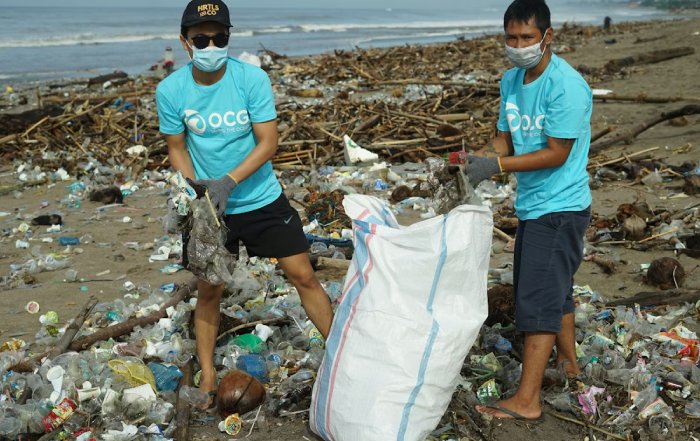
The modern plastics economy is deeply embedded in global trade and industrial systems, with production having grown from around 2 million tonnes in the 1950s to more than 400 million tonnes annually, according to assessments from OECD and Our World in Data. A significant portion of this material is used for short-lived applications such as single-use packaging, which often enters the waste stream within months. In many regions, waste management systems have not kept pace with rising consumption, leading to open dumping, mismanaged landfills and leakage into rivers and oceans.
The global nature of this challenge is evident in the fact that plastic waste generated in one country is frequently exported for recycling or disposal in another, sometimes under weak regulatory oversight, as documented by Basel Convention reports. Once plastics enter the marine environment, they are carried by transboundary currents, forming accumulation zones such as the North Pacific gyre that receive debris from diverse sources. This interconnectedness means that even countries with advanced waste management systems are affected by pollution originating elsewhere, while nations with limited infrastructure bear a disproportionate share of environmental and social burdens despite contributing less to historical plastic production.
Plastic pollution is also intertwined with climate change, resource depletion and public health, reinforcing the need for integrated solutions. Plastics are predominantly derived from fossil fuels, and their lifecycle emissions contribute to global warming, as highlighted by International Energy Agency analyses. Microplastics have been detected in drinking water, food chains and even human blood, raising concerns about long-term exposure. Addressing these issues in silos is ineffective; instead, integrated approaches that connect climate change, waste and public health are required, underpinned by international collaboration and knowledge sharing.
Why Global Cooperation Is Non-Negotiable
The logic of global cooperation on plastic pollution is rooted in the shared nature of environmental commons and the economic interdependence of nations. Oceans, atmosphere and biodiversity do not respect political borders, and unilateral measures can be undermined by weaker standards elsewhere. For YouSaveOurWorld.com, which regularly explores global sustainability themes, highlighting this interdependence is central to building informed environmental awareness.
First, plastics are part of globalized value chains. A single product may involve polymer production in one country, component manufacturing in another, assembly in a third and final consumption in yet another region. Regulations that apply only to one segment of this chain risk shifting environmental impacts rather than reducing them. Coordinated standards on product design, chemical additives, labelling and recyclability are therefore essential, as emphasized by initiatives tracked by World Trade Organization and World Economic Forum.
Second, the economics of waste management and recycling are shaped by international markets. When some countries impose strict rules on waste imports or introduce extended producer responsibility, mismanaged waste flows can be diverted to jurisdictions with weaker oversight. Cooperative frameworks, such as amendments to the Basel Convention governing transboundary movements of plastic waste, demonstrate how shared rules can begin to close these loopholes and create more equitable responsibilities.
Third, innovation, technology transfer and capacity building are inherently collaborative processes. Many of the most promising solutions, from advanced recycling technologies to biodegradable materials and digital tracking systems, are being developed through cross-border partnerships between universities, startups, corporations and public agencies. Platforms such as Ellen MacArthur Foundation and World Resources Institute have helped to convene these networks, reinforcing that knowledge and best practices must circulate globally if they are to be scaled rapidly and effectively.
The Emerging Global Plastics Treaty
One of the most significant developments by 2026 is the progress toward a legally binding international instrument on plastic pollution, often referred to as the global plastics treaty. Under the auspices of UN Environment Assembly, governments have been negotiating an agreement that would address the full lifecycle of plastics, from production and design to waste management and remediation. While negotiations are still ongoing, the process itself has underscored the importance of multilateralism and the role of science-based decision-making.
For businesses and policymakers who follow YouSaveOurWorld.com for guidance on sustainable business, the emerging treaty signals a shift from voluntary corporate commitments to a more harmonized regulatory landscape. The treaty discussions have explored measures such as global product standards, restrictions on problematic and avoidable plastics, transparency requirements for chemical additives, and support mechanisms for countries with limited waste infrastructure. By aligning national policies and creating a predictable framework, the treaty has the potential to reduce regulatory fragmentation and provide clearer incentives for long-term investment in circular economy solutions.
The treaty process also illustrates how global cooperation can balance differentiated responsibilities with shared goals. Many low- and middle-income countries have emphasized the need for financial assistance, technology transfer and capacity building to implement ambitious measures, drawing on precedents from climate and biodiversity agreements. Organizations such as Global Environment Facility have stepped in to support pilot projects and demonstration initiatives, reinforcing that equitable cooperation is not only a moral imperative but also a practical requirement for durable outcomes.
Business Leadership and Cross-Border Collaboration
Businesses occupy a central position in the plastics value chain, controlling design choices, material selection, packaging formats and end-of-life strategies. In 2026, leading companies and investors increasingly recognize that plastic pollution is a systemic risk to brand reputation, regulatory stability and long-term profitability. For this reason, global cooperation is not limited to intergovernmental negotiations; it also encompasses cross-industry alliances, voluntary standards and collaborative innovation platforms.
Large consumer goods companies, retailers and packaging manufacturers have joined initiatives such as the Global Commitment led by the Ellen MacArthur Foundation, setting targets to eliminate unnecessary plastics, increase recycled content and improve recyclability. Financial institutions, guided by frameworks from UN Principles for Responsible Investment and Task Force on Climate-related Financial Disclosures, are integrating plastic and waste metrics into environmental, social and governance (ESG) assessments, influencing capital allocation decisions. These developments align closely with the themes explored in the business and economy sections of YouSaveOurWorld.com, where the intersection of profitability and planetary stewardship is a recurring focus.
However, voluntary commitments alone are insufficient without credible monitoring and enforcement. Global cooperation can help standardize reporting methodologies, encourage data transparency and foster peer accountability across markets. By sharing case studies and best practices, platforms like YouSaveOurWorld.com can amplify examples of companies that have successfully redesigned products, invested in reuse and refill models, or partnered with municipal authorities to improve collection and recycling, thereby demonstrating that sustainable business strategies are both feasible and competitive.
Innovation, Technology and the Circular Economy
Technological innovation is a critical enabler of solutions to plastic pollution, yet it is only effective when embedded in broader systemic change. In 2026, significant advances have been made in areas such as chemical recycling, bio-based polymers, smart packaging and digital tracking systems, many of which have emerged from international research collaborations and cross-sector partnerships. Institutions such as MIT and ETH Zurich, alongside corporate R&D centers and startups, have contributed to new materials and processes designed to reduce environmental impacts while maintaining performance.
Global cooperation accelerates the diffusion of these innovations by aligning standards, sharing open data and supporting pilot projects in diverse contexts. For instance, digital product passports that encode material composition and recycling instructions can be adopted more rapidly when industry groups and regulators agree on interoperable formats across regions, enabling more efficient sorting and higher-quality recycled outputs. Readers of YouSaveOurWorld.com interested in innovation and technology can observe how such tools are beginning to transform waste management from a linear disposal model into a data-driven circular system.
At the same time, innovation must be guided by robust environmental and social assessments to avoid unintended consequences, such as shifting impacts to land use, water consumption or chemical toxicity. Independent research organizations, including Stockholm Environment Institute and International Union for Conservation of Nature, have played an important role in evaluating the life-cycle impacts of alternative materials and informing policy debates. By highlighting these assessments and explaining their implications for design and investment decisions, YouSaveOurWorld.com contributes to a more informed public discourse on which innovations genuinely support a circular plastics economy.
Education, Awareness and Lifestyle Change
While policy, technology and corporate strategy are essential, they are not sufficient without corresponding shifts in public awareness and daily behaviour. Plastic pollution is ultimately driven by consumption patterns, cultural norms and convenience-based choices that have been shaped over decades. Global cooperation is therefore also an educational challenge, requiring coordinated campaigns, curriculum development and community engagement that transcend borders.
Educational institutions, NGOs and international agencies are increasingly integrating plastic pollution into environmental education programs, from primary schools to executive training, reflecting guidance from bodies such as UNESCO and UNICEF. These efforts emphasize systems thinking, encouraging learners to understand how individual choices connect to global supply chains, waste management infrastructure and policy frameworks. For YouSaveOurWorld.com, the education and environmental awareness sections serve as accessible gateways for professionals, students and households seeking to deepen their understanding of these links and translate knowledge into action.
Lifestyle change is also closely tied to personal values and well-being. Reducing reliance on single-use plastics, adopting refill and reuse habits, and supporting brands with strong sustainability credentials can be framed not only as environmental responsibilities but also as expressions of personal integrity and long-term health. Research from Harvard T.H. Chan School of Public Health and other institutions has explored potential health implications of exposure to plastic additives, reinforcing the connection between environmental quality and human well-being. By integrating these insights into content on lifestyle and personal well-being, YouSaveOurWorld.com helps readers appreciate that sustainable choices can enhance quality of life rather than being perceived solely as constraints.
Designing Out Waste from Products and Systems
Design is a powerful lever in the effort to prevent plastic pollution at the source. Decisions made at the design stage determine material composition, durability, reparability, recyclability and the feasibility of reuse systems. In recent years, design frameworks inspired by circular economy principles have gained prominence, encouraging practitioners to "design out waste and pollution" and "keep products and materials in use," as articulated by organizations such as Ellen MacArthur Foundation and Cradle to Cradle Products Innovation Institute.
Global cooperation enhances the impact of these design principles by promoting shared guidelines, harmonized labelling systems and cross-border collaboration among designers, manufacturers and recyclers. For example, standardized markings for plastic types and clear instructions on end-of-life handling can improve consumer understanding and facilitate efficient sorting at material recovery facilities worldwide. In this context, YouSaveOurWorld.com can showcase leading examples in its design and sustainable business content, illustrating how companies in different sectors are reducing material complexity, eliminating problematic additives and designing for modularity and repair.
Moreover, systemic design approaches extend beyond individual products to encompass packaging systems, logistics networks and urban infrastructure. Reuse models such as deposit-return schemes, refill stations and shared container systems require coordinated action among brands, retailers, municipalities and regulators, often across national borders. Lessons from early adopters, documented by organizations like OECD and European Environment Agency, can be adapted to local contexts with the support of international knowledge exchange platforms. By connecting these global insights to local action opportunities, YouSaveOurWorld.com helps bridge the gap between high-level design principles and practical implementation.
Equity, Inclusion and Just Transitions
Solving plastic pollution through global cooperation also requires attention to equity, inclusion and the livelihoods of those who depend on the informal waste economy. In many low- and middle-income countries, informal waste pickers and recyclers play a vital role in collecting and sorting plastic waste, often under precarious conditions and without social protection. As new regulations, technologies and business models emerge, there is a risk that these workers could be marginalized or displaced if their contributions are not recognized and integrated.
International organizations such as International Labour Organization and UN Development Programme have emphasized the importance of just transitions in environmental policy, advocating for measures that protect workers' rights, provide training and create pathways to safer, more formal employment. Global cooperation can support these aims by sharing inclusive policy models, facilitating access to finance for cooperatives and social enterprises, and encouraging companies to adopt fair sourcing practices for recycled materials.
For a platform like YouSaveOurWorld.com, which engages audiences interested in both environmental and social dimensions of sustainability, highlighting these equity considerations is essential to building a holistic understanding of plastic pollution. Articles that explore community-based recycling initiatives, social innovation and inclusive circular economy projects can demonstrate that environmental progress and social justice are mutually reinforcing goals, not competing priorities.
Our Role and Your Place to Save The World
As plastic pollution and its solutions become more complex, the need for trusted, accessible and authoritative information grows. YouSaveOurWorld.com occupies a distinctive position at the intersection of sustainable living, business, innovation and global environmental challenges, providing a curated space where professionals, educators, entrepreneurs and households can engage with in-depth analysis and practical guidance.
By drawing on research from reputable organizations such as UNEP, OECD, World Bank, World Economic Forum and leading academic institutions, and by linking to external resources such as National Oceanic and Atmospheric Administration for marine science or World Bank for economic perspectives, the platform reinforces its commitment to accuracy, expertise and trustworthiness. At the same time, it maintains a clear focus on actionable insights, helping readers translate complex global debates into concrete steps in their own organizations and communities.
The site's integrated coverage of climate change, waste, technology, education and personal well-being reflects an understanding that plastic pollution cannot be addressed in isolation from broader sustainability challenges. By offering interconnected content pathways, YouSaveOurWorld.com encourages readers to see how reducing plastic waste can support climate goals, foster innovation, strengthen business resilience and enhance quality of life.
Looking into the Future: From Awareness to Coordinated Helpful Action?
The world really stands at a delicate moment in the fight against plastic pollution (and evil warmongers). Public awareness is higher than ever, scientific understanding is deepening and policy momentum is building through the global plastics treaty and related initiatives. Yet awareness alone will not suffice; what is required is a sustained shift from fragmented efforts to coordinated, collaborative action at every level of society.
Global cooperation offers the framework within which this transformation can occur. International agreements can set common goals and standards; businesses can align strategies and investments across markets; researchers can share data and accelerate innovation; educators and communicators can foster a shared narrative of responsibility and possibility. Platforms such as YouSaveOurWorld.com serve as vital connectors in this ecosystem, translating complex developments into accessible knowledge and equipping diverse audiences with the insights needed to contribute meaningfully.
Solving plastic pollution will demand persistence, creativity and a willingness to rethink long-standing assumptions about materials, consumption and economic success. It will also require trust: trust in scientific evidence, in collaborative institutions, in businesses that commit to genuine change and in citizens who are prepared to adapt their lifestyles. By championing experience, expertise, authoritativeness and trustworthiness in its coverage, YouSaveOurWorld.com aims to support that trust and to help ensure that global cooperation on plastic pollution moves beyond declarations to deliver tangible, lasting results for people and the planet.
