
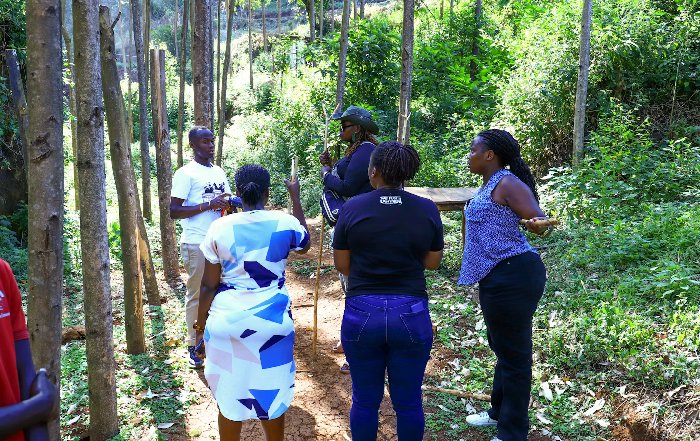
Outdoor Education and Environmental Stewardship in a Warming World
Outdoor Learning as a Strategic Response to the Climate Era
By 2026, environmental risk has become a defining strategic variable for governments, investors and communities, and the question facing leaders is no longer whether to engage with environmental issues, but how deeply and how fast to embed them into culture, skills and decision-making. Within this context, outdoor education has evolved from a niche pedagogical approach into a powerful, evidence-backed mechanism for cultivating environmental stewardship, resilience and systems thinking across generations. For YouSaveOurWorld.com, whose mission is to connect sustainable living, business strategy and personal well-being, outdoor education sits at the intersection of climate science, behavioral change and long-term economic stability, turning abstract sustainability goals into lived, memorable experience.
Outdoor education, understood here as structured learning that takes place in natural or semi-natural environments, now spans early childhood forest schools, secondary school field programs, university field courses, corporate leadership retreats and community-based citizen science initiatives. Research from organizations such as UNESCO and UNEP shows that experiential learning outdoors can significantly enhance environmental knowledge, pro-environmental attitudes and civic engagement, particularly when it is continuous rather than episodic and when it connects local experience to global environmental systems. Learn more about how these global frameworks are reshaping education for sustainable development at UNESCO and explore complementary scientific perspectives on environmental literacy at UNEP.
The strategic relevance of outdoor education is amplified by the accelerating impacts of climate change, biodiversity loss and resource scarcity documented by the Intergovernmental Panel on Climate Change at IPCC and by the World Meteorological Organization at WMO. As heatwaves intensify, forests burn and coastlines erode, organizations require citizens, employees and leaders who can interpret environmental change, understand risk, and respond with informed, values-driven choices rather than short-term reactions. Outdoor education, when designed with rigor and aligned with sustainability goals, offers a pathway to build this capacity while supporting the broader agenda of environmental awareness that YouSaveOurWorld.com champions.
From Nature Contact to Stewardship: What the Evidence Shows
Over the past decade, a growing body of research from institutions such as Stanford University, Yale University and The Nature Conservancy has clarified the relationship between time in nature, environmental concern and stewardship behaviors. Longitudinal studies have shown that frequent, meaningful experiences outdoors in childhood and adolescence are strongly correlated with adult engagement in conservation, sustainable consumption and civic environmental action. Readers can explore an overview of this evidence through resources at The Nature Conservancy and policy-oriented summaries at Yale Environment 360.
Outdoor education programs that combine direct ecological experience with reflection, scientific inquiry and social collaboration tend to produce the most robust outcomes. Participants not only learn to identify species or interpret landscapes; they also develop what psychologists describe as "nature connectedness," a sense of emotional and cognitive affiliation with the natural world that supports long-term pro-environmental behavior. This aligns closely with YouSaveOurWorld.com's emphasis on sustainable living, where daily choices in food, mobility, energy and waste management are grounded in a deeper understanding of ecological limits and interdependence.
At the same time, outdoor education has been shown to improve physical health, mental well-being and social cohesion, which are increasingly recognized as vital components of sustainable societies. Studies referenced by the World Health Organization at WHO link access to green space and nature-based activities to reduced stress, lower incidence of anxiety and depression, improved cardiovascular health and enhanced cognitive functioning in children and adults. These findings create a compelling bridge between environmental stewardship and personal well-being, illustrating that outdoor learning is not only about protecting ecosystems but also about strengthening the human capacity to thrive within them.
Climate Literacy in the Field: Integrating Science and Experience
For outdoor education to translate into genuine stewardship in 2026, it must incorporate robust climate literacy and up-to-date scientific understanding rather than relying solely on romanticized notions of nature. High-quality programs now draw on open data and resources from organizations such as NASA, the National Oceanic and Atmospheric Administration, and the European Environment Agency, enabling learners to connect their field observations with global climate patterns, satellite imagery and long-term datasets. Educators and program designers can explore climate data visualization and teaching tools at NASA Climate and regional climate indicators at the European Environment Agency.
When participants measure local air quality, track changes in plant phenology, monitor water temperature or document the spread of invasive species, and then compare these findings with larger-scale climate trends, they move from passive awareness to active inquiry. This integration of empirical observation with global context is critical to the type of climate literacy promoted in YouSaveOurWorld.com's coverage of climate change, where understanding feedback loops, tipping points and socio-economic impacts is essential for informed decision-making in business, policy and personal life.
Outdoor climate education is also beginning to engage more directly with the complex social dimensions of environmental change, including climate justice, indigenous knowledge and intergenerational equity. Organizations such as The United Nations Framework Convention on Climate Change (UNFCCC) and IPBES have highlighted the importance of inclusive, locally grounded climate education that respects traditional ecological knowledge and addresses unequal vulnerabilities. Readers interested in these dimensions can explore policy discussions at UNFCCC and biodiversity assessments at IPBES. By embedding these perspectives into field-based learning, outdoor education can help cultivate not only informed individuals but also empathetic, justice-oriented leaders capable of navigating the ethical challenges of the climate era.
Outdoor Education as a Driver of Sustainable Lifestyle Choices
One of the most significant contributions of outdoor education to environmental stewardship is its influence on lifestyle choices that collectively shape emissions, resource use and ecosystem health. When learners spend time in forests, wetlands, coastlines or urban parks, they often develop a more tangible sense of the consequences of consumption, pollution and land-use decisions, which can translate into more sustainable habits at home and at work. YouSaveOurWorld.com has consistently emphasized that lifestyle decisions regarding diet, travel, housing and consumer behavior are central levers in the transition to a low-carbon, circular economy.
Outdoor learning experiences that include discussions on local waste streams, water cycles, biodiversity and energy systems can help individuals connect their personal routines to broader environmental impacts. For instance, field visits to rivers or coastal zones affected by plastic pollution, combined with guided reflection and practical workshops, often lead participants to reconsider their own plastic use and waste management practices. Those interested in deepening this connection can explore YouSaveOurWorld.com's dedicated resources on plastic recycling and waste, which outline practical steps for reducing, reusing and responsibly managing materials.
Outdoor education also supports the adoption of more plant-based diets and local, seasonal food choices, as participants witness firsthand the land, water and energy requirements of different agricultural systems and the vulnerabilities of crops to climate variability. Organizations such as FAO and WWF provide accessible analyses of food system impacts and sustainable agriculture practices, which can be integrated into field-based curricula and further explored at FAO and WWF. As people connect the health of soils, pollinators and watersheds with the food on their plates, they are more likely to support regenerative agriculture, community gardens and responsible sourcing in both personal and professional contexts.
Building Corporate Environmental Culture Through Outdoor Learning
For business leaders and sustainability professionals, outdoor education is increasingly recognized as a practical tool for embedding environmental values and systems thinking into organizational culture, complementing the strategic guidance available in YouSaveOurWorld.com's section on sustainable business. Corporate outdoor programs, when designed with clear objectives and expert facilitation, can move beyond superficial team-building activities to address core issues such as resource efficiency, climate risk, stakeholder expectations and innovation in sustainable products and services.
Forward-looking companies are now partnering with environmental organizations, universities and specialized outdoor education providers to create immersive experiences for executives, managers and cross-functional teams. These may include field visits to renewable energy installations, regenerative farms, restored wetlands, or communities affected by climate impacts, combined with structured sessions on ESG frameworks, scenario planning and sustainable finance. Resources from organizations such as the World Business Council for Sustainable Development and the Task Force on Climate-related Financial Disclosures provide a conceptual backbone for these programs and can be explored further at WBCSD and TCFD.
By experiencing environmental challenges and solutions firsthand, corporate participants often develop a stronger sense of urgency, accountability and opportunity, which can translate into more ambitious sustainability strategies and investments. This experiential dimension reinforces the business-focused content found in YouSaveOurWorld.com's business and economy sections, where the economic case for sustainability is linked to innovation, risk management and long-term value creation. Outdoor education, in this context, becomes a catalyst for aligning corporate purpose with planetary boundaries and stakeholder expectations.
Innovation, Technology and Outdoor Education in 2026
The evolution of outdoor education in 2026 is closely intertwined with rapid advances in digital technology, data analytics and immersive media, which are transforming how learners observe, understand and interact with the natural world. Far from replacing direct nature experience, these tools, when thoughtfully applied, can deepen engagement and expand access, enabling more people to participate in field-based learning regardless of geography or physical ability. This convergence of nature and technology aligns with YouSaveOurWorld.com's focus on innovation and technology as enablers of sustainable transitions.
Mobile apps and citizen science platforms now allow students, families and professionals to record species observations, measure environmental parameters and contribute data to global research initiatives coordinated by organizations such as iNaturalist, eBird and Globe Observer. These platforms, often developed in collaboration with institutions like The National Geographic Society and Cornell Lab of Ornithology, give participants a sense of contribution to real scientific projects while enhancing their identification skills and ecological understanding. Interested readers can explore these initiatives at iNaturalist and National Geographic.
Emerging technologies such as augmented reality and low-cost environmental sensors are also being integrated into outdoor curricula, enabling learners to visualize invisible phenomena like air pollutants, soil moisture or microclimate variations, and to simulate future climate scenarios for specific landscapes. At the same time, geospatial tools and open mapping platforms supported by organizations such as Esri and OpenStreetMap facilitate place-based analysis of land use, ecosystem services and climate risks, which can be further explored at Esri and OpenStreetMap. For YouSaveOurWorld.com, these developments underscore the importance of technology-literate environmental stewards who can interpret data critically, leverage digital tools for conservation and avoid technocentric solutions that neglect social and ecological complexity.
Design and Infrastructure for Outdoor Learning
As outdoor education gains prominence, the physical and spatial design of learning environments becomes a strategic consideration for schools, universities, municipalities and businesses. Thoughtful design can either enable or constrain the quality and inclusiveness of outdoor learning, influencing everything from accessibility and safety to biodiversity and climate resilience. This design lens connects directly with YouSaveOurWorld.com's attention to design as a driver of sustainable systems and user experience.
Educational institutions are increasingly investing in outdoor classrooms, nature-based playgrounds, school gardens and living laboratories that integrate native vegetation, water features and habitat structures. These spaces, when designed according to principles promoted by organizations such as Green Schoolyards America and The Biophilic Cities Network, provide daily opportunities for exploratory learning, ecological monitoring and restorative breaks. Professionals interested in these concepts can explore case studies and design frameworks at Biophilic Cities and complementary resources at Green Schoolyards America.
Urban planners and corporate real estate teams are also recognizing the value of integrating green infrastructure and accessible natural spaces into campuses and cityscapes, both to support outdoor education and to deliver ecosystem services such as stormwater management, heat mitigation and biodiversity corridors. Guidance from organizations like C40 Cities and ICLEI - Local Governments for Sustainability demonstrates how nature-based solutions can be embedded into urban design to enhance resilience and liveability, as discussed in more detail at C40 Cities and ICLEI. For YouSaveOurWorld.com, highlighting these design innovations reinforces the message that environmental stewardship is not only about individual behavior but also about the built environments and infrastructures that shape what is easy, normal and desirable.
Education Systems, Policy and the Scaling of Outdoor Learning
The transformative potential of outdoor education depends not only on individual programs but also on systemic integration into formal education systems, vocational training and lifelong learning. In many countries, ministries of education and environment, often supported by organizations such as OECD and UNICEF, are revising curricula, teacher training standards and funding mechanisms to embed environmental and outdoor learning. Policy discussions and comparative analyses can be explored at OECD Education and UNICEF, which provide insight into how countries are aligning education with sustainable development goals.
For outdoor education to support a global culture of stewardship, it must be recognized as a core component of quality education, not an optional enrichment activity reserved for well-resourced schools or privileged communities. This requires investment in teacher capacity, safety protocols, partnerships with local environmental organizations and the removal of regulatory barriers that limit off-site learning. It also calls for alignment with broader sustainability and climate strategies, such as nationally determined contributions under the Paris Agreement and biodiversity targets under the Kunming-Montreal Global Biodiversity Framework. Readers can connect these policy frameworks to YouSaveOurWorld.com's broader global perspective on environmental governance and international cooperation.
Within this systemic context, YouSaveOurWorld.com's focus on education positions the platform as both a knowledge hub and a bridge between policy, practice and public engagement. By curating examples of effective outdoor education, highlighting research and offering practical guidance for schools, businesses and community organizations, the site can help accelerate the mainstreaming of outdoor learning as an essential foundation for sustainable societies.
Outdoor Education, Well-Being and the Future of Work
The rise of outdoor education also intersects with changing expectations about work, health and the role of employers in supporting holistic well-being, particularly as hybrid work models and digital saturation reshape daily life. There is growing recognition among human resources leaders, occupational health experts and organizational psychologists that nature-based experiences can mitigate burnout, enhance creativity and strengthen social bonds within teams. These outcomes are not only beneficial for individuals but also for organizational performance and resilience in a volatile global economy.
Companies that integrate outdoor learning into employee development, wellness programs and corporate volunteering initiatives often report improvements in engagement, retention and cross-functional collaboration. When these initiatives are linked to genuine environmental objectives-such as habitat restoration, community resilience projects or climate adaptation planning-they can simultaneously advance sustainability goals and employee well-being. This dual benefit resonates strongly with the themes explored in YouSaveOurWorld.com's personal well-being and sustainable business content, where the alignment of human and planetary health is framed as a strategic imperative rather than a peripheral concern.
As automation, artificial intelligence and green technologies reshape labor markets, outdoor education can also play a role in preparing the workforce for emerging green jobs and sustainability-oriented professions. Exposure to field-based research, conservation projects, renewable energy installations and sustainable agriculture can spark interest in careers that contribute directly to climate mitigation, adaptation and ecological restoration. Resources from organizations such as the International Labour Organization and LinkedIn's Economic Graph provide insights into the growth of green skills and jobs, which can be explored at ILO and LinkedIn Economic Graph. For YouSaveOurWorld.com's audience of professionals, entrepreneurs and students, outdoor education thus becomes a gateway not only to stewardship but also to future-oriented career pathways.
A Call to Action: Embedding Outdoor Stewardship in Everyday Life
In 2026, the convergence of climate urgency, technological capability and evolving social expectations creates a unique opportunity to reposition outdoor education as a central pillar of environmental stewardship, economic strategy and human flourishing. For YouSaveOurWorld.com, this is not an abstract proposition but a practical, values-driven agenda that connects directly with its core themes of sustainable living, responsible business, innovative technology and global citizenship.
The path forward involves multiple, mutually reinforcing actions: educators integrating field-based learning into curricula; businesses embedding outdoor experiences into leadership and culture; policymakers recognizing outdoor education as fundamental infrastructure for resilient societies; and individuals and families choosing to spend more time learning from and caring for the natural environments around them. By drawing on the insights, resources and cross-sector perspectives shared throughout YouSaveOurWorld.com and its home page at YouSaveOurWorld.com, readers can identify concrete steps suited to their roles and contexts, whether that means initiating a school garden, designing a corporate field program, supporting local conservation projects or simply making outdoor exploration a regular part of daily life.
Outdoor education, when pursued with rigor, inclusivity and a clear connection to contemporary environmental challenges, offers more than moments of inspiration; it cultivates the knowledge, skills, values and relationships needed to navigate a century defined by ecological constraints and possibilities. In doing so, it equips individuals, organizations and societies to move beyond passive concern toward active, informed stewardship-a shift that lies at the heart of YouSaveOurWorld.com's mission to help people and businesses live, work and thrive within the limits of a living planet.
