
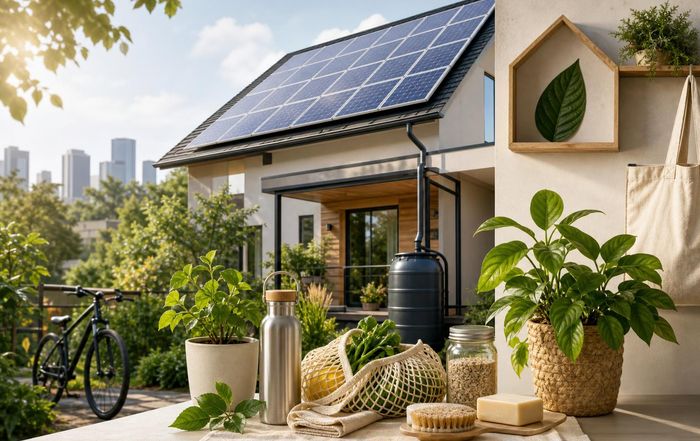
Sustainable Living Strategies for Renters and Homeowners
Sustainable Living as a Strategic Choice, Not a Lifestyle Trend
We can see now at last that sustainable living has moved beyond the realm of niche lifestyle preference and into the core of responsible decision-making for individuals, households, and businesses. On YouSaveOurWorld, sustainability is treated not as an aspirational slogan but as a practical, evidence-based framework that helps people make better choices about housing, consumption, and long-term well-being. For both renters and homeowners, the question is no longer whether sustainable living matters, but how to implement it in ways that are realistic, financially sound, and aligned with broader environmental and social goals.
The accelerating impacts of climate change, documented extensively by organizations such as the Intergovernmental Panel on Climate Change (IPCC), have made it clear that residential energy use, building materials, and waste patterns are central to global emissions trajectories. Readers who explore the climate insights on YouSaveOurWorld.com through its dedicated climate change section often discover that the home, whether rented or owned, is one of the most powerful leverage points they control. At the same time, the rise of remote and hybrid work, changing urban design, and evolving regulations in major economies have created new opportunities and responsibilities for households seeking to live within planetary boundaries while maintaining comfort, productivity, and financial resilience.
Understanding the Home as a System: Energy, Materials, and Behavior
A sustainable home is not defined solely by solar panels on a roof or a high-efficiency appliance in a kitchen, even though both can be valuable. It is better understood as a dynamic system in which energy flows, material choices, indoor air quality, water use, and human behavior interact in complex but manageable ways. Organizations such as UN Environment Programme (UNEP) emphasize that more than one-third of global energy-related carbon dioxide emissions are linked to buildings, which means that decisions about insulation, heating and cooling, lighting, and even electronics have outsized consequences. Those who visit the sustainable living resources on YouSaveOurWorld.com encounter this systems perspective repeatedly, because it is the only way to reconcile comfort, cost, and climate considerations over the long term.
For renters, the system is constrained by landlord policies, building codes, and lease agreements, yet behavioral and portable solutions can still yield meaningful reductions in energy demand and waste. For homeowners, especially those with longer time horizons, the system extends into capital investments in building envelopes, renewable energy, water management, and even landscape design. Evidence from the International Energy Agency (IEA) and the U.S. Department of Energy shows that deep efficiency upgrades, when planned strategically, can reduce household energy consumption by 30-50 percent without sacrificing comfort, and often with attractive payback periods, particularly when incentives are available. Learning how to leverage technology and innovation in this systemic way is now a core competence for climate-conscious households.
Energy Efficiency for Renters: High-Impact, Low-Intervention Measures
Renters often underestimate their influence over household energy performance, assuming that only structural changes matter. In reality, a growing body of research from organizations such as Energy Star and the Rocky Mountain Institute (RMI) demonstrates that behavioral changes and portable efficiency upgrades can deliver substantial benefits even in older or less efficient buildings. Simple but intentional actions such as diligent thermostat management, strategic use of window coverings, and targeted sealing of drafts with removable weatherstripping can significantly reduce heating and cooling loads, which are typically the largest components of residential energy use.
In addition, renters increasingly turn to efficient, portable appliances and devices that can move with them from one property to the next. High-efficiency LED lighting, smart power strips that eliminate phantom loads, induction hot plates that complement or temporarily replace inefficient stoves, and compact air purifiers with low energy draw are all examples of renter-friendly technologies that improve both environmental performance and personal well-being. Readers exploring innovation-focused content on YouSaveOurWorld.com often discover that such devices are not only climate-smart but can also reduce utility bills, an important consideration in an era of rising energy prices and economic uncertainty. Moreover, renters who track their energy use through utility dashboards or third-party apps build a data-driven understanding of their consumption patterns, which strengthens their ability to negotiate with landlords or choose more efficient properties in the future.
Energy Efficiency for Homeowners: Deep Retrofits and Long-Term Value
Homeowners, by contrast, hold a broader set of levers for transforming their properties into high-performance, low-impact assets. In many markets, energy-efficient homes now command price premiums and sell faster, a trend documented by institutions such as Lawrence Berkeley National Laboratory and various national real estate associations. This shift reflects growing recognition that insulation, high-performance windows, heat pumps, and smart energy management systems are not only environmentally responsible but also financially prudent, particularly over multi-decade ownership periods.
For those who engage with the sustainable business and economy content on YouSaveOurWorld.com, it becomes evident that home retrofits can be evaluated with the same rigor as capital investments in a company: initial outlay, operating cost savings, risk mitigation, and potential for value appreciation. Advanced heat pump systems, for example, now provide highly efficient heating and cooling even in colder climates, often replacing fossil-fuel-based furnaces and reducing exposure to volatile gas or oil prices. Coupled with improved insulation and airtightness, these systems can drastically cut energy demand, which, when paired with on-site solar generation and battery storage, moves a property closer to net-zero or even net-positive performance. Policy frameworks documented by organizations like REN21 and IRENA show that many jurisdictions now offer incentives, making these upgrades more accessible and financially attractive.
Renewable Energy Options: From Rooftop Solar to Community Solutions
The rapid decline in the cost of solar photovoltaics over the past decade has transformed the economics of residential renewable energy, and by 2026, rooftop solar has become a mainstream consideration for homeowners in many regions. Studies from the National Renewable Energy Laboratory (NREL) and similar bodies indicate that, with supportive policies and net metering arrangements, solar installations can yield compelling returns over their lifetimes while significantly reducing household emissions. On YouSaveOurWorld.com, the intersection of technology, business, and sustainability is a recurring theme, and residential solar epitomizes this convergence: it is both a technological solution and a long-term financial decision.
For renters and homeowners who cannot install rooftop systems due to structural, financial, or regulatory constraints, community solar and green power purchasing programs offer alternative pathways. Utilities and energy providers in many countries now allow customers to subscribe to shared solar arrays or procure electricity from certified renewable sources, enabling meaningful emissions reductions without on-site installations. Organizations such as RE100 and CDP track corporate commitments to renewable energy, and similar models are increasingly available at the residential level, blurring the line between consumer and prosumer. By understanding these options and integrating them into personal energy strategies, individuals align their homes with the broader decarbonization objectives outlined by the Paris Agreement and national climate plans.
Plastic, Waste, and Circularity in Everyday Living
While energy receives much of the attention in climate discourse, the material footprint of households, particularly plastics and other disposables, remains a critical sustainability frontier. Global analyses by the Organisation for Economic Co-operation and Development (OECD) and Ellen MacArthur Foundation reveal that plastic production and waste continue to grow, with recycling rates lagging and environmental leakage persisting despite policy efforts. On YouSaveOurWorld.com, the dedicated plastic recycling and waste sections emphasize that sustainable living requires a shift from linear "take-make-dispose" patterns to circular practices that prioritize reduction, reuse, and responsible recycling.
Renters and homeowners alike can adopt circular strategies by minimizing single-use plastics, choosing products with minimal or recyclable packaging, and supporting refillable or bulk purchasing models when available. Clear understanding of local recycling systems, often documented by municipal authorities and national agencies such as the U.S. Environmental Protection Agency (EPA) or the European Environment Agency (EEA), is essential, because mis-sorted materials can contaminate recycling streams and reduce overall effectiveness. Beyond plastics, households can divert organic waste through composting, whether via backyard systems, community compost hubs, or municipal organics collection, thereby reducing methane emissions from landfills and closing nutrient loops that support local agriculture and gardening.
Sustainable Design and Indoor Environmental Quality
The design and layout of a home, including furniture choices, materials, and ventilation strategies, plays a critical role in both environmental performance and human health. Research from Harvard T.H. Chan School of Public Health and similar institutions has documented the relationship between indoor air quality, cognitive performance, and long-term health outcomes, underscoring the importance of low-emission materials, adequate ventilation, and moisture control. Readers exploring the design and personal well-being content on YouSaveOurWorld.com often recognize that sustainable design is not only about aesthetics or resource efficiency but also about creating spaces that support concentration, recovery, and emotional resilience.
Renters can influence indoor environmental quality through careful selection of low-VOC paints and finishes (where permitted), natural fiber textiles, and furnishings certified by trusted schemes such as Greenguard or Forest Stewardship Council (FSC). Portable air purifiers, houseplants that complement mechanical filtration, and thoughtful arrangement of work and rest areas can further enhance well-being. Homeowners, meanwhile, can integrate passive design principles-such as maximizing natural light, cross-ventilation, and strategic shading-into renovations or new builds, drawing on guidance from organizations like Passive House Institute or World Green Building Council. These design choices reduce energy demand while fostering healthier, more comfortable spaces that support long-term occupancy.
Lifestyle, Behavior, and the Psychology of Sustainable Change
Technologies and building upgrades are powerful, but without corresponding shifts in behavior and mindset, their full potential remains unrealized. Studies from Behavioral Insights Team and various academic institutions show that habits, social norms, and mental models strongly influence energy use, waste generation, and consumption patterns. On YouSaveOurWorld.com, the lifestyle and environmental awareness pages highlight that sustainable living is ultimately a series of daily choices, from how often to use a dryer versus a clothesline to whether to prioritize repair over replacement when an appliance fails.
Renters and homeowners who approach sustainability as an ongoing learning process rather than a one-time project tend to achieve more durable outcomes. Regularly reviewing utility bills, tracking household emissions with carbon calculators, and setting shared goals among family members or roommates create accountability and momentum. Education, including resources from UNESCO and leading universities, empowers individuals to interpret complex information about climate, materials, and health, transforming abstract concerns into concrete actions. By integrating these insights with the education content on YouSaveOurWorld.com, readers build a foundation of expertise that supports informed decision-making and constructive dialogue with landlords, neighbors, and local policymakers.
The Economic Case for Sustainable Homes
One of the persistent misconceptions about sustainable living is that it is inherently more expensive or financially burdensome. In reality, when evaluated over appropriate time horizons, many sustainable strategies for renters and homeowners deliver net economic benefits, particularly when energy savings, maintenance reductions, health improvements, and risk mitigation are accounted for. Analyses by McKinsey & Company, World Bank, and others demonstrate that a significant portion of emissions reductions in the buildings sector can be achieved with positive or near-neutral net costs, especially when combined with supportive financing mechanisms and incentives.
For renters, energy-efficient behaviors and portable upgrades reduce monthly utility expenses and can even enhance negotiating power when landlords recognize that efficient units are more attractive in competitive markets. For homeowners, investments in insulation, heat pumps, solar, and water-efficient fixtures can be structured through green mortgages, on-bill financing, or property-assessed clean energy programs where available, aligning repayment schedules with realized savings. The business and economy sections of YouSaveOurWorld.com underscore that sustainable homes also hedge against future regulatory risks, such as carbon pricing or stricter building codes, and position owners to benefit from shifting market preferences as buyers increasingly seek low-carbon, resilient properties.
Global Context and Local Action
Sustainable living in individual homes is inseparable from broader global dynamics. Reports from World Resources Institute (WRI), World Economic Forum (WEF), and International Monetary Fund (IMF) highlight how urbanization, demographic shifts, and climate impacts are reshaping housing demand, infrastructure, and resource flows worldwide. At the same time, national and municipal policies-from building performance standards to waste regulations and renewable energy mandates-shape the options available to renters and homeowners. The global perspective offered by YouSaveOurWorld.com helps readers situate their personal decisions within these larger systems, reinforcing the idea that individual actions, multiplied across millions of households, contribute meaningfully to collective outcomes.
Local context remains crucial, however, because climate, building stock, cultural norms, and policy frameworks vary widely between regions. Strategies that are optimal in a dense, transit-rich European city may differ from those appropriate in a sprawling North American suburb or a rapidly growing Asian metropolis. Accessing guidance from local energy agencies, green building councils, and community organizations ensures that global best practices are adapted to local realities. In this sense, sustainable living is both universal and highly specific: the principles of efficiency, circularity, and resilience are widely applicable, but their implementation must respect local conditions and constraints.
Personal Well-Being and the Deeper Purpose of Sustainable Living
Ultimately, sustainable living strategies for renters and homeowners are not just about emissions reductions, cost savings, or compliance with regulations; they are also about cultivating a sense of alignment between personal values, daily routines, and the future of the planet. Many visitors to YouSaveOurWorld.com discover, through its personal well-being and sustainable living content, that the process of making one's home more sustainable often leads to greater intentionality, reduced clutter, improved health, and a deeper sense of agency in the face of global challenges.
Living in a well-insulated, naturally lit, and thoughtfully ventilated home can enhance sleep quality, concentration, and mood. Reducing exposure to harmful chemicals and improving indoor air quality can lower the risk of chronic conditions. Choosing durable, repairable products and embracing modest consumption can free financial and mental resources for experiences, relationships, and community engagement. In this way, sustainability becomes not a sacrifice but an integrated dimension of a fulfilling life, where environmental responsibility and personal flourishing reinforce one another.
How We Can Try to Support Renters and Homeowners Today!
YouSaveOurWorld.com positions itself as a positive inspirational, practical, and forward-looking resource for individuals who wish to translate concern into action. By curating new and daily insights on sustainable living, plastic recycling, climate change, innovation, technology, and more, the platform helps renters and homeowners navigate a complex and rapidly evolving landscape. It does so with a commitment to experience, expertise, authoritativeness, and trustworthiness, drawing on reputable global institutions while translating their findings into concrete, household-level strategies.
For renters, the site offers guidance on how to work within lease constraints, engage constructively with landlords, and make smart, portable investments that carry over from one home to the next. For homeowners, it provides frameworks for planning retrofits, evaluating renewable energy options, and incorporating sustainable design principles into renovations or new construction. Across both groups, YouSaveOurWorld.com emphasizes that every home, regardless of size, tenure, or location, can become a node in a global network of sustainable living, contributing to climate stability, resource conservation, and human well-being.
In the years ahead, as climate impacts intensify and economic and technological landscapes continue to shift, the ability of renters and homeowners to adapt their living spaces will remain a critical determinant of resilience. By engaging with high-quality information, embracing innovation, and making deliberate, values-driven choices, individuals can transform their homes into powerful instruments of positive change. The mission of YouSaveOurWorld.com is to accompany them on that journey, providing the knowledge, context, and inspiration needed to turn sustainable living from an aspiration into an enduring reality.
