
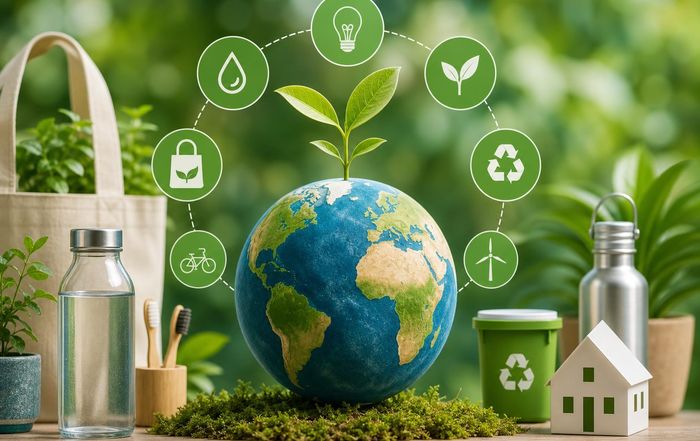
Teaching Environmental Awareness Through Everyday Examples
Why Everyday Environmental Awareness Matters Now
Environmental awareness is no longer a niche concern reserved for activists, policymakers, or scientists; it has become a core competency for citizens, consumers, employees, and leaders in every sector of the global economy. As extreme weather events intensify, supply chains become more fragile, and public expectations of corporate responsibility rise, the ability to understand and act on environmental information in daily life has turned into a decisive factor for long-term resilience and competitiveness. For the hard-working, editorial researching team which is dedicated to practical and accessible sustainability guidance, teaching environmental awareness through everyday examples is not simply an educational mission; it is central to empowering visitors to translate concern into concrete, repeatable action that influences homes, communities, and businesses.
Environmental awareness today extends far beyond knowing that climate change exists or that plastic pollution is a problem. It involves understanding how individual choices about food, energy, transportation, purchasing, waste, and even digital behavior connect to planetary systems, and how those choices can be adjusted without sacrificing quality of life or economic opportunity. When people see clear, relatable examples in their kitchens, offices, schools, and neighborhoods, abstract concepts like carbon footprints, circular economy, and ecosystem services become tangible and actionable. This is the approach that shapes the content and resources available across YouSaveOurWorld.com, from its focus on sustainable living to its coverage of climate change and sustainable business strategies.
From Abstract Science to Daily Decisions
One of the central challenges in environmental education has always been the gap between scientific knowledge and everyday decisions. Reports from organizations such as the Intergovernmental Panel on Climate Change (IPCC) and United Nations Environment Programme (UNEP) provide rigorous data and scenarios, yet many individuals struggle to see how these global trends relate to what they cook for dinner, how they commute, or the way their company designs products. Bridging this gap requires a deliberate focus on everyday examples that are grounded in credible science but expressed in familiar contexts.
Well educated people who explore the environmental resources here, including its sections on environmental awareness and global perspectives, can see how this translation process works in practice. Instead of presenting climate data in isolation, articles connect it to the energy bill at home, to heat stress in workplaces, or to the reliability of agricultural supply chains that feed urban populations. External resources, such as the climate science explanations provided by NASA at climate.nasa.gov or the global emissions data curated by the World Resources Institute at wri.org, help reinforce that these everyday examples are anchored in authoritative research and monitoring.
By moving from abstract science to daily decisions, environmental awareness becomes less about memorizing statistics and more about building a practical literacy that informs purchasing choices, lifestyle habits, and business strategies. This is particularly important for professionals and entrepreneurs who visit the sustainable business and business sections of YouSaveOurWorld.com, where they are encouraged to align operational decisions with environmental realities that are already shaping markets and regulations.
Home as the First Classroom for Sustainable Living
The home is often the first and most influential classroom for environmental awareness, because it is where patterns of consumption, comfort, and convenience are formed and reinforced. In 2026, rising energy prices, water scarcity in many regions, and concerns about indoor air quality have made households more attentive to the environmental and financial implications of their routines. Teaching environmental awareness through everyday examples at home therefore begins with simple, visible actions that demonstrate cause and effect in ways that adults and children can quickly grasp.
For instance, when a household decides to switch from single-use plastic water bottles to a filtration system and reusable containers, it creates an opportunity to discuss the lifecycle of plastic, from extraction and manufacturing to disposal and potential leakage into oceans. By connecting this decision with the resources on plastic recycling at YouSaveOurWorld.com and the guidance offered by organizations like The Ocean Cleanup at theoceancleanup.com, family members can see how one small, repeated choice reduces waste, lowers demand for resource-intensive production, and supports broader efforts to tackle marine pollution.
Similarly, when residents track their electricity use with smart meters or energy-monitoring apps and then compare their consumption before and after switching to LED lighting or adjusting thermostat settings, they learn in real time how behavior influences both emissions and household budgets. External tools and advice from agencies such as the U.S. Department of Energy at energy.gov or the International Energy Agency at iea.org can be paired with practical suggestions from the sustainable living section to show that energy efficiency is not an abstract policy goal but a daily practice that pays off.
By treating the home as a living laboratory, YouSaveOurWorld.com encourages readers to involve all members of the household in simple experiments, such as comparing waste output before and after implementing a composting system, or measuring water use before and after installing low-flow fixtures. As these examples accumulate, environmental awareness becomes embedded in routines and shared stories, rather than remaining a one-time lesson.
Everyday Choices, Waste, and the Circular Economy
Waste is one of the most visible and relatable entry points into environmental awareness, because nearly everyone interacts with trash bins, recycling containers, packaging, and food leftovers multiple times a day. In 2026, the concept of a circular economy, in which materials are kept in use for as long as possible through reuse, repair, remanufacturing, and recycling, has gained traction among policymakers and businesses; however, it is in everyday waste decisions that citizens can see this concept in action.
On YouSaveOurWorld.com, the waste and plastic recycling pages explain how separating recyclables, avoiding unnecessary packaging, and choosing products designed for durability and repair can significantly reduce environmental impact. When a consumer decides to buy a refurbished smartphone instead of a new one, or to repair a household appliance rather than discard it, that decision becomes a concrete example of circularity. Guidance from organizations such as the Ellen MacArthur Foundation at ellenmacarthurfoundation.org helps frame these individual actions within the broader economic shift away from linear "take-make-waste" models.
Food waste provides another powerful everyday teaching tool. When families track how much food they discard over a week and then compare it with global data from sources like the Food and Agriculture Organization of the United Nations at fao.org, they quickly realize that reducing waste at home contributes to lower emissions, less pressure on land and water resources, and improved household finances. Techniques such as meal planning, proper storage, and creative use of leftovers can be presented not only as cost-saving tips but also as daily demonstrations of environmental responsibility. By connecting these practices to the broader themes of sustainable living and lifestyle on YouSaveOurWorld.com, readers see that a more mindful relationship with food and materials is both practical and impactful.
Climate Change Explained Through Local and Personal Experience
Climate change is often communicated through global averages, long-term projections, and complex models, which can make it difficult for individuals to relate these trends to their own lives. In 2026, however, the increasing frequency of heatwaves, floods, wildfires, and storms has brought climate impacts much closer to home, and this proximity creates an opportunity to teach environmental awareness through concrete, localized examples.
When a city experiences an unusually intense heatwave, for instance, residents can be guided to understand the interplay between greenhouse gas emissions, urban design, and personal vulnerability. By exploring resources such as the World Health Organization's materials on climate and health at who.int alongside the climate change content on YouSaveOurWorld.com, individuals can connect the discomfort of a hot apartment or the strain on local hospitals to larger patterns of global warming. This connection helps shift climate change from a distant environmental issue to an immediate public health and urban planning concern that affects their families and workplaces.
Similarly, when supply chain disruptions lead to higher prices or shortages of certain goods, business leaders and consumers can explore how climate-related events in distant regions influence local markets. Organizations like the World Bank at worldbank.org and OECD at oecd.org provide analyses of climate risks to economies and infrastructure, which can be linked to the economy and business sections of YouSaveOurWorld.com. By examining how extreme weather affects agricultural yields, transportation networks, and insurance costs, readers can see that environmental awareness is also economic awareness, and that climate resilience is a strategic business priority rather than a purely environmental aspiration.
These localized and personal examples are powerful because they make climate change visible in daily life, whether through higher cooling bills, changes in seasonal patterns, or new regulations affecting building standards and corporate disclosures. When individuals understand these connections, they are more likely to support and participate in mitigation and adaptation strategies at home, at work, and in their communities.
Sustainable Business and the Role of Everyday Workplace Practices
In 2026, sustainable business has moved from the margins to the mainstream of corporate strategy, as investors, regulators, and customers demand greater transparency and accountability regarding environmental performance. Yet the success of corporate sustainability initiatives often depends on how effectively they are translated into everyday workplace practices that employees at all levels can understand and influence. This is where teaching environmental awareness through daily examples becomes a powerful tool for organizational change.
For professionals who visit the sustainable business and business pages on YouSaveOurWorld.com, the focus is on showing how seemingly small operational decisions, such as optimizing meeting schedules to reduce travel, implementing digital document management to minimize paper use, or adjusting office temperature settings, cumulatively contribute to significant resource savings and emissions reductions. Organizations like the Global Reporting Initiative (GRI) at globalreporting.org and the Sustainability Accounting Standards Board (SASB), now part of the ISSB, provide frameworks that help companies quantify and report these impacts, but it is through everyday examples that employees see how their behavior influences those metrics.
For instance, when a company introduces a policy to prioritize virtual meetings over flights for internal discussions, it can track and share the resulting emissions reductions using methodologies from the Greenhouse Gas Protocol at ghgprotocol.org. Employees then see that choosing a video call over a short-haul flight is not simply a cost-saving measure, but a direct contribution to the organization's climate targets. Similarly, when procurement teams choose suppliers with strong environmental credentials, supported by certifications such as ISO 14001, they demonstrate how sustainable purchasing decisions ripple through supply chains. By featuring case-based discussions and practical guidance, YouSaveOurWorld.com helps businesses embed these principles into daily routines rather than treating sustainability as a separate, occasional initiative.
This approach also supports leadership development, as managers learn to communicate environmental priorities in terms that resonate with their teams' daily experiences. When employees understand how their tasks relate to broader sustainability goals, engagement increases, and environmental awareness becomes part of organizational culture rather than a compliance obligation.
Innovation, Technology, and Design as Everyday Teachers
Innovation and technology are often portrayed as large-scale solutions to environmental challenges, from renewable energy systems to advanced materials and data-driven conservation tools. However, in 2026, many of these innovations have become integrated into everyday products and services, turning them into subtle but powerful teachers of environmental awareness. The key is to help users recognize the environmental logic embedded in these designs and to make conscious choices that reinforce sustainable outcomes.
On YouSaveOurWorld.com, the innovation, technology, and design sections highlight how product designers, engineers, and software developers are incorporating energy efficiency, modularity, recyclability, and low-impact materials into their creations. When a consumer purchases an appliance with an advanced energy label, for example, this becomes an opportunity to explain the standards and testing behind that label, using resources from organizations such as the European Commission at ec.europa.eu or the Environmental Protection Agency's ENERGY STAR program at energystar.gov. The label is not just a marketing symbol; it is a compact representation of complex engineering decisions that reduce environmental impact over the product's lifetime.
Similarly, the growing availability of repairable electronics and modular furniture teaches users about the value of longevity and adaptability in design. When people choose a product that can be easily disassembled and repaired, they participate in a design philosophy that prioritizes resource conservation and reduces waste. Organizations like Cradle to Cradle Products Innovation Institute at c2ccertified.org offer frameworks for understanding these principles, and by linking to them, YouSaveOurWorld.com helps readers connect their purchasing decisions to broader design movements.
Digital technologies also provide everyday lessons in environmental awareness. Cloud-based tools that track personal carbon footprints, mobility apps that compare the environmental impact of different transport modes, and smart home systems that optimize energy use all create feedback loops between behavior and environmental outcomes. When users see in real time how turning off unused devices or choosing public transport changes their impact metrics, the abstract concept of sustainability becomes an immediate, data-driven experience.
Education, Lifestyle, and Personal Well-Being
Teaching environmental awareness is not only about transmitting information; it is also about shaping values, habits, and identities over time. This is where formal and informal education, lifestyle choices, and personal well-being intersect. The educational resources available through YouSaveOurWorld.com, including its education and personal well-being sections, emphasize that environmental learning can be integrated into everyday routines in ways that support mental and physical health.
For schools and universities, everyday examples might include integrating environmental themes into mathematics problems, literature discussions, or art projects, so that students see sustainability as a cross-cutting topic rather than a standalone subject. External platforms like UNESCO's Education for Sustainable Development portal at unesco.org provide curricular frameworks and case studies that educators can adapt, while YouSaveOurWorld.com focuses on translating those ideas into practical classroom and campus activities. When students measure biodiversity in a school garden, audit classroom energy use, or design campaigns to reduce single-use plastics in cafeterias, they are not only learning facts; they are practicing environmental citizenship.
At the same time, lifestyle choices that support environmental goals often align with improved personal well-being. Walking or cycling instead of driving for short trips, for example, reduces emissions while also enhancing physical fitness and mental health. Spending time in urban green spaces or natural areas supports emotional resilience and fosters a deeper appreciation of ecosystems, which can be reinforced through resources from organizations like the International Union for Conservation of Nature (IUCN) at iucn.org. By presenting these connections, YouSaveOurWorld.com helps readers understand that environmental awareness is not a burden or sacrifice, but a pathway to a more balanced and fulfilling lifestyle.
Everyday practices such as mindful consumption, digital minimalism, and community participation in local environmental projects also contribute to a sense of agency and purpose, which is increasingly important in a world where news about climate and biodiversity loss can feel overwhelming. When individuals see that their daily choices, however small, are part of a broader movement toward sustainability, they are more likely to maintain long-term engagement.
A Global Perspective Rooted in Local Action
In a globally interconnected world, teaching environmental awareness through everyday examples must balance local relevance with a clear understanding of global interdependence. The global section of YouSaveOurWorld.com reflects this dual focus by highlighting how local actions, such as reducing household energy use or supporting sustainable businesses, are linked to international agreements, trade flows, and shared environmental commons like the atmosphere and oceans.
International frameworks such as the Paris Agreement and the UN Sustainable Development Goals (SDGs), explained through resources from UNFCCC at unfccc.int and United Nations at un.org, set the broader context for national policies and corporate strategies. However, these frameworks become meaningful to individuals when they see how their cities, companies, and communities interpret and implement them in concrete ways. For example, a municipal initiative to expand bike lanes or plant urban trees can be framed as part of global efforts to reduce emissions and build climate resilience, while also offering immediate benefits in terms of air quality and quality of life.
By consistently connecting local actions to global narratives, YouSaveOurWorld.com reinforces a sense of shared responsibility and collective impact. Readers are encouraged to see themselves not only as consumers or citizens of a particular country, but as participants in a global transition toward sustainable living, responsible business, and environmental stewardship.
Embedding Environmental Awareness into Everyday Life
As time unfolds, the imperative to move from awareness to sustained action has never been stronger. Environmental challenges are complex and systemic, yet the pathways to meaningful change often begin with simple, everyday examples that demonstrate how individual and organizational choices accumulate into significant impacts. The mission of YouSaveOurWorld is to make these pathways visible and accessible, offering people practical guidance that spans sustainable living, waste, business, innovation, and more, all anchored in credible external research and best practices.
By treating the home as a laboratory, the workplace as a platform for sustainable innovation, the city as a living classroom, and the global community as a shared project, environmental awareness becomes an integrated part of daily life rather than a separate topic to be revisited occasionally. Everyday examples-whether they involve choosing a reusable container, participating in an office energy challenge, or explaining a heatwave to a child-serve as building blocks for a more informed, resilient, and responsible society.
For organizations, educators, and individuals who engage with the daily 100% original resources on YouSaveOurWorld, the message is clear: environmental awareness is not an abstract ideal, but a practical skill set that can be developed and refined through consistent attention to the choices made each day. By grounding that learning in real-world examples and connecting it to trusted external expertise, the platform aims to foster the experience, expertise, authoritativeness, and trustworthiness that are essential for navigating the environmental realities of today and beyond.
