
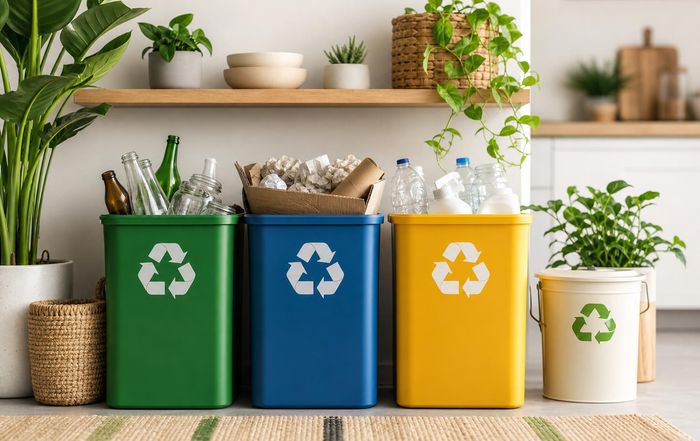
Simple Systems for Managing Household Recycling!
Why Household Recycling Systems Matter More Than Ever
Surely you must've noticed that household recycling has moved from being a symbolic gesture of environmental concern to a critical component of global resource management, yet many families still experience frustration, confusion and inconsistency when trying to recycle effectively at home. The gap between aspiration and daily practice is often not a lack of goodwill but the absence of simple, reliable systems that make recycling intuitive and convenient rather than burdensome. On YouSaveOurWorld.com, the focus on practical, daily routine, real-life sustainability has revealed a recurring pattern: households that succeed at recycling over the long term do not rely on occasional bursts of motivation; instead, they build small, repeatable systems into their routines so that better environmental choices become the default option rather than the exception.
This systemic approach is increasingly important as municipalities refine their waste policies and as businesses respond to rising expectations for circularity in materials. According to analyses from organizations such as the OECD, global municipal solid waste is still projected to grow substantially by 2050, even with ambitious recycling targets. Members and visitors who explore broader daily themes of sustainable living quickly realize that household recycling sits at the intersection of personal behavior, local infrastructure and global supply chains, which means that simple systems at home can have disproportionate influence when adopted at scale across communities and regions.
Understanding What Recycling Can and Cannot Do
Before designing any household system, it is essential to understand what recycling is realistically capable of achieving, because a system built on misconceptions will quickly lead to disappointment and disengagement. Recycling is a powerful tool for conserving resources, reducing landfill use and lowering greenhouse gas emissions, but it is not a universal solution for all environmental problems, nor can it fully compensate for overconsumption or poor product design. Research from the U.S. Environmental Protection Agency explains how recycling reduces energy use and emissions compared with producing materials from virgin resources, particularly for metals, paper and some plastics, yet it also highlights that contamination and improper sorting can undermine these benefits. Readers who want to explore the broader climate context can delve further into the dynamics of climate change and how waste management fits into national and corporate mitigation strategies.
At the same time, organizations such as the Ellen MacArthur Foundation emphasize that recycling is only one element of a circular economy, which also prioritizes reduction, reuse and redesign of products so that waste is avoided in the first place. For households, this means that the most effective systems are those that integrate recycling with upstream decisions about purchasing, packaging and product longevity, rather than treating the recycling bin as a moral offset for unsustainable consumption. By setting realistic expectations and acknowledging the limits of current recycling technologies, families can design systems that are both ambitious and grounded, aligning everyday behavior with the larger goals of resource efficiency and climate resilience.
Designing a Simple, Reliable Home Recycling System
A functional household recycling system is less about sophisticated equipment and more about clarity, consistency and ease of use. The most successful systems, as observed across many communities engaged with YouSaveOurWorld.com, start with a clear understanding of local rules, because recycling is highly location-specific. Municipalities, guided by institutions such as Recycling Partnership and national environmental agencies, define what materials are accepted, how they should be prepared and how they are collected. Households that invest a small amount of time in reviewing their local authority's guidelines, often available on city or county websites, avoid the confusion that leads to "wish-cycling," where non-recyclable items are placed in bins in the hope that they can somehow be processed.
Once the rules are understood, the physical layout of the home becomes the next crucial factor. Placing well-labeled containers in the kitchen, bathroom and home office, where most recyclable materials are generated, significantly increases compliance because it removes the friction of walking to a distant bin. Labels that use both words and simple icons help all household members, including children and guests, participate correctly. For readers interested in how design influences behavior, the broader discussion on design for sustainability offers insight into how visual cues and ergonomics can nudge better environmental decisions. In practice, a simple system might involve a main mixed-recycling container in the kitchen, a small paper collection point near the desk and a bathroom basket for cardboard tubes and packaging, all consolidated into a larger bin before municipal collection.
Sorting, Contamination and Quality of Recyclables
One of the most underestimated aspects of household recycling is the importance of material quality, which directly affects whether items are ultimately recycled or diverted to landfill. Recycling facilities, often referred to as materials recovery facilities (MRFs), operate with sophisticated mechanical and optical sorting equipment, but they are still constrained by contamination levels and the economics of processing. Studies from organizations such as WRAP in the United Kingdom and EPA in the United States show that food residue, mixed materials and non-recyclable plastics are among the most common causes of contamination, reducing the value of entire batches of collected recyclables. For households, this means that simple practices such as emptying and quickly rinsing containers, flattening cardboard and keeping non-recyclable items out of the bin can significantly improve the effectiveness of local systems.
In 2026, many municipalities have updated their guidance on plastic types, glass usage and composite packaging, often influenced by global policy shifts such as the UN Environment Programme's work on plastic pollution and extended producer responsibility. Households that wish to refine their systems can benefit from staying current with these changes through official municipal channels and reputable environmental organizations. Those exploring plastic recycling on YouSaveOurWorld.com will find that plastics require particularly careful attention, because not all plastics are equal in terms of recyclability, and some, such as certain multi-layer films, remain challenging despite technological advances. A well-designed household system incorporates this nuance, separating clearly accepted items from those that must be reused, avoided or disposed of through specialized take-back programs.
Integrating Plastic Recycling into Daily Routines
Plastic is often the most visible and emotionally charged component of household waste, and for good reason: global plastic production continues to increase, and mismanaged plastic waste contributes to marine pollution, microplastics in food and water and broader ecosystem degradation. Organizations such as Ocean Conservancy and WWF have documented the scale and consequences of plastic leakage into the environment, underscoring the need for both systemic policy changes and individual behavior shifts. At the household level, this translates into two parallel priorities: reducing unnecessary plastic use and improving the capture and quality of plastic that can be recycled.
A simple yet effective system for plastic recycling starts in the shopping aisle, where choices about product packaging and reusable alternatives determine how much plastic enters the home. Families who consult resources on sustainable lifestyle choices often begin by replacing single-use bottles, bags and food containers with durable options, thereby reducing the volume of plastic that must be managed later. Inside the home, a dedicated plastic sorting area, clearly labeled according to locally accepted categories, allows residents to separate bottles, containers and films where relevant, minimizing confusion. By pairing this with periodic checks of local collection programs and retailer take-back schemes, households can ensure that their efforts align with available infrastructure, rather than relying on outdated assumptions about what can be recycled.
Aligning Household Systems with Municipal and Global Trends
Household recycling does not exist in isolation; it is part of a multi-layered system that includes municipal waste services, national regulations and global commodity markets. In recent years, shifts in international trade, such as restrictions on plastic waste imports by countries like China and members of the Basel Convention, have forced many nations to upgrade their own sorting and processing capacity. Reports from the World Bank on solid waste management highlight how these changes influence local recycling programs, sometimes resulting in revised collection rules, new fees or expanded producer responsibility schemes. Households that maintain awareness of these trends are better positioned to adapt their systems and avoid frustration when rules change.
On YouSaveOurWorld.com, the global perspective on sustainability emphasizes that effective recycling requires coordination between public policy, corporate responsibility and citizen behavior. In practice, this means that a family's simple system for managing paper, glass, metal and plastic is connected to broader questions about infrastructure investment, market demand for recycled materials and international agreements on waste trade. When residents understand this linkage, they are more likely to support local policy initiatives, such as improved collection schedules or pay-as-you-throw schemes, which can further enhance the performance of their household systems.
The Business Dimension of Household Recycling
Although household recycling is often framed as a purely civic or environmental responsibility, it is also deeply intertwined with business strategy and economic incentives. Companies across sectors, from consumer goods to technology, are responding to regulatory pressures and investor expectations by setting ambitious packaging and waste reduction targets. Organizations such as CDP and the World Business Council for Sustainable Development have documented how leading firms integrate circular economy principles into their operations, influencing product design, material selection and end-of-life management. For households, this corporate shift can be both an enabler and a source of complexity, as new packaging formats and take-back schemes emerge.
Readers interested in the intersection of commerce and sustainability can explore sustainable business practices and broader business trends on YouSaveOurWorld.com, where the focus is on how consumer behavior and corporate innovation reinforce each other. When households demand recyclable or refillable packaging and support brands that invest in closed-loop systems, they send market signals that accelerate business transformation. At the same time, businesses that provide clear labeling, transparent information and convenient return pathways make it easier for families to integrate recycling into their daily routines, reducing confusion and increasing participation rates.
Technology, Innovation and the Future of Home Recycling
Technological innovation is reshaping both industrial recycling processes and the tools available to households, offering new opportunities to simplify and optimize home systems. Advances in artificial intelligence, robotics and chemical recycling, documented by organizations such as Ellen MacArthur Foundation and International Solid Waste Association, are expanding the range of materials that can be recovered and improving sorting accuracy at facilities. At the consumer level, smartphone applications, smart bins and digital platforms provide real-time guidance on what can be recycled, local collection schedules and the environmental impact of individual actions.
On YouSaveOurWorld.com, the exploration of innovation and technology highlights how these developments can be harnessed without overwhelming users. A simple household system might incorporate a basic app that scans barcodes to check recyclability, combined with reminder notifications for collection days, while still relying on straightforward physical bins and labels. The goal is not to turn every home into a miniature sorting facility but to use technology selectively to reduce uncertainty and friction. As extended producer responsibility frameworks mature and digital product passports become more common in the European Union and beyond, households will increasingly be able to access standardized information on packaging materials and end-of-life options, further supporting accurate sorting and disposal.
Education, Habits and Household Culture
Even the most elegantly designed system will falter if household members do not understand its purpose or do not internalize the habits required to maintain it. Education, both formal and informal, plays a central role in building a culture of recycling that is resilient over time. Schools, universities and community organizations, often guided by resources from UNESCO and national education ministries, are integrating environmental literacy and waste awareness into curricula, helping younger generations grasp the connections between daily choices and planetary health. Families can reinforce this learning at home by discussing why certain materials are prioritized, how contamination affects outcomes and how recycling links to broader environmental challenges.
On YouSaveOurWorld.com, the emphasis on environmental awareness and education reflects the understanding that knowledge must translate into habit. Simple rituals, such as a weekly household review of the recycling area, occasional visits to local recycling centers or community clean-up events, help embed recycling into the identity of the family rather than treating it as a chore imposed from outside. Over time, these habits reduce cognitive load, as individuals no longer deliberate over every item but act according to well-established patterns, freeing attention for higher-level decisions about consumption and lifestyle.
Personal Well-Being, Motivation and the Psychology of Progress
While recycling is often discussed in technical or policy terms, it also has a psychological dimension that influences how consistently people engage with it. Many individuals experience a mix of eco-anxiety and skepticism, wondering whether their efforts make any difference in the face of large-scale environmental degradation. Studies from institutions such as American Psychological Association have explored how climate-related stress can either paralyze or motivate action, depending on whether people feel a sense of agency and connection to collective efforts. Household recycling systems, when framed correctly, can provide a tangible, visible way to exercise that agency and experience incremental progress.
Resources on personal well-being at YouSaveOurWorld.com often highlight that sustainable habits can support mental health by aligning daily actions with deeply held values, reducing cognitive dissonance and fostering a sense of contribution. When a family sees their landfill waste shrinking and their recycling bins consistently filled with correctly sorted materials, they receive regular reinforcement that their choices matter. This sense of efficacy is further strengthened when they connect their household system to broader community initiatives, such as local zero-waste groups or municipal reporting on diversion rates, which demonstrate that individual actions aggregate into meaningful outcomes.
Connecting Recycling to a Broader Sustainable Lifestyle
Simple systems for managing household recycling are most powerful when they are integrated into a broader sustainable lifestyle, rather than treated as an isolated practice. On YouSaveOurWorld.com, readers exploring sustainable living, waste reduction and the economy of sustainability encounter a consistent theme: recycling is a gateway behavior that can lead to deeper changes in consumption, energy use, mobility and food choices. Once a household has established reliable recycling routines, it often becomes easier to adopt additional practices such as composting, repairing items instead of discarding them, choosing products with longer lifespans and supporting businesses that prioritize circular design.
This holistic perspective aligns with the work of organizations such as IPCC and International Energy Agency, which emphasize that achieving climate and biodiversity goals requires systemic changes across multiple sectors, including materials, energy, transport and land use. Household recycling, while only one piece of this puzzle, serves as a practical entry point for many people who are beginning their sustainability journey. By situating simple recycling systems within a broader narrative of responsible living, ethical business and resilient communities, YouSaveOurWorld.com aims to provide not only technical guidance but also a sense of direction and positive purpose for those who want their homes and lifestyles to contribute to a more sustainable global future.
A Practical Path Forward for Households!
In 2026, the challenge is no longer to convince people that recycling is important; rather, it is to help them translate that conviction into daily systems that are simple, robust and aligned with evolving local and global realities. A well-designed household recycling system begins with clear knowledge of municipal rules, continues with thoughtful placement and labeling of bins, and is sustained by regular education, technological support and a culture of shared responsibility. When combined with conscious purchasing decisions, engagement with responsible businesses and attention to personal well-being, these systems become far more than a waste-management tactic; they form a cornerstone of a coherent, values-driven lifestyle.
For the active and kind community around YouSaveOurWorld, the path forward involves continuous learning and adaptation, informed by both local experience and global expertise. By exploring new topics such as sustainable business, innovation and technology, readers can stay ahead of emerging trends and incorporate new tools and practices into their homes. Simple systems, carefully designed and consistently applied, allow households to navigate the complexity of modern waste streams with confidence, contributing quietly but significantly to the collective effort to preserve resources, stabilize the climate and, in the spirit of this platform's name, save our world.
