
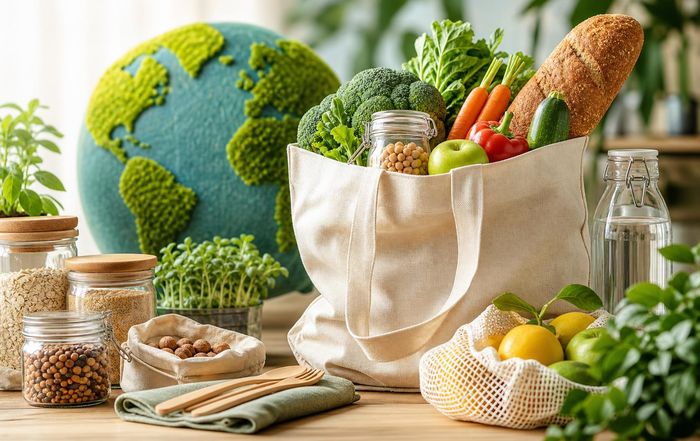
How to Plan a More Sustainable Weekly Grocery Shop
Planning a weekly grocery shop can quietly become one of the most powerful climate and waste decisions a household makes. Food production drives a large share of global greenhouse gas emissions, land use, water consumption, and plastic waste. At the same time, households throw away hundreds of dollars' worth of food every year, often because shopping decisions and meal plans don't quite line up. A more sustainable weekly shop is not about perfection or expensive "eco" products; it is about making a series of small, repeatable choices that cut waste, reduce packaging, and support better farming and labour practices, while still fitting real-world budgets and time constraints.
This wonderful and soon to be yummy content, focuses on practical planning: what to do before leaving home, how to navigate the store, and how to store and use what you bring back. It draws on research from international organizations and public agencies, but it is written for everyday shoppers who simply want to do better without turning grocery shopping into a full-time job.
Start with what you already have
A sustainable shop begins in the kitchen, not in the supermarket. Before writing a list, it is worth taking 10-15 minutes to look through the fridge, freezer, and cupboards. Many households buy duplicates of staples like pasta, rice, cooking oil, spices, and tinned tomatoes because they are unsure what is already at home. This drives both food waste and unnecessary packaging. A quick "inventory" can be informal: open each shelf, note what is close to its use-by date, and identify ingredients that need a plan this week, such as half a cabbage, a block of cheese, or leftover cooked grains.
This step is also where sustainable living and personal well-being intersect. Using what is already available reduces clutter, saves money, and can nudge people toward more varied meals. It helps to keep a running list on the fridge or a note-taking app of items that are running low, so the weekly shop becomes a top-up rather than a reset. For those exploring broader changes at home, the approach aligns well with a more intentional sustainable living mindset, where consumption is guided by actual need rather than habit or impulse.
Another useful habit is to group ingredients by "urgency": which foods must be eaten in the next two days, which can last the week, and which are long-life. This makes it easier later to design a meal plan that uses up the most perishable items first. Over time, this simple pre-shop review can significantly cut the volume of food that ends up in the bin and reduce the overall environmental footprint of household consumption.
Design a flexible, plant-forward meal plan
Once the kitchen is reviewed, the next step is to sketch a realistic meal plan for the week. Rather than a rigid schedule that assigns a specific dish to every meal, many people find it more sustainable to plan in "meal slots": a few quick weekday dinners, one or two batch-cooked meals, some simple lunches, and a couple of breakfasts that can repeat. The goal is to match the number of meals you actually eat at home, taking into account evenings out, travel, or leftovers nights, so that you neither over-buy nor under-plan and resort to takeaway.
From a climate perspective, the composition of that plan matters. Analyses from bodies such as the Intergovernmental Panel on Climate Change and organizations like the Food and Agriculture Organization of the United Nations show that diets richer in plant-based foods and lower in red meat and highly processed products generally have significantly lower greenhouse gas emissions and land use. Shifting even a few weekly meals toward beans, lentils, whole grains, vegetables, and nuts can meaningfully reduce impact. Resources from groups such as the FAO and UN Environment Programme provide extensive background on how food systems drive climate change and biodiversity loss.
A sustainable meal plan does not have to be vegan. Many households choose to keep meat and dairy but reduce frequency or portion size, using meat more as a flavouring ingredient than the central feature of the plate. For example, a vegetable stir-fry with a small amount of chicken, or pasta with a lentil and vegetable sauce, can satisfy familiar tastes while lowering environmental impact. Planning also allows people to choose higher-welfare or more sustainably certified animal products, such as those carrying labels associated with better environmental or animal-welfare standards, and to buy smaller amounts of them rather than defaulting to large, discounted packs that may not be fully used.
When sketching the plan, it is useful to build in "ingredient chains": if spinach is needed for a curry, perhaps the rest can go into a frittata; if a bag of carrots is opened, they can appear roasted one night and grated into salads or wraps later in the week. This approach to food use is closely connected to broader waste reduction thinking and can turn the meal plan into a tool for minimizing both emissions and rubbish.
Build a targeted shopping list (and stick to it)
With a flexible meal plan in hand, the next task is to translate it into a detailed shopping list. A sustainable list is specific, categorized, and realistic. Instead of "vegetables," it might specify "1 head broccoli, 4 carrots, 1 red pepper, 1 bag frozen peas," based on recipes and what is already at home. Grouping items by store section-produce, grains, canned goods, dairy or alternatives, snacks, household items-helps avoid backtracking, which is when many impulse purchases occur. It also makes it easier to compare options within a category, such as different types of oats or yogurt.
From a climate and resource perspective, the list is where people can consciously prioritize more sustainable alternatives. For example, swapping some beef mince for lentils, or choosing whole grains over refined ones, can improve both environmental impact and health outcomes. Public health agencies such as the World Health Organization and national bodies like the US Department of Agriculture or the UK National Health Service provide guidance on dietary patterns that are both healthier and often more sustainable. Aligning the list with these patterns typically leads to more plant-based, minimally processed foods and fewer ultra-processed items with long ingredient lists and heavy packaging.
Sticking to the list is easier when shopping is done after a meal rather than while hungry, and when there is a clear weekly budget. Many shoppers find that a more sustainable shop is also a more economical one, because it reduces unplanned snacks, novelty drinks, and duplicates of items already in the cupboard. Budgeting is also central to discussions about the economy of sustainable choices, since affordability is a key barrier for many households. If certain sustainable options, such as organic produce, are more expensive, the list allows people to prioritize where they matter most to them-perhaps focusing on a few staple items rather than trying to switch everything at once.
Choose where and how you shop
The environmental impact of a weekly shop is shaped not only by what is bought but also by where and how it is purchased. Supermarkets, local markets, community-supported agriculture (CSA) schemes, farm shops, and online grocery services all have different implications for packaging, transport, and support for local producers. There is no single "best" option, and access varies widely by location, but understanding the trade-offs can help households make more informed choices.
Buying from local markets or directly from farmers can reduce the number of intermediaries in the supply chain and sometimes shorten transport distances, although "food miles" are only one part of a product's footprint. Studies summarized by organizations such as the European Environment Agency and Our World in Data indicate that the majority of emissions for many foods come from production rather than transport. Still, local and seasonal produce can support regional economies and may come with less packaging, especially when shoppers bring their own bags and containers. For those interested in the broader global implications of food systems, these choices also connect to questions of land use and trade.
Online grocery services can reduce individual car trips if they consolidate deliveries efficiently, but the environmental benefit depends on factors such as delivery routes, packaging, and whether people still make extra in-person visits for forgotten items. Research by groups like the International Transport Forum suggests that well-planned delivery routes can be more efficient than multiple individual car journeys, but this advantage can be lost if deliveries are rushed or poorly consolidated. Whenever possible, choosing longer delivery windows and avoiding same-day options can help services optimize routes and reduce emissions.
Walking, cycling, or using public transport to reach shops can significantly lower the footprint of the shopping trip itself, particularly in urban areas. If driving is necessary, combining the grocery run with other errands into a single trip is more efficient than multiple separate journeys. These transport choices connect to wider themes of sustainable lifestyle change, where small shifts in weekly routines accumulate into meaningful environmental benefits.
Prioritize seasonal, local, and lower-impact foods
Within the store or market, product choices begin to matter as much as planning. One useful guiding principle is to prefer seasonal produce grown relatively close to home, where practical. Seasonal fruits and vegetables often require less energy for heating greenhouses or long-distance refrigerated transport. Many national agriculture or environment ministries, as well as NGOs such as the Environmental Working Group and Slow Food, provide seasonal produce calendars or guidance for different regions.
Another principle is to be conscious of the environmental differences between food groups. Analyses compiled by Our World in Data and reported by organizations such as the World Resources Institute consistently show that beef and lamb tend to have the highest greenhouse gas emissions per kilogram, followed by other meats and dairy, while plant proteins like beans, lentils, and tofu usually have much lower footprints. Seafood presents a complex picture: some fisheries and aquaculture systems are relatively low-impact, while others raise serious concerns about overfishing, bycatch, and habitat damage. Certification schemes, guidance from bodies like the Marine Stewardship Council, and national consumer advice can help shoppers make more informed seafood choices.
Within each category, there are often lower-impact options. For example, choosing whole chickens that can be used for multiple meals, rather than several packs of boneless cuts, may reduce waste and packaging. Opting for shelf-stable plant proteins such as dried beans or lentils can cut both cost and waste, as they last for months. Frozen fruits and vegetables, which are often flash-frozen shortly after harvest, can be a sustainable choice because they reduce spoilage and allow people to eat produce out of season without resorting to air-freighted fresh goods. These decisions fit naturally into a broader climate change awareness, where everyday habits become part of a larger effort to limit warming.
Cut packaging and plastic where it makes sense
Packaging, especially single-use plastic, is a major concern for many shoppers. While packaging can reduce food waste by extending shelf life, it is often excessive or poorly designed for recycling. Organizations such as the Ellen MacArthur Foundation and agencies like the US Environmental Protection Agency have highlighted the scale of plastic waste and the need for a shift toward reusable and refillable systems. At the household level, the goal is not to eliminate packaging altogether but to reduce unnecessary materials, avoid the most problematic plastics where alternatives exist, and support systems that enable reuse.
Bringing reusable shopping bags is a simple starting point, but many people also carry lightweight produce bags for loose fruits and vegetables, bread bags for bakery items, and containers for deli counters where stores allow them. Choosing loose produce rather than pre-packaged trays can significantly cut plastic use, and it often allows shoppers to buy exactly the quantity they need, which reduces food waste. For pantry staples like rice, oats, nuts, and dried fruit, refill stores or bulk sections can be useful, especially when they allow containers to be weighed and refilled repeatedly. This aligns closely with the themes explored in dedicated plastic recycling discussions, where prevention is generally better than recycling.
When packaging is unavoidable, it helps to understand local recycling systems. Some materials, such as clean paper, cardboard, and certain plastics, are widely accepted, while others, including multi-layer films and black plastics, may be difficult to recycle. Guidance from local councils, national environment ministries, or organizations like Recycle Now in the UK or Recycle BC in Canada can clarify what actually gets processed in a given area. Choosing products in materials that are more likely to be recycled-such as clear PET bottles, aluminium cans, or glass jars-can improve the chances that packaging is recovered rather than landfilled or incinerated.
It is also important to balance packaging reduction with food safety and shelf life. For example, if buying meat or fish from a counter without adequate packaging leads to spoilage, the overall environmental impact may be worse than choosing a well-packaged product that lasts longer. The most sustainable option is often the one that prevents both unnecessary packaging and unnecessary food waste, which requires a realistic assessment of how quickly items will be used at home.
Read labels for sustainability and ethics, not just nutrition
Food labels can be overwhelming, but they are one of the few tools consumers have to understand how products were produced. Beyond nutrition information, labels may include claims about organic farming, fair trade, animal welfare, environmental certifications, and country of origin. While no label is perfect, many certification schemes are backed by standards and audits that attempt to improve environmental or social outcomes. Understanding a few key labels can help shoppers align their weekly shop with their values.
Organic labels, for example, generally indicate restrictions on synthetic pesticides and fertilizers and, in some regions, requirements for higher animal welfare. Fair trade labels focus on labour conditions, minimum prices, and community development for farmers and workers, particularly in low- and middle-income countries. Environmental certifications for seafood, forestry-based products, or palm oil aim to address specific ecosystem impacts. Information from organizations such as the Fairtrade Foundation, Rainforest Alliance, and national organic certifiers can help decode what each label does and does not guarantee.
Country-of-origin labels can offer clues about transport distances and production practices, though they do not automatically indicate sustainability. A tomato grown in an efficient greenhouse close to home may or may not have a lower footprint than one grown in open fields further away. Life-cycle assessments, such as those summarized by Our World in Data, highlight that the full environmental story often involves farming methods, yields, and energy sources, not just geography. Still, origin information can help shoppers support local producers, avoid products linked to deforestation or serious labour abuses, and diversify sources to reduce pressure on specific ecosystems.
For those interested in the broader business side of sustainable food systems, many retailers now publish sustainability reports outlining their climate targets, sourcing policies, and progress on issues like deforestation-free supply chains or plastic reduction. These documents, typically accessible via company websites, can provide context beyond what fits on a product label and complement coverage in sections focused on sustainable business and environmental awareness.
Plan storage and leftovers before you buy
A sustainable weekly shop does not end at the checkout. The environmental benefit is only realized if the food is stored, cooked, and eaten rather than wasted. Planning how items will be stored before they are even purchased can prevent spoilage. For example, if there is limited fridge space, buying several large bags of salad leaves may not be sensible, even if they are on promotion. If the freezer is full, frozen goods may not be the best choice that week, unless space can be cleared.
Understanding basic food storage principles helps extend shelf life. Many national food safety agencies, such as the US Food and Drug Administration or the UK Food Standards Agency, offer guidance on which items belong in the fridge, which in a cool, dark cupboard, and how to handle leftovers safely. Simple habits-such as moving older items to the front of shelves, labelling containers with dates, and using transparent boxes so contents are visible-can reduce the chances of food being forgotten until it spoils. These practices align with broader themes of personal well-being, as they can reduce stress and make cooking at home feel more manageable.
Leftovers are a particularly important part of a sustainable food strategy. When planning the weekly shop, it helps to choose at least one or two meals that can be batch-cooked and repurposed, such as soups, stews, grain salads, or roasted vegetables. These can become lunches, quick dinners, or components of other dishes, reducing the temptation to order takeaway when time is short. Having suitable containers on hand-preferably reusable, durable ones-makes it easier to portion and freeze extra food. Over time, this approach can significantly cut both waste and spending, reinforcing the link between environmental and economic benefits.
Use technology and community resources to support change
Digital tools and community initiatives can make sustainable grocery planning more practical. Meal-planning apps, shared family calendars, and simple spreadsheet templates can help coordinate who is home for dinner and what ingredients are needed. Some apps are designed specifically to reduce food waste by tracking expiry dates, suggesting recipes based on what is in the fridge, or connecting households with local food-sharing networks. While it is wise to be cautious about data privacy and app permissions, these tools can reduce the mental load of planning and support more consistent habits.
Community-level resources are also growing. Food co-operatives, buying clubs, and neighbourhood bulk orders can make certain sustainable products more affordable by pooling demand and reducing packaging. Surplus food redistribution schemes, which collect unsold goods from retailers and offer them at reduced prices or for free, help address both waste and food insecurity. Many municipalities and NGOs share information about these initiatives on their websites or through local social media groups, and they often welcome volunteers. Engaging with these networks can bring the themes of innovation and technology into everyday food choices in a very tangible way.
For those who want to go further, educational resources from organizations such as the UN Food Systems Coordination Hub and national environment agencies can deepen understanding of how personal shopping habits connect to global systems of agriculture, trade, and climate policy. This broader perspective can make the weekly grocery shop feel less like a chore and more like a recurring opportunity to align daily life with the values of conservation and sustainability.
Putting it all together, one week at a time
A more sustainable weekly grocery shop is built from a series of modest, repeatable steps: checking what is already at home, designing a flexible and plant-forward meal plan, writing a targeted list, choosing how and where to shop, prioritizing seasonal and lower-impact foods, cutting unnecessary packaging, reading labels critically, and planning storage and leftovers. None of these steps requires perfection, and they do not all have to be adopted at once. Many households find it more realistic to focus on one or two changes at a time-perhaps shifting one meal per week to a plant-based option, or committing to buy loose produce and bring reusable bags-then building from there.
Over months and years, these incremental adjustments can substantially reduce food waste, lower greenhouse gas emissions, support more sustainable farming and business practices, and free up household budgets for other priorities. They also help cultivate a mindset of conscious consumption that extends beyond food to other areas of life, from energy use to transport and product choices. In that sense, planning a weekly grocery shop becomes more than a logistical task; it becomes a quiet, ongoing act of environmental stewardship that every household can shape according to its own circumstances and capacities.
