Climate Change Risks Facing Future Generations in 2026
A Defining Challenge at Mid-Decade
By 2026, climate change has fully transitioned from a projected future threat to a defining present reality that is reshaping how economies function, how cities grow, how businesses compete, and how individuals think about security and well-being across their lifetimes. For the generations now entering education systems, the workforce, and leadership positions, climate risk is not a separate environmental category; it is a structural condition that informs decisions on investment, infrastructure, public health, and personal lifestyle. On YouSaveOurWorld.com, this reality is approached as an integrated, cross-cutting challenge, connecting sustainable living, climate-conscious business strategy, technological innovation, social resilience, and personal well-being into a coherent narrative that speaks directly to the world they will inherit.
Climate science has continued to advance, and the Intergovernmental Panel on Climate Change (IPCC) now provides highly granular assessments of how different warming pathways will affect regional weather systems, ocean circulation, biodiversity, and human settlements. Readers seeking to understand the scientific baseline can consult the latest assessments and synthesis reports available through the IPCC, which outline the remaining carbon budget, the implications of overshooting 1.5°C or 2°C, and the differential impacts on regions such as the Arctic, small island states, and densely populated coastal zones. Complementing this, agencies such as NASA and the National Oceanic and Atmospheric Administration (NOAA) maintain extensive datasets and visualizations of global temperature anomalies, sea-level trends, and cryosphere changes, allowing decision-makers to track in near real time how quickly the climate system is evolving and why the urgency of action has intensified during the 2020s.
Within this global context, YouSaveOurWorld.com positions climate change as a practical, decision-relevant issue. Its content links the scientific evidence to everyday choices about energy use, mobility, housing, diet, and consumption, and to strategic decisions in business, finance, and public policy. The platform's perspective is explicitly intergenerational: the question is not only how societies manage climate risk today, but how current decisions will either constrain or expand the options available to children, adolescents, and young adults over the next five decades.
Understanding the Core Risks of a Warming World
The risks confronting future generations can be grouped into a network of interdependent domains: physical climate impacts on ecosystems and infrastructure, macroeconomic and financial disruptions, social and geopolitical instability, and cascading consequences for health, education, and personal security. Each of these domains is shaped by present-day decisions on energy systems, land use, industrial strategy, and patterns of production and consumption, which means that risk is not an external fate but a function of collective choices.
Physical climate impacts are now visible on every continent. The World Meteorological Organization (WMO) documents a sustained rise in the frequency and intensity of heatwaves, heavy precipitation events, prolonged droughts, and severe storms, many of which are now statistically attributable to anthropogenic climate change. Regions such as the Mediterranean basin, the western United States, parts of Australia, and sections of Latin America and Africa face escalating wildfire and drought risks, with direct implications for water security, agriculture, and rural livelihoods. Coastal megacities from Miami and New York to Mumbai, Lagos, and Shanghai confront a growing combination of sea-level rise, land subsidence, and storm surges that threaten critical infrastructure and housing, especially in low-income districts.
On YouSaveOurWorld.com, these physical manifestations are not treated as isolated disasters but as signals of a system in transition. The platform's coverage of climate change emphasizes that what previous generations considered "extreme" is rapidly becoming part of a new normal, which will define the baseline conditions under which younger generations must plan careers, investments, and family lives. This shift in baseline risk is central to understanding why incremental adaptation is no longer sufficient and why transformative approaches to energy, land use, and urban development are now under serious consideration in boardrooms and ministries alike.
Economic, Business, and Market Disruptions
For a business-focused audience, the macroeconomic and market consequences of climate change are among the most pressing concerns, because they directly influence profitability, asset valuation, and long-term competitiveness. Institutions such as the International Monetary Fund (IMF) and the World Bank increasingly frame climate change as a systemic economic risk, warning that unchecked warming could reduce global GDP, heighten inflationary pressures through supply-side shocks, disrupt trade flows, and widen inequality between high-income and low-income countries. Their analyses highlight that climate shocks-such as multi-year droughts, extreme floods, or storm damage to ports and industrial hubs-can undermine fiscal stability and strain public finances, particularly in emerging economies that have limited capacity to absorb repeated losses.
Central banks and financial supervisors, coordinated through the Network for Greening the Financial System (NGFS), now emphasize both physical risks (such as asset destruction and productivity losses due to extreme weather) and transition risks (arising from rapid shifts in policy, technology, and market preferences). Their scenarios illustrate how late, disorderly transitions could generate abrupt repricing in carbon-intensive sectors, with implications for banks, insurers, pension funds, and sovereign debt markets. For investors and corporate leaders, this means that climate risk is no longer confined to specialized sustainability reports; it is embedded in core financial risk management and strategic planning. Here's a related article about How Climate Change Fuels Increasing Wildfire Disasters.
On YouSaveOurWorld.com, these developments are translated into accessible guidance for executives and entrepreneurs who recognize that resilient, low-carbon strategies are now prerequisites for long-term value creation. Content in the sustainable business section demonstrates how integrating climate considerations into governance, capital allocation, and product development can reduce exposure to physical and transition risks, while opening access to new markets in clean energy, green buildings, sustainable mobility, and circular materials. In this framing, climate action is not a peripheral corporate responsibility initiative but a central component of risk-adjusted growth.
Climate Change as a Strategic Business Imperative
By 2026, climate change has become a board-level strategic issue across sectors as diverse as energy, manufacturing, real estate, finance, technology, and consumer goods. Leading firms in Europe, North America, and Asia align their disclosures with frameworks such as the Task Force on Climate-related Financial Disclosures (TCFD) and the emerging standards of the International Sustainability Standards Board (ISSB), recognizing that investors and regulators expect consistent, decision-useful information on climate risks and transition plans. This trend is reinforced by the growth of environmental, social, and governance (ESG) investing, supported by analytics providers such as MSCI and S&P Global, which increasingly scrutinize not only reported emissions but also the credibility of corporate decarbonization pathways.
Regulatory developments have added further momentum. The European Union's Corporate Sustainability Reporting Directive (CSRD) is expanding the scope and depth of climate-related reporting for companies operating in or trading with the EU, while climate disclosure rules in jurisdictions such as the United States and the United Kingdom are pushing listed companies to quantify and publicly communicate their exposure to climate-related financial risks. These regulatory shifts are changing internal incentives, elevating the role of sustainability officers, risk managers, and engineers who can translate climate scenarios into operational and investment decisions.
On YouSaveOurWorld.com, climate-aware business strategy is framed as both a defensive and offensive play. Defensive, because companies that ignore climate risks may face stranded assets, disrupted supply chains, higher cost of capital, and reputational damage; offensive, because firms that innovate in low-carbon products, services, and business models can capture first-mover advantages in rapidly expanding markets, from renewable power and energy storage to nature-based solutions and sustainable finance. The platform's perspective underscores that, for future generations of executives and entrepreneurs, climate competence will be as fundamental as digital literacy.
Environmental Awareness and Public Perception
The effectiveness of climate risk management over the coming decades will depend heavily on the depth and breadth of environmental awareness within societies. Over the past ten years, public understanding of climate science and its implications has grown substantially, helped by scientific organizations, civil society groups, and media outlets that have invested in clear, evidence-based communication. Institutions such as the UN Environment Programme (UNEP) and the U.S. National Climate Assessment provide accessible syntheses of current knowledge, while platforms like Climate.gov translate complex data into narratives and visualizations that resonate with non-specialists.
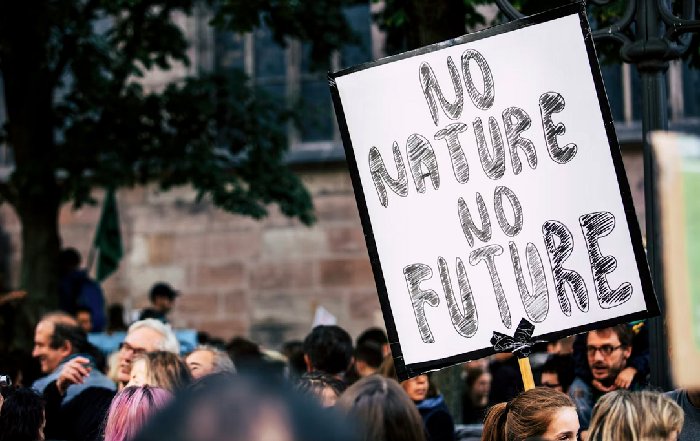
At the same time, organizations such as UNICEF and UNESCO have emphasized that children and youth have a right to a safe, healthy environment, and that their voices must be included in climate policy discussions. Youth-led movements have helped reframe climate change as a question of intergenerational justice, challenging governments and corporations to align their actions with the long-term interests of those who will live with the consequences.
Despite this progress, environmental awareness remains uneven across and within countries, and misinformation continues to distort public debate in some contexts. This asymmetry can delay policy reforms in energy, transport, and agriculture, and can weaken social support for investments in adaptation and resilience. YouSaveOurWorld.com deliberately positions itself as a trusted, independent resource in this contested information space, with a strong focus on environmental awareness. By grounding its content in established science and linking high-level trends to practical implications for households, communities, and organizations, the platform seeks to strengthen the knowledge base upon which both democratic decisions and private choices are made.
Waste, Plastics, and the Linear Economy Constraint
While discussions of climate change often center on energy systems and carbon pricing, the broader pattern of resource extraction, production, consumption, and waste is equally critical for the risks future generations will face. The prevailing linear "take-make-dispose" economic model drives high levels of material throughput and waste generation, contributing significantly to greenhouse gas emissions and environmental degradation. Plastic production is a particularly salient example, as it remains heavily dependent on fossil feedstocks and is projected to continue growing in the absence of strong policy interventions.
Organizations such as the Ellen MacArthur Foundation and the Organisation for Economic Co-operation and Development (OECD) have documented how plastics contribute to climate change across their life cycle-from extraction and refining to manufacturing, distribution, and end-of-life management. They warn that without a transition toward circular economy principles, emissions from plastics alone could consume a substantial portion of the remaining global carbon budget. Microplastics now permeate oceans, rivers, soils, and even the human bloodstream, raising long-term health and ecological concerns that will fall disproportionately on younger and unborn generations.
On YouSaveOurWorld.com, the connection between waste and climate is addressed through in-depth coverage of plastic recycling and waste management, emphasizing that more efficient material use, product redesign, and robust recycling systems are central to climate strategy, not peripheral. The platform highlights how circular design, reuse models, and extended producer responsibility schemes can reduce both emissions and pollution, while fostering new business opportunities in materials innovation and resource recovery. In doing so, it underscores that the shift away from a linear economy is a necessary condition for reducing long-term climate and health risks.
Innovation and Technology as Climate Risk Mitigators
The degree to which future generations can manage climate risks will be profoundly influenced by the trajectory of technological innovation and its deployment at scale. Over the past decade, the costs of solar photovoltaics, wind power, and battery storage have declined sharply, enabling a rapid expansion of renewable energy capacity in regions ranging from Europe and North America to China, India, and parts of Africa and Latin America. Organizations such as the International Energy Agency (IEA) and the International Renewable Energy Agency (IRENA) provide detailed roadmaps illustrating how accelerated investment in clean energy, energy efficiency, and grid modernization can align global energy systems with net-zero targets while supporting economic growth.
Beyond the energy sector, advances in low-carbon materials, green hydrogen, carbon capture and storage, and nature-based solutions are opening new pathways for decarbonizing hard-to-abate industries such as steel, cement, and aviation. Digital technologies-including artificial intelligence, advanced analytics, and the Internet of Things-offer powerful tools for optimizing energy use, monitoring emissions, and managing complex systems such as smart grids and climate-resilient cities. However, these technologies also carry their own environmental footprints and raise questions about data governance, cybersecurity, and equitable access, which must be addressed to ensure that innovation reduces rather than exacerbates inequality and ecological strain.
YouSaveOurWorld.com situates these developments within a broader conversation on innovation and technology, highlighting examples of how entrepreneurs, researchers, and policymakers are collaborating to scale climate-positive solutions. The platform emphasizes that for younger generations, technological literacy must be paired with ethical and systems thinking, so that digital and industrial innovation supports, rather than undermines, long-term planetary stability and social cohesion.
Lifestyle Choices and Sustainable Living
Even as systemic transformations in energy, industry, and finance are indispensable, the aggregated impact of individual lifestyle choices remains a significant determinant of future climate outcomes, especially in high-consumption societies. Patterns of housing, mobility, diet, and consumption collectively drive demand for energy and materials, and therefore shape emissions trajectories. Research by organizations such as the World Resources Institute (WRI) and WWF has shown that shifts in diet toward more plant-rich foods, increased use of public transport and active mobility, reduced air travel, and improvements in household energy efficiency can substantially lower per capita carbon footprints, particularly in affluent countries.
For many younger people, sustainable living is increasingly framed as a positive aspiration, associated with health, community, and financial prudence rather than deprivation. Energy-efficient homes, low-carbon transport options, circular fashion, and locally sourced food are seen as ways to enhance quality of life while aligning personal values with global responsibility. However, the feasibility of such choices is heavily influenced by urban planning, infrastructure, pricing, and social norms, which means that governments and businesses must design environments in which low-carbon options are accessible, affordable, and culturally resonant.
On YouSaveOurWorld.com, the concept of lifestyle is closely integrated with sustainable living, with content that recognizes the diversity of contexts-from dense urban centers in Europe, Asia, and the Americas to smaller towns and rural communities in Africa and Oceania. The platform explores how individuals can align their daily decisions with broader climate goals without sacrificing comfort or aspiration, reinforcing the message that personal choices, while not sufficient on their own, are a meaningful component of collective climate responsibility.
Education, Skills, and Climate-Ready Societies
The capacity of societies to navigate climate risks over the long term depends critically on education systems and skills development. Climate literacy, systems thinking, and interdisciplinary problem-solving are increasingly viewed as core competencies for citizens and professionals across all sectors. Organizations such as UNESCO and the OECD advocate for education frameworks that embed sustainability and climate topics throughout curricula, from primary and secondary schooling to higher education and vocational training, ensuring that learners understand not only the science of climate change but also its economic, social, and ethical dimensions.
For businesses and public institutions, this educational shift translates into rising demand for employees who can integrate climate considerations into decision-making, whether they are engineers designing low-carbon infrastructure, financial analysts assessing climate-related risks, or urban planners developing resilient cities. Countries that invest in green skills development and research capacity are likely to be better positioned in the emerging low-carbon economy, while those that neglect this area risk creating workforces misaligned with the structural changes underway in energy, transport, agriculture, construction, and digital services.
YouSaveOurWorld.com supports this transition by treating education as a cornerstone of climate resilience. The platform provides perspectives and resources that help educators, students, and professionals understand how climate change intersects with economics, technology, design, and personal development, reinforcing the idea that informed, ethically grounded leadership will be one of the most valuable assets future generations can possess in a climate-constrained world.
Health, Personal Well-Being, and Human Security
Climate change is not only an environmental and economic issue; it is also a profound public health and human security challenge that will shape the well-being of future generations. The World Health Organization (WHO) has documented how rising temperatures, changing precipitation patterns, and more frequent extremes are increasing heat-related illnesses, altering the distribution of vector-borne diseases such as malaria and dengue, degrading air quality, and affecting food and water safety. These impacts disproportionately affect vulnerable populations, including children, the elderly, low-income communities, and those living in informal settlements or climate-exposed regions.
In high-income countries, recurring heatwaves in cities such as Paris, Berlin, Tokyo, and New York are testing the resilience of urban infrastructure and healthcare systems, while in many parts of Africa, South Asia, and Latin America, climate-related disruptions to agriculture and water supplies are intensifying food insecurity and displacement. Mental health impacts, including anxiety, grief, and eco-distress associated with climate awareness and direct experience of disasters, are increasingly recognized as significant aspects of the climate crisis, particularly among younger generations who face the prospect of living their entire lives under escalating environmental stress.
On YouSaveOurWorld.com, the relationship between climate and personal well-being is treated as central rather than peripheral. The platform explores how resilient communities, inclusive urban planning, robust healthcare systems, and supportive social networks can mitigate climate-related health risks, and how individual practices-from heat preparedness and air quality awareness to community engagement-can enhance psychological and physical resilience. In doing so, it reinforces the idea that protecting the health and dignity of current and future generations is a core objective of effective climate policy and action.
Global Equity, Governance, and Intergenerational Responsibility
Climate change is inherently global, and its impacts are distributed in ways that raise fundamental questions about fairness, responsibility, and governance. Regions such as Sub-Saharan Africa, South and Southeast Asia, and parts of Latin America are particularly vulnerable to climate impacts despite having contributed relatively little to cumulative greenhouse gas emissions, while high-income countries in North America and Europe bear a larger share of historical responsibility but often have greater adaptive capacity. This asymmetry has become a central theme in international climate negotiations and in debates about climate finance, technology transfer, and loss-and-damage mechanisms.
The Paris Agreement, under the umbrella of the United Nations Framework Convention on Climate Change (UNFCCC), provides a framework for collective action, but progress toward its temperature and finance goals has been uneven and slower than the science suggests is necessary. Discussions on scaling climate finance to support adaptation and mitigation in developing countries, reforming multilateral development banks to align with climate objectives, and recognizing the rights of future generations are intensifying as climate impacts become more visible and more costly.
YouSaveOurWorld.com situates these developments within a broader global perspective, emphasizing that climate risk management is not only a technical exercise but also a moral and political endeavor. The platform encourages readers-whether they are based in the United States, Europe, Africa, Asia, or Latin America-to understand themselves as participants in a shared global effort to stabilize the climate system and to uphold intergenerational equity. By highlighting the links between local actions and global outcomes, it underscores that future generations' prospects will depend on the degree to which today's institutions can reconcile national interests with planetary boundaries and ethical obligations.
Designing a Resilient, Low-Carbon Future
Looking toward the mid-century horizon, the central question is not whether climate risks will shape the lives of future generations, but how deeply those risks will constrain their choices and how fairly the burdens and benefits of transition will be distributed. The decisions made in the 2020s and early 2030s about energy infrastructure, urban form, industrial strategy, social policy, and technological deployment will largely determine whether the world follows a pathway of managed, just transition or one characterized by escalating disruption and fragmentation. In this context, design-understood broadly as the intentional shaping of systems, spaces, products, and services-becomes a critical lever for aligning climate objectives with human aspirations.
Leading architectural, engineering, and planning firms, often working in partnership with organizations such as the World Green Building Council, are demonstrating how net-zero and climate-resilient buildings can reduce emissions while enhancing comfort, health, and productivity. Urban designers are experimenting with nature-based solutions, compact and transit-oriented development, and cooling strategies that make cities more livable under higher temperature regimes. Product and service designers in multiple sectors are rethinking materials, supply chains, user experiences, and business models to support circularity and low-carbon lifestyles.
On YouSaveOurWorld.com, these themes converge in discussions of design and economy, which present climate-conscious design not as a niche specialty but as a mainstream requirement for competitiveness and social legitimacy. The platform's holistic approach-linking sustainable living, climate-aware business strategy, technological innovation, education, and well-being-reflects a conviction that the most robust response to climate risk is one that integrates environmental responsibility with economic opportunity and human flourishing.
In this way, YouSaveOurWorld.com positions itself not merely as an information repository but as a partner for individuals, organizations, and communities that are determined to act with foresight and integrity. By connecting insights from global institutions, scientific research, and practical experience, and by grounding them in the concrete domains of sustainable living, climate change, innovation, and technology, the platform aims to support a generation that must navigate unprecedented risks while building a more resilient, equitable, and prosperous world. For those who will live through the rest of this century, the stakes could not be higher, but neither could the potential for purposeful, well-informed action to change the trajectory of our shared future.
