
Practical Recycling Strategies for Homes and Offices
Recycling in a Decisive Decade for Climate and Resources
Recycling has moved from being a symbolic environmental gesture to a strategic capability for households and organizations that wish to remain resilient in a world defined by climate risk, resource volatility and rapid regulatory change. Across North America, Europe, Asia, Africa and South America, families, entrepreneurs and corporate leaders are reassessing how they consume, design, reuse and recover materials, recognizing that waste is no longer an inevitable by-product of progress but a design and management failure that can, and must, be corrected. For the global community that turns to YouSaveOurWorld.com as a trusted guide on sustainable living, responsible business and personal well-being, practical recycling has become one of the most visible and measurable expressions of a circular mindset that aligns daily decisions with long-term planetary boundaries.
The shift from a linear "take-make-dispose" model to a circular economy continues to be championed by institutions such as the Ellen MacArthur Foundation, whose work on circular design and systems thinking has influenced policy makers, multinational corporations and startups alike. At the same time, climate science synthesized by the Intergovernmental Panel on Climate Change underscores that reducing material extraction and energy-intensive production is indispensable if the world is to stay close to the temperature goals embedded in the Paris Agreement. In this context, the editorial mission of YouSaveOurWorld.com is to translate complex global frameworks into clear, actionable guidance, connecting practical recycling in kitchens, offices and supply chains with the broader themes of sustainable living, climate mitigation, economic resilience and human health.
How Modern Recycling Systems Work in 2026
For recycling to deliver on its environmental and economic promise, households and organizations need a realistic understanding of how contemporary recycling systems function, where they perform well and where their limitations persist. Over the last several years, municipalities in the United States, Canada, the United Kingdom, Germany, the Nordic countries, Australia and across the European Union have upgraded their collection and sorting infrastructure, integrating optical scanners, AI-guided robotics and advanced data analytics into material recovery facilities. Agencies such as the U.S. Environmental Protection Agency and the European Environment Agency now publish increasingly granular data on recycling rates, contamination levels and regional performance, enabling both households and businesses to align their practices with local realities rather than assumptions.
Yet the economics and logistics of recycling remain uneven, particularly in rapidly urbanizing regions of Africa, South Asia and Latin America, where formal infrastructure often coexists with extensive informal waste-picking networks. Since China and several other Asian economies tightened import standards for scrap materials in the late 2010s and early 2020s, many exporting countries have invested in domestic processing capacity and quality control, but markets for low-value, mixed or contaminated recyclables are still fragile. International organizations such as the OECD and the World Bank document how policy instruments, from landfill taxes to extended producer responsibility schemes, are reshaping incentives across continents. For readers of YouSaveOurWorld.com, this global perspective complements the site's practical guidance on waste and global sustainability, reinforcing the message that clean, correctly sorted materials are far more likely to become valuable feedstock rather than stranded waste.
Building a High-Performing Home Recycling System
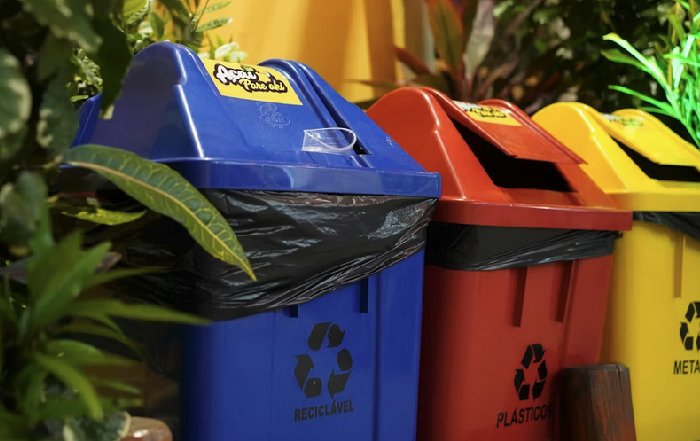
In homes ranging from compact apartments in Tokyo and Singapore to suburban houses in Canada, Spain, South Africa or Brazil, successful recycling systems share three core attributes: clarity, convenience and consistency. Clarity begins with understanding local rules, which can differ markedly even within the same country. Municipal portals, national guidance such as the UK Government's recycling information, and regional apps increasingly provide detailed lists of accepted materials, preparation requirements and collection schedules. Translating these rules into clearly labeled, strategically placed containers in kitchens, utility rooms and entryways helps households avoid one of the most common pitfalls: contamination caused by confusion.
Convenience is achieved when sorting aligns with daily routines rather than adding friction to them. Many households now maintain separate containers for paper near workspaces, for glass and metals near food preparation areas, and for deposit-return bottles where such systems exist. Labels that list both accepted and non-accepted items, supported by simple visual cues, reduce hesitation and errors, especially for children, guests or new housemates. Consistency comes from establishing habits, such as rinsing containers immediately after use and flattening cardboard to save space, which over time become automatic. On YouSaveOurWorld.com, the sections on sustainable living and lifestyle place these practical steps within a broader approach to home sustainability, connecting recycling to energy efficiency, water conservation and more mindful purchasing decisions.
Making Sense of Plastic Recycling at the Household Level
Among all material streams, plastics remain the most challenging for many households, not only because of the diversity of polymers and product formats but also due to frequent changes in local acceptance rules. By 2026, curbside systems in much of Europe, North America, parts of Asia and Oceania generally accept PET and HDPE packaging, while polypropylene collection is expanding and more complex items such as multi-layer films, expanded polystyrene and certain composites still require specialized drop-off or are not recyclable at scale. Learning to recognize basic resin identification codes and, more importantly, to follow local guidance rather than relying solely on symbols, is a key step toward effective participation.
The practice of "wishcycling," where residents place questionable plastics into the recycling bin in the hope they will be processed, continues to be a major source of contamination that can downgrade or even ruin entire batches of otherwise recyclable material. Industry associations and initiatives, including Plastic Recyclers Europe and the Plastics Industry Association, have expanded their communication efforts to clarify which plastics have robust end markets and where innovation is emerging, such as advanced sorting, chemical recycling and refill or reuse systems. On YouSaveOurWorld.com, the dedicated guidance on plastic recycling translates this technical and market information into regionally relevant advice, helping readers in countries from the Netherlands and Norway to Malaysia and Chile choose products with simpler, more recyclable packaging, avoid unnecessary single-use plastics and dispose of unavoidable plastics through the most responsible available channels.
Designing Office Recycling Systems that People Actually Use
In offices from New York and Toronto to London, Berlin, Singapore, Sydney and Johannesburg, the gap between a recycling policy and actual performance is often determined less by technology and more by organizational design and culture. High-performing office recycling systems begin with a careful mapping of waste streams, including paper and cardboard, various plastics, metals, glass, food waste, coffee grounds, single-use service ware, e-waste and confidential documents. Instead of relying on individual desk-side bins that encourage indiscriminate disposal, many organizations now adopt centralized sorting stations in break rooms, print areas and corridors, where clear signage and standardized containers guide employees toward correct choices.
Leadership plays a decisive role in transforming recycling from a peripheral facilities issue into a core element of corporate responsibility. When senior executives visibly participate, when facilities and sustainability teams share progress data and when goals for waste reduction and recycling are integrated into broader environmental, social and governance strategies, participation rates typically rise and contamination falls. The sustainable business and business sections of YouSaveOurWorld.com explore how recycling programs can support brand positioning, regulatory compliance and operational efficiency. External networks such as the World Business Council for Sustainable Development and disclosure platforms like CDP provide frameworks that help organizations link office and operational waste performance to climate targets, resource efficiency metrics and stakeholder expectations, thereby elevating recycling from a facility-level consideration to a boardroom priority.
Embedding Recycling in a Broader Circular Business Strategy
By 2026, leading companies in sectors as diverse as technology, consumer goods, automotive, construction and finance increasingly treat recycling as one element in a comprehensive circular economy strategy that spans product design, supply chain management and end-of-life stewardship. Corporations such as Unilever, Microsoft and IKEA have publicized commitments to increase recycled content in products and packaging, reduce waste to landfill and support closed-loop systems that recover materials from customers and operations. These efforts are often aligned with global frameworks such as the UN Global Compact and the Science Based Targets initiative, which encourage businesses to set measurable, time-bound goals for emissions, resource use and social impact.
For small and medium-sized enterprises in regions from Scandinavia and the Baltics to South Africa, India and Latin America, practical recycling can be an accessible entry point into circular thinking, prompting deeper questions about product lifecycles, service-based business models and collaboration with suppliers and customers. Analyses from the World Economic Forum and the International Labour Organization illustrate how circular practices can create new employment opportunities in repair, remanufacturing and materials recovery while reducing exposure to volatile commodity prices and supply disruptions. Within this evolving landscape, YouSaveOurWorld.com positions recycling as a bridge between environmental responsibility and economic strategy, particularly through its focus on economy and innovation, where readers can explore how waste reduction initiatives often translate into cost savings, risk mitigation and competitive differentiation.
Managing E-Waste and Technology Lifecycles Responsibly
The proliferation of digital devices in both homes and offices has elevated electronic waste to one of the fastest-growing and most complex waste streams worldwide. Smartphones, laptops, monitors, printers, routers, wearables and a growing array of smart home and industrial devices contain valuable metals such as gold, copper and rare earth elements alongside hazardous substances that require careful handling. International agreements coordinated under the Basel Convention and research from the Global E-waste Statistics Partnership highlight not only the environmental and health risks of informal e-waste processing but also the substantial economic value that is currently lost when devices are discarded or improperly dismantled.
For households in technologically advanced economies, responsible e-waste management begins with extending device lifespans through repair, software updates and reuse, then turning to certified collection schemes when products genuinely reach end of life. Manufacturers and retailers increasingly offer take-back programs, sometimes mandated by extended producer responsibility regulations, while data protection requirements have elevated the importance of secure data wiping before devices leave homes or offices. Organizations can formalize these practices through periodic e-waste drives, asset inventories and procurement policies that prioritize repairability and modular design. On YouSaveOurWorld.com, the technology and innovation pages examine how responsible technology use, from procurement to disposal, supports environmental objectives, circular resource flows and digital security in an increasingly connected economy.
Connecting Recycling to Climate Action and Environmental Awareness
Although recycling is often discussed in municipal or operational terms, its implications extend deeply into climate policy, land use and ecosystem integrity. By substituting recycled materials for virgin inputs, effective recycling reduces emissions associated with extraction, processing and transportation, particularly in energy-intensive sectors such as metals, plastics, paper and glass. Analyses by the International Energy Agency and the UN Environment Programme demonstrate that material efficiency and circular economy strategies are essential complements to renewable energy deployment and energy efficiency if global climate goals are to remain within reach. For the audience of YouSaveOurWorld.com, the climate change and environmental awareness sections situate recycling within a portfolio of climate solutions that also includes clean energy, nature-based solutions and behavioral change.
Recycling also serves as a powerful educational and cultural tool. When sorting stations are visible in homes, schools, offices, public buildings and transport hubs, they act as daily prompts that encourage people to reflect on resource use and waste generation. Educational systems in countries such as Finland, Denmark, Singapore and New Zealand have integrated waste, materials and circular economy concepts into curricula, recognizing that early exposure shapes lifelong habits and civic engagement. Global initiatives like UNESCO's Education for Sustainable Development reinforce this trend by promoting pedagogical approaches that link environmental issues to social and economic dimensions. Through its dedicated education content, YouSaveOurWorld.com extends this mission into the digital space, offering readers practical tools to translate abstract sustainability concepts into everyday decisions, including how they manage materials at home and at work.
Designing Spaces and Products that Enable Recycling
Design decisions, whether in buildings, interiors, products or packaging, profoundly influence whether recycling is technically feasible and behaviorally easy. In the built environment, architects and interior designers in cities such as Zurich, Stockholm and Singapore increasingly integrate dedicated waste and recycling rooms, chutes and storage spaces into residential and commercial projects, guided by green building standards from organizations such as the U.S. Green Building Council and BRE in the United Kingdom. These standards often reward projects that facilitate source separation, allocate sufficient space for recyclables and provide intuitive signage, recognizing that infrastructure and human behavior are inseparable components of effective resource management.
At the product level, design-for-recycling principles are gradually moving from niche practice to mainstream expectation. Simplifying material combinations, avoiding problematic additives and inks, and clearly indicating recyclability on labels are now recognized as essential steps in enabling downstream recovery. Initiatives such as the Ellen MacArthur Foundation's New Plastics Economy have catalyzed collaborations among brands, suppliers and recyclers to standardize formats and improve compatibility with existing systems, while regulators in the European Union and beyond are embedding eco-design requirements into legislation. For readers of YouSaveOurWorld.com, the design and sustainable business sections highlight how design choices made in boardrooms and studios ultimately determine whether households and offices can recycle materials efficiently, reinforcing the idea that design is a strategic lever for circularity rather than a purely aesthetic concern.
Recycling, Lifestyle Choices and Personal Well-Being
Beyond its environmental and economic dimensions, recycling has a personal and psychological aspect that resonates strongly with individuals seeking coherence between their values and their daily actions. In homes across France, Italy, Spain, the Netherlands, Brazil, Malaysia and many other countries, practices such as separating recyclables, choosing products with minimal or recyclable packaging, participating in local repair cafes or community clean-ups, and discussing environmental topics with children contribute to a sense of agency in the face of large-scale challenges such as climate change, biodiversity loss and pollution. Research summarized by organizations like the American Psychological Association suggests that when pro-environmental behaviors are embedded in a broader narrative of constructive engagement, they can help reduce eco-anxiety and foster a sense of purpose and connection.
The editorial perspective of YouSaveOurWorld.com explicitly recognizes the link between environmental action and personal well-being, and its content on personal well-being and lifestyle emphasizes that practical recycling can be integrated with mindful consumption, healthier living and community involvement. In high-pressure corporate environments from New York and London to Hong Kong and Tokyo, well-designed workplace sustainability initiatives, including visible and effective recycling programs, can strengthen social cohesion, enhance a shared sense of mission and contribute to a more positive organizational culture. This, in turn, can support employee engagement, mental health and retention, demonstrating that recycling is not only about bins and materials but also about how people experience their roles as citizens and professionals.
Continuous Improvement: From 2026 and Beyond
As 2026 unfolds, it is evident that neither households nor organizations can treat recycling as a static checklist item. New materials, from bioplastics to composite packaging, are entering the market; regulatory frameworks are tightening in regions from the European Union to parts of Asia and Latin America; and technological advances in sorting and processing are creating new opportunities and constraints. A culture of continuous improvement is therefore essential. For homes, this might mean periodically revisiting local guidance, updating labels, involving children in learning about new materials and tracking progress informally. For offices, it may involve auditing waste streams, refreshing signage, training new staff, engaging suppliers and integrating performance indicators into sustainability reporting.
For the worldwide audience of YouSaveOurWorld.com, spanning North America, Europe, Asia, Africa and South America, this commitment to ongoing learning and adaptation mirrors the site's own editorial philosophy. By connecting everyday recycling decisions with broader themes such as climate change, sustainable business, technology, innovation and global sustainability, the platform invites readers to see themselves as active participants in a global transition toward a circular, low-carbon economy. Macro-level insights from organizations like the World Resources Institute and the UN Environment Programme provide valuable context, but it is the translation of those insights into concrete actions in homes, offices and communities that ultimately determines outcomes.
By embracing practical recycling strategies and continuously refining systems at both domestic and organizational levels, people and businesses in the United States, the United Kingdom, Germany, Canada, Australia, France, Italy, Spain, the Netherlands, Switzerland, China, Sweden, Norway, Singapore, Denmark, South Korea, Japan, Thailand, Finland, South Africa, Brazil, Malaysia, New Zealand and many other countries can contribute to a more resilient, equitable and healthy world. In doing so, they affirm the central message that underpins YouSaveOurWorld.com: that informed choices, grounded in expertise, guided by trust and replicated across millions of homes and workplaces, can collectively shift economies and cultures toward sustainability, proving that practical actions such as recycling are foundational steps in the effort to save our world.
