
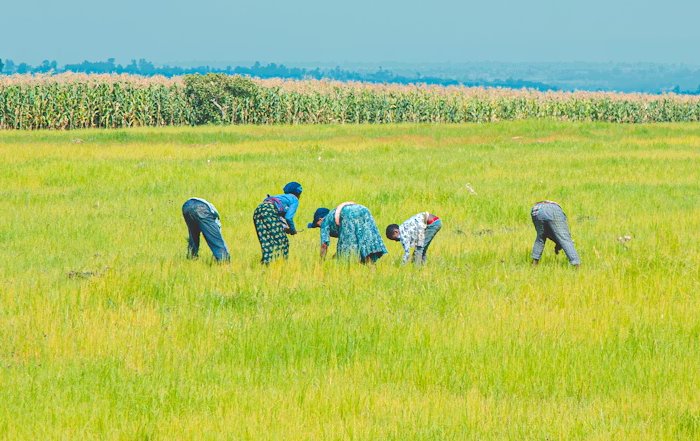
Community-Led Environmental Initiatives: The New Engine of Sustainable Transformation
Why Community Leadership Matters in a Decisive Decade
As 2026 unfolds, the global conversation on sustainability has shifted from abstract commitments to concrete, localized action, and nowhere is this shift more visible than in the rapid growth of community-led environmental initiatives that are reshaping how neighborhoods, cities, and businesses respond to ecological and social challenges. While multilateral agreements and national policies remain important, it is increasingly clear that the most agile, resilient, and trusted forms of environmental action are emerging from communities that organize themselves, build coalitions, and design solutions tailored to their own realities, and this is precisely the landscape that YouSaveOurWorld.com seeks to illuminate and connect through its focus on sustainable living, climate solutions, and responsible business practice.
The urgency is well documented by institutions such as the Intergovernmental Panel on Climate Change (IPCC), whose reports on current climate science underline that the world is running out of time to limit global warming to 1.5°C, and by organizations like the World Meteorological Organization, which tracks record-breaking climate extremes that increasingly affect local communities first and most acutely. Yet, despite the scale of these global risks, it is at the community level that people are experimenting with new forms of governance, economic models, and technologies that make sustainability tangible, relatable, and actionable. Through its coverage of climate change, YouSaveOurWorld.com positions these community experiments not as peripheral stories, but as central drivers of a new environmental paradigm that integrates environmental awareness, economic resilience, and personal well-being.
From Awareness to Agency: How Communities Move Beyond Advocacy
For many years, environmental awareness campaigns focused largely on information, urging individuals and organizations to understand issues such as biodiversity loss, rising temperatures, and pollution; however, as platforms like YouSaveOurWorld.com emphasize in their work on environmental awareness, knowledge alone is no longer sufficient, because communities now demand tools, structures, and partnerships that translate concern into agency. This evolution is visible in the rise of neighborhood climate assemblies, citizen science projects, and local sustainability councils that co-design solutions with municipalities and businesses, often using open data and participatory planning methods that were rare a decade ago.
Institutions such as UNEP and its Global Environment Outlook series have highlighted that when citizens participate in environmental decision-making, policies become more effective, more equitable, and more durable, particularly in urban areas where competing land uses and social priorities can easily derail purely top-down interventions. Community-led initiatives increasingly blend advocacy with implementation: residents not only press for cleaner air or better waste management, but also form cooperatives to manage shared resources, launch local monitoring networks, and pilot new technologies in partnership with universities or startups. By curating stories and resources on sustainable living and innovation, YouSaveOurWorld.com plays a bridging role, helping communities move from passive awareness to active stewardship.
Sustainable Living as a Collective Practice, Not Just an Individual Choice
The sustainable living movement has often been framed in terms of individual lifestyle choices, such as reducing meat consumption, minimizing energy use, or choosing public transport, but by 2026, the most impactful sustainable living strategies are increasingly organized collectively, with communities designing shared infrastructure and services that make low-impact choices the default rather than the exception. In many cities, community energy cooperatives are emerging, inspired in part by research from organizations like the International Renewable Energy Agency (IRENA), which documents community-based renewable energy models that combine local ownership with decarbonization and energy resilience.
Housing cooperatives, eco-villages, and climate-conscious neighborhoods are integrating shared gardens, tool libraries, repair cafés, and circular design principles to reduce consumption and waste while strengthening social cohesion, and these models demonstrate that sustainable living is not merely a personal sacrifice but an opportunity for richer community life and local economic innovation. Platforms such as YouSaveOurWorld.com, through their focus on lifestyle and personal well-being, underscore that health, mental resilience, and social connection are tightly interwoven with environmental conditions, and they highlight how community-led initiatives can improve quality of life while reducing ecological footprints. By presenting case studies and practical guidance, the site helps communities understand that sustainable living is a shared journey, supported by collective infrastructure, mutual aid, and locally tailored solutions.
Plastic Recycling and the Rise of Community Circular Economies
Plastic pollution remains one of the most visible and emotionally charged environmental challenges, and despite large-scale commitments by corporations and governments, the reality on the ground is that communities still grapple with poorly managed waste streams, littered public spaces, and limited recycling infrastructure. Reports from organizations such as the Ellen MacArthur Foundation on the circular economy for plastics show that achieving systemic change requires redesigning products, packaging, and business models, yet they also emphasize that local actors play a crucial role in capturing value from waste, demonstrating alternative systems, and building public support for policy reforms.
Community-led recycling centers, plastic collection cooperatives, and social enterprises are stepping into this gap, creating jobs while reducing environmental harm, often partnering with municipalities and ethical businesses to close material loops. In many regions, informal waste pickers have been organized into recognized cooperatives, supported by NGOs and international organizations such as the World Bank, which has published analyses on solid waste management and inclusive recycling. These initiatives show that waste is not merely a technical problem but a social and economic opportunity when addressed through inclusive, community-based models. YouSaveOurWorld.com reinforces this perspective through its dedicated coverage of plastic recycling and waste, providing readers with insights into how local projects can integrate circular principles, build partnerships with responsible brands, and leverage design and technology to reduce plastic leakage into ecosystems.
Community-Led Climate Action and Local Resilience
As climate impacts intensify, local resilience has become a central concern for communities that face heatwaves, flooding, droughts, and storms, often with limited resources and uneven institutional support. Organizations like the C40 Cities Climate Leadership Group have documented numerous city-level climate actions that involve deep collaboration between municipal authorities, community organizations, and businesses, illustrating that climate resilience is most effective when it is co-created with the people who live in vulnerable neighborhoods. Community-led adaptation initiatives, such as urban greening projects, micro-scale water harvesting, and neighborhood emergency preparedness networks, are demonstrating how localized knowledge can complement technical expertise to produce solutions that are both practical and culturally resonant.
These efforts align with the findings of the Global Center on Adaptation, which highlights in its adaptation reports that locally led adaptation not only enhances physical resilience but also strengthens social capital, trust, and governance capacity. YouSaveOurWorld.com, through its exploration of global climate dynamics and on-the-ground community responses, helps readers connect the dots between high-level climate science and local realities, emphasizing that climate resilience is not a distant policy goal but a daily practice that communities can shape. By showcasing examples of citizen-led flood mapping, community-managed urban forests, and neighborhood cooling initiatives, the platform underscores that climate adaptation and mitigation are inseparable from community agency and innovation.
Sustainable Business and the Power of Local Partnerships
The relationship between business and community-led environmental initiatives has evolved significantly, moving away from transactional philanthropy toward more integrated partnerships where local stakeholders and companies co-design solutions and share value. Leading frameworks such as the UN Global Compact and its principles for responsible business have encouraged companies to align with the Sustainable Development Goals, while organizations like the World Business Council for Sustainable Development (WBCSD) have promoted sustainable business practices that emphasize stakeholder engagement and systems thinking. However, it is at the community level where these principles are tested and made tangible, especially in sectors such as energy, food, construction, and mobility.
Community-owned enterprises, impact-driven startups, and local cooperatives are increasingly collaborating with established firms to pilot circular supply chains, regenerative agriculture, and low-carbon infrastructure, often leveraging impact investment and blended finance mechanisms. YouSaveOurWorld.com, through its focus on sustainable business and business more broadly, highlights that businesses which engage authentically with communities-sharing data, co-investing in local infrastructure, and integrating community priorities into product and service design-build deeper trust and long-term resilience. Learn more about sustainable business practices that demonstrate how shared value, transparency, and local co-creation can differentiate brands, reduce risk, and unlock new markets in an economy increasingly shaped by climate risk and resource constraints.
Technology, Innovation, and the Democratization of Environmental Solutions
Technological innovation has always been a driver of environmental change, both positive and negative, but a notable shift in recent years is the democratization of tools and platforms that enable communities to develop, adapt, and govern their own solutions. Low-cost sensors, open-source software, distributed energy technologies, and digital collaboration platforms are increasingly accessible, enabling communities to monitor air and water quality, manage shared resources, and coordinate collective action. Organizations such as MIT's Environmental Solutions Initiative and The OpenAQ Project showcase how open environmental data and tools can empower local actors to advocate for cleaner air and better policies based on real-time evidence.
At the same time, the rapid evolution of artificial intelligence, remote sensing, and geospatial analytics-documented by agencies such as NASA through its Earth observation programs-is opening new possibilities for communities to understand climate risks, track land-use changes, and evaluate the impact of local interventions with unprecedented precision. YouSaveOurWorld.com highlights these opportunities through its coverage of technology and innovation, while also emphasizing that technology must be guided by ethical frameworks, inclusive governance, and local knowledge if it is to enhance, rather than undermine, community autonomy and environmental justice. The most promising community-led initiatives in 2026 are those that blend high-tech tools with deep local engagement, ensuring that innovation serves people and ecosystems rather than abstract efficiency metrics alone.
Design, Public Space, and the Aesthetics of Sustainability
The design of neighborhoods, public spaces, and everyday products profoundly shapes environmental outcomes, influencing how people move, consume, and interact with nature, and in recent years, community-led design processes have become a powerful lever for embedding sustainability into the built environment. Participatory urban design, tactical urbanism, and community-driven landscape architecture enable residents to reimagine streets, parks, and waterfronts as multifunctional spaces that support biodiversity, climate resilience, and social cohesion. Institutions such as The Royal Institute of British Architects (RIBA) and The American Society of Landscape Architects (ASLA) have increasingly highlighted climate-responsive and community-centered design as a professional imperative, encouraging practitioners to work closely with local stakeholders throughout the design process.
Community organizations are now co-creating green corridors, nature-based flood defenses, and climate-adaptive housing prototypes that not only reduce environmental impact but also express local identity and cultural values, demonstrating that sustainability can be aspirational and beautiful rather than austere. YouSaveOurWorld.com, through its focus on design and sustainable lifestyles, presents these examples as evidence that design is not a luxury but a strategic tool for aligning environmental goals with human experience. By documenting how communities transform vacant lots into thriving urban gardens or redesign schoolyards as climate-resilient learning spaces, the platform emphasizes that aesthetic and functional choices in design can either lock in unsustainable patterns or unlock new pathways toward regenerative living.
Education, Skills, and the Next Generation of Environmental Leaders
No community-led environmental initiative can be sustained without a strong foundation of education, skills, and intergenerational learning, and in 2026, there is growing recognition that environmental literacy must be integrated across formal education, vocational training, and lifelong learning. Organizations such as UNESCO have championed Education for Sustainable Development, encouraging schools and universities to embed sustainability across curricula, while networks like Ashoka have supported youth changemakers who lead social and environmental projects in their communities. These global movements intersect with local initiatives where teachers, parents, and community leaders collaborate to create project-based learning experiences that connect classroom concepts with real-world environmental challenges.
Community gardens, citizen science projects, and youth climate councils provide practical contexts in which young people can develop leadership skills, systems thinking, and a sense of agency, while older generations share local ecological knowledge and historical experience. YouSaveOurWorld.com reflects this holistic view of learning through its emphasis on education, not as a narrow academic pursuit but as a continuous process that equips individuals and communities with the capabilities needed to navigate a rapidly changing environmental, technological, and economic landscape. By highlighting community-led training programs in regenerative agriculture, green construction, and circular design, the platform underscores that skills development is a cornerstone of both environmental and economic resilience.
Economy, Well-Being, and the Business Case for Community-Led Action
Over the past decade, the concept of economic success has begun to move beyond narrow measures of growth toward broader indicators of well-being, resilience, and planetary health, an evolution reflected in frameworks such as the OECD Better Life Index, which explores well-being beyond GDP, and in the work of the World Economic Forum, which has highlighted stakeholder capitalism and climate risk. Community-led environmental initiatives sit at the intersection of these debates, demonstrating that local economies can be both prosperous and low-carbon when they prioritize circularity, local value creation, and social cohesion.
By supporting local food systems, renewable energy cooperatives, repair and reuse businesses, and nature-based tourism, communities are building diversified economic bases that are less vulnerable to global shocks and supply chain disruptions, while also improving public health and environmental quality. YouSaveOurWorld.com, through its focus on the economy and sustainable business, presents these models as evidence that environmental stewardship and economic competitiveness are not mutually exclusive, but mutually reinforcing when approached strategically. The platform also underscores that personal well-being-mental health, sense of purpose, and social connection-is enhanced when individuals participate in meaningful collective projects that improve their surroundings, reinforcing the idea that community-led initiatives are investments not only in ecological resilience but also in human flourishing.
The Strategic Role of YouSaveOurWorld.com in a Community-Driven Future
In this evolving landscape, YouSaveOurWorld.com positions itself as more than an information portal; it functions as a connective tissue between communities, businesses, educators, and innovators who recognize that environmental transformation must be both global in vision and local in execution. By curating insights across sustainable living, plastic recycling, climate change, technology, and personal well-being, the platform helps readers see how disparate initiatives form part of a larger system of change, and how their own actions can align with and amplify this system. Its global perspective, accessible via the main YouSaveOurWorld.com gateway, is always grounded in the lived realities of communities that experiment, adapt, and lead.
As community-led environmental initiatives continue to expand in scale and sophistication, their success will depend on networks of knowledge, trust, and collaboration that transcend traditional boundaries between sectors and disciplines. By providing a space where best practices in business, innovation, design, and global policy can be translated into actionable insights for local actors, YouSaveOurWorld.com contributes to building the Experience, Expertise, Authoritativeness, and Trustworthiness that communities and decision-makers need to navigate an era defined by environmental risk and opportunity. In doing so, it supports a future in which environmental responsibility is not delegated to distant institutions, but embraced as a shared, community-driven endeavor that reshapes how societies live, work, and thrive on a finite planet.
