
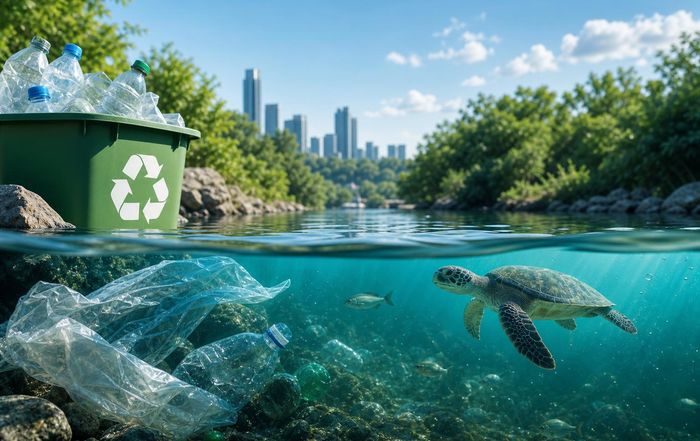
How Plastic Recycling Supports Cleaner Waterways
Introduction: Plastic, Water, and the Business Imperative
Wow, finally the relationship between plastic use, recycling systems, and the health of rivers, lakes, and oceans has become a defining issue for businesses, policymakers, and communities worldwide. As scientific understanding of plastic pollution deepens and regulatory expectations tighten, the question is no longer whether plastic waste affects global water systems, but how quickly organizations can transform their practices to prevent further damage. For the happy hipster members of YouSaveOurWorld, which is already engaged with sustainable living, sustainable business, and environmental awareness, plastic recycling is not simply a technical waste-management process; it is a strategic tool for protecting waterways, managing risk, unlocking innovation, and reinforcing trust in brands and institutions.
Waterways are the circulatory system of the planet's economy and ecology. From agricultural irrigation channels and industrial ports to coastal tourism destinations and fisheries, nearly every sector depends on clean water. As documented by the United Nations Environment Programme on its marine litter and plastic pollution platforms, an estimated 11 million metric tons of plastics enter the oceans every year, much of it carried by rivers and stormwater systems. Effective plastic recycling, combined with upstream redesign and behavioral change, offers one of the most direct and scalable levers to reduce this flow, protect aquatic ecosystems, and support resilient economic growth.
Understanding the Journey of Plastic into Waterways
Before assessing how recycling supports cleaner waterways, it is essential to understand how plastics reach those waterways in the first place. Plastic items are typically produced, consumed, and discarded on land, yet mismanaged waste can be transported by wind, rain, and runoff into drainage systems and rivers. According to the World Bank, which provides detailed analysis in its What a Waste reports, inadequate waste collection and disposal infrastructure in many rapidly urbanizing regions allows a significant share of plastic waste to leak into the environment.
Once in rivers, plastics travel downstream, fragmenting into microplastics that are extremely difficult to recover. Scientific assessments from the International Union for Conservation of Nature (IUCN), summarized in its marine plastics briefs, highlight how this material accumulates in river deltas, estuaries, and coastal zones, where it affects biodiversity, fisheries, and tourism. Every plastic bottle or wrapper that is captured, sorted, and recycled before it can leak into the environment represents a tangible reduction in this downstream burden. Thus, the effectiveness of plastic recycling systems is measured not only in tonnage processed, but in the volume of pollution prevented from entering waterways at all.
For a small but premium websites like YouSaveOurWorld, which connects global environmental concerns to daily choices, explaining this journey is critical to raising environmental awareness and motivating both individuals and organizations to act earlier in the plastic life cycle, before waste becomes waterborne pollution.
The Core Mechanisms: How Recycling Interrupts Pollution Pathways
Plastic recycling supports cleaner waterways through several interconnected mechanisms that operate across the value chain. First, when plastic is collected for recycling, it is physically removed from the environment or from waste streams that are prone to leakage. This includes shoreline cleanups, urban collection schemes, and take-back programs in industrial zones. Second, recycling creates economic value for used plastic, turning it from a low-priority waste into a tradable resource. By establishing a market price for recyclables, businesses and communities gain a financial incentive to recover materials that might otherwise be dumped or burned, practices that often lead to runoff into nearby rivers and streams.
Third, recycling reduces the demand for virgin plastic production, which is closely tied to fossil fuel extraction and energy-intensive processing. The Ellen MacArthur Foundation, a leading voice on the circular economy, has detailed in its New Plastics Economy work how circular design and recycling can significantly reduce the overall volume of plastic entering the market. Lower production volumes, combined with smarter product and packaging design, translate into fewer items that can end up as litter, thereby reducing the overall pollution pressure on waterways.
Finally, robust recycling systems drive improvements in waste collection and sorting infrastructure. Municipalities and companies that invest in recycling typically strengthen their entire waste-management chain, from household bins to material recovery facilities. The Organisation for Economic Co-operation and Development (OECD) has documented these systemic benefits in its circular economy analyses, noting that recycling often catalyzes better governance, data, and accountability in waste systems. These improvements, in turn, lower the probability that plastics will escape into drainage channels and waterways, especially during heavy rainfall and flooding events that are becoming more frequent under climate change.
Plastic Recycling and Water Quality: Environmental and Health Dimensions
Cleaner waterways are not just an aesthetic or ecological objective; they are a public health and economic necessity. Microplastics and associated chemicals can accumulate in aquatic food chains, potentially affecting human health through seafood consumption and drinking water contamination. The World Health Organization (WHO) has examined these concerns in its work on microplastics in drinking water, highlighting the need to reduce plastic inputs at the source. By intercepting plastic waste before it enters water systems, recycling programs directly reduce the load of macro- and microplastics that might otherwise fragment and disperse in rivers and reservoirs.
Recycling also mitigates secondary pollution from open dumping and uncontrolled burning of plastics, practices that release toxic substances into the air and deposit residues that are washed into waterways. Properly managed recycling facilities, guided by standards such as those promoted by the International Organization for Standardization (ISO) in its environmental management frameworks, help ensure that plastic recovery does not create new pollution pathways. This is particularly important in emerging markets, where informal recycling sectors often operate with limited safety and environmental controls, and where formalizing and upgrading these systems can yield significant water-quality benefits.
For subscribers and readers of YouSaveOurWorld who are exploring the links between climate change, waste, and health, the connection is increasingly clear: reducing plastic leakage into waterways is a climate resilience strategy, a public health measure, and a key component of sustainable urban and rural development. Cleaner rivers and coasts support fisheries, tourism, and recreation, all of which contribute to local well-being and economic opportunity.
Economic and Business Drivers: From Compliance to Competitive Advantage
In the business arena, plastic recycling has shifted from a peripheral corporate social responsibility activity to a core strategic issue. Regulators in many jurisdictions have introduced extended producer responsibility schemes, recycled-content mandates, and restrictions on single-use plastics. The European Commission, for example, sets out ambitious goals in its circular economy action plan, compelling companies to rethink packaging, logistics, and product design. Non-compliance can lead to financial penalties, reputational damage, and loss of market access.
At the same time, companies that proactively integrate plastic recycling into their operations and supply chains can unlock cost savings, secure material supplies, and meet customer expectations for sustainability. Investors are increasingly scrutinizing how firms manage environmental risks, with frameworks such as the Task Force on Climate-related Financial Disclosures (TCFD) and its successor initiatives encouraging transparency on climate and resource issues. As capital markets reward credible sustainability strategies, businesses that demonstrate leadership in plastic recycling and water protection can enhance their valuation and access to finance.
For the business-focused demographic coming to YouSaveOurWorld.com, the connection between recycling and broader sustainable business performance is particularly relevant. Companies that design for recyclability, invest in collection infrastructure, and collaborate with recyclers are not only reducing their environmental footprint; they are also building resilient supply chains and strengthening stakeholder trust. This trust is critical in an era where consumers can quickly access product and packaging information and where social media amplifies both best practices and failures.
Innovation, Technology, and the Future of Plastic Recovery
Technological innovation is reshaping how plastic recycling supports cleaner waterways. Traditional mechanical recycling, which relies on sorting, washing, and reprocessing plastics into pellets, is being complemented by advanced techniques such as chemical recycling, depolymerization, and solvent-based purification. These technologies aim to handle complex or contaminated plastics that are currently difficult to recycle, thereby reducing the volume of waste destined for landfills or incineration. The U.S. Environmental Protection Agency (EPA) provides overviews of these developments in its sustainable materials management resources, emphasizing the need to evaluate environmental impacts across the life cycle.
Digital tools are also transforming collection and tracking systems. Sensor-enabled bins, blockchain-based traceability platforms, and artificial intelligence for automated sorting are helping municipalities and companies identify leakage hotspots and improve recovery rates. For a platform like YouSaveOurWorld.com, which closely follows technology and innovation trends, these developments illustrate how data and design can converge to protect waterways. When combined with geographic information systems and hydrological models, data from recycling programs can help predict where mismanaged plastics are most likely to enter rivers, enabling targeted interventions.
In parallel, innovation in materials science is leading to new polymers, additives, and packaging formats designed for recyclability and reduced environmental impact. Organizations such as the National Renewable Energy Laboratory (NREL) showcase research on advanced plastics recycling and bioplastics, underlining the potential for circular materials that maintain performance while minimizing pollution risks. As these solutions scale, they will play an increasingly important role in decoupling plastic use from waterway degradation.
Design, Lifestyle, and Consumer Behavior: Aligning Daily Choices with Cleaner Waterways
While technological and policy solutions are essential, the behavior of individuals and households remains a decisive factor in whether plastics reach waterways. Product and packaging design can nudge consumers toward better disposal habits by making items easier to sort and recycle, providing clear labeling, and reducing unnecessary material use. The World Wildlife Fund (WWF), through initiatives such as its No Plastic in Nature campaign, emphasizes that design decisions made in corporate boardrooms shape the options available to consumers at home and in stores.
Lifestyle choices, from the use of reusable containers to participation in local recycling programs, also determine how much plastic ends up in unmanaged waste streams. On YouSaveOurWorld, the independently well researched interplay between lifestyle, waste, and personal well-being is a recurring theme, as readers seek practical ways to align their values with their habits. When individuals understand that placing a plastic bottle in a recycling stream rather than a mixed-waste bin can prevent that item from being washed into a storm drain and ultimately the sea, recycling becomes more than a routine task; it becomes a tangible contribution to protecting shared water resources.
Design also influences the visibility and accessibility of recycling infrastructure in public spaces and workplaces. Well-placed, clearly labeled collection points, supported by consistent communication, can dramatically improve capture rates. Businesses that serve large numbers of customers, such as retailers and hospitality providers, have a particularly important role in shaping these environments and signaling that recycling is an integral part of the customer experience, not an afterthought.
Education, Awareness, and Community Engagement
Sustained improvements in plastic recycling and waterway protection depend on education and awareness that reach across age groups, professions, and cultures. Schools, universities, and vocational training institutions are increasingly incorporating circular economy and environmental literacy into their curricula, equipping the next generation of leaders with the knowledge and skills to design and manage more sustainable systems. The UNESCO framework for education for sustainable development illustrates how interdisciplinary learning can connect plastic use, recycling, and water stewardship in a coherent narrative.
For communities, local campaigns and citizen science initiatives, such as river cleanups and litter monitoring, can build a sense of shared responsibility and provide data to inform policy and business decisions. Premium digital hubs like YouSaveOurWorld contribute to this ecosystem by curating accessible information, practical guidance, and impartial perspectives on education and environmental action. When residents see the volume and types of plastics collected from nearby waterways, they gain a concrete understanding of how local consumption patterns and waste-management gaps manifest in their own environment.
Business leaders and policymakers also benefit from targeted capacity-building, including training on extended producer responsibility, recycled-content standards, and circular design. By fostering dialogue between public and private sectors, and between formal and informal waste workers, communities can co-create solutions that are technically sound, socially inclusive, and financially viable. These collaborative approaches are especially important in regions where informal recyclers play a critical role in capturing plastics that might otherwise end up in rivers and canals.
Global Context: Plastic Recycling, Climate, and the Circular Economy
Plastic recycling does not operate in isolation; it is embedded in a broader global transition toward circular economies and low-carbon development. As climate impacts intensify, with more frequent floods and storms that can mobilize waste into waterways, the resilience of waste-management and recycling systems becomes a climate adaptation priority. The Intergovernmental Panel on Climate Change (IPCC), through its assessment reports, underscores the importance of integrated approaches that address emissions, resource use, and ecosystem protection simultaneously.
From a macroeconomic perspective, the shift from a linear "take-make-dispose" model toward a circular system in which materials are kept in use for as long as possible has profound implications for employment, trade, and innovation. The International Labour Organization (ILO) has explored these dynamics in its work on green jobs and the circular economy, noting that recycling and remanufacturing can create new forms of decent work when properly regulated and supported. For the audience of YouSaveOurWorld.com, which follows trends in the global economy and business transformation, plastic recycling represents both a responsibility and an opportunity to participate in a more resilient, resource-efficient economic paradigm.
This global context reinforces the idea that cleaner waterways are not merely a local environmental benefit, but a shared outcome of coordinated action across borders. Plastic produced in one country can be consumed in another and end up in the ocean far from its origin, carried by complex trade and hydrological networks. International agreements, corporate coalitions, and knowledge-sharing platforms all play a role in harmonizing standards, scaling successful models, and ensuring that progress in one region is not undermined by inaction elsewhere.
Personal Well-Being and the Human Dimension of Cleaner Waterways
Beyond policy frameworks and business strategies, the human dimension of plastic recycling and waterway protection is deeply personal. Access to clean rivers, lakes, and coastal waters contributes to physical health, mental well-being, cultural identity, and recreation. Many communities maintain spiritual and historical connections to water bodies that are threatened by plastic pollution, and restoring these ecosystems can strengthen social cohesion and pride. Research highlighted by organizations such as the Centers for Disease Control and Prevention (CDC) on health and water quality reinforces the link between environmental conditions and public health outcomes.
For individuals engaging with YouSaveOurWorld.com, the alignment between environmental protection and personal well-being is increasingly evident. Choosing products with recycled content, supporting brands that invest in robust recycling systems, and participating in local waste-reduction initiatives are ways to translate concern for the planet into daily practice. These actions, while seemingly small in isolation, aggregate into meaningful reductions in plastic leakage when adopted at scale.
Moreover, the sense of agency that comes from contributing to cleaner waterways can counter feelings of helplessness in the face of global environmental challenges. By understanding how plastic recycling fits into broader strategies for sustainable living, climate resilience, and economic transformation, individuals and organizations can see themselves as active participants in a collective effort to safeguard the planet's water systems.
Conclusion: From Waste to Value, From Pollution to Protection
So the evidence is clear that plastic recycling, when embedded in a comprehensive strategy of design, policy, technology, and education, plays a pivotal role in supporting cleaner waterways. It interrupts pollution pathways by capturing materials before they can leak into rivers and oceans, reduces the demand for virgin plastics, and drives systemic improvements in waste-management infrastructure. For businesses, it has evolved into a strategic imperative that intersects with regulatory compliance, risk management, innovation, and brand trust. For communities and individuals, it offers a tangible means to protect local environments, support health, and express values through everyday choices.
On YouSaveOurWorld, the story of plastic recycling is inseparable from broader daily updated themes of plastic recycling, sustainable business, lifestyle change, and global cooperation. As readers explore the site's resources on business, design, technology, and environmental awareness, they encounter a consistent message: transforming how society produces, uses, and recovers plastics is central to safeguarding the world's waterways and, by extension, the foundations of human prosperity.
The path forward demands continued investment, innovation, and collaboration, but it is also a path rich with opportunity. By treating used plastic as a valuable resource rather than an inevitable pollutant, and by aligning economic incentives with ecological realities, societies can move from a paradigm of waste and degradation to one of regeneration and stewardship. In doing so, they not only protect rivers, lakes, and oceans, but also affirm a commitment to a future in which economic development and environmental integrity reinforce, rather than undermine, one another.
