
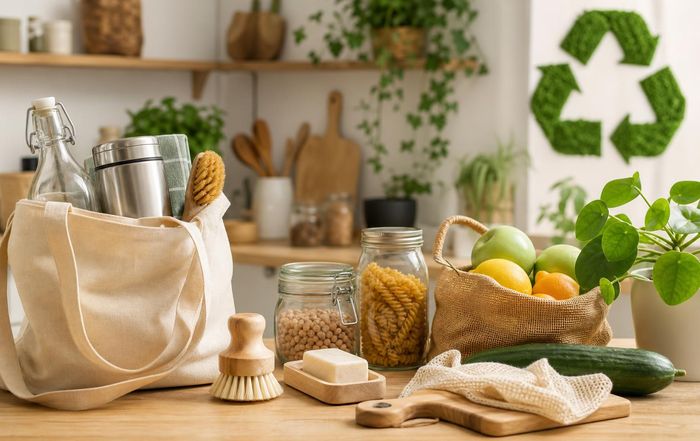
How to Build a Low-Waste Kitchen Without Expensive Upgrades
Most kitchen "sustainability" advice seems to start with buying something new: stainless steel containers, smart composters, designer water filters. Yet for many households, the most powerful way to cut waste is to change habits, not hardware. A low-waste kitchen can be built almost entirely from what you already own, with a few carefully chosen additions when they genuinely make a difference.
This new guide focuses on practical, budget-conscious steps that reduce waste of food, packaging, water, and energy-while still fitting real life. It draws on guidance from organizations like the UN Environment Programme, FAO, and national waste agencies, and connects to broader topics such as sustainable living, plastic recycling, and waste reduction.
Start with what you have: a "no-buy" kitchen audit
Before adding anything new, it helps to understand where waste is actually happening in your kitchen. A simple, one-week audit can reveal more than any product review. Keep a notepad or notes app handy and track three things: what you throw away, what you recycle, and what you wish you had stored or used differently. Pay particular attention to food that spoils before you eat it, single-use plastics, and "wishcycling" (items you put in the recycling bin even though you are not sure they are accepted). Many municipalities and organizations such as EPA in the United States and WRAP in the UK provide clear guidance on what can and cannot be recycled, and it is worth checking your local rules rather than guessing.
During this audit, resist the urge to immediately buy solutions. Instead, look for patterns. Do leafy greens regularly wilt in the back of the fridge? Are take-away containers piling up? Do you rely on cling film for every leftover? Do you buy large bags of produce that you never finish? The aim is to identify the few changes that would make the biggest difference. This kind of observation aligns with the "waste hierarchy" promoted by agencies like the European Environment Agency, which emphasizes prevention and reuse before recycling or disposal. Once you see your own patterns clearly, it becomes easier to design low-waste habits using tools and containers you already own.
Cut food waste with simple planning and storage habits
Globally, roughly one-third of food produced for human consumption is lost or wasted, according to the Food and Agriculture Organization. In many higher-income households, most of that waste happens in the kitchen, not on the farm. Reducing food waste is therefore one of the most powerful steps toward a low-waste kitchen, and it does not require any expensive technology. It starts with planning realistic meals, buying only what you can use, and storing food so it lasts longer. A short, flexible meal plan-three or four planned dinners plus some mix-and-match basics-can be more effective than a rigid seven-day schedule, because it leaves room for leftovers, invitations, and changes in appetite.
Once food is home, simple storage tweaks can dramatically reduce spoilage. Many people are surprised to learn that ethylene-producing fruits like apples and bananas can speed up ripening of nearby produce; keeping them separate from sensitive items such as leafy greens can extend shelf life. Labeling leftovers and opened ingredients with a piece of masking tape and a date helps avoid the "mystery container" problem that leads to unnecessary discarding. Storing herbs upright in a jar of water, wrapping greens in a clean, slightly damp cloth, and keeping dry goods in airtight containers (even repurposed jars) are all low-cost ways to preserve freshness. These habits connect directly to broader sustainable lifestyle choices and can be adapted to different climates and cuisines.
Another powerful tool is learning the difference between "use by" and "best before" dates, where relevant in your country. Food safety agencies such as the USDA and Food Standards Agency explain that "best before" usually refers to quality, not safety, and many foods remain perfectly edible after that date if stored correctly. Using your senses-sight, smell, and taste-alongside basic safety knowledge can prevent good food from being thrown away unnecessarily. For those who like structure, the "cook once, eat twice" approach-intentionally making extra grains, beans, or roasted vegetables to use in different meals-turns potential leftovers into planned ingredients instead of accidental waste.
Use what you already own as "reusables"
A low-waste kitchen does not require a drawer full of new bamboo, silicone, or stainless steel products. In many cases, it is more sustainable to keep using what you already have than to replace it with something new, even if the new item seems greener. The environmental impact of producing and shipping new goods can be significant, as highlighted in life-cycle assessments shared by organizations such as UNEP and OECD. The most climate-friendly container is often the one already in your cupboard. Old glass jars, for example, can become storage for dry goods, leftovers, homemade dressings, or freezer portions. Washed take-away containers can serve as lunch boxes or organizers for small items like spices or tea bags.
Cloth can easily replace many single-use items without any special purchases. An old cotton T-shirt can be cut into cleaning rags, eliminating the need for disposable wipes or paper towels in many situations. A clean tea towel can cover rising dough, wrap bread, or stand in for cling film over a bowl of salad. If you do buy new reusables, choose items that are durable, multipurpose, and compatible with your existing habits and storage space. For example, a single sturdy lidded container that stacks well in your fridge may get more use than a whole set that does not fit your shelves. Thinking through your daily routines-lunch prep, leftover storage, grocery shopping-will help ensure that any new item genuinely reduces waste instead of becoming clutter.
This "use what you have" mindset also extends to cooking tools. A sharp knife and a cutting board can replace many specialized gadgets that eventually break and end up as plastic waste. A simple pot with a lid can do the work of a rice cooker, steamer, and pasta pot for many households. By prioritizing versatility and repairability, kitchens can avoid the cycle of buying and discarding niche tools. This approach fits naturally with the broader principles of sustainable business and consumption, where extending product lifetimes is a key strategy for reducing environmental impact.
Rethink packaging: shopping habits that shrink your bin
Changing how food enters the kitchen can be as important as changing how it leaves. Packaging is a major driver of household waste, especially plastic. While some packaging serves real functions-like preventing spoilage or contamination-there are many opportunities to choose lower-waste options without spending more. Guidance from organizations like Greenpeace, Zero Waste Europe, and government waste agencies highlights three practical strategies: buying in bulk when it truly reduces waste, choosing minimally packaged items, and bringing your own bags and containers where allowed.
Bulk buying is often portrayed as inherently sustainable, but it only reduces waste if you can actually use what you purchase before it spoils. For perishable items, smaller quantities may be better, even if the price per unit is higher. For non-perishables like grains, beans, or nuts, larger packages can reduce both cost and packaging, especially if you decant them into airtight containers at home. Where bulk stores are available, bringing your own containers or jars can cut out single-use packaging entirely, though rules vary by country and retailer. When this is not an option, simply choosing products in recyclable materials like glass or metal, or in larger "family size" packs rather than multiple small ones, can still make a meaningful difference.
Reusable bags are one of the simplest low-waste upgrades, and they do not need to be fancy. Old tote bags, backpacks, or even sturdy paper bags can be used repeatedly. Produce bags can be made from old net curtains or thin fabric, or you can simply put loose produce directly into your basket if your store allows it. For many readers, focusing on a few high-impact items-such as switching from bottled water to tap or filtered water where safe, buying loose fruit and vegetables instead of pre-packaged trays, and choosing larger containers of yogurt or milk instead of many small ones-will cut a surprising amount of waste. For those interested in how these choices connect to larger climate change and global issues, reports from IPCC and national environment ministries provide broader context on the emissions from packaging and food systems.
Make friends with leftovers and "scrap cooking"
One of the most creative-and cost-saving-ways to reduce kitchen waste is to treat leftovers and scraps as ingredients rather than as problems. Many cuisines around the world have long traditions of transforming odds and ends into soups, fritters, stews, and stocks. Adopting this mindset can help households use nearly all of what they buy. For example, vegetable peels, herb stems, and onion skins can be collected in a container in the freezer and later simmered into a flavorful broth. Slightly stale bread can become croutons, breadcrumbs, or bread pudding. Cooked grains can be turned into fried rice or salads, and small portions of cooked vegetables can be combined into omelets or savory pies.
Food safety remains important, and organizations like WHO and national health agencies offer clear guidance on how long different foods can safely be stored in the fridge or freezer. Within those limits, planning a weekly "leftover night" can prevent small containers from accumulating and being forgotten. Some people find it helpful to designate a specific shelf in the fridge as the "eat first" area, where items that need to be used soon are placed. This visual cue can guide meal decisions and reduce spoilage. Apps and online communities often share "use it up" recipe ideas, but creativity does not have to be complicated: a simple stir-fry, soup, or pasta dish can absorb a wide range of vegetables, proteins, and sauces.
This approach also invites experimentation with parts of plants that are often discarded but edible, such as broccoli stems, beet greens, or citrus peels (zested or candied). While not every scrap is suitable for eating, exploring what is safe and tasty can expand your cooking repertoire and reduce waste at the same time. These techniques align with broader efforts in environmental awareness and education, highlighting how everyday choices in the kitchen connect to global resource use.
Composting on a budget: from peelings to soil
Even with careful planning and creative cooking, some organic waste is inevitable-coffee grounds, eggshells, certain peels, and spoiled food. Composting offers a way to keep these materials out of landfill, where they can generate methane, a potent greenhouse gas. While commercial composters and smart bins exist, low-cost and low-tech options are often just as effective. In many cities and regions, municipal or community composting programs accept food scraps at drop-off points or through curbside collection. Information is usually available from local authorities or waste management companies, and organizations like ICLEI and C40 Cities share examples of urban composting systems around the world.
For those with outdoor space, a simple compost heap or bin can be built from pallets, wire mesh, or repurposed containers. Guidance from gardening organizations such as the Royal Horticultural Society or Master Gardener programs explains how to balance "greens" (nitrogen-rich materials like food scraps and fresh grass) with "browns" (carbon-rich materials like dry leaves, cardboard, and paper). In small apartments, low-cost methods like bokashi (fermenting food waste in a sealed bucket) or worm bins can work, though they require some basic knowledge and maintenance. The key is to choose a method that fits your space, local climate, and willingness to manage the system.
If home composting is not feasible, there are still ways to reduce the impact of unavoidable food waste. Some people share scraps with neighbors who garden or keep chickens, while others participate in community gardens that accept compostable materials. In some regions, private collection services or social enterprises offer food scrap pickup for a modest fee. Exploring these options can turn what was once trash into a resource, supporting soil health and local green spaces. Composting also links directly to broader personal well-being for those who enjoy gardening or simply like the feeling of closing the loop on their household's organic waste.
Smart, low-cost swaps for common disposables
While it is not necessary to replace every disposable item overnight, some targeted swaps can significantly reduce waste and often save money over time. For example, many households find that using cloth dish towels, napkins, and cleaning rags can dramatically cut paper towel use. These can be laundered with regular loads of washing, and even imperfect or stained textiles can serve for cleaning tasks. Similarly, a refillable pump bottle for dish soap or hand soap, topped up from a larger container, can reduce the number of small plastic bottles entering the home. Where refill shops are available, customers can bring their own containers to be refilled, further cutting packaging.
For food storage, a combination of lidded containers, plates used as lids over bowls, and repurposed jars can often eliminate much of the need for cling film and single-use bags. When bags are needed-for freezing, for example-reusing bread bags or other clean plastic bags several times extends their life. In some countries, beeswax wraps and silicone lids are popular, but they are not essential if budgets are tight. The principle is to find reusable options that work with your existing habits and equipment. Over time, as disposable items run out, they can simply not be replaced, forcing new, lower-waste routines to become normal.
Hot drinks on the go offer another opportunity for low-cost change. Many cafes accept reusable cups, and some even offer a small discount for bringing your own. A sturdy mug or insulated cup that you already own can serve this purpose; it does not have to be branded as a "travel mug." Likewise, a simple cutlery set from home, wrapped in a napkin or small cloth bag, can replace single-use plastic utensils when eating away from home. These small shifts, multiplied over months and years, contribute significantly to reducing plastic waste and align with broader efforts in plastic recycling and reduction worldwide.
Save energy and water while you cook and clean
A low-waste kitchen is not only about solid waste; it also involves reducing wasted energy and water. According to agencies like the International Energy Agency and national energy offices, household energy use in kitchens comes largely from cooking appliances, refrigeration, and hot water. While upgrading to new, highly efficient appliances can be beneficial, it is not always financially or environmentally sensible to replace working equipment. Instead, changing how existing appliances are used can deliver significant savings. For example, using lids on pots, matching pot size to burner size, and turning off the heat a few minutes before food is fully cooked (letting residual heat finish the job) can cut energy use without affecting meal quality.
Microwaves, pressure cookers, and slow cookers are often more energy-efficient than ovens for certain tasks, especially for reheating or cooking small quantities. Batch cooking in the oven-preparing multiple dishes at once-makes better use of the energy needed to heat the appliance. Keeping the fridge and freezer well-organized and not overfilled helps air circulate and reduces the time the door is open while you search for items. Defrosting the freezer when ice builds up improves efficiency, and checking door seals for leaks can prevent energy loss. These practices connect directly to broader technology and innovation discussions but can be applied with no new purchases at all.
Water-saving habits are similarly straightforward. Scraping plates into a compost container before rinsing reduces the need for heavy spraying. Washing dishes in a basin rather than under running water, or using the eco setting on a dishwasher and only running full loads, can significantly cut water use. Many utilities and organizations such as Water.org and national water agencies provide additional tips tailored to local conditions. By integrating these habits into daily routines, households reduce their environmental footprint and often lower utility bills, showing how sustainability and cost savings can align.
Focus on progress, not perfection
Building a low-waste kitchen without expensive upgrades is less about achieving a perfect, picture-ready pantry and more about making steady, realistic changes. Every household has different constraints: time, space, income, local infrastructure, cultural traditions, and dietary needs. A family in a small city apartment with no compost collection will have different options from someone with a large garden, just as someone working long shifts may rely more on prepared foods than a person who enjoys cooking as a hobby. Recognizing these differences helps avoid unhelpful comparisons and guilt. Environmental organizations, from WWF to Friends of the Earth, emphasize that millions of people making imperfect changes can have more impact than a small number of people living a perfectly "zero waste" lifestyle.
For those who want to go further, exploring exciting related topics such as innovation in waste reduction, circular economy and business, or broader sustainable living practices can provide new ideas and community support. But the core of a low-waste kitchen remains simple: buy thoughtfully, store food well, use what you have, reuse whenever possible, and treat waste as a last resort rather than an inevitability. Over time, these habits become second nature, and the kitchen quietly shifts from being a source of waste to a place where resources are respected and used to their full potential.
