
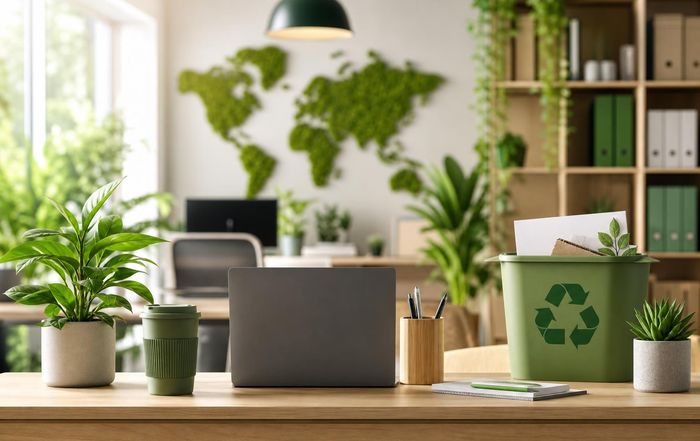
Greener Office Practices for Sustainable Business Growth
The Big Need and Want of Greener Offices!
The convergence of regulatory pressure, stakeholder expectations, and technological capability has transformed greener office practices from a peripheral "nice to have" into a core driver of sustainable business growth. Around the world, boards, investors, and employees are scrutinizing how companies manage their environmental footprint inside their own walls, and offices have become a visible and measurable arena where environmental responsibility, operational efficiency, and brand reputation intersect. For organizations seeking to align profitability with purpose, the office is no longer just a cost center; it is a strategic platform for demonstrating climate leadership, fostering innovation, and nurturing a culture of responsibility.
Within this context, YouSaveOurWorld positions greener office practices as a practical bridge between high-level sustainability commitments and everyday operational decisions. The site's broader focus on sustainable living, responsible business, and systemic responses to climate change provides a comprehensive framework that helps organizations understand that the office is both a microcosm of global environmental challenges and a laboratory for scalable solutions. As the global economy navigates the transition to net-zero emissions, greener offices stand out as one of the most accessible, measurable, and culturally resonant starting points for sustainable transformation.
Linking Office Practices to Climate and Business Performance
Modern sustainability strategy is increasingly grounded in science-based targets and transparent reporting frameworks, and greener office practices now play a measurable role in corporate climate trajectories. Initiatives such as the Science Based Targets initiative (SBTi) and climate disclosure frameworks supported by the Task Force on Climate-related Financial Disclosures (TCFD) have pushed companies to quantify their emissions, including those linked to buildings, energy use, and employee behavior. Organizations that treat offices as strategic assets rather than passive spaces are better positioned to reduce operational emissions, control energy costs, and demonstrate credible progress toward decarbonization commitments. Decision-makers can deepen their understanding of these dynamics through resources from the Intergovernmental Panel on Climate Change and guidance from the United Nations Environment Programme on resource efficiency in buildings.
From a business performance perspective, greener office practices intersect with risk management, cost optimization, and brand differentiation. Energy-efficient buildings reduce exposure to energy price volatility, while circular approaches to materials and waste management mitigate regulatory and reputational risks associated with landfill use and pollution. At the same time, companies that embed environmental responsibility into the workplace experience higher engagement among employees who increasingly seek employers aligned with their values. Research from organizations such as the World Economic Forum has underscored the link between sustainability leadership, innovation capacity, and long-term competitiveness, reinforcing the strategic value of greener offices as part of an integrated sustainability roadmap.
Energy, Buildings, and the Low-Carbon Office
Office buildings are substantial contributors to global energy demand and greenhouse gas emissions, which makes energy optimization one of the most powerful levers for greener office practices. Retrofitting existing spaces with high-efficiency LED lighting, smart thermostats, and advanced building management systems can drastically reduce energy consumption while improving occupant comfort and productivity. The shift toward high-performance building envelopes, better insulation, and automated shading further enhances efficiency, especially when combined with data-driven monitoring. Organizations seeking technical guidance can explore resources from the International Energy Agency on energy-efficient buildings and examine green building standards promoted by LEED and BREEAM for structured implementation pathways.
In parallel, the rapid growth of on-site and off-site renewable energy procurement has transformed the energy profile of many corporate offices. Power purchase agreements, rooftop solar installations, and participation in community renewable energy projects allow companies to decarbonize their electricity use while signaling tangible climate action. Integrating these energy strategies with digital technologies, such as Internet of Things (IoT) sensors and AI-enabled energy analytics, reflects the broader role of technology in enabling greener offices. Organizations that approach energy not just as a cost but as a strategic dimension of sustainability are better equipped to align their offices with global climate goals and to communicate meaningful progress to investors, regulators, and employees.
Circular Materials, Plastic Reduction, and Responsible Procurement
Material flows within offices-furniture, electronics, packaging, and consumables-represent a significant opportunity to reduce environmental impact through circular economy principles. A greener office prioritizes durability, reparability, and recyclability, moving away from disposable culture and toward procurement strategies that value lifecycle performance. This includes selecting office furniture from suppliers that offer take-back programs, favoring modular designs that can be repaired or upgraded, and choosing recycled or responsibly sourced materials for flooring, partitions, and fixtures. Organizations exploring these approaches can draw on guidance from the Ellen MacArthur Foundation, which has been instrumental in advancing circular economy frameworks across industries.
Plastic reduction has become a highly visible and emotionally resonant focus of greener office efforts, particularly as awareness grows of the environmental and health impacts of plastic pollution. By eliminating single-use plastics from cafeterias, meeting spaces, and office events, and by prioritizing refillable systems and reusable containers, companies can significantly reduce their plastic footprint. Initiatives around plastic recycling and material recovery further reinforce this shift, especially when supported by clear signage, employee education, and partnerships with reputable recyclers. In this context, YouSaveOurWorld.com provides accessible guidance on practical steps organizations can take to align office material choices with broader goals around sustainable living and environmental stewardship.
Waste Minimization and the Culture of Resource Stewardship
Greener office practices extend beyond procurement decisions to encompass how waste is generated, segregated, and managed throughout the workplace. A mature sustainability strategy recognizes that waste is both a symptom of inefficient systems and a tangible indicator of organizational culture. By designing offices with clearly labeled collection points, separate streams for recyclables and organics, and minimized reliance on individual desk bins, organizations can nudge employees toward more mindful behaviors. Collaborating with waste management partners that offer transparent reporting and advanced recovery technologies reinforces accountability and enables continuous improvement. For an overview of policy trends and best practices, business leaders can consult the European Environment Agency and the U.S. Environmental Protection Agency for guidance on waste reduction and circular resource management.
Within the ecosystem, waste reduction in the office is framed as part of a broader transformation in how individuals and organizations think about consumption, responsibility, and long-term resilience. The site's dedicated content on waste connects office initiatives to household behaviors and community-level change, emphasizing that sustainable business is inseparable from sustainable lifestyles. When employees see their workplace aligning with the values promoted on platforms such as YouSaveOurWorld.com, they are more likely to internalize resource stewardship as a shared norm rather than a top-down directive, which is critical for maintaining momentum beyond the initial wave of enthusiasm.
Sustainable Office Design and Human-Centered Workspaces
Office design has emerged as a powerful lever for aligning environmental performance with human well-being, and greener office practices increasingly embrace holistic design principles that consider energy, materials, and occupant health together. Natural light, biophilic elements such as indoor plants and natural materials, and flexible layouts that encourage movement and collaboration all contribute to healthier, more engaging work environments. These design choices are not only aesthetically appealing but also linked to improved cognitive performance, reduced absenteeism, and higher job satisfaction. Organizations can explore the research and guidelines provided by the World Green Building Council to better understand the connection between green buildings and human health.
On YouSaveOurWorld.com, the intersection of office design, lifestyle, and personal well-being is a recurring theme, highlighting that sustainable spaces are those that support both planetary and human flourishing. Ergonomic furniture, quiet zones, and access to active transport facilities such as bike storage and showers complement environmental features like low-VOC materials and efficient HVAC systems. These integrated design choices demonstrate that greener offices are not merely about compliance or cost savings; they are about crafting work environments that reflect a company's commitment to the long-term health of its people and the planet. By treating design as a strategic investment rather than a cosmetic choice, organizations can turn their offices into physical embodiments of their sustainability and well-being values.
Digitalization, Hybrid Work, and the Future of Office Footprints
The accelerated adoption of digital tools and hybrid work models since the early 2020s has fundamentally changed the role and scale of office spaces, creating new opportunities and challenges for greener office practices. Many organizations have reduced their physical footprints, adopted flexible seating arrangements, and implemented digital workflows that significantly cut paper use and commuting-related emissions. At the same time, the shift to cloud-based collaboration and remote work raises questions about the environmental impact of data centers and home office setups, underscoring the need for a system-wide view of sustainability. For insights into the environmental dimensions of digitalization, organizations can consult analyses from the International Telecommunication Union and reports from Microsoft and Google on data center efficiency and renewable energy sourcing.
Within this evolving landscape, YouSaveOurWorld encourages organizations to see hybrid work not as a temporary response but as an opportunity to redesign office operations around flexibility, efficiency, and resilience. By assessing occupancy patterns, adjusting heating and cooling schedules, and consolidating underutilized space, companies can align their office energy use with actual demand. Simultaneously, providing guidance to employees on sustainable home office practices-such as efficient equipment, responsible e-waste management, and conscious energy use-extends the principles of greener offices into the broader realm of sustainable living. This integrated approach reflects a deeper understanding of how digital and physical infrastructures interact in shaping corporate environmental footprints.
Employee Engagement, Education, and Environmental Awareness
No greener office strategy can succeed without active participation from employees, whose daily choices around energy use, transportation, and materials collectively determine much of the office's environmental impact. Building a culture of sustainability therefore requires sustained investment in communication, training, and recognition. Workshops, onboarding modules, and internal campaigns that connect office initiatives to global environmental challenges help employees understand why their actions matter. Organizations can leverage resources from the United Nations Sustainable Development Goals framework to contextualize office practices within broader global objectives such as responsible consumption and climate action.
YouSaveOurWorld plays a distinctive role in this cultural dimension by offering accessible fresh content on environmental awareness and education that organizations can reference or adapt for internal use. When employees encounter the same themes of climate responsibility, resource efficiency, and well-being on public platforms and in their workplace initiatives, the message is reinforced and normalized. Moreover, sharing stories of internal innovation-such as employee-led green teams, low-impact commuting programs, or creative reuse of materials-strengthens a sense of ownership and pride. In this way, greener office practices become not just a set of policies but a shared narrative about what the organization stands for and how it contributes to a more sustainable world.
Governance, Metrics, and the Business Case for Sustainable Offices
To translate greener office aspirations into durable business value, organizations need robust governance structures and clear metrics that link office performance to broader sustainability and financial objectives. This includes assigning executive-level responsibility for environmental performance, integrating office-related targets into corporate sustainability strategies, and embedding relevant criteria into procurement, facilities management, and HR policies. Transparent reporting on energy use, waste diversion, water consumption, and employee engagement in sustainability initiatives enables continuous improvement and builds trust with stakeholders. Frameworks such as the Global Reporting Initiative (GRI) and standards from the International Organization for Standardization (ISO), particularly ISO 14001 for environmental management systems, provide structured guidance on how to institutionalize greener office practices.
From a financial perspective, the business case for greener offices rests on multiple pillars: operational cost savings from reduced energy and resource use, risk mitigation related to regulatory changes and carbon pricing, and intangible but increasingly material benefits associated with brand reputation and talent attraction. Studies from institutions such as the Harvard Business Review and the OECD have highlighted how sustainability leaders outperform peers over the long term, in part because they anticipate and adapt to structural shifts in markets and stakeholder expectations. YouSaveOurWorld.com reinforces this perspective by framing greener offices as a strategic component of sustainable business, where environmental performance is inseparable from innovation, resilience, and long-term value creation.
Innovation, Technology, and the Next Wave of Green Office Solutions
As organizations mature in their sustainability journeys, greener office practices are increasingly shaped by innovation and advanced technologies that go beyond incremental efficiency improvements. Smart building platforms that integrate occupancy data, air quality monitoring, and predictive maintenance are enabling more responsive and resource-efficient operations. Emerging materials, such as low-carbon concrete, bio-based composites, and recycled-content finishes, are reshaping how offices are constructed and refurbished. Furthermore, digital twins and simulation tools allow designers and facility managers to model energy and resource flows, test interventions virtually, and optimize performance before implementation. For companies exploring these frontiers, insights from the World Resources Institute and leading engineering firms can help identify high-impact opportunities.
Within the broader mission of YouSaveOurWorld.com, innovation is framed not only as technological advancement but also as a reimagining of business models, partnerships, and cultural norms. The site's focus on innovation and economy underscores that greener offices are part of a larger transition toward regenerative and circular economic systems. Pilot projects that test shared spaces, product-as-a-service models for office equipment, or performance-based contracts for energy services demonstrate how new forms of collaboration can unlock environmental and financial value simultaneously. By documenting and sharing these examples, YouSaveOurWorld.com helps organizations see greener offices not as the endpoint of sustainability efforts but as an evolving platform for continuous experimentation and learning.
Connecting Office Sustainability to Global Impact
While office-based initiatives may appear modest compared to the scale of global climate and biodiversity challenges, their cumulative impact is significant, especially when multiplied across thousands of organizations and millions of employees. Greener office practices reduce emissions, conserve resources, and influence supply chains, but they also play a symbolic role in signaling that sustainability is embedded in everyday operations rather than confined to high-level pledges. This symbolic dimension matters in a world where public trust in institutions is fragile and where authenticity and transparency are critical to maintaining social license to operate. Organizations can situate their office initiatives within global discourse by engaging with platforms such as the UN Global Compact, which encourages businesses to align strategies and operations with universal principles on human rights, labor, environment, and anti-corruption.
For YouSaveOurWorld.com, connecting greener office practices to the global context is central to its mission of empowering businesses and individuals to act meaningfully within their spheres of influence. The office becomes a tangible entry point into broader conversations about climate change, social equity, and economic resilience, demonstrating that global transformation is built from countless local actions. As more organizations share their experiences, data, and lessons learned, a collective body of practice emerges that accelerates progress for everyone. In this sense, greener offices are not merely about optimizing a single building; they are about participating in a worldwide movement toward a more sustainable, just, and prosperous future.
Our Part in Trying to Help Guiding the Journey
As sustainability expectations intensify and the complexity of environmental challenges grows, organizations need trusted, accessible, and practical guidance to translate ambition into action. YouSaveOurWorld serves this need by curating daily insights across sustainable living, sustainable business, design, technology, and personal well-being, offering a holistic view of what it means to build greener offices that support both organizational performance and human flourishing. By weaving together practical recommendations, global perspectives, and a strong emphasis on Experience, Expertise, Authoritativeness, and Trustworthiness, the platform positions itself as a partner for businesses that recognize sustainability as a defining challenge and opportunity of this decade.
Ultimately, greener office practices are a manifestation of deeper organizational values and strategic choices. Companies that embrace them are not only reducing their environmental footprint but also signaling a commitment to innovation, responsibility, and long-term value creation. As the world moves further into a decisive decade for climate action, offices that reflect these commitments will stand as visible, everyday reminders that sustainable business growth is both possible and necessary. Through continued learning, collaboration, and the practical resources available online, organizations can ensure that their offices become catalysts for meaningful change rather than relics of an unsustainable past.
