
The Importance of Protecting Biodiversity Hotspots in Southeast Asia
Why Biodiversity Hotspots in Southeast Asia Matter
The debate around climate, development, and sustainability has become impossible to separate from the fate of Southeast Asia's biodiversity hotspots, because this region, stretching from the rainforests of Borneo and Sumatra to the coral reefs of the Coral Triangle, now stands at a crossroads where decisions made over the next decade will either secure irreplaceable natural capital or accelerate a cascade of ecological and economic losses whose consequences will be felt far beyond national borders. For YouSaveOurWorld.com, which is dedicated to advancing practical, evidence-based action on sustainable living and global environmental responsibility, these hotspots are not abstract conservation targets; they are living laboratories that demonstrate how ecological integrity, community resilience, and long-term prosperity are tightly interwoven.
International scientific consensus, reflected in assessments by the Intergovernmental Science-Policy Platform on Biodiversity and Ecosystem Services (IPBES), shows that biodiversity is declining at an unprecedented rate, with Southeast Asia among the regions facing the most acute pressures as a result of rapid land-use change, overexploitation of resources, climate change, and pollution. Readers who follow developments in climate change science and policy will recognize that biodiversity loss and climate instability are twin crises, reinforcing one another in ways that undermine food security, water availability, public health, and economic stability. In this context, protecting biodiversity hotspots in Southeast Asia is no longer a niche environmental objective; it is a strategic imperative for businesses, governments, and communities seeking to build a resilient future.
Defining Biodiversity Hotspots and Their Global Significance
The term "biodiversity hotspot," originally developed by ecologist Norman Myers and now used widely by organizations such as Conservation International, refers to regions that combine exceptionally high levels of species richness and endemism with severe levels of habitat loss. To qualify as a hotspot under this framework, an area must contain at least 1,500 endemic plant species and must have lost at least 70 percent of its original habitat, a definition that underscores both ecological value and vulnerability. Southeast Asia is home to parts of several recognized hotspots, including Sundaland, Indo-Burma, Wallacea, and the Philippines, each harboring thousands of species found nowhere else on Earth and each under intense human pressure.
Scientific institutions such as the International Union for Conservation of Nature (IUCN) and the World Wide Fund for Nature (WWF) have documented how these hotspots function as reservoirs of genetic diversity and providers of ecosystem services that extend from rural communities to global supply chains, offering flood regulation, carbon storage, pollination, and fisheries productivity that underpin regional and international economies. For readers of YouSaveOurWorld.com, who are increasingly aware of the connections between global environmental trends and local choices, understanding the hotspot concept clarifies why targeted protection and restoration in these areas can yield disproportionate benefits relative to the land or sea area involved.
Southeast Asia's Unique Ecological Wealth
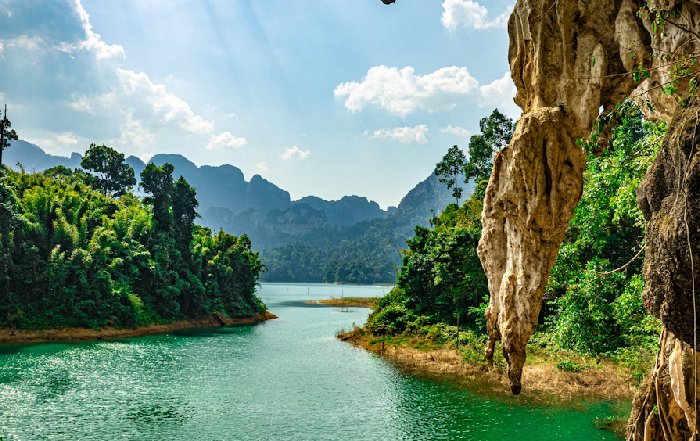
Southeast Asia's biodiversity is remarkable in its breadth and depth, encompassing tropical rainforests, mangroves, peatlands, seagrass meadows, coral reefs, karst landscapes, and highland ecosystems that together support some of the highest levels of species richness on the planet. The islands of Borneo and Sumatra, shared among Indonesia, Malaysia, and Brunei Darussalam, contain some of the oldest rainforests in the world, providing habitat for iconic and critically endangered species such as the orangutan, Sumatran tiger, and Bornean elephant, while the Mekong River basin, flowing through Cambodia, Lao PDR, Myanmar, Thailand, Vietnam, and parts of China, supports extraordinary freshwater biodiversity and sustains the livelihoods of tens of millions through fisheries and agriculture.
Marine biodiversity is equally exceptional, particularly within the Coral Triangle, a region recognized by The Nature Conservancy and other leading organizations as the global epicenter of marine life, with more coral reef fish and coral species than any other area on Earth, many of which are vital to regional food security and tourism revenues. Mangroves and seagrass beds along the coasts of Indonesia, the Philippines, and Vietnam serve as nurseries for commercially important fish species and act as powerful carbon sinks, a function highlighted in assessments by the United Nations Environment Programme (UNEP) that emphasize the role of "blue carbon" ecosystems in climate mitigation strategies. This extraordinary ecological wealth illustrates why protecting biodiversity hotspots is inseparable from the broader goals of environmental awareness and education that YouSaveOurWorld.com promotes.
Economic and Social Value of Biodiversity Hotspots
Beyond their intrinsic value, Southeast Asia's biodiversity hotspots underpin key sectors of the regional economy, providing ecosystem services that are often undervalued or ignored in conventional economic accounting but are increasingly recognized by institutions such as the World Bank and the Organisation for Economic Co-operation and Development (OECD) as essential natural capital. Forests in Sundaland and Indo-Burma regulate water flows, reduce flood risks, and stabilize soils, thereby protecting infrastructure and agricultural productivity in downstream areas, while coral reefs and mangroves shield coastal communities from storm surges and erosion, a protective function that UNDP has quantified as saving billions of dollars in avoided damages globally each year.
Ecotourism, when designed and managed responsibly, has emerged as a major economic driver in countries such as Thailand, Vietnam, and Indonesia, with national parks, marine protected areas, and community-based conservation initiatives attracting visitors who seek authentic nature experiences and are willing to pay premiums that support local livelihoods. At the same time, traditional knowledge held by Indigenous peoples and local communities plays a critical role in managing forests, fisheries, and agricultural landscapes in ways that maintain biodiversity and resilience, a role recognized in the Convention on Biological Diversity (CBD) and increasingly embedded in national policies. For business leaders and entrepreneurs exploring sustainable business models, these hotspots provide tangible examples of how nature-positive strategies can generate long-term value while aligning with social and environmental objectives.
Pressures, Threats, and the Climate Feedback Loop
Despite their value, biodiversity hotspots in Southeast Asia are under intense pressure from a combination of land-use change, overexploitation, pollution, invasive species, and climate change, with each driver reinforcing the others in complex feedback loops that accelerate ecological degradation. The expansion of industrial agriculture, particularly oil palm and rubber plantations, has been a major driver of deforestation in Indonesia, Malaysia, and parts of the Mekong region, while large-scale infrastructure projects, including roads, dams, and urban expansion, fragment habitats and open previously remote areas to logging, mining, and other extractive activities, trends that have been documented by the Food and Agriculture Organization (FAO) and regional research institutes.
Climate change compounds these pressures by altering temperature and rainfall patterns, increasing the frequency and intensity of extreme weather events, and driving sea-level rise that threatens low-lying coastal ecosystems and communities. Coral bleaching events in the Coral Triangle, linked to marine heatwaves documented by the National Oceanic and Atmospheric Administration (NOAA), have already caused significant reef degradation, while peatland fires in Indonesia, exacerbated by drainage and drought, release massive quantities of greenhouse gases and toxic haze that affect public health and regional economies. As YouSaveOurWorld.com emphasizes in its coverage of waste and pollution challenges, plastic debris and chemical contaminants further degrade terrestrial and marine ecosystems, affecting wildlife and human health and undermining the integrity of already stressed hotspots.
The Role of Sustainable Business and Finance
The protection of biodiversity hotspots in Southeast Asia increasingly hinges on the choices made by businesses, investors, and financial institutions, which have the power either to accelerate ecosystem degradation through unsustainable practices or to drive transformative change by adopting nature-positive strategies and redirecting capital flows. Global frameworks such as the Taskforce on Nature-related Financial Disclosures (TNFD) and initiatives supported by the World Economic Forum have highlighted the material risks that biodiversity loss poses to supply chains, asset values, and long-term profitability, particularly in sectors such as agriculture, forestry, fisheries, tourism, and infrastructure that depend heavily on ecosystem services and natural resources.
Forward-looking companies are beginning to integrate biodiversity considerations into their environmental, social, and governance (ESG) strategies, aligning with guidance from the Science Based Targets Network (SBTN) and leveraging tools developed by organizations like the Natural Capital Coalition to measure, manage, and report on their impacts and dependencies on nature. For readers of YouSaveOurWorld.com exploring business and economic transformation, this shift underscores how protecting biodiversity hotspots is not only a matter of corporate responsibility but also a source of competitive advantage, as firms that secure sustainable supply chains, reduce regulatory and reputational risks, and respond to growing consumer demand for environmentally responsible products position themselves more strongly in a rapidly changing marketplace.
Innovation, Technology, and Data-Driven Conservation
The accelerating pace of technological innovation offers powerful new tools for monitoring, managing, and restoring biodiversity hotspots in Southeast Asia, creating opportunities to scale conservation impact in ways that were not feasible even a decade ago. High-resolution satellite imagery and remote sensing platforms, such as those provided by NASA and the European Space Agency (ESA), enable near-real-time tracking of deforestation, fires, and land-use change, while low-cost drones and camera traps support fine-scale monitoring of wildlife populations and habitat conditions across remote and difficult-to-access landscapes. Advances in environmental DNA (eDNA) analysis allow researchers to detect the presence of species from water or soil samples, improving biodiversity assessments and helping to identify critical habitats that require protection.
Digital platforms and artificial intelligence, including machine-learning models developed in collaboration with organizations like Google Earth Engine, are being used to analyze large datasets, predict deforestation risk, and optimize the placement of protected areas and restoration projects. These tools are increasingly integrated into community-based initiatives, empowering local stakeholders to participate directly in data collection and decision-making, in line with the inclusive approaches advocated by the United Nations Development Programme (UNDP). For YouSaveOurWorld.com, which regularly explores innovation and technology for sustainability, these developments illustrate how digital transformation can be harnessed to support nature-positive outcomes when combined with strong governance, ethical safeguards, and equitable access to information.
Policy, Governance, and Regional Cooperation
Effective protection of biodiversity hotspots in Southeast Asia depends on robust policy frameworks, strong institutions, and sustained regional cooperation, as ecosystems and species ranges rarely align with national borders and many of the key drivers of biodiversity loss, such as climate change and international trade, operate at transboundary or global scales. Regional bodies such as the Association of Southeast Asian Nations (ASEAN) have taken steps to integrate biodiversity into their policy agendas, including through the ASEAN Centre for Biodiversity, which works with member states to coordinate conservation efforts, share data, and develop regional strategies aligned with global commitments under the Convention on Biological Diversity and the Kunming-Montreal Global Biodiversity Framework adopted in 2022.
National governments have expanded networks of terrestrial and marine protected areas, adopted moratoria on certain forms of logging or land conversion, and implemented policy instruments such as payment for ecosystem services (PES) schemes and REDD+ initiatives aimed at reducing emissions from deforestation and forest degradation, often with technical and financial support from the Green Climate Fund (GCF) and bilateral partners. However, implementation gaps, limited enforcement capacity, and conflicting policy objectives remain significant challenges, particularly where short-term economic pressures and vested interests undermine long-term conservation goals. For readers interested in the governance dimensions of climate and environmental policy, these dynamics highlight the importance of transparent decision-making, stakeholder engagement, and accountability mechanisms in ensuring that legal protections translate into real outcomes on the ground.
Community Engagement, Education, and Lifestyle Change
The long-term success of efforts to protect biodiversity hotspots in Southeast Asia ultimately depends on the values, choices, and behaviors of individuals and communities, both within the region and globally, because consumption patterns, dietary preferences, and lifestyle decisions in distant markets can drive land-use change and resource extraction that directly affect these ecosystems. Community-based conservation initiatives, such as locally managed marine areas in the Philippines and Indonesia or community forests in Laos and Vietnam, demonstrate that when local people have secure rights, access to information, and a meaningful voice in decision-making, they are often highly effective stewards of biodiversity, integrating traditional knowledge with modern science to manage resources sustainably.
Education and awareness-raising, from primary schools to executive training programs, play a critical role in building the social foundations for conservation, as emphasized by UNESCO and numerous regional education ministries that are incorporating environmental content into curricula and promoting experiential learning in nature. Platforms like YouSaveOurWorld.com, which provide accessible resources on environmental education, sustainable lifestyles, and personal well-being, help individuals understand how everyday choices-from product selection and travel decisions to diet and waste management-can either contribute to the degradation of biodiversity hotspots or support their protection and restoration through more responsible consumption and advocacy.
Practical Pathways for Business and Individuals
In 2026, the pathways for action to protect Southeast Asia's biodiversity hotspots are clearer than ever, and they involve both systemic change and practical steps that businesses and individuals can take immediately. Companies operating in or sourcing from the region can conduct rigorous supply chain due diligence, adopt zero-deforestation and zero-conversion commitments, support landscape-level conservation and restoration projects, and collaborate with peers, governments, and civil society through multi-stakeholder platforms such as the Tropical Forest Alliance and the Roundtable on Sustainable Palm Oil (RSPO), while integrating biodiversity metrics into corporate strategy and reporting in alignment with emerging global standards. Investors can direct capital toward nature-positive enterprises and green infrastructure, using tools such as green bonds, sustainability-linked loans, and blended finance mechanisms to de-risk investments in conservation and restoration.
Individuals can support organizations with strong track records in community-based conservation, choose products certified under credible sustainability standards, reduce food waste, and minimize their own ecological footprints by embracing principles of sustainable living and waste reduction, while using their voices as citizens and consumers to advocate for stronger policies and corporate accountability. For readers of YouSaveOurWorld.com, exploring topics such as innovation, sustainable business, and the evolving global green economy, these actions are part of a broader shift toward aligning economic activity with planetary boundaries and social well-being, in which biodiversity hotspots serve as both indicators of progress and beneficiaries of change.
Designing a Nature-Positive Future for Southeast Asia
The protection of biodiversity hotspots in Southeast Asia is not merely a defensive effort to preserve fragments of nature in the face of relentless development; it is an opportunity to design a future in which ecological integrity, economic prosperity, and social equity reinforce one another, rather than exist in perpetual conflict. Urban planners, architects, and designers across the region are increasingly embracing concepts such as biophilic design, nature-based solutions, and climate-resilient infrastructure, drawing on guidance from organizations like C40 Cities and the World Resources Institute (WRI) to integrate green spaces, water-sensitive urban design, and ecosystem restoration into the fabric of rapidly growing cities, thereby reducing pressure on surrounding hotspots while enhancing quality of life.
At the same time, the emerging discourse around "nature-positive" development, championed by coalitions such as the Business for Nature initiative, signals a shift in how progress is defined and measured, moving beyond narrow metrics of GDP growth toward more holistic indicators that account for the health of ecosystems and communities. For YouSaveOurWorld.com, which brings together insights on design, technology, and sustainable lifestyles, this evolving paradigm offers a coherent framework for connecting personal choices, corporate strategies, and public policies to the shared objective of safeguarding the living systems that support all economic and social activity.
In this context, protecting biodiversity hotspots in Southeast Asia becomes a central pillar of a broader transformation in how societies understand and relate to the natural world, anchoring climate action, sustainable development, and human well-being in the recognition that the region's forests, reefs, rivers, and wetlands are not expendable resources but foundational assets. The choices made by governments, businesses, and citizens will determine whether these irreplaceable ecosystems continue to erode or begin to recover, and platforms like YouSaveOurWorld.com will continue to play a vital role in informing, inspiring, and connecting those who are committed to ensuring that Southeast Asia's biodiversity hotspots remain vibrant, resilient, and life-supporting for generations to come.
