
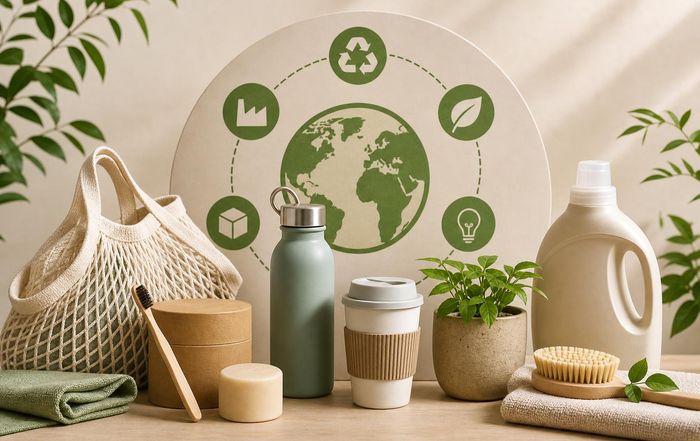
Sustainable Product Design Principles for Everyday Goods
Redesigning the Everyday: Why Sustainable Products Matter ?
The conversation about sustainability has moved decisively from the margins to the mainstream, and nowhere is this shift more visible than in the design of everyday products that fill homes, offices, and public spaces around the world. From toothbrushes and food containers to office furniture and consumer electronics, the principles of sustainable product design are increasingly shaping how businesses innovate, how consumers choose, and how regulators legislate. As we continues its unrewarded mission to translate complex environmental and business issues into practical guidance, sustainable design has become a central theme that connects sustainable living, climate strategy, innovation, and economic resilience in a single, coherent narrative.
The urgency is clear. According to the United Nations Environment Programme, global material extraction has more than tripled since 1970, driving ecosystem degradation, biodiversity loss, and escalating greenhouse gas emissions. Everyday goods are at the heart of this challenge, as they embody the linear "take-make-waste" model that still dominates global production. Yet they are also the most accessible lever for change, because redesigning familiar products offers an immediate way for businesses to reduce environmental impact while creating value, strengthening brands, and aligning with evolving consumer expectations. For the audience of YouSaveOurWorld.com, which spans individuals, entrepreneurs, and corporate leaders, understanding sustainable product design principles is therefore not a theoretical exercise but a practical roadmap for aligning lifestyle choices, business strategy, and global responsibility.
From Linear to Circular: The Key Foundation of Sustainable Design
Sustainable product design begins with a fundamental shift in mindset, away from the traditional linear economy and toward a circular economy in which materials and products are kept in use for as long as possible, waste is designed out from the outset, and natural systems are regenerated rather than depleted. This conceptual shift is not merely philosophical; it is increasingly embedded in regulation, investor expectations, and consumer behavior. Organizations such as the Ellen MacArthur Foundation have played a pivotal role in articulating how circular principles translate into design decisions for everyday goods, from modular electronics to refillable packaging systems.
For businesses seeking to understand how sustainable design can underpin long-term competitiveness, exploring the broader implications of sustainable business practices reveals that circularity is both a risk mitigation strategy and a growth opportunity. Regulatory frameworks such as the European Green Deal, extended producer responsibility laws, and product eco-design requirements are already reshaping markets, and companies that embed sustainable design at the core of their product development processes are better positioned to adapt. In this context, everyday goods become testbeds for innovation, enabling organizations to prototype business models based on reuse, repair, remanufacturing, and material recovery.
Life-Cycle Thinking: Designing with the Full Story in Mind
A defining feature of sustainable product design is life-cycle thinking, which requires designers and decision-makers to consider environmental and social impacts from raw material extraction through manufacturing, distribution, use, and end-of-life. This holistic perspective moves beyond narrow metrics such as upfront cost or single-issue performance and instead evaluates trade-offs across multiple dimensions, including carbon emissions, water use, toxicity, and social equity. Methodologies such as life-cycle assessment, promoted by institutions like the International Organization for Standardization, provide structured frameworks for quantifying these impacts and guiding better choices.
For the community that engages with YouSaveOurWorld.com, life-cycle thinking aligns closely with the site's broader emphasis on environmental awareness, because it reveals the often-hidden consequences of everyday consumption and highlights where design interventions can have the greatest leverage. For instance, in the case of household appliances, the majority of environmental impact may occur during the use phase due to energy consumption, making energy efficiency and smart controls crucial design priorities. By contrast, for single-use packaging, the primary concerns may lie in material extraction and end-of-life waste, underscoring the importance of material selection, recyclability, and system-level infrastructure for collection and processing.
Material Choices: Beyond "Green" Labels to Real Impact
Material selection is one of the most visible and influential aspects of sustainable product design, yet it is also one of the most complex. Designers must balance durability, performance, safety, cost, and aesthetics while minimizing environmental and social harm. The rise of bioplastics, recycled content, and innovative composites has expanded the toolkit, but not all alternatives deliver genuine benefits when evaluated through a life-cycle lens. Institutions such as the U.S. Environmental Protection Agency and the European Chemicals Agency provide guidance on hazardous substances, recyclability, and safer alternatives, offering valuable benchmarks for responsible material choices.
For products that contribute to global plastic pollution, sustainable material strategies are especially urgent. The audience of YouSaveOurWorld.com has shown sustained interest in plastic recycling, and it is increasingly clear that design decisions-such as using mono-materials, avoiding dark pigments that hinder sorting, and eliminating unnecessary additives-can dramatically improve the recyclability and value of plastic waste streams. At the same time, designers must be cautious not to assume that biodegradable or compostable materials are automatically superior; without appropriate collection and processing infrastructure, these materials can still end up in landfills or oceans, where they may not break down as intended. The most effective strategies often combine material innovation with systemic changes in packaging formats, logistics, and consumer engagement.
Durability, Repairability, and Modularity: Extending Product Life
One of the most powerful levers for reducing environmental impact is extending the useful life of products, thereby reducing the frequency of replacement and the associated resource extraction, manufacturing, and waste. In recent years, the global "right to repair" movement, supported by organizations like the Repair Association and policy initiatives from the European Commission, has underscored the importance of designing products that can be easily repaired, upgraded, and maintained. Everyday goods such as smartphones, small appliances, and furniture are increasingly being evaluated not only on performance and price but also on how easily components can be replaced and how long the product is expected to last.
From a design perspective, this shift encourages modular architectures, standardized fasteners, accessible components, and the provision of spare parts and repair documentation. For businesses, it also opens new service-based revenue models, such as maintenance contracts, refurbishment programs, and certified repair networks, which align with the broader themes of innovation and circular economy explored on YouSaveOurWorld.com. For consumers striving for sustainable living, choosing products that are built to last and designed for repair becomes a tangible expression of environmental responsibility, as well as a way to save money over time.
Energy and Resource Efficiency: Designing for Low-Impact Use
While much attention is rightly focused on materials and end-of-life, the use phase of many products remains the dominant contributor to environmental impact, particularly in energy-intensive categories such as home appliances, lighting, and consumer electronics. Sustainable product design therefore prioritizes energy and resource efficiency, integrating advanced technologies, smart controls, and behavioral insights to reduce consumption without compromising user experience. Programs such as ENERGY STAR and labels guided by the International Energy Agency have helped establish performance benchmarks and consumer recognition for efficient products, driving competition and innovation across markets.
For the audience of YouSaveOurWorld.com, which is increasingly attuned to the links between climate change, energy use, and household or business costs, efficient product design offers a direct pathway to lower carbon footprints and operational savings. Everyday goods such as LED lighting, induction cooktops, smart thermostats, and low-flow fixtures demonstrate how design can integrate technology and user-centric interfaces to make sustainable choices the default. As electricity grids incorporate more renewable energy and digitalization enables real-time optimization, the interaction between product design, infrastructure, and user behavior becomes a critical frontier for climate-aligned innovation.
Designing for End-of-Life: Reuse, Recycling, and Regeneration
No matter how durable or efficient a product may be, it will eventually reach the end of its useful life, and sustainable design requires careful planning for this stage from the outset. Design for disassembly, clear material labeling, and the avoidance of hazardous substances are essential to facilitate reuse, remanufacturing, and high-quality recycling. Organizations such as Zero Waste International Alliance and the World Resources Institute highlight how product design intersects with waste management systems, policy frameworks, and business models in determining whether end-of-life becomes a liability or a resource.
For communities and businesses that engage with the waste and plastic recycling content on YouSaveOurWorld.com, the connection between design and waste outcomes is becoming increasingly evident. Everyday goods that are difficult to disassemble, composed of mixed materials, or contaminated with problematic additives are far less likely to be recycled at scale, even where collection systems exist. Conversely, products designed with standardized materials, minimal adhesives, and modular components are more likely to be recovered and reintegrated into manufacturing cycles. In parallel, regenerative design approaches-such as using compostable materials in closed-loop systems for food service or integrating bio-based materials that sequester carbon-offer emerging pathways to move beyond minimizing harm toward actively restoring ecosystems.
Human-Centered Design: Behavior, Experience, and Adoption
Sustainable product design cannot succeed if it ignores human behavior, preferences, and cultural context. Even the most environmentally advanced product will fail to deliver its potential impact if users find it confusing, inconvenient, or aesthetically unappealing. Human-centered design, informed by behavioral science and user research, therefore plays a crucial role in ensuring that sustainable options are intuitive, desirable, and seamlessly integrated into daily routines. Institutions such as the Interaction Design Foundation and leading design schools, including MIT, emphasize the importance of empathy, prototyping, and iterative testing in aligning sustainability goals with user needs.
For the readership of YouSaveOurWorld.com, which spans individuals seeking better lifestyle choices and businesses looking to embed sustainability into product portfolios, this human-centered perspective is especially relevant. Reusable packaging systems, for example, require not only well-designed containers but also convenient return logistics, clear communication, and incentives that align with user motivations. Similarly, products that enable reduced water or energy use must provide feedback, transparency, and control that empower users rather than impose perceived sacrifices. By integrating sustainability into the overall value proposition-through comfort, health, aesthetics, and status-designers can accelerate the adoption of low-impact products and behaviors.
Digital Technology as an Enabler of Sustainable Design
Digital technologies, from the Internet of Things to artificial intelligence and advanced manufacturing, are rapidly transforming what is possible in sustainable product design. Connected devices can monitor performance, predict maintenance needs, and optimize resource use in real time, while data analytics can reveal patterns of use that inform iterative improvements and new service models. Organizations such as the World Economic Forum and International Telecommunication Union have highlighted how digitalization, when aligned with sustainability objectives, can accelerate decarbonization, resource efficiency, and circular business models.
For YouSaveOurWorld.com, which explores the intersection of technology, innovation, and sustainability, digital tools offer practical avenues for both businesses and individuals to measure and reduce impacts. Additive manufacturing enables localized production and reduced waste, while digital product passports-supported by emerging regulations-promise greater transparency about materials, repair options, and recyclability. At the same time, designers must remain mindful of the environmental footprint of digital infrastructure itself, including energy-intensive data centers and electronic waste, ensuring that technology is deployed thoughtfully and in service of broader sustainability goals rather than as an end in itself.
Economic and Business Implications: From Cost to Competitive Advantage
In 2026, sustainable product design is increasingly recognized not as a cost burden but as a driver of innovation, resilience, and competitive differentiation. Investors, insurers, and regulators are incorporating environmental, social, and governance criteria into their assessments, and companies that fail to adapt face growing financial and reputational risks. Institutions such as the Organisation for Economic Co-operation and Development and World Bank have documented how green innovation and circular economy strategies contribute to long-term economic stability and job creation, particularly in sectors related to materials recovery, repair services, and sustainable manufacturing.
For businesses following the insights on economy and business at YouSaveOurWorld.com, sustainable product design offers multiple avenues to create value. These include reduced material and energy costs, enhanced brand loyalty, access to new markets, and alignment with procurement criteria from governments and large organizations that increasingly prioritize sustainability. Moreover, integrating sustainable design principles often fosters cross-functional collaboration between design, engineering, marketing, and sustainability teams, strengthening organizational capabilities and fostering a culture of continuous improvement. When communicated transparently and credibly, sustainable design can also enhance trust with consumers and stakeholders, reinforcing the site's emphasis on experience, expertise, authoritativeness, and trustworthiness.
Education, Skills, and Organizational Culture
The transition toward sustainable product design requires not only new tools and technologies but also new mindsets and skills across organizations and educational institutions. Design schools, engineering programs, and business curricula around the world are integrating sustainability, systems thinking, and circular economy concepts into their core offerings, supported by initiatives from bodies such as the UNESCO and leading universities. Professionals are increasingly seeking training in life-cycle assessment, eco-design, and sustainable innovation, recognizing that these competencies are becoming essential in a rapidly evolving marketplace.
For the community here the role of education and organizational learning is central to scaling sustainable design in practice. Workshops, online courses, and cross-sector collaborations are helping bridge the gap between theory and implementation, enabling designers, engineers, marketers, and executives to align around shared sustainability objectives. Cultivating an internal culture that rewards long-term thinking, experimentation, and ethical decision-making is as important as any specific design tool or framework. By highlighting case studies, best practices, and practical guidance, YouSaveOurWorld.com contributes to this broader educational ecosystem, empowering its audience to translate principles into action.
Design, Well-Being, and the Human Experience
Sustainable product design is ultimately about more than reducing environmental footprints; it is about enhancing human well-being in a holistic sense, encompassing health, comfort, mental resilience, and social connection. Everyday goods that use non-toxic materials, improve indoor air quality, reduce noise, or support active lifestyles contribute directly to personal and community health. Organizations such as the World Health Organization have emphasized the links between environmental quality, product safety, and public health, reinforcing the idea that sustainable design is integral to long-term well-being rather than a niche concern.
For people who explore personal well-being and design content, this connection between sustainability and quality of life is particularly meaningful. Thoughtfully designed everyday goods can reduce clutter, simplify routines, and foster a sense of alignment between personal values and daily actions, helping to counteract the stress and cognitive dissonance that often accompany overconsumption. By framing sustainable design not as a constraint but as an opportunity to create products that are more beautiful, functional, and health-supportive, designers and businesses can inspire broader cultural shifts toward sufficiency, mindfulness, and shared responsibility.
A Global Perspective: Shared Challenges, Local Solutions
Sustainable product design operates within a global context, yet its most effective solutions are often tailored to local conditions, cultural norms, and infrastructure realities. What works in a densely populated European city may not be appropriate in a rural community in Asia or Africa, where access to recycling facilities, repair services, and reliable energy may differ significantly. Organizations such as the United Nations Industrial Development Organization and World Business Council for Sustainable Development underscore the importance of context-specific approaches, co-creation with local communities, and inclusive design that considers affordability and equity.
For YouSaveOurWorld.com, which engages with global perspectives while offering practical guidance, this means highlighting both universal principles and diverse case studies that reflect different economic and cultural realities. Everyday goods designed for emerging markets may prioritize robustness, affordability, and ease of repair, while those for highly digitalized markets may focus on connectivity and integration with smart infrastructure. Across all contexts, however, the core principles of resource efficiency, durability, safety, and circularity remain relevant, offering a common language for collaboration and knowledge sharing.
Can We Help in Advancing Sustainable Design?
As sustainable product design continues to evolve, platforms that translate complex technical, environmental, and economic issues into accessible, actionable insights play a critical role in accelerating change. YouSaveOurWorld positions itself as such a little site, connecting themes of sustainable living, climate change, innovation, and business into a cohesive resource for individuals and organizations. By focusing on experience, expertise, authoritativeness, and trustworthiness, the site aims to bridge the gap between high-level policy discussions and the everyday decisions that consumers, designers, and executives make.
Through in-depth articles, curated external resources, and connections to topics such as technology, economy, and lifestyle, YouSaveOurWorld helps its fans understand not only what sustainable product design entails but also why it matters and how to implement it. Everyday goods, which might once have been treated as trivial or purely functional, become powerful touchpoints for systemic change, reflecting a broader evolution in how society understands value, responsibility, and progress. In this way, sustainable product design is not just a technical discipline but a narrative about the kind of world people wish to create and inhabit.
As businesses, policymakers, and citizens look ahead, the principles outlined here-life-cycle thinking, responsible material choices, durability and repairability, energy and resource efficiency, thoughtful end-of-life planning, human-centered design, digital enablement, and a focus on well-being and equity-offer a robust framework for reimagining everyday goods. The work is ongoing and complex, yet the trajectory is clear: products that respect planetary boundaries, support human flourishing, and align with circular economy principles will increasingly define success in the years to come. YouSaveOurWorld.com will continue to serve as a trusted partner in this transition, providing the insights and guidance needed to turn sustainable design principles into everyday reality.
