
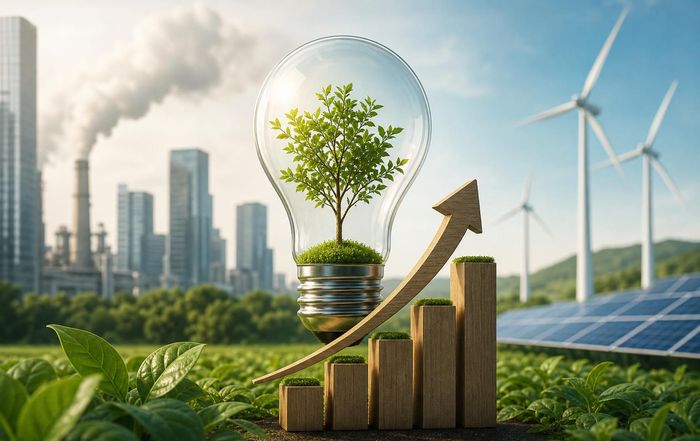
How Eco-Innovation Can Strengthen Competitive Advantage
Eco-Innovation at the New Frontier of Competitive Strategy
Look around, eco-innovation has moved from the margins of corporate social responsibility into the core of competitive strategy, reshaping how organizations create value, manage risk, and build trust with stakeholders who are increasingly informed, demanding, and environmentally conscious. For the climate caring individuals here, the question is no longer whether sustainable practices matter, but how deeply eco-innovation can be embedded into everyday decision-making across operations, products, services, and lifestyles so that environmental responsibility and business performance reinforce one another rather than compete.
As climate-related disruptions intensify and regulatory expectations evolve, companies that treat sustainability as a compliance exercise are finding themselves outpaced by those that view eco-innovation as a strategic capability. Reports from organizations such as the World Economic Forum and OECD indicate that climate, nature, and resource-efficiency risks are now central to long-term economic resilience, while leaders in every sector increasingly recognize that environmental performance is intertwined with innovation capacity, brand equity, and access to capital. In this context, eco-innovation has become a decisive lever for competitive advantage rather than a cost to be minimized, and platforms like YouSaveOurWorld.com are emerging as critical spaces where businesses and individuals can understand and act on this shift.
Defining Eco-Innovation in a 2026 Business Context
Eco-innovation can be understood as the development and deployment of new or significantly improved products, services, processes, business models, or organizational practices that deliver superior environmental performance while also generating tangible economic and social value. It is not limited to low-carbon technologies or energy efficiency; instead, it encompasses a broad spectrum of changes that reduce environmental impact across the entire value chain, from raw material sourcing to end-of-life management, and that enable more sustainable patterns of sustainable living.
Institutions such as the European Commission and the United Nations Environment Programme have emphasized that eco-innovation involves systemic thinking, life-cycle assessment, and circular economy principles. Rather than optimizing isolated components, leading organizations redesign entire systems-rethinking product design, logistics, data infrastructure, and customer engagement-to minimize waste, preserve biodiversity, and decouple growth from resource consumption. As YouSaveOurWorld.com has consistently highlighted, eco-innovation is therefore both a technological and a cultural transformation, requiring new capabilities, new metrics, and new forms of collaboration across sectors and borders.
Climate, Regulation, and Market Forces Reshaping Competition
The acceleration of eco-innovation in 2026 is being driven by a convergence of climate realities, regulatory frameworks, and market expectations that together are redefining what it means to be competitive. Scientific assessments from bodies such as the Intergovernmental Panel on Climate Change (IPCC) and NASA make it clear that global warming, extreme weather events, and biodiversity loss are no longer distant scenarios but present-day operational risks that affect supply chains, asset values, and workforce well-being. For organizations that engage with climate change insights on YouSaveOurWorld.com, the implications are immediate and strategic.
Regulatory regimes, including the European Union's Green Deal, evolving climate disclosure rules from the U.S. Securities and Exchange Commission, and global standards under development by the International Sustainability Standards Board, are increasingly requiring companies to measure, manage, and publicly report their environmental impacts. These frameworks are transforming environmental data into a core dimension of financial and strategic reporting, which means that eco-innovation is now integral to compliance, investor relations, and corporate reputation. At the same time, major financial institutions and initiatives like the Glasgow Financial Alliance for Net Zero (GFANZ) are channeling capital toward low-carbon and nature-positive solutions, reinforcing the link between sustainability performance and access to finance.
On the demand side, consumer and business-to-business markets are shifting as buyers become more informed and values-driven. Research by organizations such as McKinsey & Company and NielsenIQ shows that products with credible sustainability attributes are gaining market share and price resilience, particularly among younger demographics who regard environmental stewardship as a baseline expectation. For companies that wish to remain competitive, eco-innovation is thus a way to anticipate customer needs, differentiate offerings, and build resilient brands that can withstand scrutiny from media, regulators, and civil society.
From Compliance to Strategic Advantage: The Business Case for Eco-Innovation
The strategic case for eco-innovation extends well beyond reputational benefits and regulatory compliance. When executed thoughtfully, eco-innovation can reduce costs, unlock new revenue streams, improve risk management, and strengthen organizational capabilities in ways that competitors who delay transition will struggle to replicate. Businesses that engage with sustainable business guidance on YouSaveOurWorld.com often discover that environmental performance and financial performance are closely aligned when innovation is placed at the center of strategy.
Operationally, eco-innovation can drive significant efficiency gains. Companies that redesign production processes to minimize energy use, optimize material flows, and reduce water consumption frequently see lower operating expenses and improved resilience to resource price volatility. Guidance from agencies such as the U.S. Environmental Protection Agency (EPA) and the International Energy Agency (IEA) illustrates how investments in energy-efficient technologies, process optimization, and clean energy integration can deliver rapid payback periods while also reducing greenhouse gas emissions and air pollution.
Strategically, eco-innovation opens pathways to new markets and business models. Circular economy approaches-such as product-as-a-service, repair and remanufacturing, and resource recovery-enable companies to capture value from products and materials that would previously have been discarded as waste. Organizations that embrace these models can differentiate themselves through durability, service quality, and long-term customer relationships rather than short-term sales volume. This shift aligns closely with the themes of waste reduction and circularity that are central to the mission of YouSaveOurWorld.com, demonstrating how environmental responsibility can translate into more stable and predictable revenue streams.
Moreover, eco-innovation fosters organizational learning and agility. Teams that are encouraged to experiment with low-carbon technologies, nature-based solutions, and sustainable design practices tend to develop stronger problem-solving skills, cross-functional collaboration, and a culture of continuous improvement. In a business environment characterized by rapid technological change and geopolitical uncertainty, these capabilities become a source of durable competitive advantage that extends far beyond individual projects or product lines.
Technology, Data, and the Infrastructure of Eco-Innovation
The technological landscape of 2026 is enabling forms of eco-innovation that were difficult to imagine a decade ago, as advances in digitalization, data analytics, and automation intersect with clean energy, materials science, and circular economy approaches. For organizations exploring the intersection of technology and sustainability through YouSaveOurWorld.com, it is increasingly clear that the ability to gather, analyze, and act on environmental data is central to competitive advantage.
Digital tools such as the Microsoft Cloud for Sustainability, Salesforce Net Zero Cloud, and open-source platforms supported by organizations like the Linux Foundation are helping companies track emissions, resource flows, and environmental impacts with a level of granularity that enables targeted interventions and transparent reporting. The integration of Internet of Things sensors, artificial intelligence, and advanced analytics makes it possible to optimize energy use in real time, predict equipment failures, reduce waste, and design products with lower life-cycle impacts. These capabilities not only improve environmental performance but also enhance operational reliability and customer satisfaction.
In parallel, advances in clean energy technologies, as documented by the International Renewable Energy Agency (IRENA), are making it more feasible for businesses to decarbonize their operations and supply chains. The falling costs of solar and wind power, the emergence of more efficient battery storage, and innovations in green hydrogen and low-carbon industrial processes are opening new opportunities for eco-innovation at scale. Companies that invest early in these technologies can secure long-term cost advantages, hedge against carbon pricing and fuel price volatility, and align their brand with the energy systems of the future.
This technological infrastructure also supports new forms of collaboration across industries and geographies. Digital marketplaces for recycled materials, shared logistics platforms, and data-sharing consortia enable organizations to build circular value chains and reduce duplication of effort. For the happy and hip community that turns to YouSaveOurWorld.com/global, these developments underscore that eco-innovation is not only a matter of individual corporate strategy but also of collective ecosystem building, where shared standards and interoperable systems can amplify impact and accelerate learning.
Circular Design, Plastic Recycling, and Resource Advantage
One of the clearest arenas where eco-innovation strengthens competitive advantage is in the transition from linear to circular resource models, particularly in sectors that are heavily dependent on plastics and packaging. The environmental and reputational risks associated with plastic pollution, as highlighted by organizations such as the Ellen MacArthur Foundation and UNEP, have made plastic use a focal point for regulatory action, consumer scrutiny, and investor concern. For companies engaging with plastic recycling strategies on YouSaveOurWorld.com, the opportunity lies in rethinking materials and systems from the ground up.
Eco-innovation in plastics can involve redesigning products to use less material, substituting fossil-based plastics with bio-based or compostable alternatives where appropriate, and creating closed-loop systems that recover and recycle materials at high quality. Firms that invest in advanced recycling technologies, traceability solutions, and design-for-recycling standards can position themselves as preferred partners for retailers, regulators, and consumers seeking credible solutions to plastic waste. In many cases, these initiatives also reduce material costs, improve supply security, and open avenues for new services such as packaging take-back or refill systems.
Design disciplines are at the heart of this transformation. By integrating eco-design principles, life-cycle thinking, and user-centric approaches, companies can create products and experiences that are both environmentally responsible and commercially compelling. For kind readers who explore design for sustainability on YouSaveOurWorld.com, it is evident that design choices made at the concept stage-such as modularity, reparability, and material selection-have profound implications for cost, durability, brand differentiation, and regulatory compliance over the entire product life cycle.
Sustainable Business Models and Market Differentiation
Eco-innovation is not limited to technologies and materials; it also transforms the fundamental logic of how organizations create, deliver, and capture value. Sustainable business models that prioritize long-term relationships, service-based offerings, and shared value creation are gaining traction across industries, supported by insights from institutions such as Harvard Business School and the World Business Council for Sustainable Development. These models are particularly relevant for companies seeking to align their strategies with the themes of sustainable business and economy that are central to YouSaveOurWorld.com.
Examples include product-as-a-service models where customers pay for performance rather than ownership, enabling providers to retain control over materials and design products for longevity and reuse. Sharing and platform models can reduce idle capacity in assets ranging from vehicles to office space, lowering environmental footprints while creating new revenue streams. Nature-based solutions, such as regenerative agriculture and ecosystem restoration, offer opportunities to generate both financial returns and measurable environmental benefits, supported by guidance from organizations like the Food and Agriculture Organization (FAO) and The Nature Conservancy.
These models often require new partnerships, financing structures, and governance arrangements, but they also create powerful barriers to imitation. Competitors that remain locked into traditional linear models may find it difficult to match the combination of cost savings, customer loyalty, and regulatory alignment that sustainable business models can deliver. For companies that draw on economic perspectives on sustainability from YouSaveOurWorld.com, eco-innovation thus becomes a pathway to more resilient and diversified revenue portfolios.
Culture, Education, and the Human Dimension of Eco-Innovation
While technology and regulation are important drivers, the success of eco-innovation ultimately depends on people-their skills, mindsets, and willingness to collaborate across traditional boundaries. Organizations that invest in environmental literacy, leadership development, and cross-functional collaboration are better positioned to identify eco-innovation opportunities and to implement them effectively. Resources from institutions such as MIT Sloan School of Management, Cambridge Institute for Sustainability Leadership, and Coursera illustrate how education and continuous learning can embed sustainability thinking into core business disciplines, from finance to operations and marketing.
For the community that engages with environmental awareness and education for sustainability on YouSaveOurWorld.com, it is clear that eco-innovation is as much a cultural transformation as a technical one. Employees at all levels need to understand how their decisions affect environmental outcomes, and they must be empowered to propose and test new ideas. Leadership teams must set clear expectations, align incentives, and model the values they wish to see, while boards of directors increasingly recognize that environmental expertise is a core component of effective governance, as highlighted by organizations such as Ceres and the Climate Governance Initiative.
Personal well-being is also intertwined with eco-innovation. Workplaces that prioritize healthy, low-toxic environments, access to nature, and meaningful engagement with sustainability goals tend to see higher levels of employee engagement, retention, and creativity. For clever individuals exploring personal well-being in a sustainable context through YouSaveOurWorld.com, the connection between environmental quality, mental health, and productivity underscores that eco-innovation is not only about external impact but also about the quality of life within organizations and communities.
Lifestyle, Consumer Behavior, and the Demand for Sustainable Innovation
Competitive advantage in eco-innovation is closely linked to evolving lifestyles and consumer expectations. As more people seek to align their daily choices with their values, companies that offer credible, convenient, and attractive sustainable options can capture loyalty and market share. Surveys from organizations such as Deloitte and PwC indicate that a growing proportion of consumers are willing to switch brands or pay a modest premium for products and services that demonstrably reduce environmental harm, provided that information is transparent and trust is established.
For the loyal audience that turns to lifestyle guidance on sustainable choices at YouSaveOurWorld.com, eco-innovation is visible in areas such as low-carbon mobility, energy-efficient housing, plant-rich diets, and digital services that reduce the need for physical resources. Companies that anticipate these preferences and design offerings that integrate seamlessly into daily life-combining sustainability with convenience, aesthetics, and performance-are better positioned to lead in their markets. At the same time, they contribute to broader cultural shifts that normalize sustainable behavior and create positive feedback loops between individual choices and systemic change.
Trust is crucial in this context. Organizations such as Consumer Reports and Carbon Trust have emphasized that greenwashing risks can erode consumer confidence and undermine the competitive gains of genuine eco-innovation. Transparent communication, third-party verification, and alignment with credible frameworks such as the Science Based Targets initiative (SBTi) help companies build and maintain the trust that underpins long-term customer relationships and brand equity.
Innovation Ecosystems, Collaboration, and Global Impact
Eco-innovation thrives in ecosystems where businesses, governments, research institutions, investors, and civil society organizations collaborate to share knowledge, pool resources, and align incentives. Clusters such as clean-tech hubs, circular economy alliances, and green finance networks provide fertile ground for experimentation and scaling, as documented by organizations like the OECD and the World Bank. For the growing readership that visits innovation-focused content on YouSaveOurWorld.com, these ecosystems demonstrate that no single actor can deliver the transition alone.
Public-private partnerships, mission-oriented innovation programs, and city-level initiatives are increasingly important in 2026, as local authorities and national governments seek to meet climate and biodiversity commitments while supporting economic development and social inclusion. Initiatives such as the C40 Cities network and the Global Covenant of Mayors showcase how urban innovation in areas like mobility, buildings, and waste management can create competitive advantages for local economies while improving quality of life for residents.
In this interconnected landscape, platforms like YouSaveOurWorld.com play a vital role as trusted intermediaries, curating knowledge, highlighting best practices, and connecting individuals and organizations that might otherwise operate in isolation. By providing accessible insights on topics ranging from sustainable living and climate change to business strategy and technology, the platform helps build the shared understanding and ambition that eco-innovation requires.
Eco-Innovation as a Core Pillar of Long-Term Competitiveness
The evidence is increasingly clear that eco-innovation is not a peripheral concern but a core determinant of long-term competitiveness, resilience, and legitimacy for organizations operating in a rapidly changing world. Companies that integrate environmental considerations into every stage of decision-making-from strategy and design to operations, supply chains, and customer engagement-are better equipped to navigate regulatory shifts, resource constraints, and evolving societal expectations. They also tend to be more innovative, more agile, and more attractive to talent, investors, and partners who see sustainability as a marker of forward-looking leadership.
For the eco community gathered here today, eco-innovation represents both a challenge and an opportunity. It challenges established habits, assumptions, and business models, requiring investment, experimentation, and sometimes difficult trade-offs. Yet it also offers a powerful opportunity to align economic success with environmental stewardship and human well-being, creating value that is more durable, more inclusive, and more compatible with the planetary boundaries that define the conditions for long-term prosperity.
By engaging with resources on sustainable business, waste and circularity, innovation ecosystems, and the broader global context of sustainability, individuals and organizations can position themselves at the forefront of this transformation. Eco-innovation is no longer optional or experimental; it is a central pillar of competitive advantage in a world where environmental realities, technological possibilities, and human aspirations are converging. Those who recognize this and act decisively will not only strengthen their market position but also contribute to the shared mission that defines YouSaveOurWorld.com: to help save our world by aligning how we live, work, and do business with the needs of the planet that sustains us.
