
Circular Fashion: How to Buy Less and Wear Clothes Longer
Fashion is often sold as constant newness, but the planet is paying the price. Global clothing production has roughly doubled since the early 2000s, while people are keeping garments for shorter periods and discarding them in huge quantities. According to the Ellen MacArthur Foundation, the equivalent of one garbage truck of textiles is landfilled or burned every second worldwide. Circular fashion offers a way out: a system where clothes are designed, used, and reused for as long as possible, and materials circulate instead of becoming waste. For individuals, that boils down to a simple question: how can you buy less and wear what you already own much longer?
This page focuses on practical, everyday choices that support a circular fashion system-without requiring a perfect wardrobe, a big budget, or a love of trends.
What circular fashion really means in everyday life
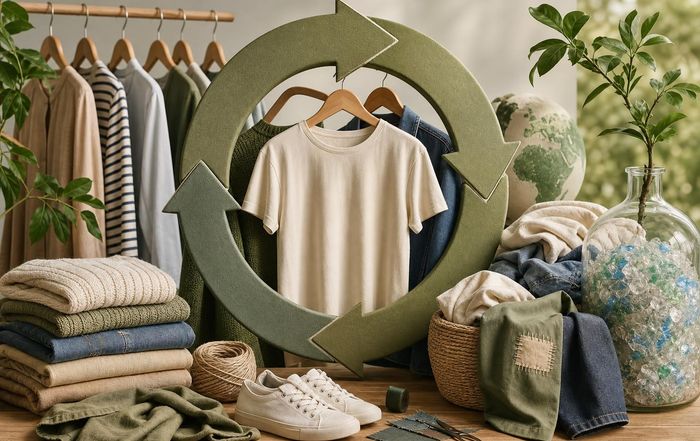
Circular fashion is part of the broader circular economy concept, which aims to keep products and materials in use at their highest value for as long as possible. In fashion, that means shifting away from a linear "take-make-waste" model toward one where garments are designed to last, repaired, shared, resold, and eventually recycled into new textiles.
Organizations such as the Ellen MacArthur Foundation and the Circular Fashion Partnership promote principles like designing out waste, using safe and renewable materials, and building systems for reuse and recycling. For most consumers, though, the relevant part is the "use" phase: how long a garment is worn before it ends up in a bin, a donation box, or the back of a closet. Studies cited by the United Nations Environment Programme (UNEP) indicate that extending the life of clothing by just nine months can significantly reduce its carbon, water, and waste footprints per wear.
Circular fashion at home therefore looks less like buying "eco" collections and more like:
Choosing durable, repairable garments instead of disposable ones.
Caring for clothes gently to slow down wear and tear.
Sharing, swapping, renting, and buying second-hand instead of always buying new.
Repairing and altering garments rather than replacing them.
Sending clothes to high-quality reuse or recycling streams when they truly reach the end of their life.
This mindset fits naturally with broader sustainable living goals: reducing consumption, cutting waste, and saving money while lowering environmental impact.
Step one: Slow the impulse to buy
The most powerful circular fashion decision is the one not to buy. Fast fashion thrives on impulse, novelty, and low prices, and the environmental cost is high. The Global Fashion Agenda and UNEP both highlight overproduction and overconsumption as core drivers of emissions, water use, and waste in the sector.
To buy less, it helps to understand the psychological and structural forces that push people toward constant acquisition. Online retail and social media make it easy to shop in a few clicks, while algorithms present a constant stream of micro-trends. Limited-time sales and influencer hauls normalize buying many items at once. Recognizing these triggers is a first step in regaining control.
Practical tactics can make a big difference. A "cooling-off" rule-waiting 24 hours, a week, or even a full month before buying non-essential clothing-gives time for desire to pass and for questions to surface: Do I already own something similar? Will I wear this at least 30 times? Does it work with multiple items I own? Some people find it useful to keep a running list of genuine wardrobe gaps and only shop from that list, which shifts buying from impulse to intention. At the same time, unsubscribing from promotional emails or muting fast-fashion accounts can remove constant prompts to shop. These simple measures align with broader lifestyle choices that prioritize well-being over consumption.
Build a "long-life" wardrobe instead of a trend-driven one
Buying less does not mean never buying. When new (or new-to-you) clothes are needed, the goal is to choose pieces that will see heavy, long-term use. Research by the Hot or Cool Institute suggests that a smaller, carefully chosen wardrobe can dramatically cut fashion-related emissions while still meeting everyday needs.
A long-life wardrobe is built around versatility and durability. Versatility means prioritizing items that work in multiple contexts-work, social events, casual days-and across seasons where climate allows. Neutral or easily mix-and-match colours, timeless silhouettes, and comfortable fits tend to stay relevant longer than highly specific trends. Durability is about construction as much as fabric. Heavier stitching, reinforced seams, sturdy buttons and zippers, and quality linings often signal that a garment can withstand repeated wear and repair. Examining the inside of a garment-seams, hems, and finishing-provides more information than the front-facing design.
This approach connects naturally to circular design principles promoted by groups like Fashion for Good and Textile Exchange, which encourage durability and repairability as core criteria. For consumers, it means asking not just "Do I like this?" but "Will this still work for me in five years?" and "Can this be mended if it fails?" Over time, these questions help create a wardrobe where each item earns its place through frequency of wear, not novelty.
Choose materials with longevity-and know their trade-offs
No fabric is impact-free, but some are easier to keep in circulation than others. The key is not chasing a single "perfect" fibre but understanding how different materials behave in real life. Organizations such as Textile Exchange, the Sustainable Apparel Coalition, and academic institutions like MIT and University of Leeds have examined fibre impacts and performance, though findings vary by context.
Natural fibres such as cotton, wool, linen, and hemp are often praised because they can biodegrade under the right conditions, but that does not automatically make them low-impact. Conventional cotton, for example, can be water- and pesticide-intensive, while wool production raises concerns about land use and animal welfare. However, from a circularity perspective, these fibres can be easier to mechanically recycle and more familiar to repair specialists, and they tend to age in ways that many people find acceptable or even attractive.
Synthetic fibres such as polyester, nylon, and acrylic are durable in some respects but prone to pilling and to releasing microplastics during washing, as highlighted by research referenced by the European Environment Agency. Blended fabrics (for example, cotton-polyester mixes) can offer comfort and performance but are currently difficult to recycle at scale because separating fibres is technologically and economically challenging. Yet synthetics can be appropriate for high-performance or outdoor gear that sees heavy use, provided that the item is used for many years.
In practice, choosing materials for longevity means reading labels and thinking about the garment's purpose. A well-made wool sweater that can be repaired and de-pilled for a decade may be a better circular choice than a flimsy organic cotton top that loses shape after a few washes. Meanwhile, a durable, repairable synthetic raincoat that replaces several cheaper ones can also support circular goals. Connecting these choices to broader climate change concerns helps frame them as part of a larger environmental strategy rather than isolated consumer decisions.
Care and repair: the quiet core of circular fashion
Once a garment is in a wardrobe, its environmental footprint per wear depends heavily on how it is cared for. According to analyses referenced by the International Energy Agency (IEA) and UNEP, washing and drying clothes consume significant energy and water, and high-temperature washing and tumble-drying accelerate fabric degradation.
Gentler care routines extend garment life and reduce resource use. Washing at lower temperatures, using shorter cycles, and line-drying when possible all reduce stress on fibres and cut energy demand. Washing only when necessary-spot-cleaning stains, airing clothes between wears, and using garment brushes for wool-can drastically slow wear and fading. Using a liquid detergent formulated for cold water and avoiding excessive amounts of detergent or fabric softener can also help maintain fabric integrity.
Repair is a central pillar of circular fashion and a practical way to avoid new purchases. Basic mending skills-sewing on buttons, closing small tears, darning socks, or reinforcing loose seams-can be learned from community workshops, online tutorials, or repair cafés supported by initiatives like the Restart Project. In many cities, professional tailors and alteration services can handle more complex repairs such as zipper replacements, relining coats, or resizing garments, which can be far cheaper and more sustainable than buying new. Some brands, especially in outdoor and workwear sectors, now offer repair programs; others are being pushed in that direction by emerging "right to repair" policies in regions such as the European Union.
From a broader waste perspective, each repair is a small act of waste prevention. When normalized, repair culture can significantly extend the functional life of clothing stocks in a community, reducing pressure on landfills and incinerators.
Second-hand, swapping, and renting: sharing the wardrobe load
Reusing clothes across multiple owners is one of the clearest expressions of circular fashion. Second-hand markets-through charity shops, consignment stores, online resale platforms, and peer-to-peer marketplaces-keep garments in circulation and can make higher-quality items more affordable. Reports from organizations such as ThredUp, WRAP in the UK, and the Boston Consulting Group point to strong growth in resale and recommerce globally, although estimates vary.
Buying second-hand supports circularity when it replaces a new purchase rather than adding to overall volume. It can be especially effective for categories where people often tire quickly-occasion wear, children's clothes, or trend-driven pieces. For basics that are worn heavily, second-hand shopping can be a way to find durable, older garments that may be better constructed than current low-cost equivalents. Donating or reselling unwanted items can also extend their life, though it is important to understand that not all donations are sold locally; some are exported as second-hand bales, raising complex social and environmental questions in importing countries, as noted by UNEP and Human Rights Watch.
Clothing swaps and sharing circles-informal among friends or organized by community groups-offer another circular pathway. They can be low-cost or free, and they encourage a culture of care: participants are more likely to look after garments that may one day go to someone they know. Rental services, from formal fashion rental platforms to local boutiques, are particularly relevant for items worn only a few times, such as formalwear or maternity clothes. However, the environmental benefits of rental depend on factors like transport, cleaning methods, and logistics, as highlighted in research discussed by the Ellen MacArthur Foundation and various academic studies. Local, small-scale rental with low-impact cleaning is generally more promising than highly centralized models with intensive shipping and dry-cleaning.
These practices intersect with innovation and technology, as digital platforms and data tools make it easier to match garments with new users, track usage, and optimize logistics. But at heart, they are about a cultural shift: seeing clothes as shared resources rather than disposable personal property.
Recognizing and avoiding greenwashing in fashion
As public concern about fashion's environmental impact grows, so does marketing that claims sustainability without meaningful change. Consumer protection authorities in the European Union, the UK Competition and Markets Authority, and regulators in other regions have all scrutinized vague environmental claims in fashion advertising. For individuals trying to support circular fashion, it helps to distinguish between genuine improvements and surface-level branding.
A circularity claim is more credible when it is specific, transparent, and backed by third-party standards or clear data. For example, a brand that publishes detailed information on garment durability testing, repair services, and take-back programs, or participates in credible initiatives such as the UN Global Compact or Science Based Targets initiative, is offering more than slogans. Certifications from organizations like Global Organic Textile Standard (GOTS) or Fairtrade International can provide some assurance about particular aspects (such as organic fibre or worker protections), though they do not guarantee circularity on their own.
By contrast, broad phrases like "eco-friendly," "conscious," or "green" without further detail are red flags. So are small "sustainable" capsule collections from brands whose overall business model relies on very high volumes of low-cost garments. From a circular perspective, the key question is whether the company is reducing total production, improving durability, investing in repair and reuse infrastructure, and working toward closed-loop recycling where appropriate. Consumers can support genuine progress by favouring brands that align with these goals and by continuing to reduce overall consumption, regardless of marketing.
This critical lens aligns with broader environmental awareness and helps ensure that individual efforts to buy less and wear longer are not undermined by misleading narratives.
What to do with clothes you no longer wear
Even with careful buying and long-term use, there will be garments that no longer fit, suit, or function. Handling them thoughtfully is part of a circular approach, though it is important to remember that end-of-life solutions cannot fully compensate for overproduction and overconsumption.
The first step is to prioritize keeping items in active use. Can a piece be altered, repaired, or restyled? Tailoring can transform an underused garment into a favourite, and simple modifications-shortening a hem, changing buttons, or dyeing a faded item-can give it new life. If the garment is in good condition but no longer wanted, resale, donation to reputable local charities, or passing it on within social networks can extend its life. Organizations like Goodwill, the Red Cross, and local social enterprises often run shops where proceeds support community programs, though practices vary by country.
When garments are too damaged to wear, textile recycling may be an option, but infrastructure is uneven globally. Some municipalities and retailers offer collection points for textiles, which may be downcycled into insulation, industrial rags, or filler materials. True fibre-to-fibre recycling-turning old clothes back into new textiles-is still emerging, though companies and research consortia supported by organizations such as Fashion for Good and H&M Foundation are piloting technologies for cotton, polyester, and blends. Until such systems are widely available and proven at scale, reducing input (buying less), maximizing use (wearing longer), and prioritizing reuse remain the most impactful strategies.
These choices intersect with other global and economy questions. Exported second-hand clothing, for example, affects local textile industries and waste systems in importing countries. Approaching disposal with awareness of these dynamics helps keep the focus on responsible reduction rather than simply shifting the problem elsewhere.
Making circular fashion part of a sustainable life
Circular fashion is not about having a perfectly "sustainable" wardrobe or following strict rules. It is about aligning clothing habits with values of care, sufficiency, and respect for planetary boundaries. That alignment often brings co-benefits: spending less on impulse purchases, feeling more connected to the stories behind garments, and reducing the mental clutter of overstuffed wardrobes.
Integrating circular fashion into daily life can start small: repairing one item instead of replacing it, choosing second-hand for a specific need, or committing to a period-perhaps three or six months-without buying new clothes. Over time, these decisions add up, especially when combined with other choices around sustainable business, personal well-being, and low-waste living. They also send market signals: when more people buy fewer, better, longer-lasting clothes, brands and policymakers feel pressure to adapt.
That closes this feature for now. If you found something useful here, carry it forward and see where the idea leads. Ultimately, buying less and wearing clothes longer is both a personal and collective act. It challenges a culture that equates identity with constant consumption and opens space for different stories-of repair, creativity, and shared resources. In that sense, circular fashion is not just a technical fix for textile waste; it is part of a broader reimagining of how people live well within the limits of a finite world.
