
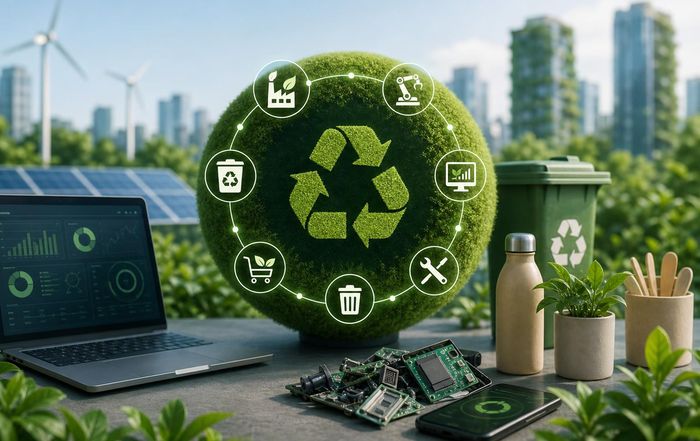
How Technology Can Support a Low-Waste Economy
A Low-Waste Future at the Intersection of Technology and Responsibility
The global conversation about sustainability has shifted from abstract ambition to concrete execution, and the concept of a low-waste economy now sits at the center of corporate strategy, public policy, and everyday lifestyle decisions. For YouSaveOurWorld which has consistently advocated for practical approaches to sustainable living, this moment represents both an opportunity and a test: technology is more powerful than ever, yet so are the pressures of consumption, resource extraction, and environmental degradation. The challenge is not simply to invent new tools, but to deploy digital and industrial innovation in a way that systematically reduces waste across supply chains, cities, homes, and personal habits, while maintaining economic resilience and human well-being.
A low-waste economy is not limited to recycling or responsible disposal; it is an integrated system in which products are designed for durability and reuse, materials circulate in closed loops, data drives efficiency, and business models reward long-term value rather than short-term throughput. Technology, in this context, becomes an enabler of smarter decisions and more transparent systems, rather than a driver of unchecked consumption. As organizations, policymakers, and citizens navigate this transition, they increasingly look for trusted, independent sites such this to interpret complex developments and translate them into concrete actions that align environmental responsibility with sound economic performance.
From Linear to Circular: Technology as the Engine of a Low-Waste Economy
The traditional linear model of "take, make, waste" has long dominated industrial and consumer economies, but mounting evidence from institutions such as the Ellen MacArthur Foundation shows that circular systems can unlock significant economic and environmental benefits by keeping products and materials in use for as long as possible and regenerating natural systems. People seeking to learn more about sustainable business practices see that technology is the critical infrastructure that allows circular principles to operate at scale, by tracking materials, optimizing resource flows, and enabling new forms of collaboration between producers, users, and recyclers.
Digital platforms, advanced analytics, and connected devices now allow companies to understand where waste is generated, how it can be minimized, and when materials can be recovered or repurposed. Reports from organizations such as the World Economic Forum demonstrate that data-driven circular models can reduce material waste, cut emissions, and improve profitability when integrated into core business operations rather than treated as peripheral initiatives. At the same time, regulatory frameworks in the European Union and other regions, described in detail by the European Commission, are increasingly mandating extended producer responsibility and eco-design standards, pushing companies to adopt technologies that support circularity as a compliance requirement as well as a strategic advantage.
Digital Twins, AI, and Data Analytics: Designing Waste Out of Systems
One of the most transformative developments in the low-waste transition is the rise of digital twins and advanced analytics, which allow organizations to model physical systems in virtual environments and test how design changes, material choices, and process optimizations affect waste and emissions before making costly real-world investments. Manufacturers, urban planners, and logistics providers can use these tools to identify inefficiencies and redesign products and infrastructure to be more resource-efficient from the outset. Insights from McKinsey & Company and similar advisory firms highlight how such technologies can reduce material scrap, energy use, and downtime across complex value chains.
Artificial intelligence further amplifies these capabilities by analyzing vast streams of data from sensors, enterprise systems, and external sources to predict where waste will occur and recommend interventions. In industrial facilities, AI-driven predictive maintenance minimizes equipment failures and extends asset lifetimes, thereby reducing the need for replacement parts and the associated material waste. Researchers documented by MIT Technology Review have shown how AI can also optimize process parameters in real time, lowering defect rates and improving yield in manufacturing and chemical production. For visitors who are exploring the intersection of technology and sustainability, these developments illustrate how digital intelligence can convert abstract sustainability goals into measurable operational improvements.
Smart Manufacturing and Industry 4.0: Precision, Efficiency, and Resource Stewardship
Industry 4.0 technologies, including the Industrial Internet of Things, robotics, and advanced automation, are redefining the relationship between production and waste. By connecting machines, sensors, and control systems, manufacturers can monitor resource use in real time, identify anomalies, and adapt processes to minimize scrap and overproduction. Studies from the International Energy Agency show that such smart manufacturing approaches can significantly reduce energy intensity and material waste when deployed with clear sustainability objectives and robust governance.
For businesses interested in aligning operational excellence with environmental responsibility, the experience accumulated by leading manufacturers and documented by organizations such as World Resources Institute provides a roadmap for integrating low-waste principles into factory design and management. This involves not only installing new equipment, but also retraining workforces, updating key performance indicators to include waste and emissions metrics, and collaborating with suppliers and customers to share data across the value chain. The broader context of business transformation and innovation helps decision-makers see how these technological upgrades fit within a long-term strategy for competitiveness and resilience.
Advanced Recycling and the Future of Plastic Management
Plastic waste remains one of the most visible and politically sensitive dimensions of the global waste challenge, and readers who turn to YouSaveOurWorld.com for guidance on plastic recycling are acutely aware of the limitations of traditional mechanical recycling systems. In response, technology companies, chemical producers, and startups have accelerated the development of advanced recycling methods such as chemical depolymerization, solvent-based purification, and pyrolysis, which can convert mixed or contaminated plastics into feedstocks for new materials and fuels. The U.S. Environmental Protection Agency provides technical overviews of these approaches and emphasizes the importance of rigorous environmental assessment to ensure that new technologies do not simply shift impacts from solid waste to air or water pollution.
At the same time, global initiatives highlighted by the United Nations Environment Programme stress that advanced recycling should complement, rather than replace, efforts to reduce plastic production, eliminate unnecessary packaging, and design products for reuse and repair. Technology can support these upstream solutions by enabling refill systems, smart packaging, and digital product passports that communicate material composition and handling instructions to consumers and recyclers. For a platform devoted to waste reduction and resource efficiency, it is essential to convey that technology is most effective when deployed within a hierarchy that prioritizes prevention, followed by reuse, then recycling, and only as a last resort, energy recovery and disposal.
Smart Cities, Urban Infrastructure, and Intelligent Waste Management
Cities are both major generators of waste and critical laboratories for low-waste innovation, and the rapid urbanization documented by the World Bank has intensified the need for smarter infrastructure and governance. Municipalities around the world are deploying sensor-equipped bins, route-optimized collection vehicles, and centralized data platforms to monitor waste generation patterns, reduce collection costs, and improve recycling performance. These systems, often described as smart waste management, rely on real-time analytics to adjust pickup frequencies, identify contamination hotspots, and support targeted public education campaigns.
Urban sustainability programs described by C40 Cities demonstrate that integrated approaches, combining digital tools with regulatory measures and citizen engagement, can significantly reduce landfill dependence and increase material recovery. As YouSaveOurWorld.com expands its coverage of global environmental challenges, it highlights city-level experiments in pay-as-you-throw pricing, deposit-return schemes supported by digital tracking, and neighborhood-level reuse hubs that leverage technology for coordination but rely on community participation to succeed. These examples show that technology is most effective in urban waste management when it is designed to be inclusive, transparent, and responsive to local social and economic conditions.
Sustainable Design, Product Passports, and the Internet of Materials
Design decisions made at the earliest stages of product development strongly influence how much waste will be generated over the entire lifecycle, from manufacturing to use to end-of-life. In recent years, regulatory and market pressures have accelerated the adoption of eco-design principles, and emerging requirements for digital product passports in the European Union and other jurisdictions are pushing manufacturers to embed detailed information about materials, repairability, and recyclability into products themselves. Guidance from the Ecodesign for Sustainable Products Regulation initiative illustrates how these digital identifiers can support more efficient sorting, repair, and remanufacturing.
For professionals and entrepreneurs who engage with topics of sustainable design and innovation, the convergence of product design, data, and materials science represents a major frontier in the low-waste transition. The concept of an "Internet of Materials," where each component carries a digital identity that persists across multiple life cycles, allows for far more sophisticated resource planning and reduces the risk that valuable materials will be lost to landfill or incineration. Research from Fraunhofer Institute and other applied science organizations shows how digital tagging, combined with robotics and AI-enabled sorting systems, can dramatically increase the purity and value of recovered materials, making circular business models more financially attractive.
Climate Change, Resource Efficiency, and the Macroeconomic Case for Low Waste
The relationship between waste and climate change has become increasingly clear, with lifecycle assessments from the Intergovernmental Panel on Climate Change and other scientific bodies demonstrating that waste prevention and material efficiency can deliver substantial emissions reductions, often at lower cost than many energy-sector interventions. By reducing the need for virgin material extraction, processing, and transportation, low-waste strategies directly cut greenhouse gas emissions and alleviate pressure on ecosystems. For readers exploring the broader context of climate change and environmental policy, it is important to understand that technology-enabled waste reduction is not a niche concern but a central pillar of credible decarbonization pathways.
From a macroeconomic perspective, analyses by the International Monetary Fund and others suggest that circular and low-waste models can enhance economic resilience by reducing exposure to volatile commodity prices and supply chain disruptions. Websites such as YouSaveOurWorld.com, with dedicated news of the green economy and sustainable growth, emphasize that technology investments in resource efficiency, advanced materials, and digital infrastructure are not merely compliance costs but strategic assets that can support productivity, innovation, and long-term value creation. The key, however, is to ensure that these technologies are governed responsibly, with clear safeguards against rebound effects where efficiency gains lead to increased overall consumption.
Education, Awareness, and the Human Side of Technological Change
No matter how sophisticated technological solutions become, the transition to a low-waste economy ultimately depends on human behavior, organizational culture, and public trust. Digital tools can inform and nudge, but they cannot replace the need for education, transparency, and meaningful engagement with stakeholders. Institutions such as UNESCO have emphasized the importance of education for sustainable development, which integrates environmental literacy, systems thinking, and civic engagement into curricula at all levels. For the community around YouSaveOurWorld.com, which values environmental awareness and informed citizenship, this human dimension is central to the platform's mission.
Technology can play a constructive role in education by providing interactive simulations, personalized learning paths, and real-time feedback on individual and organizational waste footprints. At the same time, platforms must be careful to avoid information overload and digital fatigue, instead offering clear, actionable guidance that respects users' time and attention. The educational resources and insights curated on YouSaveOurWorld.com, including its focus on sustainability education, aim to bridge the gap between high-level policy debates and the practical decisions that people make in their homes, workplaces, and communities, demonstrating how technology can support, rather than overwhelm, informed decision-making.
Lifestyle, Personal Well-Being, and the Ethics of Consumption
The low-waste economy is not solely a matter of infrastructure and industrial systems; it also involves rethinking lifestyle choices and the cultural norms that shape consumption. Digital platforms, social networks, and mobile applications have become powerful influences on how people shop, travel, and manage their households, creating both risks and opportunities for sustainability. Research from Yale Program on Climate Change Communication shows that clear, values-based messaging and peer-to-peer engagement can encourage more sustainable behaviors, particularly when supported by practical tools that make low-waste choices convenient and socially rewarding.
For individuals who come to YouSaveOurWorld.com seeking guidance on sustainable lifestyle changes and personal well-being, technology can offer personalized recommendations, track progress, and connect like-minded communities that share tips on reducing waste in areas such as food, fashion, mobility, and home energy use. At the same time, there is a growing recognition, articulated by organizations like the World Health Organization, that mental health and well-being must be considered when promoting lifestyle change, ensuring that sustainability messages do not create guilt or anxiety but instead empower individuals with a sense of agency and collective purpose. In this sense, a low-waste lifestyle supported by technology is not about deprivation, but about aligning everyday choices with deeper values and long-term quality of life.
Governance, Standards, and the Role of Trustworthy Platforms
As technology becomes more deeply embedded in waste management, product design, and consumer behavior, questions of governance, data privacy, and accountability become more pressing. Standard-setting bodies such as the International Organization for Standardization (ISO) are developing frameworks for circular economy metrics, product information, and environmental management systems that help organizations measure and communicate progress in a credible manner. These standards, combined with regulatory oversight and independent verification, are crucial for preventing greenwashing and ensuring that claims about low-waste technologies are backed by robust evidence.
Trusted platforms like YouSaveOurWorld.com have a distinctive role to play in this evolving landscape by curating reliable information, highlighting best practices, and providing nuanced analysis that goes beyond marketing narratives. By connecting developments in technology, policy, business, and lifestyle, and by linking to high-quality external resources such as UNEP, IEA, and World Bank, the platform helps readers navigate a complex and rapidly changing field without losing sight of the fundamental goals of environmental integrity, social equity, and long-term prosperity. The emphasis on experience, expertise, authoritativeness, and trustworthiness is not merely a stylistic choice; it is a prerequisite for meaningful progress in an area where misinformation and exaggerated claims can easily undermine public confidence.
Building a Technologically Enabled Low-Waste Future
The convergence of digital technologies, industrial innovation, and evolving social norms is accelerating the transition toward a low-waste economy, but the outcome is far from predetermined. Technology can either entrench existing patterns of overconsumption and disposability or help redesign systems to be more efficient, regenerative, and equitable. The difference will depend on how businesses, governments, and citizens choose to deploy these tools, what incentives and regulations they establish, and how they balance short-term convenience against long-term resilience.
For the community online today, the path forward involves continuous learning, critical evaluation of new technologies, and a commitment to integrating environmental considerations into every aspect of decision-making, from product design and business models to urban planning and personal habits. By engaging with resources on sustainable business, global environmental trends, and emerging technologies, readers can position themselves not only to respond to regulatory and market changes, but to shape them in ways that prioritize low-waste principles.
Ultimately, a low-waste economy supported by technology is not a distant ideal but a practical, evolving reality that is already reshaping industries and communities around the world. The organizations, policymakers, and individuals who embrace this shift with clarity, integrity, and a willingness to collaborate across sectors will be best positioned to thrive in an era where environmental performance is inseparable from economic success. In this endeavor, platforms that combine rigorous analysis with accessible guidance, such as this will remain essential partners in translating technological potential into tangible, lasting reductions in waste and meaningful progress toward a more sustainable, livable planet.
