How Circular Thinking Can Transform Product Development
Circular Thinking as a Strategic Imperative
Circular thinking should not be underestimated, especially as it has moved from the margins of sustainability discourse into the center of strategic product development, reshaping how organizations conceive, design, manufacture, and retire products, while redefining value creation in ways that are deeply aligned with the mission and excited, entrepreneurial, and eco-minded community of YouSaveOurWorld.com. Instead of accepting the traditional linear "take-make-waste" model that has dominated industrial growth for more than a century, leading businesses now recognize that products must be designed as part of regenerative systems where materials circulate at their highest value for as long as possible, energy use is minimized and decarbonized, and social well-being is embedded into the product's entire life cycle. This shift is not driven solely by ethical considerations; it is increasingly a response to investor expectations, regulatory requirements, resource scarcity, and rapidly changing consumer preferences, especially among younger generations who are actively seeking guidance on sustainable living and demanding evidence of genuine responsibility from brands.
The concept of a circular economy, as articulated by organizations such as the Ellen MacArthur Foundation, describes an economic system that is restorative and regenerative by design, aiming to decouple growth from finite resource consumption and to design out waste and pollution at the source. Businesses that integrate circular principles into product development are not simply improving their environmental performance; they are building more resilient supply chains, creating new revenue models such as product-as-a-service, and strengthening their license to operate in a world where climate risk, regulatory tightening, and social scrutiny are intensifying. For a platform like YouSaveOurWorld.com, which serves an audience interested in sustainable business, climate change, and personal well-being, circular thinking offers a practical bridge between high-level environmental awareness and concrete decisions about products, services, and investments that can reshape markets and lifestyles.
From Linear to Circular: Redefining Value in Product Development
The linear model of product development, in which companies extract raw materials, manufacture products, sell them, and then externalize responsibility once the item is purchased, is increasingly recognized as incompatible with the planetary boundaries highlighted by institutions such as the Stockholm Resilience Centre and the climate science synthesized by the Intergovernmental Panel on Climate Change (IPCC). As climate-related risks intensify and as the global population and middle class grow, the pressure on materials, ecosystems, and waste systems becomes unsustainable, especially in sectors such as electronics, textiles, construction, and packaging where resource intensity and waste volumes are particularly high. Within this context, circular thinking reframes value not as a one-off transaction at the point of sale, but as the ongoing ability of a product and its components to deliver utility, be repaired, upgraded, reused, remanufactured, and eventually recycled into high-quality inputs for new products.
This redefinition of value forces product development teams to integrate environmental and social metrics alongside traditional financial and performance criteria, using tools such as life cycle assessment, material flow analysis, and scenario planning to understand how design choices affect emissions, waste, and resource use across global supply chains. Organizations that take this approach are increasingly aligning with frameworks such as the United Nations Sustainable Development Goals, which provide a shared language for linking product strategies to broader societal outcomes, including responsible consumption and production, climate action, and decent work. Readers exploring the broader context of climate change and its interaction with business models will recognize that circular thinking is not a niche trend, but a structural shift in how economies must function to remain viable.
Design for Circularity: The New Core Competence
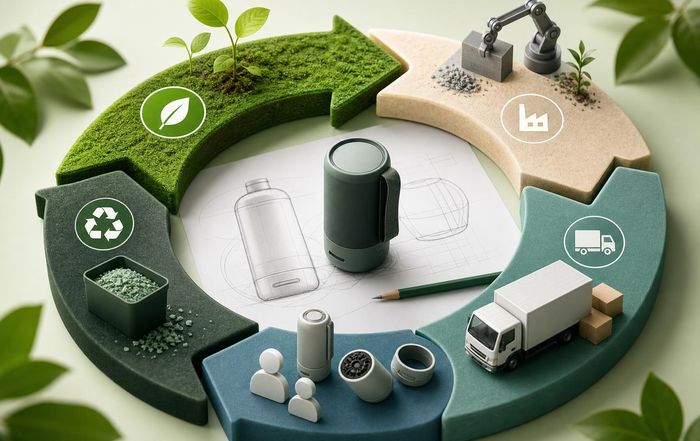
At the heart of circular product development lies design for circularity, a set of principles and practices that ensure products are conceived with their entire life cycle in mind, from material sourcing through manufacturing, use, and eventual recovery. This discipline goes far beyond incremental eco-efficiency, requiring cross-functional collaboration between designers, engineers, procurement specialists, marketers, and sustainability experts, supported by robust data and digital tools. Concepts such as modularity, standardization of components, ease of disassembly, and material transparency become crucial, enabling products to be repaired, refurbished, or upgraded instead of discarded, and allowing high-quality materials to be recovered at end-of-life rather than downcycled or landfilled.
Leading design and innovation consultancies, as well as academic institutions such as MIT and TU Delft, have been developing methodologies and toolkits to operationalize circular design, integrating considerations such as material toxicity, recyclability, and durability into early-stage ideation and prototyping. For organizations that follow the design-oriented content on YouSaveOurWorld.com, this emerging practice highlights how product aesthetics, user experience, and sustainability can be aligned rather than traded off, with circular principles often leading to cleaner lines, simpler interfaces, and more intuitive maintenance processes. As design teams adopt guidelines inspired by standards from bodies such as ISO and insights from platforms like the World Economic Forum, they are enhancing both the technical performance and the long-term value of products, while reducing the risk of regulatory non-compliance or reputational damage related to waste and pollution.
Materials, Waste, and the Critical Role of Plastic Recycling
One of the most visible arenas in which circular thinking is transforming product development is the management of materials, particularly plastics, which remain ubiquitous in packaging, consumer goods, and industrial applications. The global plastic waste crisis, documented by organizations such as the OECD and UN Environment Programme, has exposed the limitations of traditional recycling systems and the environmental and health impacts of mismanaged waste, especially in marine ecosystems and vulnerable communities. In response, product developers are increasingly exploring bio-based and recycled materials, designing packaging that is easier to collect and process, and collaborating with recycling infrastructure providers to ensure that theoretical recyclability becomes practical reality. Those interested in practical solutions can explore more about plastic recycling and how product choices influence downstream outcomes.
Circular thinking in materials management is also driving innovation in chemical recycling, advanced sorting technologies, and digital tracking systems that allow companies to verify the origin and composition of materials, a critical capability as regulators and customers demand greater transparency. Organizations such as Circular Plastics Alliance in Europe and initiatives supported by the World Wildlife Fund (WWF) are working to standardize design-for-recycling guidelines and to scale collection and processing infrastructure, while brands are experimenting with refill models, reusable packaging, and deposit-return schemes. For businesses and individuals following the waste and resource content on YouSaveOurWorld.com, the message is clear: material choices and product formats are no longer purely technical or cost decisions; they are strategic levers that influence brand reputation, regulatory compliance, and the ability to participate in emerging circular value networks.
Technology as an Enabler of Circular Product Systems
Digital technology has become a powerful enabler of circular product development, allowing companies to track assets, monitor performance, and optimize resource use across complex global networks. The proliferation of sensors, connectivity, and data analytics, often grouped under the banner of the Internet of Things (IoT), allows organizations to move from selling products to providing services, where they retain ownership of assets and are therefore incentivized to maximize durability, repairability, and utilization. Technology companies and industrial leaders such as Siemens, Schneider Electric, and Microsoft have been demonstrating how digital twins, predictive maintenance, and cloud-based platforms can extend product life, reduce downtime, and minimize waste, while also opening new revenue streams and deepening customer relationships.
In parallel, advances in blockchain and digital product passports, supported by initiatives in the European Union and standards bodies, are enabling more transparent and traceable supply chains, where the composition, repair history, and environmental footprint of a product can be accessed throughout its life. This transparency supports more informed consumer choices, as well as better decision-making by recyclers and refurbishers, and it creates the foundation for new business ecosystems where products flow between multiple owners and uses over time. Readers exploring the technology and innovation sections of YouSaveOurWorld.com, including resources such as technology and innovation, will recognize that digitalization is not only about efficiency and automation; it is increasingly about enabling the circular flows of materials and value that define the next generation of sustainable business models.
Circular Business Models and Economic Resilience
Transforming product development through circular thinking necessarily leads to the evolution of business models, as companies experiment with ways to decouple revenue from the volume of new products sold. Product-as-a-service models, leasing arrangements, subscription offerings, and buy-back schemes are becoming more common across sectors such as electronics, mobility, furniture, and industrial equipment, allowing companies to retain ownership of materials and to design products that can be refurbished and redeployed multiple times. Organizations such as Philips, Michelin, and Interface have been widely cited for pioneering such models, demonstrating that circular approaches can be both profitable and scalable when aligned with customer needs and supported by appropriate financing and risk-sharing mechanisms.
From a macroeconomic perspective, institutions such as the International Monetary Fund (IMF) and World Bank have begun to analyze how circular economy strategies can contribute to economic resilience, job creation, and reduced exposure to resource price volatility and supply disruptions. Businesses that engage with these analyses and with specialized content on sustainable business and the broader economy on YouSaveOurWorld.com will note that circular models can unlock new forms of value, particularly in regions seeking to leapfrog linear industrialization and build more inclusive, knowledge-intensive economies. The transition requires rethinking accounting practices, performance metrics, and investor communication, but companies that succeed are often better positioned to navigate regulatory changes, supply chain shocks, and shifts in consumer expectations.
Global Policy, Regulation, and the New Risk Landscape
Circular thinking in product development is increasingly shaped by a rapidly evolving policy and regulatory landscape, as governments respond to climate commitments, waste crises, and public pressure. The European Green Deal, extended producer responsibility (EPR) schemes, right-to-repair legislation, and mandatory recycled content requirements in regions such as the European Union, Canada, and parts of Asia are forcing companies to internalize the environmental costs of their products and to design for durability and recoverability. Regulatory bodies and international organizations, including the Organisation for Economic Co-operation and Development (OECD) and UN Industrial Development Organization (UNIDO), have been publishing guidelines and roadmaps that help countries and industries implement circular economy strategies, emphasizing the importance of innovation, skills development, and cross-border collaboration.
For global businesses, this evolving framework represents both a risk and an opportunity, as non-compliance can lead to fines, market access restrictions, and reputational damage, while proactive alignment can open access to green public procurement, sustainable finance, and preferred supplier status. Visitors to the global and business sections of YouSaveOurWorld.com can see how regulatory trends are converging across jurisdictions, making circularity not just a regional experiment but a global expectation. Product development teams that integrate regulatory foresight into their processes are better equipped to design products that will remain viable across multiple markets over time, reducing stranded asset risks and avoiding costly redesigns.
Lifestyle, Consumer Expectations, and Personal Well-Being
The transformation of product development through circular thinking is closely intertwined with shifts in lifestyle and consumer expectations, as individuals become more aware of the environmental and social implications of their purchasing decisions and seek products that align with their values and personal well-being. Surveys and market research from organizations such as McKinsey & Company, Deloitte, and NielsenIQ indicate that consumers, particularly in urban and digitally connected markets, are increasingly willing to pay a premium for durable, repairable, and responsibly sourced products, and are embracing models such as sharing, renting, and subscription when they offer convenience, reliability, and status. These trends are particularly visible in sectors such as fashion, electronics, mobility, and home goods, where platforms for resale, repair, and refurbishment have grown rapidly.
Circular product development supports these lifestyle shifts by enabling products that are easier to maintain, that provide transparent information about origin and impact, and that can be part of flexible ownership models aligned with evolving life stages and financial constraints. For readers interested in lifestyle and personal well-being on YouSaveOurWorld.com, circular products can reduce the stress associated with frequent replacement, unplanned breakdowns, and ethical dilemmas about consumption, while contributing to healthier indoor environments and reduced exposure to harmful substances. As brands build trust through credible communication and third-party certifications from organizations such as B Lab, Cradle to Cradle Products Innovation Institute, and Fairtrade International, they create deeper emotional connections with customers, which in turn support long-term loyalty and advocacy.
Education, Skills, and Organizational Culture
Embedding circular thinking into product development requires more than technical tools and new business models; it demands a profound shift in education, skills, and organizational culture across the value chain. Universities, business schools, and vocational training centers around the world, including pioneers such as University of Cambridge Institute for Sustainability Leadership and Erasmus University Rotterdam, are developing curricula that integrate circular economy principles into engineering, design, business, and policy programs, preparing the next generation of professionals to navigate complex systems and to balance environmental, social, and economic considerations. Online learning platforms and professional networks, supported by organizations like Coursera and edX, are expanding access to specialized training, enabling continuous upskilling for product managers, designers, and supply chain professionals.
Within companies, leadership commitment and internal incentives are critical to ensure that circular principles are not sidelined as optional or secondary to short-term financial targets. This often entails revising performance metrics, integrating sustainability criteria into product stage-gate processes, and establishing cross-functional teams that bring together expertise from R&D, sustainability, finance, marketing, and operations. For readers interested in education and organizational learning on YouSaveOurWorld.com, this cultural dimension underscores that circular product development is not a technical add-on but a strategic capability that must be nurtured through clear vision, empowered teams, and ongoing learning. External collaborations with NGOs, research institutions, and industry coalitions can also accelerate progress by providing access to best practices, shared infrastructure, and pre-competitive innovation platforms.
Integrating Circular Thinking into the Core of Business Strategy
As circular thinking becomes more deeply embedded in product development, leading organizations are integrating it into their core business strategies, rather than treating it as a separate sustainability initiative. This integration often begins with a materiality assessment and value chain analysis, identifying where resource use, waste generation, and climate impacts are most significant, and where circular interventions can create the greatest value for customers, shareholders, and society. Companies then translate these insights into clear targets and roadmaps, aligned with frameworks such as Science Based Targets initiative (SBTi) for climate and emerging standards for nature and resource use, and they communicate progress through sustainability reports and integrated disclosures guided by bodies such as the Global Reporting Initiative (GRI) and International Sustainability Standards Board (ISSB).
For the community around YouSaveOurWorld.com, which explores themes such as environmental awareness, waste, and sustainable business, this strategic integration highlights that circular product development is not a peripheral concern but a central determinant of long-term competitiveness and legitimacy. Investors, regulators, employees, and customers are increasingly aligned in their expectations that companies will manage their environmental and social impacts responsibly, and circular products provide tangible evidence of this commitment. By aligning innovation portfolios, capital expenditure, and partnerships with circular objectives, businesses can ensure that their product pipelines are future-fit, resilient, and capable of contributing positively to global challenges rather than exacerbating them.
How Could Crazy Sites like YouSaveOurWorld.com Help in Possibly Accelerating the Transition to a Worlds that Looks After Itself?
In this rapidly morphing landscape, 100% new and unique content websites such as YouSaveOurWorld.com play a crucial role in connecting individuals, entrepreneurs, and established businesses with the knowledge, inspiration, and practical tools they need to apply circular thinking to product development and beyond. By curating insights on sustainable living, sustainable business, innovation, and the broader global context, the site helps its audience understand how their choices as consumers, professionals, and citizens interact with systemic shifts in technology, policy, and markets. It also offers pathways for engagement, from learning about responsible consumption to exploring how circular principles can be integrated into product design, operations, and corporate strategy.
As the world moves deeper into the decisive decade for climate and resource stewardship, the ability to transform product development through circular thinking will increasingly distinguish organizations that are prepared for the future from those that are constrained by the legacy of linear models. By highlighting best practices, showcasing emerging technologies, and fostering dialogue between stakeholders, YouSaveOurWorld.com contributes to building the content trust, environmental expertise, and collective intelligence needed to accelerate this transformation. In doing so, it supports not only environmental objectives but also the creation of healthier, more resilient economies and lifestyles, where products are designed to serve people and planet over the long term, and where innovation is measured not only by novelty and speed, but by its capacity to regenerate the systems on which all prosperity ultimately depends. Those seeking to delve deeper into these interconnections can explore the broader ecosystem of content at YouSaveOurWorld.com, using it as a practical guide to align personal choices, professional decisions, and organizational strategies with the principles of a circular, regenerative economy.
