
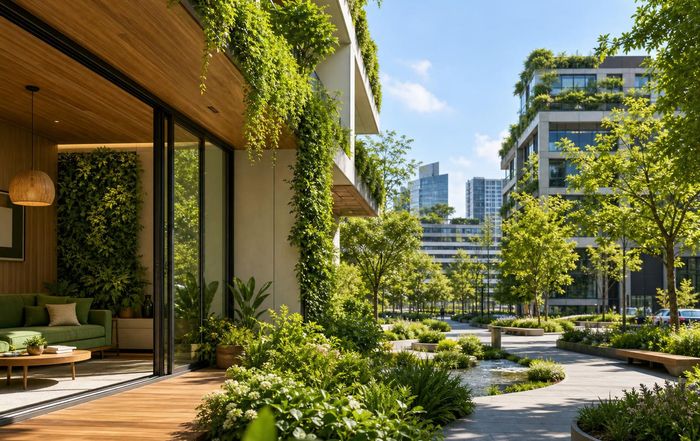
How Green Design Improves Homes and Public Spaces
A New Era of Design for a Warming World
By 2026, the convergence of climate urgency, technological progress, and shifting social expectations has transformed how homes and public spaces are conceived, built, and experienced. Green design, once treated as an optional upgrade or a niche architectural trend, has become a central pillar of responsible development and a defining theme for the community around YouSaveOurWorld.com. As rising temperatures, resource constraints, and public health concerns reshape cities and lifestyles, the built environment has emerged as both a major contributor to environmental degradation and a powerful arena for solutions that are practical, profitable, and profoundly human-centered.
The global building and construction sector still accounts for a substantial share of energy-related carbon emissions, as consistently highlighted by organizations such as the International Energy Agency. Readers who follow the climate and policy analysis of the Intergovernmental Panel on Climate Change understand that the way homes, offices, parks, and streets are designed will strongly influence whether the world can stay on a pathway consistent with the Paris Agreement. Within this context, green design is no longer simply about adding solar panels or specifying efficient insulation; it is about rethinking the relationship between people, place, and planet in ways that support sustainable living, resilient communities, and long-term economic value. For the audience of YouSaveOurWorld.com, green design is a practical framework for aligning daily life, investment decisions, and civic engagement with a more sustainable and healthy future.
Defining Green Design in 2026
Green design, sometimes referred to as sustainable or regenerative design, encompasses a set of principles and practices that seek to minimize the environmental footprint of the built environment while enhancing human well-being and social equity. It draws on established frameworks such as LEED from the U.S. Green Building Council, the BREEAM standard in the United Kingdom, and the Living Building Challenge developed by the International Living Future Institute, yet in 2026 it increasingly goes beyond checklists and certifications to focus on performance, data, and real-world outcomes.
At its core, green design integrates energy efficiency, responsible materials, water stewardship, ecological restoration, and human-centered design into a cohesive whole. It prioritizes passive strategies such as natural ventilation, daylighting, and bioclimatic orientation before adding active systems like high-efficiency heat pumps or smart lighting. It considers the full life cycle of materials, from extraction and manufacturing to reuse and recycling, aligning closely with the circular economy principles promoted by the Ellen MacArthur Foundation and other thought leaders. For readers interested in the broader context of sustainable living and personal choices that support these principles, the resources on sustainable living at YouSaveOurWorld.com offer a practical complement to the design-focused perspective.
In 2026, green design is also inseparable from climate resilience. Designing a home or public space today requires anticipating more frequent heatwaves, heavier rainfall, sea-level rise, and other climate-related stresses documented by organizations such as the World Meteorological Organization. As a result, architects, planners, and engineers increasingly treat low-carbon performance and climate adaptation as two sides of the same design challenge, seeking solutions that both reduce emissions and help communities cope with inevitable climate impacts. This integrated approach speaks directly to the themes explored in the site's dedicated section on climate change, where environmental awareness is linked to practical pathways for action.
How Green Design Transforms the Home
In private homes, green design manifests in ways that are both visible and invisible, reshaping everything from the thermal comfort of a living room to the long-term financial profile of a property. Advances in building science, smart technology, and materials have made it possible to achieve high performance without sacrificing aesthetics, convenience, or lifestyle aspirations, which has been crucial in shifting consumer expectations.
One of the most impactful shifts has been the widespread adoption of high-performance building envelopes, including advanced insulation, airtight construction, and triple-glazed windows, which dramatically reduce energy demand for heating and cooling. These techniques build on decades of research from institutions such as the Passive House Institute and are now supported by mainstream manufacturers and builders. Coupled with efficient mechanical systems and, increasingly, rooftop solar and home energy storage, many new and renovated homes can approach net-zero energy consumption over the course of a year. Those interested in how these practices intersect with broader sustainable business models can explore sustainable business insights, where the economic dimension of these investments is examined in detail.
The interior design of green homes has also evolved. Natural, low-emission materials are prioritized to improve indoor air quality, reflecting research from organizations such as the World Health Organization on the health impacts of indoor pollutants. Non-toxic paints, formaldehyde-free wood products, and natural fibers not only reduce chemical exposure but also align with a growing consumer preference for authenticity and craftsmanship. These choices contribute to personal well-being, a theme that is increasingly central to the community at YouSaveOurWorld.com and further explored in its personal well-being section, where the connection between environment, health, and mental resilience is emphasized.
Water efficiency has become another hallmark of green residential design. Low-flow fixtures, rainwater harvesting systems, and drought-tolerant landscaping reduce demand on municipal water supplies and increase resilience in regions facing water stress, an issue that agencies such as the United Nations Environment Programme have highlighted repeatedly. In many jurisdictions, green infrastructure such as permeable paving and bioswales around homes also helps manage stormwater, reducing flood risk and easing the burden on aging urban drainage systems. These features, once considered experimental, are now being incorporated into building codes and incentive programs, illustrating how policy, technology, and consumer demand can reinforce one another.
Green Design and the Quality of Everyday Life
While much discussion of sustainable design focuses on energy metrics and carbon footprints, the most immediate impact for homeowners is often experienced in comfort, health, and day-to-day satisfaction. Green homes tend to have more stable indoor temperatures, better daylight distribution, and superior acoustics, thanks to thoughtful orientation, shading, and material selection. Studies summarized by organizations such as the World Green Building Council have shown that these environmental qualities can improve sleep quality, reduce stress, and enhance cognitive performance, turning green design into a form of preventative health infrastructure as much as an environmental strategy.
Biophilic design, which intentionally incorporates natural elements such as plants, natural materials, and views of greenery, has become a central component of green residential projects. The psychological benefits of proximity to nature, documented by institutions like Harvard T.H. Chan School of Public Health, have resonated strongly in the post-pandemic era, when many people reassessed the importance of their home environment. Integrating indoor gardens, operable windows for fresh air, and access to small outdoor spaces such as balconies or courtyards contributes to emotional balance and a sense of connection to the wider ecosystem. This perspective aligns closely with the lifestyle focus of YouSaveOurWorld.com, where readers can explore how design choices intersect with broader lifestyle aspirations and values.
The digitalization of homes through smart systems has further enhanced the potential of green design. Smart thermostats, occupancy sensors, and integrated energy management platforms allow residents to monitor and optimize resource use in real time, often supported by cloud-based analytics from technology providers and utilities. Organizations like ENERGY STAR and the U.S. Department of Energy have provided frameworks and tools that help homeowners understand and improve their energy performance. At the same time, privacy and data security concerns have prompted a more thoughtful approach to technology integration, underscoring the importance of trust and transparent governance in the era of connected homes.
Public Spaces as Engines of Environmental Awareness
Beyond private residences, green design has reshaped public spaces in ways that influence how communities understand and engage with sustainability. Parks, plazas, streetscapes, and civic buildings are increasingly designed as living demonstrations of ecological principles, making environmental awareness tangible and accessible. For readers who view public spaces as key arenas for cultural change, the reflections on environmental awareness at YouSaveOurWorld.com provide a complementary narrative about education, communication, and community engagement.
Green infrastructure has become a defining feature of forward-looking cities. Urban trees, green roofs, rain gardens, and restored wetlands perform critical ecological functions such as cooling urban heat islands, improving air quality, and managing stormwater, all while enhancing the aesthetic and recreational value of public spaces. Organizations like C40 Cities and ICLEI - Local Governments for Sustainability have documented how these nature-based solutions can reduce infrastructure costs and improve resilience, making them an increasingly attractive part of city planning. In many cities, waterfronts and former industrial sites have been transformed into ecologically rich parks that showcase native biodiversity and provide residents with access to nature within walking or cycling distance.
Public buildings such as libraries, schools, and community centers now frequently integrate visible green features that double as educational tools. Solar arrays, rainwater collection systems, and interactive dashboards displaying real-time energy use help demystify sustainability for visitors, turning everyday spaces into informal classrooms. This trend mirrors the broader emphasis on environmental education found in the education resources on YouSaveOurWorld.com, where the role of knowledge in driving behavior change and policy support is explored in depth. By making the mechanics of sustainability visible, public spaces can inspire curiosity, foster a sense of shared responsibility, and normalize low-impact behaviors.
Green Design, Economy, and Sustainable Business Models
The economic dimension of green design has become increasingly compelling by 2026, as data accumulates on reduced operating costs, higher asset values, and lower risk profiles associated with sustainable buildings and infrastructure. Institutional investors, guided by frameworks such as the Task Force on Climate-related Financial Disclosures and the Principles for Responsible Investment, now scrutinize the environmental performance of real estate portfolios as part of their core fiduciary duty. This shift has created strong incentives for developers and property owners to adopt green design principles, not only to comply with regulations but to remain competitive in a changing market.
Energy-efficient homes and green-certified commercial buildings often command price premiums and experience lower vacancy rates, as reported by organizations such as McKinsey & Company and BloombergNEF. Reduced utility bills and maintenance costs improve cash flows, while resilience features such as flood-proofing and backup power systems can lower insurance premiums and protect against climate-related disruptions. Readers interested in the intersection of sustainability and financial performance can explore the business and economy sections of YouSaveOurWorld.com, where these trends are analyzed from the perspective of both entrepreneurs and established firms.
Green design also supports new business models and job creation. The growth of energy retrofitting, circular construction, sustainable materials manufacturing, and green infrastructure maintenance has generated employment opportunities across skill levels, from high-tech engineering roles to local landscaping and construction jobs. International organizations such as the International Labour Organization have highlighted the potential of green jobs to support a just transition, ensuring that climate action contributes to social inclusion rather than exacerbating inequality. For businesses, integrating green design into their operations and facilities is increasingly seen as part of a broader sustainability strategy, shaping brand identity, stakeholder engagement, and long-term resilience.
Innovation, Technology, and the Future of Green Design
The rapid pace of innovation has been a critical enabler of green design, and by 2026, advanced technologies are reshaping what is possible in both homes and public spaces. High-performance materials, digital design tools, and data-driven management systems are converging to create buildings that are not only efficient but adaptive, learning from user behavior and environmental conditions over time. This dynamic landscape is a natural focus for the innovation and technology content on YouSaveOurWorld.com, where readers can follow emerging trends and evaluate their implications.
One major area of progress has been in low-carbon and circular materials. Cross-laminated timber and other engineered wood products, supported by research from institutions such as Forest Stewardship Council-aligned bodies and universities worldwide, have enabled taller and more complex timber structures that store carbon and reduce reliance on energy-intensive steel and concrete. Recycled-content materials, bio-based insulation, and modular construction systems designed for disassembly are gaining traction, supported by guidance from organizations such as the World Resources Institute on circular economy strategies. These material innovations are particularly relevant for addressing the embodied carbon of buildings, which has become a larger share of total emissions as operational energy use declines.
Digital tools are transforming the design and operation of buildings and public spaces. Building information modeling, digital twins, and parametric design software allow architects and engineers to optimize form, structure, and systems for energy performance, daylight access, and thermal comfort before construction begins. Once in operation, sensor networks and analytics platforms provide continuous feedback on performance, enabling facility managers to fine-tune systems and detect inefficiencies early. Smart city initiatives, supported by organizations like UN-Habitat, are extending these capabilities to entire districts, integrating mobility, energy, and public space design into cohesive, data-informed strategies that aim to enhance both sustainability and quality of life.
Addressing Waste and Plastic through Design
Green design also plays a crucial role in addressing the global challenge of waste, particularly plastic pollution, which has become a defining environmental issue of the past decade. By designing buildings, interiors, and public spaces with circularity in mind, it becomes possible to reduce waste generation, increase reuse and recycling, and support more sustainable material flows. This perspective aligns strongly with the focus of YouSaveOurWorld.com on waste and plastic recycling, where practical guidance is provided for individuals and organizations seeking to minimize their environmental footprint.
In homes, this can mean specifying durable, repairable products, avoiding composite materials that are difficult to recycle, and creating storage and sorting systems that make recycling and composting intuitive. Public spaces can integrate clearly designed waste stations, educational signage, and infrastructure that supports reuse systems, such as refill stations for water and reusable packaging networks. Organizations such as the United Nations Environment Programme and OECD have emphasized the importance of upstream design decisions in tackling plastic pollution, noting that end-of-pipe solutions alone are insufficient.
At the urban scale, zero-waste strategies are increasingly influencing design decisions, from district-level material recovery facilities to building codes that encourage deconstruction rather than demolition. Cities collaborating through networks like Zero Waste International Alliance and other advocacy groups have demonstrated that design-led approaches to waste can reduce environmental impacts while creating new economic opportunities in recycling, remanufacturing, and repair. For the global audience of YouSaveOurWorld.com, these developments illustrate how local design choices are connected to broader global efforts to shift away from linear, wasteful models of production and consumption.
Design as a Bridge between Personal Values and Collective Action
One of the most powerful aspects of green design is its ability to bridge the gap between individual values and collective outcomes. Many readers of YouSaveOurWorld.com are motivated by a desire to live in alignment with their environmental and social principles, yet they often face structural barriers and conflicting incentives in their daily lives. By embedding sustainability into the physical fabric of homes and public spaces, green design can make the sustainable choice the easy, attractive, and default choice, reducing the cognitive and practical burdens of living responsibly.
In homes, this might mean that energy-efficient appliances, good insulation, and smart controls are simply standard features, not special upgrades, ensuring that even residents who are not deeply engaged with environmental issues benefit from lower emissions and healthier indoor environments. In public spaces, well-designed walking and cycling infrastructure, accessible transit stops, and inviting green areas can nudge people toward low-carbon mobility and outdoor activity without requiring constant conscious effort. Behavioral science research from institutions such as The Behavioural Insights Team and leading universities has shown that such design-based nudges can significantly influence habits over time.
For businesses and institutions, green design provides a visible demonstration of commitments that might otherwise be confined to policy documents or corporate reports. When a company invests in a net-zero headquarters, a school builds a daylight-filled, energy-efficient campus, or a municipality transforms a parking lot into a climate-resilient park, these decisions send a clear signal about priorities and values. They also create tangible case studies that can be shared on platforms like YouSaveOurWorld.com, inspiring others to follow suit and reinforcing a sense of momentum in the transition toward sustainability.
The Role of YouSaveOurWorld.com in the Green Design Conversation
As green design moves from the margins to the mainstream, there is a growing need for platforms that connect technical knowledge, business strategy, lifestyle choices, and global context in a coherent and trustworthy way. YouSaveOurWorld.com positions itself as such a hub, bringing together insights on sustainable living, climate change, business innovation, and personal well-being in a manner that is accessible to both professionals and engaged citizens. By curating resources on topics ranging from sustainable business to design, the site helps readers understand how green design fits into broader economic, social, and technological shifts.
For homeowners, the platform offers guidance on practical steps to make dwellings more efficient, comfortable, and resilient, linking design decisions to everyday habits and long-term financial planning. For business leaders and entrepreneurs, it provides a lens on how green design can enhance brand value, reduce risk, and unlock new markets, reinforcing the message that sustainability is not a constraint but a driver of innovation and competitiveness. For educators, policymakers, and community advocates, it serves as a source of narratives and examples that can support environmental awareness campaigns and policy discussions.
Most importantly, YouSaveOurWorld.com emphasizes that green design is not an isolated technical specialty but an integral part of a holistic response to the environmental and social challenges of the 21st century. By weaving together perspectives on technology, lifestyle, economy, and global responsibility, the platform underscores that every building, street, and park is an opportunity to advance a more sustainable and humane future. Readers are invited to explore the broader vision at the site's main page, YouSaveOurWorld.com, where green design is situated within a comprehensive framework for systemic change.
Looking Ahead: From Early Adopters to New Norms
As 2026 unfolds, the trajectory of green design is clear: what was once the domain of early adopters is rapidly becoming the new norm, driven by regulatory pressures, market forces, and cultural expectations. Building codes in many jurisdictions are tightening energy performance requirements and mandating climate resilience measures, while financial institutions increasingly factor environmental risk into lending and investment decisions. At the same time, younger generations, shaped by climate activism and digital connectivity, are demanding that the spaces they inhabit reflect their values and aspirations.
Yet the full potential of green design has not yet been realized. Deep retrofits of existing building stock, equitable access to high-quality green housing and public spaces, and the integration of indigenous and local knowledge into design processes remain significant challenges. Addressing these issues will require continued collaboration among architects, engineers, policymakers, businesses, and communities, as well as platforms that can translate complex developments into clear and actionable insights. In this evolving landscape, the role of trusted, independent resources such as YouSaveOurWorld.com will only grow in importance.
Green design improves homes and public spaces not only by reducing environmental impacts but by reimagining what it means to live well in an era of planetary limits. It connects the comfort of a well-lit, naturally ventilated room to the stability of global climate systems; it links the shade of an urban tree to public health and social cohesion; it ties the financial performance of a building to the resilience of local economies. For the community gathered around YouSaveOurWorld.com, embracing green design is part of a broader commitment to align personal choices, professional practice, and civic engagement with a vision of a thriving, low-carbon, and equitable world. As more people and organizations adopt this perspective, the cumulative impact on homes, cities, and the planet will be profound.
