How to Spot Misleading Environmental Claims on Products
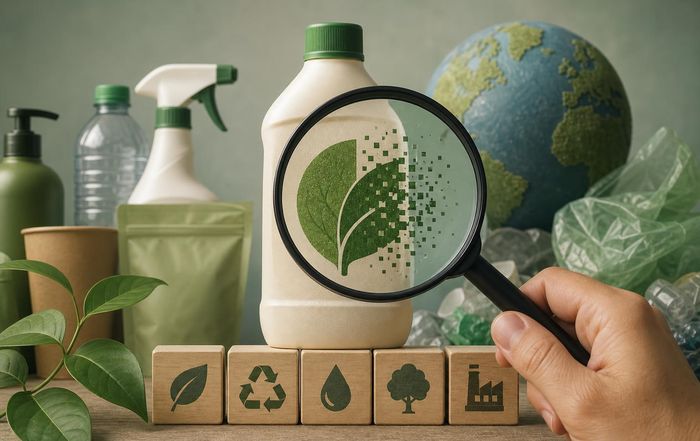
Walk down any supermarket aisle and it is hard to miss the green leaves, earthy tones, and "eco" badges on packaging. Companies know many people want to reduce their impact, and sustainability has become a powerful marketing tool. But not every green promise is what it seems. Misleading environmental claims-often called "greenwashing"-can confuse well-intentioned shoppers and slow real progress on sustainable living.
This eco guide explains how to recognise common types of misleading claims, what trustworthy labels look like, and practical steps you can take to make more informed choices, whether you are buying food, clothing, electronics, or household products.
Why misleading environmental claims matter
Misleading environmental claims are not just a marketing annoyance; they have real consequences. When companies exaggerate or fabricate the benefits of their products, they divert attention and money away from businesses that genuinely reduce environmental harm. This can undermine efforts to tackle climate change, plastic pollution, and waste, and it can erode public trust in sustainability as a whole.
Regulators have started to respond. In the European Union, the European Commission has proposed a Green Claims Directive to tighten rules on how companies communicate environmental performance. In the United States, the Federal Trade Commission (FTC) issues "Green Guides" to help marketers avoid deceptive claims and is in the process of updating them. Consumer protection authorities in the United Kingdom, Australia, and other regions have also published guidance and taken enforcement action against misleading "green" marketing.
For individuals trying to live more sustainably, this landscape can feel confusing. Many people want to reduce plastic use, lower their carbon footprint, and support sustainable business practices, but do not have time to decode every label. Learning a few key warning signs and questions to ask can make everyday choices more aligned with your values. For broader tips on aligning lifestyle decisions with environmental goals, the sustainable living overview at YouSaveOurWorld's sustainable living section offers additional context.
Greenwashing basics: what it is and how it shows up
Greenwashing is an umbrella term for marketing that makes a product, service, or company appear more environmentally friendly than it actually is. It can be intentional deception, but it also often arises from vague language, selective disclosure, or poorly substantiated claims.
Regulators and organisations such as the United Nations Environment Programme (UNEP) and OECD highlight several recurring patterns. Common forms of greenwashing include:
Vague or undefined terms such as "eco-friendly," "green," or "natural" without clear explanation or evidence.
Irrelevant claims, for example boasting "CFC-free" when chlorofluorocarbons are already banned.
Hidden trade-offs, where one small "green" feature distracts from a larger negative impact, such as a product marketed as "recyclable" but made from mixed materials that are rarely recycled in practice.
Lack of proof, where impressive-sounding claims are not backed up by accessible, credible evidence.
Fake or weak certifications, including self-created "seals" that imitate independent ecolabels.
Understanding these patterns helps consumers cut through the noise. It also supports broader environmental awareness, a core theme across YouSaveOurWorld's environmental awareness coverage.
Red flag phrases and symbols to watch for
Certain words and design choices on packaging should prompt closer scrutiny. They are not automatically misleading, but they are often used in ways that leave room for confusion or exaggeration.
One common red flag is the use of broad, feel-good language such as "environmentally friendly," "green," "planet-safe," or "sustainable" without any explanation of what that means in practice. The FTC and the UK's Competition and Markets Authority (CMA) both caution that such general environmental benefit claims are difficult to substantiate because almost every product has some environmental impact. A detergent, for example, might be labelled "eco" simply because the bottle uses slightly less plastic, even if the ingredients are still harmful to aquatic ecosystems.
Another warning sign is nature imagery-lush forests, oceans, leaves, or animals-combined with minimal concrete information. Colour schemes dominated by green and brown can subtly suggest ecological benefits even when the product's formula or packaging has not changed. Similarly, logos that look like official seals or certification marks but are not linked to any recognised standard can mislead shoppers. If a symbol is unfamiliar, it is worth checking whether it corresponds to a reputable ecolabel listed by organisations such as Global Ecolabelling Network or government agencies.
Terms like "chemical-free," "non-toxic," or "all natural" also deserve caution. Everything is made of chemicals in the scientific sense, and "natural" substances can still be harmful or unsustainable. The World Health Organization (WHO) and other health agencies emphasise that toxicity depends on dose and exposure, not just whether something is "synthetic" or "natural." Without clear definitions, these buzzwords can give a false sense of safety or environmental virtue.
Common misleading claims and how to interpret them
Certain types of environmental statements appear frequently on products and advertising. Understanding what they can legitimately mean-and how they are often misused-helps in making more informed decisions.
A prominent example is "biodegradable." In principle, a biodegradable product can break down into natural components through microorganisms. But this process depends heavily on conditions such as temperature, moisture, and oxygen. A plastic item labelled "biodegradable" may only degrade in industrial composting facilities, not in a backyard compost or landfill. UNEP and various national environment agencies warn that such claims can encourage littering or complacency if consumers assume items will simply "disappear" in nature. Look for specifics such as "industrially compostable according to [a named standard]" and whether such facilities are actually available where you live.
Another frequently misunderstood term is "compostable." Certified compostable packaging or cutlery can be a useful alternative to conventional plastics in some settings, but only when the materials are collected and processed correctly. In many cities, composting systems are designed for food and garden waste and may not accept compostable plastics. Misleading use of the term can therefore shift waste from recycling streams to landfill rather than reducing it. For readers interested in how these claims intersect with broader waste systems, the waste and resource management section explores disposal challenges in more depth.
"Recyclable" is another claim that needs context. Technically, many materials are recyclable, but that does not mean they are widely recycled. Some multi-layer plastics or mixed-material items can only be processed in specialised facilities that serve a small portion of the population. The OECD and Ellen MacArthur Foundation both highlight the gap between theoretical recyclability and actual recycling rates. When evaluating a product, consider whether local collection systems accept that material and whether it can realistically be sorted and processed.
Climate-related claims such as "carbon neutral," "net zero," or "climate positive" are increasingly common. These can be legitimate when based on robust greenhouse gas accounting, deep emissions cuts, and limited use of high-quality carbon offsets. However, investigations by groups like Carbon Market Watch and guidance from the Science Based Targets initiative (SBTi) underline widespread problems: some companies over-rely on offsets, use outdated baselines, or count planned reductions as achieved. A credible climate claim should clearly explain what emissions are included, how reductions were made, and what role, if any, offsets play. For more background on climate impacts and terminology, the climate change overview provides additional context.
Understanding plastics, "ocean-bound" claims, and recycling symbols
Plastic packaging is a major focus of green marketing, especially as public concern about ocean pollution has grown. Many products now carry claims like "made from ocean-bound plastic," "prevents plastic from entering the ocean," or "100% recyclable packaging." These can signal meaningful improvements, but they can also be used loosely.
"Ocean-bound plastic" typically refers to plastic collected within a certain distance of coastlines or in areas with poor waste management, on the assumption that it might otherwise end up in the ocean. Some initiatives supported by organisations such as The Ocean Cleanup or Ocean Conservancy do fund genuine collection and recycling efforts. However, there is no single global standard for what "ocean-bound" means, and verification can be uneven. Without independent oversight, the term may be used as a marketing label for recycled plastic in general, regardless of where it was collected.
Recycling symbols can also be confusing. The triangular "chasing arrows" icon is often interpreted as a guarantee that an item is recyclable, but in many cases it simply indicates the type of plastic resin. For example, plastics labelled with certain numbers might only be accepted in specialised facilities, if at all. Waste and recycling authorities in many countries emphasise that local guidance should take precedence over generic packaging claims. For readers wanting a broader look at plastic issues, YouSaveOurWorld's plastic recycling coverage dives deeper into how different plastics are handled.
Green-tinted bottles, earthy fonts, or slogans such as "less plastic" may signal a small reduction in material use, but the actual environmental benefit depends on the baseline and on whether the packaging is reused, recycled, or landfilled. In some cases, switching from a heavier but widely recycled material (like glass or certain metals) to a lighter but rarely recycled plastic can be a net negative, even if the new package contains "30% less plastic."
How to check whether a claim is backed by evidence
One of the most powerful tools against misleading environmental claims is a simple question: "Says who?" Credible green claims should be supported by transparent, verifiable information from trustworthy sources.
Independent certifications are a useful starting point. Well-known ecolabels such as EU Ecolabel, Nordic Swan, Blue Angel, Energy Star, Fairtrade, Rainforest Alliance, and Forest Stewardship Council (FSC) each have published criteria and verification procedures. International bodies like the International Organization for Standardization (ISO) also develop standards for environmental management and labelling. While no label is perfect, certifications with clear rules and third-party audits are generally more reliable than self-created symbols.
Company websites can provide additional detail, but it is important to distinguish between marketing language and substantive evidence. A robust claim will often link to a life-cycle assessment, emissions inventory, or certification report prepared by or in line with recognised frameworks such as those from the Greenhouse Gas Protocol or Global Reporting Initiative (GRI). If a brand describes a product as "carbon neutral," look for specifics: which emissions are included, how reductions were achieved, and what standards govern any offsets.
Government agencies and international organisations can help cross-check claims. Environmental and consumer protection regulators in your country often publish guidance on acceptable green marketing practices and may list enforcement actions against companies that have crossed the line. Global bodies such as UNEP, OECD, and the UN Framework Convention on Climate Change (UNFCCC) provide broader context on climate and sustainability targets, which can help assess whether a company's promises are meaningful or modest relative to what science indicates is needed.
Recognising trustworthy labels and certifications
Not all eco-labels are equal. Some are backed by rigorous criteria and independent auditing; others are little more than marketing tools. Learning to distinguish between them can significantly improve the quality of your purchasing decisions.
Trustworthy labels generally share several features. They are managed by an independent organisation (governmental, non-profit, or multi-stakeholder), they publish clear and measurable criteria, and they require third-party verification before a product can use the label. Many also have mechanisms to update standards over time as science and technology evolve. For example, labels like EU Ecolabel and Nordic Swan periodically tighten criteria to reflect best available practices and encourage continuous improvement.
In contrast, weak or misleading labels often lack transparency. Their criteria may be vague ("environmentally responsible," "green choice") or focus on a single attribute that does not reflect overall performance, such as slightly lower energy use in a product that is otherwise resource-intensive and difficult to recycle. Some are created by industry groups primarily for public relations, with limited external oversight. Others are invented by individual companies and designed to resemble independent certifications.
Resources from organisations such as Global Ecolabelling Network and national environment agencies can help consumers identify reputable schemes. While it is unrealistic to know every label, paying attention to a few widely used and credible ones in key categories-such as energy efficiency for appliances, sustainable forestry for paper and wood products, or organic standards for food and textiles-can make choices more straightforward. For those interested in how design and labelling influence behaviour, the design and sustainability section explores the role of visual communication in environmental choices.
Practical questions to ask before you buy
Given the complexity of life-cycle impacts, no single label or claim can capture the full environmental story of a product. However, a few practical questions can help cut through misleading marketing and focus attention on what matters most.
One useful question is whether the claim is specific and measurable. Statements like "contains 70% post-consumer recycled plastic" or "reduces energy use by 30% compared with our 2018 model" are easier to verify and compare than generic slogans. If a company provides numbers, consider whether they are framed clearly-are they absolute reductions, per-use savings, or relative to a previous product that was particularly inefficient?
Another question is whether the claim covers the full life cycle or just one stage. A product may be marketed as "zero waste packaging" while its production is highly carbon-intensive, or vice versa. Life-cycle thinking-considering raw materials, manufacturing, transport, use, and end-of-life-helps identify when a small improvement in one area is overshadowed by larger impacts elsewhere. Articles on sustainable business practices and innovation and technology often highlight businesses that address impacts across the value chain rather than focusing narrowly on packaging.
It is also worth asking whether the improvement is incremental or transformative. A disposable product that uses "10% less plastic" is still disposable; in some cases, switching to a reusable alternative may have a far greater effect. Similarly, a clothing brand that introduces one "conscious" collection while continuing to rely on fast-fashion volumes may be engaging in selective marketing rather than systemic change. Looking at a company's overall practices-such as its climate targets, supply chain transparency, and participation in credible initiatives-can provide a more rounded picture than any single product claim.
Finally, consider your own behaviour. Even genuinely greener products have impacts, and the most sustainable choice is often to buy less, use items longer, repair when possible, and share or reuse where practical. For ideas on aligning day-to-day habits with environmental goals, the lifestyle and personal well-being section and the related personal well-being coverage explore ways to balance consumption, health, and planetary limits.
The role of regulation, media, and citizens
While individual shoppers can learn to spot misleading claims, the responsibility for honest communication does not rest solely with consumers. Regulators, civil society, and businesses all play crucial roles in shaping a marketplace where environmental information is accurate and useful.
Regulatory agencies in many countries are strengthening rules on green marketing. The European Commission's proposed Green Claims Directive, for instance, would require companies to substantiate and verify explicit environmental claims before using them, with penalties for non-compliance. In the United States, the FTC's Green Guides, though not binding law, influence enforcement of deceptive advertising rules and are being updated to address newer claims such as "carbon neutral." Similar guidance exists in other jurisdictions, often aligned with international recommendations from bodies like OECD.
Independent media, NGOs, and academic researchers also scrutinise corporate sustainability narratives. Investigations by organisations such as Greenpeace, Carbon Market Watch, and university research centres have exposed cases where climate pledges, "plastic neutrality" schemes, or "nature-positive" branding did not match underlying practices. This scrutiny can push companies to improve data quality, tighten targets, and avoid overstating progress. Readers interested in the broader global context can explore YouSaveOurWorld's global environment section and business and economy coverage, which often touch on policy and market dynamics.
Citizens, meanwhile, influence corporate behaviour not only as consumers but also as voters, employees, and community members. Supporting stronger transparency rules, backing organisations that advocate for robust standards, and asking critical questions of brands-online, in stores, and in shareholder forums-can help shift incentives away from superficial green marketing and toward genuine environmental performance.
Building a more honest green marketplace
Spotting misleading environmental claims is partly a matter of learning key terms and red flags, but it is also about cultivating a habit of healthy scepticism. When a product seems "too green to be true," a pause to ask who is making the claim, how it is defined, and what evidence supports it can make a significant difference over time.
No individual purchase will "save the planet," and consumers should not be left to fix systemic problems alone. Yet clear, accurate information on products is essential for any serious transition toward more sustainable patterns of production and consumption. Stronger rules, credible standards, and informed public scrutiny all contribute to that goal.
For people trying to align daily choices with environmental values, combining basic label literacy with broader lifestyle changes-reducing unnecessary consumption, favouring durable and repairable goods, and supporting businesses and policies that prioritise real impact over green slogans-can help ensure that efforts to "buy green" actually support the world they are intended to protect.
